
Shaoshan
Hunan Sheng, China
Why visit Shaoshan?
Shaoshan (Chinese: 韶山) is a small city of roughly 100,000 people in the rolling green hills of central Hunan, about 100 km southwest of the provincial capital Changsha. Once an unremarkable farming settlement, it was thrust onto the national stage as the birthplace of Mao Zedong, born here on 26 December 1893 to a relatively prosperous peasant family. Since Mao's death in 1976, the town has been reshaped into a place of secular pilgrimage — for the Chinese Communist Party, for tour groups from across the country, and for travellers curious about the roots of the most consequential Chinese figure of the 20th century. Expect red flags, brass busts, choirs singing revolutionary anthems in the square, and tour groups in matching caps: Shaoshan is less a typical "sight" than a window into how modern China remembers itself.
The town sits in a basin ringed by terraced rice paddies and bamboo-covered hills, with most visitor activity concentrated in the Shaoshan Scenic Area around Mao's former residence, Mao Zedong Square, the memorial museum, and Water Dripping Cave (Dishuidong). The newer town and Shaoshan South high-speed railway station lie a few kilometres east; shuttle buses link the two. Climate is humid subtropical: hot, sticky summers (June–August often above 32°C with thunderstorms), short cool winters (occasional frost in January), and pleasant shoulder seasons. Late March to early May and late September to early November are the best windows. Avoid the Chinese national holidays — especially the 1–7 October Golden Week, Labour Day (1–5 May), and 26 December (Mao's birthday) — when the square can hold huge numbers of pilgrims and queues for the residence stretch for hours.
Planning Shaoshan? Tell us your dates and we’ll tailor the trip.
Ask on WhatsAppHow do you get there?
By Plane
The nearest airport is Changsha Huanghua International (CSX), about 130 km east of Shaoshan. From the airport, the easiest path is a shuttle or metro into central Changsha, then a high-speed train onward from Changsha South. A direct taxi or Didi from the airport to Shaoshan takes well over an hour and is considerably more expensive than the train; there is no direct airport shuttle to Shaoshan itself.
By Train
Shaoshan South Railway Station is the main gateway, on the Changsha–Shaoshan high-speed line, with frequent trains from Changsha South taking around 25–30 minutes. An older conventional Shaoshan Railway Station still receives a small number of regular trains but is not the recommended option. Book a day or two ahead on the 12306 app or website (foreign passports accepted); on holidays book as early as possible. From Shaoshan South, local shuttle buses and tourist coaches wait at the station forecourt to ferry passengers to the Visitor's Center.
By Car / Road
Driving from Changsha takes a little over an hour via the Changsha–Shaoshan expressway; tolls are minimal and road quality is good. Long-distance buses run from Changsha's western bus terminals and from nearby Xiangtan throughout the day. Self-driving is straightforward, but a Chinese licence is required to legally drive a hired car.
The Shaoshan tourist circuit is compact and well organised. From the Visitor's Center, shuttle buses loop continuously between the main sites — Mao's Former Residence, Mao Zedong Square, the Memorial Museum, and (on a separate route) Water Dripping Cave — usually included in your entry ticket. Walking between the residence, square, and museum is also pleasant on landscaped paths through bamboo groves. Taxis wait at the Visitor's Center and at Shaoshan South Station for transfers, and Didi ride-hailing works but cars can be scarce, so keep some cash for taxis as backup. Crowds, especially mid-morning, can be intense; arrive at the residence early or in the afternoon to avoid the worst queues. Watch for low-grade scams typical of Chinese tourist sites: overpriced "guided tours" sold at the station forecourt and pushy souvenir vendors near the square.
What are the things to do?
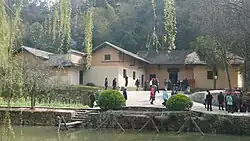
Former Residence of Mao Zedong — the yellow mud-brick farmhouse where Mao was born and lived as a child, restored with period furniture, kitchen tools, and the small family pond out front. Free entry, but advance reservation with a passport is required at the Visitor's Center. The single most affecting sight in town.
Mao Zedong Square — a wide ceremonial plaza dominated by a large bronze statue of Mao, unveiled in 1993 for the centenary of his birth. Open around the clock; expect group photos, flower-laying ceremonies, and recitations. Free.
Mao Zedong Comrade Memorial Museum — a serious, well-curated chronicle of Mao's life and the early revolution, with original letters, clothes, and personal items. Coverage of the Great Leap Forward and Cultural Revolution is, predictably, light. Free, passport required at the ticket window; closed Mondays.
Water Dripping Cave (Dishuidong) — a purpose-built secluded retreat in a forested gorge where Mao spent eleven reclusive days in June 1966 just before launching the Cultural Revolution. The guesthouse, his bedroom, and personal effects are open to visitors. A few kilometres from the square, reachable by the dedicated shuttle.
Shaofeng Peak — the peak behind Water Dripping Cave, climbable in about an hour, with views over the basin; a cable car is available for those who prefer not to walk.
Mao Family Ancestral Hall — a modest Qing-era clan hall in the nearby village of Shangwuchang, where Mao attended ancestor-veneration ceremonies as a child. Quieter than the main sites.
Join a flag-raising or wreath ceremony at dawn in Mao Zedong Square — groups of Party cadres, tour parties, and schoolchildren arrive for choreographed photos and oath-takings. Even as a bystander it's a remarkable piece of contemporary political theatre.
Walk the village circuit through the paddies and lotus ponds linking the residence, the ancestral hall, and the old village school where Mao first studied — a flat, well-marked path revealing more of the agrarian Hunan landscape than the bus tour does.
Hike up Shaofeng Peak for a moderate return walk through pine and bamboo, with a small temple near the summit.
See an evening cultural performance — large-scale outdoor song-and-dance shows themed around Mao's life are staged seasonally at a dedicated theatre in town; ask locally or through your hotel for current schedules and prices.
Day-trip from Changsha — for many travellers Shaoshan is best done as a day trip, combined with the Hunan Provincial Museum (the Mawangdui silk-clad mummy) on the return.
Planning Shaoshan? Want these on a customised itinerary?
Ask on WhatsAppWhere to eat?
Shaoshan eats with two appetites: dishes associated with Mao's own tastes, and standard Hunan fare. Hunan cuisine is famously fiery — heavy on fresh and pickled chillies, fermented black beans, smoked pork, and preserved vegetables. Signature dishes to seek out include Mao-style red-braised pork, stinky tofu, steamed fish head with chopped chillies, dry-fried green beans, and smoked bacon with leeks. A well-known chain of "Mao Family Restaurants" (Maojia Fandian), with an original branch near the square, serves a full menu of these dishes at mid-range prices and is a reliable, if touristy, choice. Simple noodle shops around town serve Changsha-style rice noodles for a cheap solo meal. Vegetarians can manage with stir-fried greens, tofu, and rice noodles but should ask explicitly for no lard and no meat. Halal options are limited to a handful of Hui Muslim noodle shops in the new town. Picture menus and English are rare — point-and-eat or use a translation app.
Where to drink?
Local drinks lean rural Hunan. Tea is everywhere — look for locally grown Shaoshan green tea, sold loose in souvenir shops and brewed in small teahouses around the scenic area. Most restaurants serve free hot water or weak tea by default. For something stronger, Hunan's best-known baijiu brand is Jiugui Jiu, a sorghum spirit from western Hunan. Local and national beer brands are widely available in restaurants and shops. There is no real "bar scene" in Shaoshan itself — evenings wind down early and most visitors are with tour groups — but a few low-key karaoke bars and small pubs operate in the new town near the high-speed station. For proper nightlife, head back to Changsha. Tap water is not drinkable; use bottled or boiled water, which hotels supply along with an electric kettle.
Planning Shaoshan? We’ll book the stays and dining for you.
Ask on WhatsAppWhere to stay?
Accommodation clusters around the Visitor's Center and the newer town near Shaoshan South Station.
- Budget — a handful of simple hotels and family-run guesthouses near the Visitor's Center and in the surrounding village offer basic doubles, often with a simple home-cooked breakfast.
- Mid-range — national budget-to-midrange chains such as Hanting have a branch near Shaoshan South Station, convenient for an early train.
- Upscale — a couple of four-star-standard properties near the scenic area offer more polished rooms, generally within walking distance of the square.
What should you buy?
The shopping in Shaoshan is, like everything else here, monothematic: Mao memorabilia and Communist-era kitsch. Stalls clustered around the square and along the road to the residence sell busts of the Chairman in every size, Mao-suit jackets and caps, embroidered satchels, propaganda-style posters, enamel mugs and pin badges, and copies of the "Little Red Book" (Chinese and sometimes English). Quality varies wildly; the gift shops attached to the museum and Water Dripping Cave generally have better-made pieces than the street stalls. Beyond memorabilia, look for Hunan embroidery, Xiangxi-style silver jewellery, and locally produced tea and dried chillies. Bargaining is expected at street stalls; fixed-price applies in museum shops and chain stores. Most vendors accept WeChat Pay and Alipay; foreign cards rarely work, so load a mobile-payment app before you arrive.
Where to go next?
- Changsha — around 30 minutes by high-speed train; the provincial capital, home to the Hunan Provincial Museum (Mawangdui Han tombs, the silk-wrapped Lady Dai), Yuelu Mountain, and a serious eating-and-nightlife scene.
- Xiangtan — a short drive away; Mao's home prefecture, with the Qishi Pagoda and Yuhu Park.
- Hengshan / Mount Heng — reachable by high-speed train via Changsha; one of China's Five Great Mountains, with Taoist and Buddhist temples and a sunrise hike to Zhurong Peak.
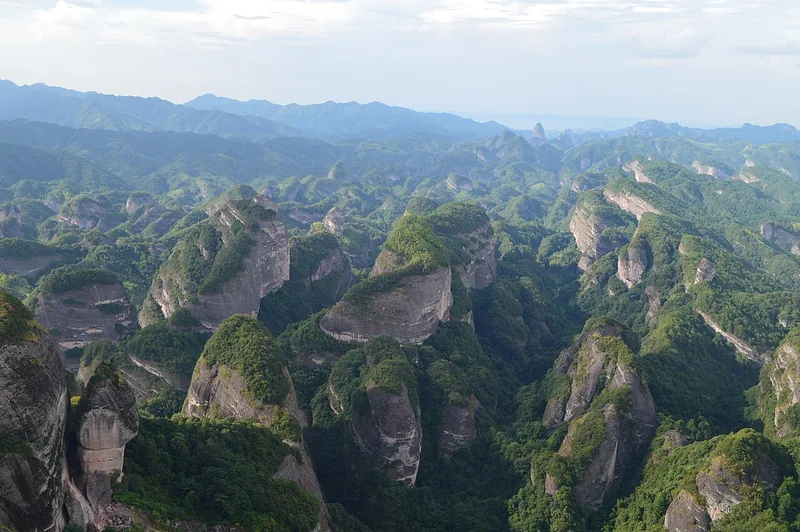
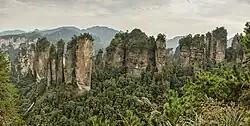
- Zhangjiajie — several hours by train or a short flight from Changsha; the sandstone-pillar landscape that inspired the floating mountains of Avatar.
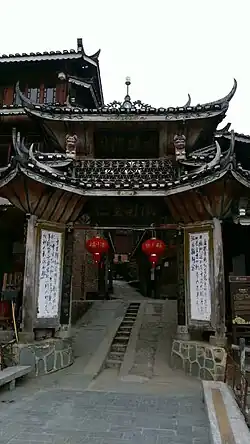
- Fenghuang Ancient Town — a long day's travel via Jishou; a riverside Miao and Tujia town of stilted wooden houses, best visited overnight.
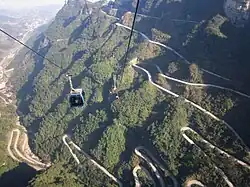
- Wulingyuan & Tianmen Mountain — adjacent to Zhangjiajie; glass skywalks, cable cars, and the natural arch of Tianmen Cave. Pair with Zhangjiajie for a multi-day extension.
Nearby in Hunan Sheng
More places to explore around Shaoshan.
Guide content as of July 2026. Portions adapted from Wikivoyage, CC BY-SA 4.0.

Contact Us
Get in touch with us.
Get in touch
Contact Us
Tell us where you'd like to go and how you like to travel. A real Tripcuro planner — not a bot — will craft an itinerary around you.
- Personalised, hassle-free planning end-to-end
- Transparent pricing, no hidden costs
- 24/7 support for complete peace of mind