
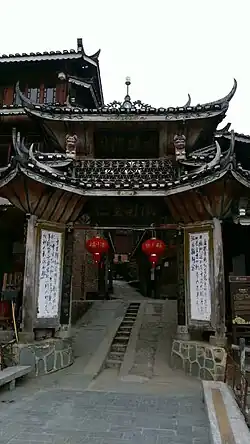
Tongdao Dong Autonomous County
Hunan Sheng, China
Why visit Tongdao Dong Autonomous County?
Tongdao Dong Autonomous County (Chinese: 通道侗族自治县) sits in the far southwestern tip of Hunan, wedged against the borders of Guizhou and Guangxi. The name literally means "passageway," a nod to its historical role as a corridor between the three provinces. While most travellers chasing Dong (Kam) culture default to Zhaoxing and Liping over the border in Guizhou, Tongdao quietly holds some of the most unspoilt Dong villages in China — wooden stilt houses crowded along terraced river valleys, drum towers, and the "wind and rain" covered bridges that Dong carpenters traditionally build without nails.
The county is also a footnote in modern Chinese political history: in December 1934 the Red Army held a conference here during the Long March that helped set the course for the march west into Guizhou. The county seat, Shuangjiang, is a small, functional market town on the Shuang River; the real reason to come lies in the surrounding Pingtan river valley, where a single road threads past several Dong villages.
Climate is humid subtropical: hot, very wet summers (June–August can see flooding on the low-lying valley roads) and damp, chilly winters that can dip near freezing at altitude. The sweet spots are late March to May (terraces flooded, rapeseed in bloom) and September to early November (clear skies, harvest, festival season). Avoid the deep wet of July if you can.
Planning Tongdao Dong Autonomous County? Tell us your dates and we’ll tailor the trip.
Ask on WhatsAppHow do you get there?
By Train
Tongdao is served by a local railway station on the Huaihua–Liuzhou line, with conventional trains to Huaihua, Liuzhou, and Guilin. For high-speed travel, the nearest hub is Huaihua South on the Shanghai–Kunming HSR, from where you transfer to a slow train or bus south. Buy tickets via the 12306 app or website (passport registration required for foreign travellers); same-day seats are usually available outside Chinese public holidays.
By Car / Road
The county seat's south bus station is the main road hub. Buses run every few hours to Huaihua and there is regular service to and from Guilin in Guangxi. Coming by car, an expressway passes nearby, and the drive from Guilin or from Huaihua each takes a few hours. Within the Pingtan river valley, buses to individual villages are infrequent — most travellers hire a driver for the day from the county seat, negotiated on the day.
The county seat itself is compact and walkable end-to-end in about 20 minutes. Local city buses and shared motorised tricycles cover everything within town for a few yuan per short hop; agree the price before getting in. Didi ride-hailing works in the county seat but coverage thins out fast once you leave town — download it before you arrive and have Alipay or WeChat Pay set up, as cash-only drivers are increasingly rare.
For the villages, your realistic options are a hired driver for the day, the very infrequent valley bus, or a scooter rental if you hold an International Driving Permit recognised in China (rare; most foreigners cannot legally drive). Watch for standard rural-China frictions: drivers padding the route, inflated ticket prices at unofficial "village entrances," and "antique" silver souvenirs that are actually nickel alloy.
What are the things to do?
The headline attraction is Dong vernacular architecture: timber-framed villages clustered around a drum tower — a tiered pagoda-like structure that serves as the village's social and ceremonial heart — connected by wind-and-rain bridges, covered wooden bridges with tiled roofs and benches where villagers shelter and gossip. Both are traditionally built from interlocking timber without nails.
Several Dong villages lie along the Pingtan river valley road and are easily strung together in a day:
- Huangdu Dong Village — the most developed of the group, with a large drum tower complex and regular evening song-and-dance performances. The most accessible introduction if you only see one.
- Pingtan Village — a quieter, more lived-in cluster strung along the riverbank, with several wind-and-rain bridges in close succession. Excellent for slow walking and photography.
- Zhongbu Village — at the upper end of the valley, with a photogenic drum tower and far fewer day-trippers than Huangdu.
- Hengling — the most remote of the group, set higher up the valley; the layout reads almost untouched by tourism. Best paired with a hired driver who knows the turn-off.
Other notable sights:
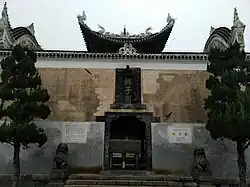
Tongdao Conference Site — the academy building in Luocheng where the December 1934 Red Army meeting was held. Worth an hour for the architecture even if you skip the revolutionary exhibits.
Wanfo Mountain National Geopark — a striking landscape of red sandstone Danxia peaks at the eastern edge of the county, with marked trails and a cable car.
Walk the Pingtan valley road end-to-end (or in sections) — the stretch between Pingtan and Hengling villages, in particular, is one of the best slow-walking routes in southwestern Hunan, with bridges every kilometre or so.
Catch a Dong choral performance. The Dong are famous for their polyphonic unaccompanied choral singing, inscribed on UNESCO's Intangible Cultural Heritage list. Huangdu stages the most accessible nightly version; if you can time a visit to a village festival, the unstaged version is incomparably better.
Time your trip to a festival, if possible — several Dong festivals fall in autumn and early spring with dates that shift by the lunar calendar; ask locally for the current schedule.
Hike Wanfo Mountain — half-day to full-day depending on which loop you pick; the cable car shortens the climb considerably.
Day-trip across the provincial line to Sanjiang Dong Autonomous County in Guangxi for comparison — the Chengyang wind-and-rain bridge there is the most famous single example of the type.
Planning Tongdao Dong Autonomous County? Want these on a customised itinerary?
Ask on WhatsAppWhere to eat?
Dong cuisine leans sour, smoky, and pickled — a product of mountain larders without refrigeration. Signature dishes to look for include sour fish, carp salted, layered with glutinous rice, and fermented for months in a wooden barrel (pungent, savoury, an acquired taste worth acquiring); oil tea, not a drink but a savoury breakfast broth of fried tea leaves, puffed rice, peanuts, and herbs; smoked pork, hung above the cooking fire for months then stir-fried with chillies; and bamboo-tube rice, glutinous rice cooked inside a bamboo segment over coals.
The county seat's morning market has simple stalls selling oil tea and rice cakes for a few yuan; Dong family-run restaurants in Huangdu village serve a full table of sour fish, smoked pork, and seasonal greens at modest prices; and a handful of "agricultural family" restaurants along Shuangjiang's main street offer set menus of Dong specialities.
Vegetarian options exist but are limited — most "vegetable" dishes are cooked with pork lard or smoked pork, so specify that you eat vegetarian and want no meat or lard. Halal options are very scarce outside the county seat.
Where to drink?
Dong rice wine — milky, low-alcohol, slightly sweet, fermented from glutinous rice — is offered at almost any home-stay; refusing the first toast politely is fine, the third is rude. Oil tea doubles as the social drink of the region (see Eat). Local baijiu, stronger sorghum-based spirits, is sold in unmarked plastic jugs in village shops; drink with caution.
Bars in the Western sense barely exist outside the county seat, where a handful of karaoke places and small beer joints cluster near the main square. In villages, evening drinking happens in courtyards and around drum towers.
Tap water is not drinkable. Boiled water is universally available — every guesthouse keeps a thermos — and bottled water is cheap and widely sold.
Planning Tongdao Dong Autonomous County? We’ll book the stays and dining for you.
Ask on WhatsAppWhere to stay?
- Budget — Dong family homestays in Huangdu and Pingtan villages offer simple wooden rooms, often with shared bathroom and breakfast included. Book on the day in person, or via a Chinese booking app; specific named properties turn over fast, so ask at the village drum tower.
- Mid-range — chain hotels such as Hanting and Home Inn have branches in the county seat with reliable rooms.
Foreign travellers should note that not all small hotels and homestays are licensed to register foreign guests. Chain hotels in Shuangjiang are the safer bet for paperwork; in villages, ask before paying.
What should you buy?
Tongdao's shopping is firmly in the handicraft-and-local-produce vein, not retail therapy.
- Dong brocade — geometric, indigo-and-white woven cloth, sold as table runners, sashes, and bags. Pingtan and Huangdu villages have weavers' cooperatives.
- Indigo-dyed cotton — a deep blue-black cloth beaten until it shines, a Dong specialty; sold as bolts and ready-made jackets in larger villages.
- Silver jewellery — Dong silverwork is genuinely beautiful, but be wary of cheap nickel alloy sold to tourists; pieces bought from a known village silversmith are a safer bet than market stalls in the county seat.
- Local food gifts — pickled fish, smoked pork, sticky rice cakes, and bamboo-tube rice, sold at the county seat's morning market.
Bargaining is expected in markets and tourist villages — start at roughly half the asking price and meet in the middle. In fixed-price shops, don't.
Where to go next?
- Sanjiang Dong Autonomous County, Guangxi — the other great Dong heartland, home of the Chengyang Wind and Rain Bridge.
- Zhaoxing and Liping, Guizhou — the most famous Dong villages of all, denser and more touristed but architecturally spectacular.
- Guilin, Guangxi — karst landscapes, the Li River, and onward connections by high-speed rail and air.
- Huaihua, Hunan — regional hub with HSR connections to Changsha, Kunming, and beyond; useful as a transit point rather than a destination.
- Fenghuang Ancient Town, Hunan — the famous Miao riverside old town, a natural pairing with Tongdao on a wider west-Hunan minority-culture loop.
- Chengyang Bridge and Bayi village, Guangxi — easy overnight extension from Tongdao if you want to see the single most iconic wind-and-rain bridge.
Nearby in Hunan Sheng
More places to explore around Tongdao Dong Autonomous County.

Guide content as of July 2026. Portions adapted from Wikivoyage, CC BY-SA 4.0.

Contact Us
Get in touch with us.
Get in touch
Contact Us
Tell us where you'd like to go and how you like to travel. A real Tripcuro planner — not a bot — will craft an itinerary around you.
- Personalised, hassle-free planning end-to-end
- Transparent pricing, no hidden costs
- 24/7 support for complete peace of mind