
Meishan Dragon Palace
Hunan Sheng, China
Why visit Meishan Dragon Palace?
Meishan Dragon Palace (梅山龙宫, Méishān Lónggōng) is a large multi-level karst cave system carved into the limestone hills of Xinhua County (新化县), in Loudi Prefecture, central Hunan. Opened to outside visitors progressively since the 1980s–2000s, the cave is named for the surrounding Meishan cultural region — the historical homeland of a syncretic folk religion blending Yao, Miao and Han Chinese beliefs that gives the area its dragon iconography and shamanic legends. The site is a nationally rated scenic area and is often cited as one of the larger underground river caves in China, with a navigable boat passage threading through dripstone halls and stalactite chambers.
Visitors come for two things: the cave itself — a walk-and-float circuit through dramatically lit chambers — and the surrounding Meishan landscape of terraced rice fields, bamboo gorges and Yao villages. The cave interior holds a steady, cool temperature year-round, making it a refuge in Hunan's muggy summers; outside, the best months are April–May (rapeseed and rice planting) and September–October (clear skies, comfortable temperatures). Avoid the late-July to August peak, when domestic crowds are heavy and the surrounding rivers can flood, and skip January–February if you dislike cold drizzle.
The destination is rural — there is no "city centre" as such. Most travellers stay either in a small township cluster near the cave gate or a short distance away in Xinhua town, the county seat, which has more hotels, restaurants and the nearest train station.
Planning Meishan Dragon Palace? Tell us your dates and we’ll tailor the trip.
Ask on WhatsAppHow do you get there?
By Plane
The nearest airport is Changsha Huanghua International (CSX), well northeast of the cave. From the airport, the practical route is the airport shuttle or metro into central Changsha, then a high-speed train onward to Xinhua South or Loudi. A direct private car from CSX to Meishan Dragon Palace is possible but only makes sense for groups given the distance and cost.
By Train
The closest station is Xinhua South Railway Station on the Shanghai–Kunming high-speed line, some distance from the cave. From Changsha South it's a little over an hour by G-series train; from Huaihua it's a similar time westbound. Loudi South is the next-best alternative, further along the same line with more frequent service.
Book via the 12306 app or Trip.com a few days ahead; weekend and holiday trains on this line can sell out fast. From Xinhua South, taxis run to the cave, or take a shuttle/bus to the Xinhua bus terminal and transfer to a local minibus.
By Car / Road
Expressways and a national road put the cave within reach of regional cities — Changsha around three hours, Zhangjiajie around 3.5–4 hours, Shaoyang around two hours.
Roads are well-paved expressways for most of the journey, narrowing to a two-lane provincial road in the final stretch to the cave gate. Long-distance coaches from Changsha serve Xinhua town several times daily; from Xinhua, frequent minibuses run to the township at the cave entrance.
This is not a walkable destination in the urban sense — sights are spread across the karst hills and connected by rural road. Options:
- Taxi / private car charter — the standard way to get between Xinhua town, the cave, the Ziquejie terraces and other Meishan sights. Negotiate before you get in; meters are rarely used outside Xinhua town.
- Didi (滴滴出行) works in Xinhua town and to a limited extent out toward the cave. Have your destination written in Chinese.
- Local minibuses (中巴) connect Xinhua bus station to the cave township and other nearby sights cheaply but on loose schedules — last departures back to Xinhua are typically in the late afternoon.
- Inside the cave: the route is a one-way circuit on raised walkways and a short boat segment; wear non-slip shoes and a light layer.
Scams to watch: at the cave car park, freelance "guides" may approach offering combo tickets that bundle in unrelated attractions at inflated prices. Buy only at the official ticket window, and confirm you're being taken to the actual scenic area gate rather than somewhere similarly named.
What are the things to do?
Meishan Dragon Palace Cave — the headline sight. A looped route through a series of themed chambers, including an underground river boat ride. Allow around two hours. Bring a light jacket, as the cave stays cool year-round.
Ziquejie Terraces, near Shuiche town southwest of the cave — an ancient terraced rice landscape carved into steep mountainsides without reservoirs, fed entirely by springs, recognised as a Globally Important Agricultural Heritage site. Best at flooding (April–May) or harvest (late September).
Daxiongshan National Forest Park, north of Xinhua — a mid-elevation forest reserve with hiking trails, temple ruins and cool summer temperatures. A day trip from the cave.
Small museums and shrines in Xinhua town tied to the local Meishan religious tradition.
A handful of Qing-era courtyard houses near the cave entrance, walkable in half an hour.
Take the underground boat ride inside the cave — the centrepiece experience, on a slow-moving wooden punt through illuminated chambers.
Rice-terrace photography walks at Ziquejie — sunrise and sunset are the best windows; some villages have homestays where you can overnight to catch first light.
Ask about Meishan cultural demonstrations — folk performances tied to the local shamanic tradition are sometimes staged in Xinhua town and near the cave during festivals, though not on a fixed daily schedule.
Rafting on the Zi River in season (roughly June–September) — operators run half-day floats from launches near Xinhua.
Cycling and hiking the back roads between the cave township and Ziquejie — a quiet route climbing through bamboo and tea plantations.
Tea visits in the Meishan hills — Xinhua is part of Hunan's dark-tea belt; a few small producers welcome drop-in tastings.
Planning Meishan Dragon Palace? Want these on a customised itinerary?
Ask on WhatsAppWhere to eat?
Xinhua cuisine sits at the spicy, smoky end of the Hunan spectrum, leaning heavily on cured pork, river fish, glutinous rice and chillies. A local signature is a fiery soup of cured beef tripe, blood and offal in chilli broth, typically eaten for breakfast, alongside fresh rice-noodle bowls with just-butchered pork. Vegetarians will find it tough going outside larger hotels; ordering "sù cài" (素菜) gets you stir-fried greens and tofu but expect lard. Halal options are limited to a few Lanzhou-style noodle shops in Xinhua town.
A neighbourhood breakfast institution in Xinhua town serves the namesake soup from early morning; street stalls near the cave township grill river fish and fry rice cakes in the evening. Farmhouse restaurants around Ziquejie serve smoked pork with bamboo shoots and terrace-grown rice. Cleaner sit-down restaurants in Xinhua town offer a fuller Hunan menu for a slightly more formal meal, and hotel restaurants at the larger Xinhua properties do banquet-style Hunan cuisine including river fish and dark-tea-smoked duck.
Where to drink?
The local drinks story is dominated by dark tea (黑茶), the fermented "border tea" historically pressed into bricks and traded along the Tea Horse Road. Teahouses in Xinhua town brew it in glass kettles.
Spirit-wise, Hunan's home-distilled rice baijiu appears in farmhouse meals at considerable strength; sip cautiously. Mainstream Chinese lager brands are the default beer.
Nightlife is modest: a handful of KTV bars and a couple of café-bars in Xinhua town. The township at the cave gate shuts down early in the evening.
Water safety: do not drink tap water anywhere in the region. Bottled water is cheap and ubiquitous. Boiled water and tea in restaurants are safe. Inside the cave, no drinks are sold past the entrance — carry one bottle.
Planning Meishan Dragon Palace? We’ll book the stays and dining for you.
Ask on WhatsAppWhere to stay?
Most options cluster in the township at the cave gate (convenient, basic) or Xinhua town (broader choice, a short drive away). Ziquejie has rustic homestays for terrace-viewing overnights.
Budget guesthouses near the cave car park and homestays at Ziquejie offer simple rooms, often with breakfast and a hot dinner included; book by phone in Chinese or via a Chinese travel platform. Mid-range business hotels along Xinhua town's main streets include familiar Chinese chain options with reliable Wi-Fi and air conditioning. An upscale option or two in Xinhua town offers the county's closest thing to a full-service hotel, with a restaurant and conference facilities.
What should you buy?
The Meishan area is not a shopping destination — souvenirs are pleasantly low-key and food-led.
- Xinhua cured meats — locally cured pork, blood sausage and pickled vegetables, sold vacuum-packed at supermarkets in Xinhua town.
- Dark tea (黑茶) — fermented brick and basket teas from the surrounding hills. Reputable shops in Xinhua town will brew samples before you buy.
- Bamboo crafts and Yao embroidery — small stalls at the cave car park and in Ziquejie villages sell baskets and embroidered textiles; inspect stitching, as quality varies.
- Wild honey and mountain herbs — sold by farmers along the road into Ziquejie. Sealed packaging is rare; buy small quantities.
Bargaining is mild — expect to talk a stall vendor down modestly, but fixed-price tea shops and supermarkets don't negotiate.
Where to go next?
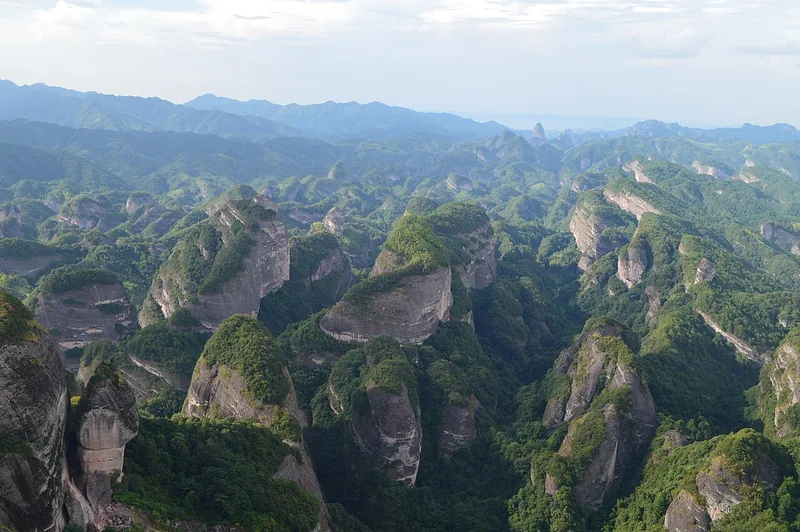
- Zhangjiajie — around 3.5 hours by road or roughly two hours via a high-speed rail connection through Xinhua South. Quartzite pinnacle landscape of Avatar fame; the natural pairing for a Hunan trip.
- Fenghuang Ancient Town — several hours by road. Riverside Qing-dynasty stilt-house town in the Miao/Tujia borderlands.
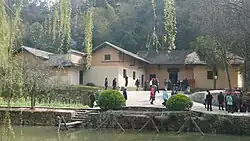
- Shaoshan — around two hours. Mao Zedong's birthplace; political-pilgrimage tourism plus a pleasant rural setting.
- Mount Heng (Hengshan) — around three hours. One of China's Five Great Mountains, with Taoist and Buddhist temples and a popular sunrise summit.
- Changsha — around 1 h 15 by high-speed rail. Hunan's capital: Yuelu Academy, the Hunan Provincial Museum, and the country's most fearsome night-market food scene.
- Anhua tea country — around 1.5 hours. The source of much of the dark tea you've been drinking; tea-factory visits and Tea Horse Road heritage villages.
Nearby in Hunan Sheng
More places to explore around Meishan Dragon Palace.
Guide content as of July 2026. Portions adapted from Wikivoyage, CC BY-SA 4.0.

Contact Us
Get in touch with us.
Get in touch
Contact Us
Tell us where you'd like to go and how you like to travel. A real Tripcuro planner — not a bot — will craft an itinerary around you.
- Personalised, hassle-free planning end-to-end
- Transparent pricing, no hidden costs
- 24/7 support for complete peace of mind