
Huaihua
Hunan Sheng, China
Why visit Huaihua?
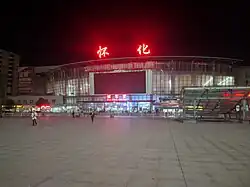
Huaihua (怀化) sits in the mountainous west of Hunan, a prefecture-level city long known as a gateway linking the Yangtze basin with the southwest highlands of Guizhou and Yunnan. The urban core, in Hecheng District, is a workmanlike railway town; the wider prefecture sprawls across numerous counties and several autonomous counties of the Dong (Kam), Miao (Hmong), Tujia and Yao peoples, who have lived in these hills far longer than the Han settlers who followed. For most travellers the city itself is a launch pad — the real reasons to come are the Dong drum-tower villages, a Ming-dynasty trading town, a walled ancient city, and a WWII-era airfield with a notable place in the history of the "Flying Tigers."
The climate is humid subtropical with four sharp seasons. Summers (June–August) are hot, sticky and very wet, with heavy monthly rainfall. Winters are short but genuinely cold and damp, with frequent grey drizzle. The best windows are late March to mid-May and late September to early November, when temperatures are comfortable and the terraced hills are at their greenest or turning. Avoid the Chinese national holidays (Spring Festival, early-October Golden Week) unless you want to share the region's old towns with domestic tour buses.
Layout is simple. Hecheng District is the modern city, strung along the north–south rail corridor with two stations — one on the older conventional line, one for high-speed rail. Outside the city, the prefecture divides broadly into a northern belt (Qu Yuan-associated river scenery and Han-dynasty history), a central belt (old trading towns), and southern Dong-Miao counties (drum towers, wind-and-rain bridges, ethnic festivals).
Planning Huaihua? Tell us your dates and we’ll tailor the trip.
Ask on WhatsAppHow do you get there?
By Plane
Huaihua Zhijiang Airport (HJJ) is in Zhijiang Dong Autonomous County, roughly an hour by road from central Huaihua. It's a small regional airport with domestic-only service; schedules thin out in low season. A shuttle bus timed to flights serves Hecheng District, and taxis are also available. The airport doubles as a historical site — it was a WWII airfield used by American and Chinese air forces, and there is a small exhibition connected to the 1945 Japanese surrender ceremony held nearby.
For more frequent connections, most travellers fly into Changsha Huanghua International (CSX) and take the high-speed train onward.
By Train
Huaihua sits on the Shanghai–Kunming rail corridor and is served by two stations — a high-speed station with services of roughly an hour and a half to Changsha South and a similar time to Kaili in Guizhou, and an older conventional station handling slower but cheaper trains with broader reach, including connections toward Zhangjiajie in northern Hunan.
Book tickets via 12306 — journey times on conventional services vary widely between trains, so check before committing. Foreign passports are accepted at automated gates at both stations; bring the physical passport, not a copy.
By Car / Road
Huaihua sits at the intersection of two major expressways. Approximate drive times: Changsha around 5–6 hours, Zhangjiajie around 3.5–4 hours, Guiyang around 5 hours, Kaili around 2.5 hours.
Long-distance buses run from Huaihua's main bus station to surrounding county seats and to Changsha, Zhangjiajie and Kaili, though the high-speed train has taken over most of the longer routes. Roads to the outlying Dong villages can be narrow and winding; allow more time than the map suggests in rain.
The urban area is compact enough that most visitors only need a mix of bus and taxi.
- City buses cover Hecheng District at a low flat fare; one route links the two railway stations.
- Taxis are metered, with a modest flag-fall and most cross-town rides inexpensive. Drivers rarely speak English; have your destination written in Chinese characters.
- Didi Chuxing (滴滴出行) works in Huaihua and is generally the easiest option for foreign visitors.
- Walking is fine in the city centre, but Huaihua is hilly and pavements vanish without warning on side streets.
Scams are uncommon but unmetered taxis at the stations occasionally quote inflated fixed fares to tourists — insist on the meter (打表, dǎ biǎo) or use Didi.
What are the things to do?
Ancient towns and walled cities
- Qianyang Ancient City, in Hongjiang City — one of the best-preserved Ming–Qing walled towns in China, with a history stretching back over two thousand years; the lanes are still residential rather than over-restored.
- Hongjiang Old Commercial Town — a Ming-dynasty river port that grew rich on tung oil, timber and river trade; the surviving courtyard houses and escort agencies make this the prefecture's most atmospheric set-piece for understanding late-imperial commerce.
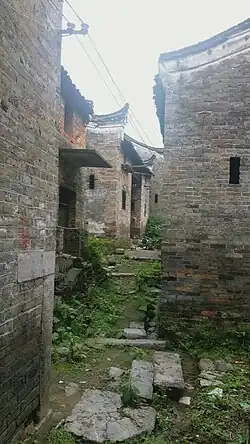
- Gaoyi Ancient Village, in Huitong County — a Ming-Qing settlement of more than a hundred surviving wooden courtyard homes, ringed by mountains on three sides and water on the fourth, often cited among China's best-preserved ancient villages.
Ethnic minority districts
- Tongdao Dong Autonomous County — the prefecture's Dong (Kam) heartland; drum towers, wind-and-rain bridges, choral singing. The Dong language is Tai-Kadai, distantly related to Thai.
- Jingzhou Miao and Dong Autonomous County — Hmong/Miao villages in the south of the prefecture, known for a summer bayberry harvest.
- Xinhuang and Zhijiang Dong autonomous counties — quieter Dong areas west of the city.
Mountains and parks
- Wanfo Mountain, in Tongdao — a Danxia landform scenic area with several linked zones and distinctive named rock features.
- Forest parks near Zhijiang and around Hecheng District offer walking trails and, in the case of Zhijiang, reconstructed Dong architecture.
- A city-centre park in Hecheng District is the urban green space, with a small museum introducing the Dong, Miao and Tujia cultures nearby.
WWII history
The Zhijiang airfield area covers the region's role in Allied air operations during the Second World War, including the 1945 Japanese surrender in this region — one of the more significant WWII historical sites in inland China.
Memorial sites in Huitong County are connected to a prominent 20th-century military figure born there.
Dong drum-tower villages — base in Tongdao and hire a local driver for a half-day loop of villages with their cypress-pillared drum towers (built without nails) and covered "wind-and-rain bridges." Sunset is the moment.
Time a visit to the Dong New Year, a lunar-calendar festival typically falling around the winter solstice. Expect reed-pipe playing, glutinous rice-cake pounding, and long-table banquets — easily the most distinctive festival in the prefecture.
Walk Qianyang's walls and lanes at dawn — before the day-tripper buses arrive, the Ming-dynasty grid feels genuinely lived-in.
Explore the river scenery in the northern counties — this stretch of the Yuan River is associated with the poet Qu Yuan's period of exile.
Hike Wanfo Mountain — half- and full-day routes through the scenic zones; a local homestay makes an early start for sunrise easier.
Watch for informal morning tai chi sessions in the city's parks.
Planning Huaihua? Want these on a customised itinerary?
Ask on WhatsAppWhere to eat?
Huaihua food sits at the crossroads of Xiang (Hunan) cuisine and the cooking of the Dong and Miao, with strong influences from neighbouring Guizhou — expect heat, sourness and smoke rather than the cleaner spice of Sichuan. Sour soup with fish, smoked pork, glutinous-rice dishes and pickled vegetables turn up everywhere; ducks, river fish and bamboo shoots are local staples.
Signature things to try include a local duck dish served three ways at one table, Dong-style sour fish soup with a fermented rice-water broth (the cultural through-line from here into Guizhou), winter-cured smoked pork stir-fried with garlic stems, and hand-pounded glutinous-rice cakes, especially fresh during Dong New Year.
City-centre restaurants and a large shopping-mall food court offer a practical mix of Hunan, Sichuan and noodle options for less adventurous eaters, while smaller neighbourhood restaurants near the stations serve the local specialities described above.
Vegetarians can manage but should be specific: ask for wǒ chī sù (我吃素, "I eat vegetarian") and watch for lard and chicken stock as default ingredients. Halal restaurants exist around the rail stations serving Hui-Muslim noodle and lamb dishes. Gluten-free is hard — soy sauce and wheat noodles are everywhere; rice noodle dishes are usually a safer bet.
Where to drink?
- Baijiu (白酒) — the default toast at any banquet; local brands run cheap and fierce. Dong villages also produce home-distilled rice spirit, often offered to guests.
- Osmanthus wine — sweet, fragrant, traditionally drunk at the Mid-Autumn Festival.
- Bayberry wine — the local summer harvest bottled into a sweet-tart fruit wine that travels well.
- Tea — Hunan is a tea-growing province; look for local green teas and dark, fermented brick tea.
- Coffee — international and domestic chains have arrived around the main commercial areas; independent cafés cluster nearby.
Water safety: tap water in Huaihua is not drinkable. Use bottled water or boil; hotels supply kettles and a daily bottle or two as standard. Ice in cheap restaurants is best avoided.
Planning Huaihua? We’ll book the stays and dining for you.
Ask on WhatsAppWhere to stay?
Huaihua has the usual range of Chinese accommodation, with budget chain hotels clustered near both railway stations, mid-range business hotels in the city centre, and a full-service upscale option or two toward the top of the local market.
Foreign passports are generally accepted at chain hotels; smaller family-run inns sometimes refuse foreigners due to police-registration paperwork, so book a registered hotel rather than walking in.
What should you buy?
Huaihua isn't a shopping destination on the scale of Changsha, but it's a good place to pick up things you won't find at home.
- Camellia oil — a county in the prefecture is known for cold-pressed camellia oil; supermarkets and local-products stores stock it.
- Bayberries — a June harvest from Jingzhou county is famous nationwide; fresh in season, otherwise as preserves, juice or wine.
- Dong embroidery and silver — indigo-dyed cotton, silver headdresses and pleated skirts in the southern county markets. Quality varies; village co-ops are more honest than airport gift shops.
- Pickled vegetables (泡菜) — jarred and ubiquitous in supermarkets.
- Medicinal herbs — worth a wander if traditional Chinese medicine interests you.
Bargaining is expected at village markets and tourist stalls (start at around half the asking price), but fixed-price at supermarkets, malls and most restaurants.
Where to go next?
- Zhangjiajie — a few hours by road, or around two hours by direct train. The sandstone-pillar national park that inspired Avatar's floating mountains; the obvious pairing with Huaihua.
- Kaili, Guizhou — around 1 h 15 by high-speed train. Capital of a Miao and Dong autonomous prefecture; the deeper, denser version of the ethnic-minority villages around Tongdao.
- Fenghuang Ancient Town — a few hours by road via Jishou. Hunan's most famous riverside old town; touristy but genuinely beautiful at dusk.
- Changsha — around 1.5 hours by high-speed train. Hunan's provincial capital — Mao Zedong sites, the Mawangdui tombs at Hunan Museum, and the country's best night-eating scene.
- Guiyang — around 2.5 hours by high-speed train. Gateway to the rest of Guizhou.
- Tongdao Dong villages — around 2.5 hours by road within the prefecture. If you only do one side trip from Huaihua, make it this; drum towers, wind-and-rain bridges, and homestays in living villages rather than restored museum sets.
Nearby in Hunan Sheng
More places to explore around Huaihua.
Guide content as of July 2026. Portions adapted from Wikivoyage, CC BY-SA 4.0.

Contact Us
Get in touch with us.
Get in touch
Contact Us
Tell us where you'd like to go and how you like to travel. A real Tripcuro planner — not a bot — will craft an itinerary around you.
- Personalised, hassle-free planning end-to-end
- Transparent pricing, no hidden costs
- 24/7 support for complete peace of mind