
Hengyang
Hunan Sheng, China
Why visit Hengyang?
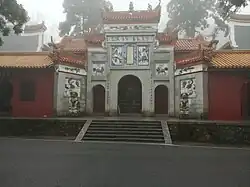
Hengyang (衡阳) is Hunan's second-largest city, sprawling along the middle reaches of the Xiang River about 200 km south of Changsha. Its nickname, the "Wild Goose City," comes from the migrating geese that historically broke their southward journey at Huiyan Peak — the southernmost of Mount Heng's peaks and the city's defining natural landmark. Hengyang has been inhabited for thousands of years and rose to prominence as a contested territory in the Warring States period; by the 3rd century it had given its name to a prefecture, and during the Second Sino-Japanese War it became a significant industrial centre. The 1944 Battle of Hengyang, a lengthy siege that flattened much of the old town, still shapes the cityscape — much of what you see is post-war reconstruction wrapped around a handful of surviving monuments.
Most travellers come for one reason: Mount Heng (Nanyue Hengshan), one of China's Five Sacred Mountains, which falls within Hengyang's prefecture in the northern Nanyue District. Beyond the mountain, the city itself rewards a day of slow exploration — an ancient academy, the Xiangjiang riverfront, and a park at the city-centre peak sit within the central districts. Hengyang has a humid subtropical monsoon climate: summers (July–August) are hot and sticky with afternoon thunderstorms; winters (December–February) are damp and chilly with little snow. The best windows are mid-March to late May and mid-September to early November, when temperatures are comfortable and the mountain is at its most photogenic.
The city is organised into several urban districts, with Mount Heng itself roughly 50 km north of downtown in Nanyue District, and two county-level cities plus several counties rounding out the prefecture.
Planning Hengyang? Tell us your dates and we’ll tailor the trip.
Ask on WhatsAppHow do you get there?
By Plane
Hengyang Nanyue Airport (HNY) sits some distance northeast of the city centre. Service is limited and mostly domestic; most international visitors fly into Changsha Huanghua (CSX) instead and continue by high-speed train. A taxi from HNY into central Hengyang takes around 40–50 minutes.
By Train
Hengyang is one of China's important rail junctions, sitting where the Beijing–Guangzhou conventional line crosses the Hunan–Guangxi line and the Wuhan–Guangzhou high-speed railway.
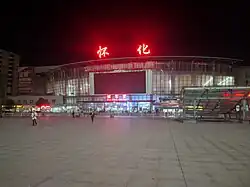
- Hengyang Railway Station (older, in the city centre) handles conventional trains, with long journey times to Guangzhou, Shanghai and Beijing.
- Hengyang East Railway Station (the high-speed station, in the eastern suburbs) offers services of roughly an hour and a half to Wuhan and to Guangzhou South on the Wuhan–Guangzhou HSR, and around 40 minutes to Changsha South. City bus routes connect it to downtown.
Book via the 12306 app or Trip.com; foreign passport entry is supported at both stations.
By Car / Road
Hengyang sits on major expressways, making it a natural road hub for southern Hunan — Changsha is around two and a half hours away, Guangzhou around six hours, and Guilin around four and a half hours.
Long-distance buses use several terminals around the city, oriented by direction (north/west, south/east, and toward the high-speed station).
Public buses are the backbone of city transport, covering all districts and suburbs at a low flat fare, with a modest surcharge for air-conditioned routes. Pay in cash or via Alipay/WeChat Pay.
Taxis are everywhere and metered; a cross-town ride rarely costs much. Foreigners occasionally get quoted flat rates; insist on the meter ("打表 dǎbiǎo") as you get in. Motorcycle taxis are how locals actually move around for short hops — cheaper and faster than taxis but with no safety net; ask a local what a trip should cost before flagging one down.
Didi Chuxing (滴滴出行) works in Hengyang and is the most foreigner-friendly option. Ferries cross the Xiang River at a couple of points and out to Dongzhou Island — a pleasant crossing rather than a tourist attraction in itself.
Walkability is decent around the central riverfront; elsewhere the city is too spread out for foot travel between sights.
Scams to watch: taxi drivers refusing the meter, motorcab quotes ballooning at the destination, and unlicensed "tour guides" outside the train stations offering Mount Heng packages — book through your hotel or the official Nanyue scenic area instead.
What are the things to do?
Sacred mountains and peaks
- Mount Heng (南岳衡山, Nanyue Hengshan) — one of China's Five Sacred Mountains and the reason most travellers come to Hengyang. The range stretches around 150 km from Hengyang to Changsha and clusters into dozens of named peaks, of which Zhurong Peak (around 1,300 m) is the highest and the traditional pilgrimage summit. Expect Buddhist and Taoist temples layered up the slopes — the Nanyue Grand Temple at the foot is the largest temple complex in southern China. From central Hengyang, take a bus from one of the long-distance terminals or a private taxi to Nanyue town at the mountain's foot.
- Huiyan Peak — the southernmost and "first" of Mount Heng's peaks, set right inside the city at a modest elevation. Climbed via a stepped path past a mid-hill pavilion to a hilltop temple, one of Hengyang's historic Buddhist sites. A pond at its foot features in classical Chinese poetry.
Academies and historical sites
- Shigu Academy (Stone Drum Academy) — founded by a Tang-dynasty scholar on Shigu Mountain at the confluence of the Xiang and Zheng rivers; elevated to an imperial academy under a Song emperor. The original buildings were destroyed in the 1944 Battle of Hengyang; the current complex is a faithful modern reconstruction.
- Nanyue Martyrs' Shrine — on Mount Heng's slopes, built in the 1940s to commemorate Chinese soldiers killed fighting Japan, one of the largest such memorials of its kind on the mainland.
Parks and waterfront
Xiangjiang riverfront promenade — a landscaped riverfront through the central districts. Best at dusk when locals turn out for square dancing, kite flying, and outdoor mahjong.
Several urban lakes and parks, popular for paddleboats and morning tai chi, are scattered through the city's districts.
Pilgrimage hike up Mount Heng — the classic Hengyang experience. The full route from the Nanyue temple complex to Zhurong Peak takes several hours up on foot; a shuttle bus and a cable car both cover part of the route for those who don't want to walk the whole way. Plan an overnight at a summit guesthouse to catch the Zhurong Peak sunrise — one of Hunan's signature experiences.
Watch the dawn from Zhurong Peak — aim to be in position well before sunrise. Even in summer it's cold at the summit; a rented coat from vendors is worthwhile.
Incense ceremony at Nanyue Grand Temple — the largest temple in southern China combines Taoist, Buddhist, and Confucian worship in a single compound; a major regional religious festival is held there in the lunar 8th month.
River cruise on the Xiang — short evening boat trips run informally from riverside docks.
Dongzhou Island — a ferry ride across from either bank for an afternoon of bicycle rentals, riverside cafés, and views back to the city skyline.
Day trip to Leiyang — a nearby county town traditionally associated with Cai Lun, the Han-dynasty figure credited with inventing paper.
Planning Hengyang? Want these on a customised itinerary?
Ask on WhatsAppWhere to eat?
Hengyang food sits firmly in the Xiang (Hunan) cuisine tradition — heavy use of chilli, fermented black beans, smoked meats, and pickled vegetables. It's less sweet than Cantonese and less numbing than Sichuan; the heat is dry, sharp, and direct. Signature local dishes include a duck served multiple ways at one table, fish-broth rice noodles eaten with fresh river fish and pickled greens as the city's most famous breakfast, and fish-head with tofu. The Mount Heng area is also known for vegetarian temple cuisine.
Riverside noodle stalls are the place for a cheap morning bowl; night-market stalls near the older temple areas serve skewers, stinky tofu, and crayfish in season. Mid-range Hunanese restaurants around the city serve classic Xiang-style banquet dishes; hotel restaurants are generally the city's best bet for a more polished meal. At the foot of Mount Heng, the Nanyue Grand Temple complex has a vegetarian dining hall serving set Buddhist meals — the best option in the prefecture for non-meat eaters.
Dietary notes: vegetarian options outside Nanyue are limited — "我不吃肉 (wǒ bù chī ròu)" is the phrase to learn, but expect lard and chicken stock in many "vegetable" dishes. Halal restaurants are scattered around the university belt. Gluten-free is essentially unrecognised; rice noodles and rice dishes are the safest defaults.
Where to drink?
Tea drinking is the local social ritual — Mount Heng's slopes produce two regional teas worth seeking out, sold loose by weight at temple-gate shops and city teahouses. Traditional teahouses along the riverfront let you sit with a pot of leaves for an afternoon.
On the alcoholic side, Hunanese love baijiu, served in small thimble glasses at any banquet. Mainstream Chinese lager brands are the standard cheap beer; a small craft-beer scene has emerged around the universities.
Water safety: tap water in Hengyang is not safe to drink unboiled. Hotels provide thermos flasks of boiled water; bottled water is everywhere. Ice in low-end establishments is best avoided.
Planning Hengyang? We’ll book the stays and dining for you.
Ask on WhatsAppWhere to stay?
Hengyang has the usual range of Chinese budget chains near the railway stations and mid-range business hotels in the central commercial belt. For a Mount Heng visit, the best experience is a small guesthouse in Nanyue town at the mountain's foot, ideally one that can arrange an early shuttle for sunrise; book well ahead for National Day and temple-fair dates.
What should you buy?
Hengyang's shopping is unpretentious and locally focused — don't expect Changsha-scale malls.
- The central commercial corridor around the city centre has mid-range department stores, electronics and clothing.
- A large modern mall in the newer district has international fast-fashion brands and a cinema.
- The Nanyue Temple market sells pilgrimage trinkets, incense, prayer beads and tea at the temple gates; bargain hard.
- Hengyang specialties to take home: local yellow tea grown on Mount Heng's slopes, and bamboo carvings from the surrounding counties. Local supermarkets carry vacuum-sealed gift versions of regional foods.
Bargaining norms: expected at markets, tourist sites, and motorcabs; not at department stores, supermarkets, or chain restaurants.
Where to go next?
- Mount Heng / Nanyue — around 50 km north; the unmissable day or overnight trip from Hengyang for the sacred mountain, temples, and Zhurong Peak sunrise.
- Changsha — around 200 km, roughly 40 minutes by high-speed rail; Hunan's provincial capital — Mao Zedong sites, Yuelu Academy, and the country's wildest street-food scene.
- Leiyang — a short trip south; traditionally associated with the paper-making figure Cai Lun.
- Yongzhou — southwest, around an hour by high-speed rail; a classical Chinese literature pilgrimage site associated with the writer Liu Zongyuan, and the Xiao-Xiang river landscape.
- Guilin — southwest, around two and a half hours by high-speed rail; karst landscapes and Li River cruises — Hengyang is a natural overnight stop between Changsha and Guilin.
- Shaoshan — north, via Changsha; Mao Zedong's birthplace and the country's most-visited "red tourism" site.
Nearby in Hunan Sheng
More places to explore around Hengyang.
Guide content as of July 2026. Portions adapted from Wikivoyage, CC BY-SA 4.0.

Contact Us
Get in touch with us.
Get in touch
Contact Us
Tell us where you'd like to go and how you like to travel. A real Tripcuro planner — not a bot — will craft an itinerary around you.
- Personalised, hassle-free planning end-to-end
- Transparent pricing, no hidden costs
- 24/7 support for complete peace of mind