
Qimei
Penghu, Taiwan
Why visit Qimei?
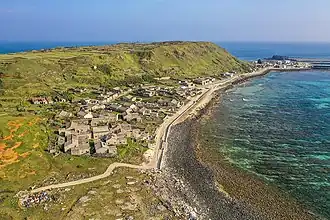
Qimei (七美), formerly known as Dacang (大倉) or Seven Beauties Island, is the southernmost inhabited island in the Penghu archipelago (Pescadores), Taiwan. The island's current name, meaning "Seven Beauties," derives from a Qing-dynasty legend in which seven young women took their own lives rather than submit to approaching pirates; the site of their sacrifice became a memorial pond that remains one of Taiwan's most iconic landmarks. Despite its small size (approximately 7 square kilometres), Qimei attracts a disproportionate share of Penghu visitors thanks to this legend and the island's dramatic basalt coastline.
Qimei has a small permanent population of a few thousand residents, most of whom are engaged in fishing and agriculture. The island retains a quiet, rural character with winding stone-walled lanes, traditional coral-stone houses, and terraced fields that feel far removed from the bustle of Makung on Penghu Main Island. The landscape is flat to gently rolling, making it well suited to exploration by scooter or bicycle.
The climate is typical of Penghu: a subtropical maritime environment with strong northeast monsoon winds from October through March, mild and dry winters, and warm humid summers. The best time to visit is from April to September, when the seas are calmer, rainfall is moderate, and ferry services run most reliably. Summer temperatures hover around 28–32 °C, while winter rarely drops below 15 °C but the wind chill can be significant.
Planning Qimei? Tell us your dates and we’ll tailor the trip.
Ask on WhatsAppHow do you get there?
By Plane
Qimei Airport (CMJ) is a small airstrip on the island with limited domestic flights operated by UNI Air from Makung (MZG). Flight time is approximately 15 minutes. Flights are infrequent and book out quickly during peak season; advance booking through the UNI Air website or a travel agency is recommended. Makung Airport (MZG) is the regional hub, with connections to Taipei Songshan (TSA), Taichung (RMQ), Tainan (TNN), Kaohsiung (KHH), Kinmen (KNH), and Taoyuan (TPE).
By Car / Road
Ferries connect Qimei's Daxi Wharf (大溪港) to Makung's Magong Harbor. The journey takes approximately 30–40 minutes by fast ferry or up to 90 minutes by slow ferry. Services are operated by the Penghu County Government ferry companies and private operators, with several departures daily during peak season (April–September) and reduced schedules in winter. Tickets can be purchased at Makung Harbor or through local tour operators. During typhoon season, ferry cancellations are common; always confirm schedules the day before travel.
Qimei is small and best explored by scooter or electric bicycle. Rental shops are available near Daxi Wharf; scooters cost approximately NT$300–400 per day. The main road circuit around the island is about 20 km and can be completed in a leisurely half-day. There is no public bus service on the island, though guided tour vans operate from the wharf during peak season. Walking is feasible for shorter distances but the distances between major sights can be tiring in summer heat.
What are the things to do?
Qimei Double-Heart Stone Weir (七美雙心石滬) — The island's most famous landmark and one of Taiwan's most photographed sites. This heart-shaped fish trap, built from stacked basalt stones, is visible from a clifftop viewing platform. The structure dates back centuries and is one of the best-preserved of Penghu's traditional stone weirs. Best viewed at low tide when the twin hearts are most clearly defined. Free admission; accessible via a short walk from the road.
Seven Beauties Tomb (七美人塚) — A walled memorial garden built around the pond where, according to legend, seven young women drowned themselves to avoid capture by pirates during the Ming dynasty. Seven fragrant trees grow from the site, said to have sprung from where the women were buried. The tomb is a protected historic site and the emotional heart of the island's identity. Free admission.
Little Taiwan (小台灣) — A natural rock formation on the southeastern coast shaped remarkably like the island of Taiwan. Best seen at low tide when the full outline is visible from the cliff above. A short detour from the coastal road.
Daxi Wharf Area (大溪港) — The island's main harbour and arrival point, with a small cluster of shops, eateries, and the tourist information kiosk.
Basalt Coastline Scenery — The entire southern and eastern coastline features dramatic columnar basalt formations, sea caves, and cliff faces eroded into fantastical shapes by wind and waves. Look for the turtle-shaped rock, the cliff-face formations near the lighthouse, and the various sea-arch formations.
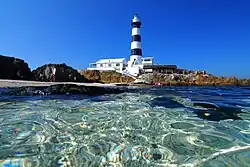
Qimei Lighthouse (七美嶼燈塔) — A white lighthouse on the southern tip of the island, built during the Japanese colonial period. The surrounding area offers sweeping ocean views and is a popular sunset-watching spot.
Traditional Stone Houses — Scattered across the island, these coral-and-basalt construction homes reflect traditional Penghu architecture, built to withstand the fierce monsoon winds.
Scooter Circuit of the Island — The 20-km loop road connecting all major sights makes for a perfect half-day ride. Allow 3–4 hours with stops for photos and exploration.
Stone Weir Viewing — Visit the Double-Heart Stone Weir at low tide for the best photographic conditions. Check tide tables before your visit; the visitor centre or your guesthouse host can advise.
Cliff Walking — Short trails along the southern and eastern coastlines provide access to basalt formations, sea caves, and viewpoints. The paths are informal but generally well-marked.
Stargazing — With minimal light pollution, Qimei offers exceptional night skies. The southern coast is particularly dark and provides clear views of the Milky Way in summer months.
Snorkelling and Swimming — The clear waters around Qimei support snorkelling at select beaches, though facilities are basic. Ask your guesthouse about safe swimming spots and current conditions.
Planning Qimei? Want these on a customised itinerary?
Ask on WhatsAppWhere to eat?
Qimei's food culture centres on fresh seafood and simple Penghu-style home cooking. The island's catch includes various reef fish, squid, and shellfish, often prepared simply to highlight freshness.
Wharf-side Seafood Stalls (大溪港海鮮) — Several small restaurants near Daxi Wharf serve fresh seafood meals. Signature dishes include grilled squid, steamed fish, and Penghu-style seaweed soup. Mains from NT$150–350.
Guesthouse Dining — Many guesthouses prepare meals for guests using local ingredients and family recipes. Pre-ordering dinner is strongly recommended, as on-island restaurants are few and may close early or run out of ingredients.
Local Snacks — Look for Penghu-style mochi (花生糬), peanut candy, and cactus ice cream (仙人掌冰淇淋) made from the prickly pear cactus that grows wild across the islands. Snack items typically NT$30–80.
Where to drink?
Qimei has no dedicated bars or cafés. Beverages are available at convenience stores and guesthouses. Local Kaoliang sorghum spirit and Penghu craft beer can be found at small shops near the wharf. Bubble tea and cold drinks are sold at convenience stores. Tap water is not safe to drink; bottled water is essential and available at shops. Bring any specialty beverages from Makung, as the selection on-island is minimal.
Planning Qimei? We’ll book the stays and dining for you.
Ask on WhatsAppWhere to stay?
Budget: Several family-run guesthouses (民宿) near Daxi Wharf and around the village offer basic but clean rooms from NT$800–1,500 per night, often including breakfast.
Mid-range: Newer guesthouses with private bathrooms, air conditioning, and sea views are available from NT$1,500–3,000 per night. Properties such as those along the southern coast offer better views and more privacy.
Upscale / Heritage: Qimei has no luxury hotels. For upscale accommodation, return to Makung where hotels and boutique properties offer more amenities. The closest heritage experience on Qimei is staying in a renovated traditional stone-house guesthouse.
What should you buy?
Shopping on Qimei is limited to small convenience stores near the wharf and a handful of shops selling local products. Souvenirs include Qimei-branded snacks, dried seafood products, and locally harvested peanuts and sesame. Traditional Penghu coral and basalt crafts are occasionally available. There are no ATMs on the island; bring sufficient cash (NTD) from Makung.
Where to go next?
Makung (Penghu Main Island) (30–40 min by fast ferry) — The capital of Penghu County, with the historic Makung Old Street, Tianhou Temple (one of Taiwan's oldest Mazu temples), and the Penghu Living Museum. The main island also offers the Penghu Great Bridge, seafood restaurants, and the base for island-hopping across the archipelago.
Wang'an Island (30–45 min by ferry from Makung) — Home to the basalt column formations of Tongpan Islet, traditional fishing villages, and excellent diving spots.
South Penghu Marine National Park (accessed by boat from Makung) — Pristine uninhabited islands with crystal-clear waters, world-class snorkelling, and protected coral reefs. Permits required.
Jibei Island (20 min by ferry from Makung) — Known for its long sandbar beach, water sports, and laid-back atmosphere. A popular day-trip destination.
Kaohsiung (fly from Makung, approx. 30 min) — Taiwan's second-largest city, offering harbour attractions, night markets, and connections to southern Taiwan destinations.
Nearby in Penghu
More places to explore around Qimei.

Guide content as of June 2026.

Contact Us
Get in touch with us.
Get in touch
Contact Us
Tell us where you'd like to go and how you like to travel. A real Tripcuro planner — not a bot — will craft an itinerary around you.
- Personalised, hassle-free planning end-to-end
- Transparent pricing, no hidden costs
- 24/7 support for complete peace of mind