
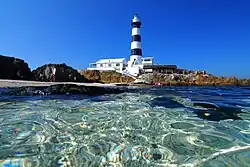
Baisha
Penghu, Taiwan
Why visit Baisha?
Baisha (白沙, Báishā; Pe̍h-soa in Minnan) is a rural township occupying the northern cluster of the Penghu archipelago in Taiwan. Its name means "white sand", a fitting label for a low-lying group of islands ringed by pale beaches and shallow turquoise water. Unlike the bustle of nearby Magong, Baisha is quiet, agricultural, and maritime — a landscape of fishing harbours, salt-sprayed temples, stone-walled fields, and the famous "stone tidal weirs" used for centuries to trap fish on the falling tide.
Baisha is best understood as a gateway as much as a destination. Its central island is linked to Magong by causeway and to Xiyu by the Penghu Great Bridge, while its northern wharves are the springboard for boat trips to outlying islands such as Jibei, with its long sandbar beach, and uninhabited islets like Gupo and Mudou. Several visitor centres are scattered through the township — the North Sea Visitor Center, the Jibei Visitor Center, and the Qitou Visitor Center — and staff there can advise on island-hopping routes and ferry schedules.
The climate is subtropical and strongly seasonal. The rewarding months are April–June and September–October, warm and relatively settled. July and August are hot and busy. Winter (roughly November–March) is dominated by the fierce northeast monsoon, which whips up the strait, disrupts inter-island ferries, and makes beach time uninviting — though it is the cheapest and quietest time to visit.
Planning Baisha? Tell us your dates and we’ll tailor the trip.
Ask on WhatsAppHow do you get there?
By Plane
The nearest airport is Penghu Airport (馬公機場 / MZG) near Magong, which has domestic flights from Taipei–Songshan, Kaohsiung, Taichung, Tainan, and Chiayi. From the airport, Baisha is reached overland via Magong by taxi or rented scooter across the connecting causeway.
By Car / Road
Baisha's central island is joined to Magong by causeway and to Xiyu by the 2,494 m Penghu Great Bridge (澎湖跨海大橋), so it is easily reached by car or scooter from elsewhere in Penghu. Most visitors arrive in Penghu by air or sea at Magong and then drive north into Baisha; the run takes well under an hour.
Baisha's main island and its causeway links to Magong and Xiyu are best explored by rented scooter or car — distances between villages and harbours are too long for comfortable walking, and public transport is sparse. Movement between Baisha's outlying islands is by ferry: Houliao Wharf serves Jibei; Jibei Wharf links to Chikan and Houliao; and Qitou, Niaoyu, and Yuanbei Wharves connect the small eastern islands. Ferry schedules are tide- and weather-dependent — confirm the last sailing before setting out, especially in windy months.
What are the things to do?
Bridges and lighthouses
- Penghu Great Bridge (澎湖跨海大橋) — The landmark 2,494 m bridge linking Baisha and Xiyu, built because the channel current between the islands was too dangerous to sail. A classic Penghu photo stop.
- Mudouyu Lighthouse (目斗嶼燈塔) — At 39.9 m, the tallest lighthouse in Taiwan, standing on the islet of Mudou; it even has a rooftop rainwater-collection system.
Museums
- Penghu Aquarium (澎湖水族館) — An oceanarium displaying over 200 fish species from the Taiwan Strait and South China Sea. Open 09:00–17:00.
- Jibei Cultural Museum of Stone Tidal Weirs (吉貝石滬文化館) — On Jibei island, devoted to shihu (石滬), the traditional method of trapping fish using tide-driven stone weirs. Open 09:00–16:30.
Temples
- Houliao Weiling Temple (後寮威靈宮) — Dedicated to the Taoist god of medicine Baosheng Dadi; built in 1602 and said to be the oldest temple to this deity.
- Gangzi Chungan Temple (港子眾安寺) — A Buddhist temple crowned by a large golden Buddha on the roof, with statuary in the surrounding gardens.
- Wadong Wusheng Temple (瓦硐武聖廟) — A Taoist temple built in 1745.
- Wadong Nantian Temple (瓦硐南天廟) — A Taoist temple completed in 1935.
- Tongliang Great Banyan (通樑古榕) — An early-19th-century temple whose grounds host a sprawling old banyan tree, a much-loved local sight beside Tongliang Baoan Temple.
Nature and islands
Jibei Island (吉貝嶼) — Famed for a long curving sandbar beach and water sports; reached from Houliao Wharf.
Gupo Island (姑婆嶼) — An uninhabited island where locals harvest edible seaweed.
Mudou Island (目斗嶼) — A small islet named for its resemblance to an eye or a carpenter's ink-marker; site of the tall Mudouyu Lighthouse.
Visit Jibei's sandbar beach — Ferry across to Jibei for swimming, snorkelling, and motorised water sports off one of Penghu's most celebrated stretches of white sand.
See the stone tidal weirs — Tour the heart-shaped and looping shihu weirs around Jibei, a living example of centuries-old fishing technology.
Drive the cross-sea bridge — Cross the Penghu Great Bridge between Baisha and Xiyu for sweeping channel views.
Dacang Mazu Cultural Park (大倉村的媽祖文化園區) — A cultural park on Dacang island themed around the sea goddess Mazu.
Harbour-hop for seafood — Time a visit to one of the township's fishing harbours to watch the catch land and buy it straight from the boats.
Planning Baisha? Want these on a customised itinerary?
Ask on WhatsAppWhere to eat?
Eating in Baisha means seafood, and the best of it is found near the working fishing harbours where boats land their catch — Chikan, Chitou (Qitou), Gangzi, Houliao, Jiangmei, and Tongliang Fishing Harbours all see fresh fish, squid, and shellfish come ashore. Small village eateries near these harbours and around Baisha's temples serve simple, fresh fish dishes, seafood noodles, and Penghu vermicelli.
Buddhist-style vegetarian (素食) food can usually be found near larger temples, but dedicated vegetarian options are limited in this rural area.
Where to drink?
Penghu's signature refreshment is cactus-fruit (xian-ren-zhang) ice cream and juice, sold at shops across the islands; herbal teas and fresh fruit drinks are also common. Baisha is rural and there is little in the way of a bar scene — for nightlife, head to Magong. Do not drink tap water straight; use bottled or boiled water.
Planning Baisha? We’ll book the stays and dining for you.
Ask on WhatsAppWhere to stay?
Baisha's accommodation is mostly small family-run guesthouses (民宿), concentrated in its villages and on Jibei island; book ahead in the summer high season, when both rooms and ferries fill up.
What should you buy?
Baisha's specialities are products of the sea and the sun: dried fish, dried squid, and seaweed harvested from islands like Gupo. Penghu's famous sun-dried vermicelli is also widely sold. The visitor centres and harbour-side shops are the practical places to pick up local edible souvenirs. Prices for packaged goods are generally fixed; buying fresh seafood directly at a harbour is more of a negotiation, and going early secures the best of the catch.
Where to go next?
- Magong — Under 30 min by road across the causeway; Penghu's only city, with historic temples and most of the islands' hotels and restaurants.
- Xiyu — Roughly 20–30 min by road across the Penghu Great Bridge; historic forts, basalt columns, and Taiwan's oldest lighthouse.
- Jibei Island — A short ferry from Houliao or Chikan; a sandbar beach and stone tidal weirs.
- Wang'an — Ferry from Magong's Nanhai Harbour; a tranquil island of green sea turtles and old stone houses.
- Qimei — A southern Penghu island, ferry from Magong; known for the Twin Hearts Stone Weir.
Nearby in Penghu
More places to explore around Baisha.

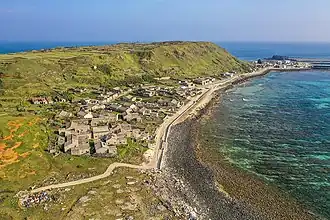
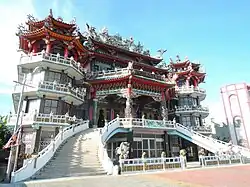
Guide content as of May 2026. Portions adapted from Wikivoyage, CC BY-SA 4.0.

Contact Us
Get in touch with us.
Get in touch
Contact Us
Tell us where you'd like to go and how you like to travel. A real Tripcuro planner — not a bot — will craft an itinerary around you.
- Personalised, hassle-free planning end-to-end
- Transparent pricing, no hidden costs
- 24/7 support for complete peace of mind