
Nangan
Lienchiang, Taiwan
Why visit Nangan?
Nangan (南竿) is the principal and governing island of the Matsu Islands, the largest of the group and the administrative heart of Taiwan's Lienchiang County. It is the gateway to Matsu — most flights and the ferry from Keelung arrive here, and onward boats to the other Matsu islands radiate out from Nangan — and it concentrates the archipelago's main institutions, services and sights. For all its administrative importance, it remains a small, hilly, rural island of stone villages, military relics and steep coasts looking out toward mainland China, just a few miles off.
Nangan's character is forged from its geography and its history. As the main island it carries a heavy military presence, with strongpoints, tunnels and memorials on every corner — a legacy of decades as a Cold War front line. Layered over this are Fujian-style granite villages, Mazu temples and the headquarters of the Matsu Distillery, maker of the kaoliang liquor for which the islands are famous. The island's villages — Jieshou (Shanlong), where the airport sits, plus Nioujiao (Fuxing), Fuao, Matsu and Renai — are all strung along or off the island's Central Boulevard.
Matsu's climate is humid subtropical but changeable. The best months are roughly April to June and the autumn; spring brings the bioluminescent "blue tears" but also thick sea fog that can delay or cancel flights, so allow buffer time. Summer is warm with a typhoon risk, and winter is cool and windy.
Planning Nangan? Tell us your dates and we’ll tailor the trip.
Ask on WhatsAppHow do you get there?
By Plane
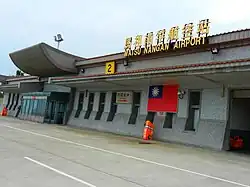
Matsu Nangan Airport (馬祖南竿航空站) sits at Jieshou Village in the centre of the island; Uni Air and Mandarin Airlines connect Nangan with Taipei (Songshan) and Taichung on fairly regular flights. The airport is small and central — most of the island's villages are within roughly 10–20 minutes by scooter or taxi. Flights are weather-dependent and prone to fog delays in spring.
The most practical way to get around Nangan is by rented scooter — the visitor information desks at the airport and at Fu'ao Harbour can help arrange one, and it is highly recommended for touring the island's spread-out villages and sights. Roads are narrow and twisting, and some look more like footpaths but are in fact roads. Taxis are available but limited; there are few public buses. The villages themselves are walkable once you arrive. Pick up the English "Backpackers Guide" booklet from the visitor centre — it has detailed itineraries and a genuinely useful map. There are no notable scams; avoid photographing military installations.
What are the things to do?
Culture and history
- Nangan Beihai Tunnel (北海坑道) — A 700 m granite-cut tunnel carved in the late 1960s for military craft, now open to the public; generally open around 08:30–17:00.
- Iron Fort / Dahan Stronghold (大漢據點) — A former ROC military fort, completed in 1975, redeveloped as a visitor attraction.
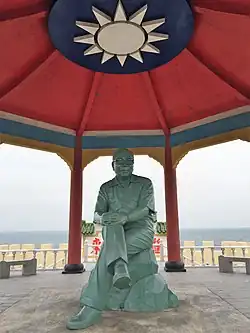
- Chiang Ching-kuo Memorial Hall (經國先生紀念堂) — A memorial complex honouring the late ROC president Chiang Ching-kuo.
- Daao Old Street (大澳老街) — An old quarter of stone buildings.
- Statue of Mazu (媽祖巨神像) — A large statue of the sea-goddess Mazu facing the sea, a landmark of the island.
- Tunnel 88 (八八坑道) — A historic tunnel, once used for pirate defence and later by the military, now used by the Matsu Distillery to age liquor; opening hours are limited and change frequently, the floor is sticky and the air thick with the scent of kaoliang. Free.
Museums
- Matsu Folk Culture Museum (馬祖民俗文物館) — Displays on the islands' history and people; open Tue–Sun roughly 09:00–17:00.
- Blue Tear Museum (藍眼淚生態館) — A small museum on the bioluminescence and local marine life; open roughly 10:00–21:00, with limited English material.
Temples
- Tianhou Temple (天后宮) — A Mazu temple.
- Niujiao Wulinggong Temple (牛角五靈公廟) — A village temple at Nioujiao.
Nioujiao (Fuxing) Village rewards an unhurried visit — a beautiful granite village built into a mountainside above the sea, with a harbour temple and a tranquil maze of stone lanes to get lost in. The Matsu Distillery is a near-obligatory stop: visitors watch a short film and are then liberally offered shots of the islands' powerful kaoliang liquor — a memorable, if hazy, experience, so take care. In spring and early summer, watching for the bioluminescent "blue tears" along the coast at night is a highlight. Touring the Beihai Tunnel, the strongpoints and the memorials gives a strong sense of the island's front-line past, and the coastal viewpoints look out toward the Chinese mainland.
Planning Nangan? Want these on a customised itinerary?
Ask on WhatsAppWhere to eat?
Nangan's food is Fujian island cooking, built on seafood and a few distinctive local products — expect fish dishes, fish noodles and fish dumplings, red yeast rice (紅糟) marinades, and the sesame flatbread jiguang bing.
- Jieshou Shizi Market (介壽獅子市場) — A traditional market selling fresh produce and cooked food; good for cheap, authentic eats, budget tier (roughly NT$30–120).
- Leemo's Restaurant (依嬤的店) — A well-regarded local restaurant in Nioujiao village, set in a traditional stone building; mid-range, roughly NT$250–500 per person.
- Furen Cafe (夫人咖啡) — A small seaside café housed in an old stone house, good for a light meal or coffee.
Vegetarian choice is limited on this seafood-focused island, so ask in advance; halal and strictly gluten-free dining cannot be relied upon.
Where to drink?
Nangan's defining drink is kaoliang liquor, made at the Matsu Distillery (馬祖酒廠), which has an exhibition room displaying kaoliang and historic medicinal liquors as well as the tools of the trade; tasting the spirit here is part of the experience. The islands also produce strong rice wines. Seaside cafés such as Furen Cafe serve coffee and tea, and the usual Taiwanese soft drinks are available. Tap water in Matsu is treated but is generally boiled or filtered before drinking; bottled water is widely available.
Planning Nangan? We’ll book the stays and dining for you.
Ask on WhatsAppWhere to stay?
- Budget: Family-run minsu (guesthouses) in the villages, some in traditional stone houses, offer basic rooms from roughly NT$800–1,500.
- Mid-range: Comfortable guesthouses and small hotels around Jieshou and the main villages offer rooms with breakfast for roughly NT$1,800–3,000.
- Upscale / heritage: The most characterful stay is a restored Fujian stone house homestay; higher-end options on Nangan are limited, so book the better guesthouses early.
What should you buy?
Nangan's signature buy is the islands' famous kaoliang sorghum liquor and rice wine, sold at the Matsu Distillery and shops around the villages. Other good buys include the sesame flatbread known as jiguang bing, dried seafood and local snacks. Jieshou Shizi Market (介壽獅子市場) is a traditional market for fresh produce and cooked food. Prices are generally fixed; bargaining is not customary.
Where to go next?
- Beigan — A short ferry from Nangan; famous for the Qinbi stone village and its own Beihai Tunnel.
- Dongyin — Reached by ferry from Nangan; the rugged northernmost Matsu island, with the Dongyong Lighthouse.
- Juguang (Dongju and Xiju) — Ferry from Nangan; quiet southern islands with old stone villages and lighthouses.
- Nioujiao (Fuxing) Village — On Nangan itself; a beautiful granite village built into the hillside.
- Keelung — On the Taiwan main island, linked to Nangan by the long ferry route; a port city and gateway to northern Taiwan.
- Matsu Distillery — On Nangan; tour the home of the islands' famous kaoliang liquor.
Nearby in Lienchiang
More places to explore around Nangan.
Guide content as of May 2026. Portions adapted from Wikivoyage, CC BY-SA 4.0.

Contact Us
Get in touch with us.
Get in touch
Contact Us
Tell us where you'd like to go and how you like to travel. A real Tripcuro planner — not a bot — will craft an itinerary around you.
- Personalised, hassle-free planning end-to-end
- Transparent pricing, no hidden costs
- 24/7 support for complete peace of mind