
Dongyin
Lienchiang, Taiwan
Why visit Dongyin?
Dongyin (東引) is the northernmost inhabited island in the Matsu archipelago, part of Lienchiang County, Taiwan. Situated at the very edge of Taiwan-controlled territory, Dongyin has been a frontline military outpost since the ROC government relocated to Taiwan in 1949. At its peak, soldiers on the island outnumbered civilians several times over, and missile batteries and underground fortifications dot the dramatic coastline. Today, as military tensions have eased, Dongyin has opened to civilian visitors and offers a compelling combination of rugged granite geology, wartime heritage, and one of Taiwan's most remote and atmospheric island experiences.
The island comprises two main landmasses — Dongyin (East Island) and Xiyin (West Island) — connected by the Zhongzhu Bridge. The terrain is hilly and rocky, with steep sea cliffs, narrow gorges, and wind-swept plateaus. The population is small, numbering only a few hundred permanent residents. Dongyin's appeal lies in its isolation, its military history etched into the landscape, and its spectacular coastal rock formations sculpted by centuries of wave erosion.
Dongyin has a maritime climate with cool, windy winters and mild summers. Fog is common from late spring through early summer (April–June), which can delay ferry and helicopter services. The best months to visit are from July to October, when the weather is most stable and the sea is calmest. Typhoon season (July–September) may occasionally disrupt transport, so check forecasts before travelling.
Planning Dongyin? Tell us your dates and we’ll tailor the trip.
Ask on WhatsAppHow do you get there?
By Plane
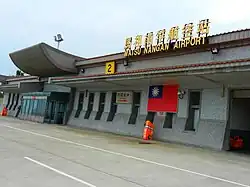
Dongyin Heliport (東引直升機場) provides helicopter connections to other Matsu islands, operated by Emerald Pacific Airlines. These services are primarily used for emergency medical transport rather than regular civilian travel. There is no fixed-wing airport on Dongyin. The nearest airport with scheduled flights is Nangan Airport (LZN) on Nangan Island, about 45 minutes away by ferry.
By Car / Road
Regular ferries run between Dongyin's Zhongzhu Harbor (中柱港) and Nangan (Matsu). The ferry journey takes approximately 45 minutes to 1.5 hours depending on sea conditions and vessel type. Services are operated by the Matsu ferry companies and typically run once or twice daily, though schedules vary seasonally and are frequently reduced or cancelled in poor weather. Booking in advance is recommended during peak season and public holidays; tickets can be purchased at Nangan's Fuao Harbor or through local travel agencies.
Dongyin has no public bus system. The primary means of getting around are taxis, scooters, and walking. The island is small enough to explore on foot for reasonably fit visitors, as the terrain, while hilly, covers a compact area. Scooter rental is available from guesthouses; fuel up at the Dongyin Petrol Station (東引加油站) on Nan'ao Road (open 08:00–17:30), as it is the only petrol station on the island. Taxis can be arranged through your accommodation or by calling local drivers directly.
What are the things to do?
Military Heritage Sites
- Andong Tunnel (安東坑道) — A 640-metre underground military tunnel constructed at a 30-degree angle with 464 steps. The tunnel features dormitories, ammunition depots, and a viewing platform. Open 08:00–17:00.
- Sanshan Strongpoint (三山據點) — Gun emplacements at the tip of a peninsula, open for visitors to photograph and explore. The site offers dramatic ocean views.
- Loyalty Arch (忠誠門) — A stone archway topped with a bronze soldier statue that marks the entrance to the main village. A striking military monument.
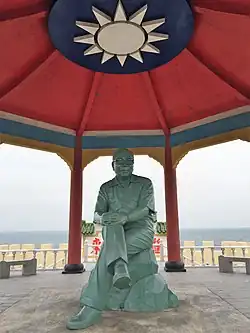
- Ganen Pavilion (中柱感恩亭) — A gazebo on an islet at the centre of the Zhongzhu Bridge, sheltering a statue of former President Chiang Ching-kuo.
- Anti-Communist National Salvation Army History Museum (陸軍東引指揮部隊史館) — A military museum documenting the island's Cold War history and garrison life.
- Xiyin Triumph Monument (西引人定勝天) — A large monument painted on the hillside celebrating the struggle against nature during island construction.
Historic Landmarks
- Dongyong Lighthouse (東湧燈塔) — Built by British engineers and completed in 1902 during the late Qing Dynasty to guide ships through the treacherous waters. The white lighthouse sits atop a cliff and remains in operation.
- The Northernmost Frontier (國之北疆) — The northernmost point of ROC-controlled territory, developed into a scenic viewpoint in 2006 with an inscribed stone monument. Open 08:00–17:00. From the observatory, visitors can see Luohanping (羅漢坪), also known as Three-Colored Stone (三色石).
Natural Landscapes
- Yixiantian Cliff (一線天) — A narrow pass between two rock faces formed by erosion, with the Chinese name meaning "a thread of sky." Open 08:00–17:00.
- Suicide Cliff (烈女義坑) — A dramatic sea cliff named after a Qing-dynasty legend of a fisherman's wife who leapt to her death rather than submit to kidnappers.
- Dragon Sea Cave (海現龍闕) — A natural stone arch and cave system carved by the sea.
- Crouching Crocodile (靜伏鱷魚) — A long peninsula that resembles a semi-submerged crocodile when viewed from the land.
- Houao (后澳) — An area of unusually shaped rock formations sculpted by millennia of wave erosion.
- Qingshui'ao (清水澳) — A flat rocky area worn smooth by the sea, popular with locals for quiet contemplation.
Temples
- White Horse King Temple (白馬尊王廟) — A local temple dedicated to a maritime deity, reflecting the island's fishing heritage.
- Taishan Temple (泰山府) — A temple serving the spiritual needs of the island's small community.
Hiking — The Mount Taishan Scenic Trail (泰山府景觀步道) offers clifftop walks with panoramic sea views. Additional informal trails connect the military sites and natural attractions along the coastline.
Military Heritage Exploration — The island's network of tunnels, bunkers, and gun emplacements can be explored over a full day, providing a unique window into Taiwan's Cold War frontline.
Lighthouse Walk — Hike to Dongyong Lighthouse at sunset for spectacular views across the strait toward mainland China.
Sports — The Dongyong Sports Park (東湧運動公園) features a running track and grassed area for outdoor recreation.
Dongyin Visitor Center (東引遊客中心) — Open 08:00–17:00, tel +886 83677266. A useful first stop for orientation, maps, and information about island attractions.
Planning Dongyin? Want these on a customised itinerary?
Ask on WhatsAppWhere to eat?
Dongyin's dining scene is modest but focused on fresh local seafood caught in the surrounding waters. Meals are typically simple, hearty, and Fujianese-influenced.
Zhen Shan Mei Restaurant (珍膳美餐廳) — Tel +886 83677289, open 11:00–20:00. Specialises in local seafood dishes prepared in traditional Fujianese style.
Qingye Restaurant (青葉餐廳) — Tel +886 83677307, open 11:00–19:00. A well-established Fujianese restaurant known for reliable home-style cooking.
Guesthouse Meals — Many B&Bs prepare meals for guests using local ingredients. Arranging dinner with your accommodation in advance is recommended, as restaurant options are few and may close early.
Where to drink?
The Dongyin Matsu Distillery (馬祖酒廠東引分廠), tel +886 83676006, open 08:00–17:30, is the island's signature attraction for beverages. This working distillery produces Kaoliang sorghum spirit (Moutai-style baijiu). Visitors can tour the information centre outlining the distillery's history and purchase bottles at the on-site shop. The island has no dedicated bars or cafés; social drinking typically happens at guesthouses or at meals. Water quality on the island is adequate but most visitors prefer bottled water.
Planning Dongyin? We’ll book the stays and dining for you.
Ask on WhatsAppWhere to stay?
Budget: Dong Yin Hai Jiao B&B (東引海角民宿), tel +886 928418308, and Ease Inn (安逸旅店), tel +886 83677010, offer simple rooms with breakfast included. Expect rates around NT$1,000–1,800 per night.
Mid-range: Royal Hotel Dongyin (東湧行旅旅店) is a modern hotel set on the hill near the harbour, offering more comfortable rooms with sea views. Rates approximately NT$2,000–3,500 per night.
Upscale / Heritage: Accommodation on Dongyin is uniformly basic to mid-range. There are no luxury properties. For upscale heritage stays, consider Nangan in the Matsu archipelago, where renovated stone houses offer more polished boutique experiences.
What should you buy?
Shopping options on Dongyin are extremely limited. The island's main specialty product is Kaoliang sorghum spirit (高粱酒) from the local branch of the Matsu distillery. Small convenience stores stock basic necessities. Visitors should bring any specific supplies, medications, or personal items from the mainland, as the range available on-island is minimal.
Where to go next?
Nangan Island (45 min–1.5 hr by ferry) — The administrative capital of Matsu, with a well-preserved traditional village at Qinbi, the Matsu Folk Culture Museum, and the region's best range of dining and accommodation.
Beigan Island (1–2 hr by ferry from Nangan, or connected via Dongyin ferries) — Known for its granite stone villages, the War God Museum, and beautiful beaches including the famous Qinbi village.
Taipei (fly from Nangan Airport, approx. 1 hr) — Taiwan's capital, offering world-class dining, shopping, nightlife, and cultural institutions.
Xiamen, China (ferry from Matsu, subject to cross-strait travel regulations) — The nearest major Chinese city, visible on clear days from the Matsu islands.
Nearby in Lienchiang
More places to explore around Dongyin.
Guide content as of June 2026. Portions adapted from Wikivoyage, CC BY-SA 4.0.

Contact Us
Get in touch with us.
Get in touch
Contact Us
Tell us where you'd like to go and how you like to travel. A real Tripcuro planner — not a bot — will craft an itinerary around you.
- Personalised, hassle-free planning end-to-end
- Transparent pricing, no hidden costs
- 24/7 support for complete peace of mind