
Lienchiang
Taiwan · County · 6 destinations with guides
Photography coming soonWhy visit?
Lienchiang County (連江縣) is the smallest and most remote county administered by Taiwan, consisting of the Matsu Islands — a scattered archipelago of small, hilly islands lying off the coast of mainland China's Fujian province, far closer to the mainland than to the main island of Taiwan. Although governed by Taiwan's Republic of China government, Matsu shares its geography, language and much of its culture with coastal Fujian, and the experience of visiting feels distinct from anywhere on the main island.
Matsu's character is shaped by two forces: the sea and the military. The islands are made of dramatic granite, their coasts carved into cliffs, arches and caves, and their villages built of stone houses clinging to steep hillsides above small harbours. For decades Matsu was a front-line garrison in the China-Taiwan standoff, and that legacy is everywhere — vast tunnels carved for naval craft, hilltop strongpoints, memorials and former military buildings now reborn as museums and attractions. The county is divided into townships across its main islands, with Nangan serving as the administrative and transport hub.
For travellers, Matsu offers a compelling combination of military history, granite-village scenery, Fujian-style temples and culture, and one of Taiwan's most remarkable natural spectacles — the bioluminescent "blue tears" that light up the sea on certain nights. Matsu remains a sensitive military area, so visitors should avoid photographing military installations and steer clear of political discussion. The islands reward several days of unhurried island-hopping.
When is the best time to visit?
Matsu has a humid subtropical climate, but its weather is notably more changeable than Taiwan proper because of its exposed northern position. The most pleasant months are roughly April to June and the autumn — spring brings the famous blue tears (藍眼淚), a glowing bioluminescence in the sea typically seen from around April through August, with peak displays in late spring and early summer. Spring is also the season of thick sea fog, which can shroud the islands and cause flight delays or cancellations, so build buffer time into any itinerary with tight connections.
Summer is warm and is the tail of the blue-tear season but carries a typhoon risk; winter is cool, windy and can be bleak. Whatever the season, allow flexibility around transport, as both flights and ferries are weather-dependent.
Tell us your dates and we'll shape a Lienchiang route around them.
WhatsAppHow do you get around?
Matsu is an archipelago, so moving around means island-hopping. Nangan is the hub: most flights and the Keelung ferry arrive here, and inter-island ferries radiate out to Beigan, Dongyin and Juguang (Dongju and Xiju). Ferry crossings between the main islands are short, but schedules are limited and weather-dependent, so plan island transfers carefully and keep a buffer day.
On each island, the practical way to get around is by rented scooter — visitor information centres at the airports and harbours can help arrange one, and scooters can be picked up at Nangan's airport or Fu'ao Harbour. Roads are narrow and sometimes look more like footpaths, but they are roads; flat islands such as Dongyin can also be explored on foot. Taxis exist but are limited, and there are few or no public buses on the smaller islands. A small helicopter service connects some islands, used mainly for emergencies and medical transport.
Where should you go?
- Nangan — The main and governing island; transport hub, home to the largest Beihai Tunnel, the giant Mazu statue and the Matsu Distillery.
- Beigan — Famous for the beautifully preserved stone village of Qinbi, its own Beihai Tunnel and the deer-inhabited Daqiu islet.
- Dongyin — The northernmost, rugged and dramatic, with the British-built Dongyong Lighthouse, the Andong Tunnel and the "Northernmost Frontier" of ROC territory.
- Juguang — The southern Dongju and Xiju islands, quiet and scenic, with old stone villages and lighthouses.
- Qinbi Village — On Beigan; a hillside cluster of granite houses overlooking Turtle Island, the showpiece of Matsu's traditional architecture.
Want the scenic legs and stays booked for you? Just ask.
WhatsAppWhat should you eat?
Matsu's food is squarely in the Fujian tradition, built on the sea and on a few distinctive island products. Seafood dominates — fish, shellfish and the local catch appear in soups, stir-fries and simple grilled dishes. The islands' best-known specialties include laobing and jiguang bing (繼光餅, a sesame-topped flatbread originally a military ration, often eaten split and filled), yellow croaker dishes, fish noodles and fish dumplings made with fish-paste wrappers, and the use of red yeast rice (紅糟) — a Fujian staple — in marinades and stews.
The county's most famous product is its kaoliang (gaoliang) sorghum liquor, distilled at the Matsu Distillery; Matsu also produces strong rice wines. Markets such as Nangan's Jieshou market and small village restaurants are the places to eat. Vegetarians will find choice limited on these seafood-focused islands and should ask in advance; halal and strictly gluten-free dining cannot be relied upon.
What is the culture like?
Matsu's culture is Fujianese, and the local language is Fuzhou-dialect Min (with Puxian Min on the remote Wuqiu islands), distinct from the Minnan spoken across most of Taiwan. The islands' stone villages, with their granite houses and tiled roofs built to withstand sea winds, are the most visible expression of this heritage, and temples to the sea-goddess Mazu — for whom the islands are named — are central to community life.
Folk religion shapes the festival calendar, with temple celebrations and processions honouring Mazu and local deities; the lantern-lit Bai Ma Zun Wang and other deity festivals around the Lunar New Year period are notable. Decades of military rule have also left a cultural mark, commemorated in the islands' war museums and memorials.
Travelling during a festival? We'll plan around the crowds.
WhatsAppWhat are the standout experiences?
- Chasing the blue tears — Watch the sea glow with bioluminescence on a spring or early-summer night, one of Taiwan's most magical natural sights, seen from beaches and viewpoints across the islands.
- Walking the Beihai Tunnels — Explore the great granite-cut naval tunnels on Nangan, Beigan and Dongyin, vast wartime engineering works carved by soldiers through solid rock.
- Wandering Qinbi Village — Spend time among the hillside granite houses of Beigan's Qinbi, gazing out over Turtle Island, and stay overnight in a restored stone homestay.
- Standing at the Northernmost Frontier — Visit Dongyin's "國之北疆" monument, the northernmost point of ROC-controlled territory, amid rugged cliff scenery.
- Touring the Matsu Distillery — Learn how the islands' famous kaoliang liquor is made, including the centuries-old Tunnel 88 used to age the spirit.
- Seeing the deer of Daqiu — Take a seasonal boat from Beigan to the uninhabited Daqiu islet, now roamed by a population of Formosan sika deer.
Top Destinations
Every destination in Lienchiang with a guide — tap a place for the full guide.
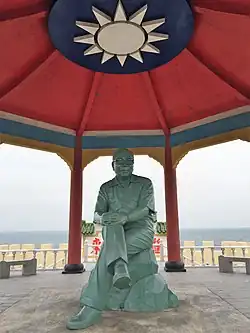
Dongyin
Dongyin (東引) is the northernmost inhabited island in the Matsu…
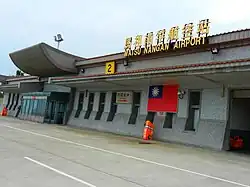
Nangan
Nangan (南竿) is the principal and governing island of the Matsu…
Beigan
Beigan (北竿) is the second-largest island of the Matsu archipelago…
Juguang
Juguang (莒光) is the southernmost township of Lienchiang County — the…
Matsu
Matsu (馬祖) is the collective name for the Lienchiang County…
Qinbi Village
Qinbi Village (芹壁) is the most photographed settlement in the Matsu…
Pair the highlights of Lienchiang into one easy trip — we'll plan the route.
WhatsApp
Contact Us
Get in touch with us.
Get in touch
Contact Us
Tell us where you'd like to go and how you like to travel. A real Tripcuro planner — not a bot — will craft an itinerary around you.
- Personalised, hassle-free planning end-to-end
- Transparent pricing, no hidden costs
- 24/7 support for complete peace of mind