
Hualien City
Hualien, Taiwan
Why visit Hualien City?
Hualien City (花蓮, Huālián) is a relaxed coastal town of around 100,000 people on Taiwan's east coast, wedged onto a narrow strip of land between the Pacific Ocean and the Central Mountain Range. It is widely considered one of the most pleasant cities in Taiwan: the air is fresh, the pace is gentle, and the dramatic scenery of mountains and sea is never far away. For most travellers, Hualien is the comfortable base for visiting the world-famous Taroko Gorge, a short distance to the north — but the city has enough of its own character, food and coastline to deserve more than a single night.
Hualien has a notably large indigenous population, predominantly Amis, whose food, crafts and music are woven through everyday life — most visibly at the city's night market. The town grew under Japanese rule and the colonial era left a legacy of shrines, gardens, railway heritage and stone industry; Hualien was historically a centre of Taiwan's marble and jade trade, and stone sculpture remains a local art form. The city centre is small, flat and easy to navigate; the train station sits a fair walk northwest of the centre, with the foreshore parks and Dongdamen Night Market toward the coast.
The climate is humid subtropical and generally mild. The best months are autumn (October–November) and spring (March–April) for clear, comfortable weather. Summer (June–September) is hot, humid and the height of typhoon season, when storms can disrupt travel and gorge access. Hualien also lies in an earthquake-prone zone — a major quake in 2024 affected the region — so check current conditions before travelling.
Planning Hualien City? Tell us your dates and we’ll tailor the trip.
Ask on WhatsAppHow do you get there?
By Plane
Hualien Airport (HUN) lies about 7 km northeast of the city, in Xincheng Township, and is closer to Beipu Station than to Hualien Station. Domestic flights connect Hualien with Taipei Songshan (UniAir), and Taichung and Kaohsiung (Mandarin Airlines); some international services have operated to Seoul. From the airport, taxis, ride-hailing and hotel shuttles run into town, and the UBus #311A connects the airport with the main bus station in front of Hualien Railway Station. Car rentals are available at and around the airport.
By Train
Hualien Station (花蓮車站, 100 Guolian 1st Rd) is the main gateway and the spine of east-coast travel. Frequent express trains — Puyuma Express and Tze Chiang Limited Express — run from Taipei in roughly 2–3 hours (around NT$583 adult fare), with the line hugging the coast through Yilan and Luodong; the left-hand side has the best views. Trains also run south to Taitung, Kaohsiung (about 2 hours) and Tainan. Tickets sell out fast in peak season — book well ahead. The station is open roughly 06:00–00:00.
By Car / Road
Provincial Highway 9 is the main north–south road through Hualien, linking the city with Taipei to the north and Taitung to the south; the scenic coastal Highway 11 branches off at the city's southwest. Driving from Taipei takes roughly 3 hours via the eastern route. Intercity buses also serve Hualien — combined bus-and-train tickets via Luodong are an alternative when train seats are scarce.
The city centre is small and easily covered on foot. Scooters are available for rent around town for roughly NT$400 a day and are the most flexible way to reach the gorge and outlying sights — note that some operators require a licence, though a few near the station rent to foreigners. Hualien has no extensive public transport network, so taxis are worth using for trips outside the centre; ride-hailing is also available. Bear in mind the train station is at least a 30-minute walk from the centre of town, so plan a taxi or bus for arrival. EasyCard works on local and Taroko-bound buses.
What are the things to do?
History and culture
- Hualien Cultural and Creative Industries Park (花蓮文創產業園區) — A pedestrianised complex of 26 former factory warehouses, now hosting arts, crafts and cultural spaces. Free to wander.
- Pine Garden (松園別館, No. 65 Songyuan Street) — A tranquil garden of 63 pine trees around a historic building once used by the Japanese military. Open roughly 09:00–18:00.
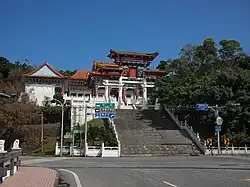
- Hualien Martyrs' Shrine (花蓮忠烈祠) — Built on the site of the former Karenkō Shrine, a memorial to those who died serving Taiwan. Open roughly 09:00–17:00.
- The Former Residence of Kuo Tzu-Chiu (郭子究故居) — The restored home of a noted local musician and teacher.
Temples
- Yenpin Prefectural Temple — Established in the Qing dynasty, this is the oldest temple in Hualien (near Zhongyang Road, sec. 4).
- The Abode of Still Thoughts — The original, deliberately simple facility of the world-famous Tzu Chi Buddhist foundation, with a Japanese-style garden.
- Hualien Al-Falah Mosque (花蓮清真寺, No. 78 Fuji Road) — The ninth mosque built in Taiwan, a short walk northwest of the TRA station.
Museums
- Hualien County Stone Sculpture Museum (花蓮縣石雕博物館) — Traditional and contemporary stone sculpture at the County Cultural Center. Open daily 09:00–17:00; admission around NT$20.
- Hualien Railway Culture Park (花蓮鐵道文化園區) — An open-air museum to Taiwan's narrow-gauge railway heritage.
Parks and coast
Qixingtan Scenic Area (七星潭) — A crescent-shaped pebble bay of clear blue water and colourful agates north of the city. Beautiful for walking, but swimming is dangerous due to steep drop-offs and strong currents.
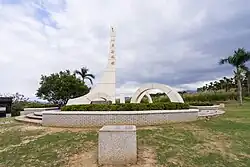
Beibin, Nanbin and Meilun Seashore Parks — Landscaped foreshore parks running the length of the city's waterfront, with spectacular Pacific sunrises.
Use Hualien as a Taroko Gorge base — The single most popular activity; day trips by bus, scooter, car or organised tour leave the city for the marble canyon to the north.
Whale and dolphin watching — Boat trips depart the Hualien coast in warmer months for dolphin sightings and the occasional whale.
Cycle the foreshore — Ride the bike paths along the seashore parks up toward Qixingtan.
Catch the sunrise — Watch the sun come up over the Pacific from the Meilun or Nanbin waterfront.
Hiking, hot springs and river tracing — Local travel companies arrange mountain hikes, river tracing and hot-spring trips in the surrounding county.
Catch a baseball game — The Hualien Baseball Stadium regularly hosts professional games.
Planning Hualien City? Want these on a customised itinerary?
Ask on WhatsAppWhere to eat?
Hualien's food culture is fresh, varied and strongly flavoured by indigenous Amis traditions and the surrounding farmland and sea.
- Zhutongfan (竹筒飯) — Rice steamed inside a bamboo tube, an Amis speciality.
- Hualien wontons (扁食) — The city's wontons are famous throughout Taiwan; long-established wonton shops serve them in clear soup, typically NT$50–100.
- Mochi (muaji) — Glutinous rice cakes with peanut, sesame, bean-paste or fruit fillings — eaten fresh and bought as souvenirs.
For a budget feast, head to Dongdamen Night Market (東大門夜市) on Chongqing Road, open roughly 18:00–24:00 — a sprawling market with a back lane dedicated to indigenous Amis vendors and weekend live music and dance. Sit-down restaurants around the city centre cover Taiwanese set meals, seafood and Western dishes from roughly NT$200–500 per person. Vegetarian food is widely available — look for the "素" sign. Halal options are limited but the mosque area is a starting point.
Where to drink?
Hualien is rich in bubble-tea and fresh-fruit-tea shops, and a pleasant independent café scene has grown around the cultural park and city centre. The night market is the easiest place for an evening drink among the food stalls. For something local, Qixingtan is known for an unusual goat-milk coffee. Convenience stores everywhere cover beer and soft drinks. Tap water in Taiwan is treated and considered safe once boiled; most visitors drink bottled or filtered water.
Planning Hualien City? We’ll book the stays and dining for you.
Ask on WhatsAppWhere to stay?
- Budget — Backpacker hostels and guesthouses cluster near Hualien Station and around the night market, with dorm beds and simple private rooms from roughly NT$500–1,200 per night.
- Mid-range — Numerous mid-range hotels and B&Bs in the city centre and near the station run roughly NT$2,000–4,000 for a double.
- Upscale — Higher-end hotels, including resort-style properties near the coast and toward the airport (the "splurge" category around Beipu Station), typically start from around NT$4,500 and up.
What should you buy?
Hualien's signature buys reflect its land and its indigenous heritage. Look for hand-woven cloth in traditional aboriginal designs; stone and jade — the city's stone market near the old bus station on Mingyi Road sells jewellery, teapots and carvings, and many shops trade in jade, a stone historically mined in the region; and mochi (muaji), the famous filled glutinous rice cakes that travel well as gifts. The night market and the streets around it are the main shopping zone. Shop prices are generally fixed and bargaining is not customary.
Where to go next?
- Taroko Gorge — About 25 km / 40–60 minutes north; Taiwan's spectacular marble canyon and the region's headline attraction.
- Qixingtan Beach — About 10 km / 20 minutes northeast; a scenic pebble bay famed for ocean views and sunrises.
- Taroko National Park — Just north of the city; alpine peaks, waterfalls and hiking beyond the gorge itself.
- Ruisui — About 65 km / 1.5 hours south by train; hot springs, dairy ranches and river rafting in the rift valley.
- Yuli — About 90 km / 2 hours south; a farming township and gateway to the Walami Trail.
- Highway 11 coastal drive — Heading south from the city; one of Taiwan's most beautiful coastal roads.
Nearby in Hualien
More places to explore around Hualien City.
Guide content as of May 2026. Portions adapted from Wikivoyage, CC BY-SA 4.0.

Contact Us
Get in touch with us.
Get in touch
Contact Us
Tell us where you'd like to go and how you like to travel. A real Tripcuro planner — not a bot — will craft an itinerary around you.
- Personalised, hassle-free planning end-to-end
- Transparent pricing, no hidden costs
- 24/7 support for complete peace of mind