
Kirishima
Kagoshima, Japan
Why visit Kirishima?
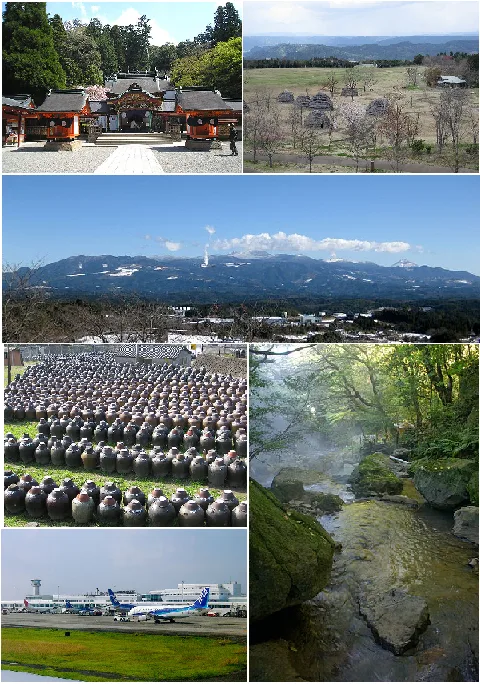
Kirishima (霧島) is a city in northern Kagoshima Prefecture, nestled at the foot of the Kirishima mountain range — a chain of volcanic peaks straddling the border between Kagoshima and Miyazaki prefectures. The city was formed in 2005 through the merger of several towns including Kokubu, Hayato, and Aira. It is home to Kagoshima Airport and serves as a gateway to both the volcanic highlands and the Kirishima-Yaku National Park.
The area is steeped in mythology. According to Japanese legend, the god Ninigi-no-Mikoto descended from heaven to the peak of Mt. Takachiho in the Kirishima range, marking the mythological founding of Japan. The Kirishima Jingū shrine, one of the oldest Shinto shrines in Kyushu, has drawn pilgrims for centuries.
Kirishima's climate varies by elevation. The lowland city areas (Kokubu, Hayato) enjoy a warm, subtropical climate similar to Kagoshima city, while the highland onsen villages (Kirishima Onsen-kyō, Maruo) at 600–800 m elevation are noticeably cooler, making them pleasant in summer and chilly in winter. Spring (March–May) brings cherry blossoms and azaleas to the mountain slopes; autumn (October–November) colours the forests in warm hues. The rainy season (June–July) and typhoon season (August–October) should be noted for outdoor plans.
Planning Kirishima? Tell us your dates and we’ll tailor the trip.
Ask on WhatsAppHow do you get there?
By Plane
Kagoshima Airport (KOJ) is located within Kirishima city itself, just 5 km from Kokubu Station. JAL, ANA, and low-cost carriers (Jetstar, Peach, Skymark, Fuji Dream, Solaseed) serve flights from Tokyo (2 hours), Osaka, Fukuoka, Naha, and other major cities. International flights connect to Seoul, Taipei, Hong Kong, and Shanghai.
From the airport, JR Kagoshima Airport Station is connected to the terminal by a free shuttle bus. Trains run to Kagoshima-Chuo (about 35 minutes) and Miyazaki (about 1 hour 20 minutes). Airport buses serve Kirishima Onsen resorts (40–60 minutes, ~¥1,500) and Kagoshima city.
By Train
Four JR stations serve the city on the Nippō Main Line:
- Kokubu Station — The main hub, closest to city centre amenities and shopping.
- Hayato Station — Near Kagoshima Airport and the Aira district.
- Kirishima-Jingū Station — Gateway to Kirishima Jingū shrine (10-minute bus ride).
- Kita-Naganoda Station — For access to the eastern Kirishima area.
From Kagoshima-Chuo, trains reach Kokubu in about 40 minutes. The Kyushu Shinkansen does not stop within Kirishima city; Hayato is served by the JR Hisatsu Orange Railway scenic line.
By Car / Road
Kirishima is about 45 minutes northeast of Kagoshima city via the Kyushu Expressway (Kirishima IC). From Miyazaki, it's roughly 1 hour south. Roads to the highland onsen villages (Kirishima Onsen-kyō) are well-maintained mountain roads; allow an additional 30 minutes from Kokubu. Kagoshima Airport has multiple car rental counters.
The lowland city areas are served by Kagoshima Kotsu buses, but services are infrequent. A car is strongly recommended for exploring the Kirishima highlands, onsen villages, and mountain trailheads.
Airport buses connect to Kirishima Onsen-kyō (¥1,500, 40–60 min). Within the onsen cluster, some ryokan offer free shuttle services.
Taxis are available at Kokubu Station, Hayato Station, and the airport. For hiking and sightseeing beyond the onsen villages, renting a car is the most practical option (¥4,000–7,000/day).
What are the things to do?
Kirishima Jingū (霧島神宮) — One of Kyushu's most important Shinto shrines, surrounded by ancient cedar forest. The current structure dates to 1715 and is designated an Important Cultural Property. Free entry. Accessible by bus from Kirishima-Jingū Station (10 minutes) or a 20-minute walk.
Matsushita Museum of Art (松下美術館) — A compact gallery featuring works by Japanese artists with connections to Kagoshima Prefecture. Located near the Kirishima Onsen area.
Kirishima mountain range — Volcanic peaks including Mt. Takachiho (1,574 m), Mt. Karakuni (1,700 m), and the crater lake Onami-ike (the highest mountain lake in Japan at 1,412 m). Hiking trails range from easy strolls to full-day ridge walks. The mythological descent point of Ninigi-no-Mikoto is marked on Mt. Takachiho.
Ebinsu Lookout (蝦野展望台) — A roadside viewpoint on the Ebino Plateau offering panoramic views of the volcanic peaks and surrounding highlands.
Kirishima Open-Air Museum (霧島アートの森) — Outdoor sculpture park set in forested highlands. Adults ¥300, children free.
Onsen hopping — The Kirishima Onsen-kyō cluster includes Maruo Onsen (public bath ~¥500), Myōban Onsen, and several ryokan with day-use baths. Water quality varies between sulphuric, acidic, and sodium-chloride springs.
Hiking the volcanic peaks — Well-marked trails from the Ebino Plateau lead to Karakuni-dake and Takachiho-dake. Allow 4–6 hours for a ridge traverse. Sturdy footwear required; volcanic gas can be present near active vents.
Visit Kirishima Jingū — Combine a shrine visit with a forest walk along the ancient pilgrimage path. Best visited early morning for a serene atmosphere.
Takachiho Farm — A highland dairy farm with ice cream, cheese, and butter made on-site. Open daily.
Golf — Several courses in the foothills, including the Kagoshima Airport Golf Club.
Planning Kirishima? Want these on a customised itinerary?
Ask on WhatsAppWhere to eat?
- Kurobuta pork — Kagoshima's famous Berkshire pork is the regional star. Tonkatsu (breaded cutlet), shabu-shabu, and grilled pork are served at restaurants throughout the city. Set meals ¥1,200–2,500.
- Satsuma-age — Kagoshima's fried fish cake, available as a snack or side dish at most local eateries (~¥200–400 per piece).
- Chicken nanban — Fried chicken with tartar sauce, a Kagoshima-born dish now popular across Japan. Widely available at family restaurants and izakaya.
- Highland cuisine at onsen ryokan — Multi-course kaiseki dinners at ryokan in the Kirishima Onsen area feature local mountain vegetables, wagyu, and seasonal ingredients. Included in overnight stays or available à la carte at ¥3,000–8,000.
- Kirishima beef — Local wagyu, served at specialty restaurants and yakiniku grills. Expect ¥2,000–5,000 for a premium cut.
- Vegetarian options are limited at standalone restaurants; ryokan can accommodate with advance notice.
Where to drink?
- Kurogirishima shōchū — The pride of the region. This sweet potato shōchū is smooth and aromatic. Available everywhere from izakaya to vending machines. Try it oyu-wari (diluted with hot water) or mizu-wari (with cold water).
- Local sake and craft beer — A handful of small breweries operate in the Kagoshima highlands.
- Kirishima tea — Served at cafés near the shrine and onsen villages. Mountain spring water gives it a distinctive clean taste.
- Water safety — Tap water is safe throughout the city. On mountain hikes, carry your own supply.
Planning Kirishima? We’ll book the stays and dining for you.
Ask on WhatsAppWhere to stay?
- Budget: Kagoshima Airport area business hotels (Toyoko Inn, APA Hotel) from ~¥5,000/night. Minshuku in the onsen villages from ~¥5,000–7,000 with breakfast.
- Mid-range: Hotel Kirishima Palace (Kirishima Onsen-kyō, from ~¥10,000/night with breakfast). Kokubu area business hotels from ~¥6,000.
- Upscale / heritage: Kirishima Hotel (long-established onsen ryokan with multiple bath types, from ~¥18,000/person with two meals). Shinyu Onsen Kirishima (mountain-top ryokan with private open-air baths, from ~¥25,000/person with meals).
What should you buy?
- Kurogirishima shōchū — Japan's famous sweet potato shōchū named after the Kirishima area. Distilleries throughout the region offer tastings and sales (bottles from ¥1,200).
- Kirishima tea — Green tea grown in the foothills; available at farm shops and roadside stations.
- Local sweet potato products — Kagoshima's signature beni-himo (sweet potato) appears in snacks, cakes, and shōchū. Try sweet potato ice cream at roadside stands.
- Roadside station (Michi-no-Eki) products — Fresh local produce, pickles, and bento at Michi-no-Eki Kirishima and others.
Where to go next?
- Kagoshima City (45 min by car/35 min by train) — Kyushu's southernmost major city with Sakurajima volcano, Sengan-en garden, and Satsuma history.
- Yakushima (from Kagoshima, ferry 2–3 hours) — UNESCO-listed ancient cedar forests and dramatic mountain trails.
- Miyakonojo (40 min east by car) — Gateway to the Miyazaki side of the Kirishima range, with archery culture and local craft villages.
- Ebino Plateau (Ebino Kōgen) (30 min east by car) — Highland resort area with hiking trails, crater lakes, and wild horse pastures.
- Yusui (Yusui-chō) (20 min by car) — A quiet mountain town known for natural spring water and the scenic Yusui underground river.
Nearby in Kagoshima
More places to explore around Kirishima.
Guide content as of June 2026. Portions adapted from Wikivoyage, CC BY-SA 4.0.

Contact Us
Get in touch with us.
Get in touch
Contact Us
Tell us where you'd like to go and how you like to travel. A real Tripcuro planner — not a bot — will craft an itinerary around you.
- Personalised, hassle-free planning end-to-end
- Transparent pricing, no hidden costs
- 24/7 support for complete peace of mind