
Yakushima
Kagoshima, Japan
Why visit Yakushima?
Yakushima (屋久島) is a near-round granite island off the southeast coast of Kyushu, administratively part of Kagoshima Prefecture. With a circumference of 135 km and an area of approximately 505 km², the island is dominated by mountains rising above 1,800 m, including Miyanoura-dake at 1,935 m — the highest peak in southern Japan. Inscribed on the UNESCO World Heritage List in 1993, Yakushima is one of Japan's most spectacular natural destinations, renowned for its ancient cedar forests, dramatic terrain, and pristine wilderness.
The island's mountains intercept enormous amounts of moisture from the Pacific, making Yakushima one of the rain-soaked places in Japan — measurable precipitation falls on roughly half the days of the year. Despite this, or because of it, the forests are extraordinarily lush. The rocky coastline and verdant mountains rising sharply from the shore are often spectacular, with white clouds billowing over peaks and mists shrouding the ridgelines. Wildflowers decorate the roads and forests year-round, and the pink sunrises and blood-red sunsets over the Pacific are breathtaking.
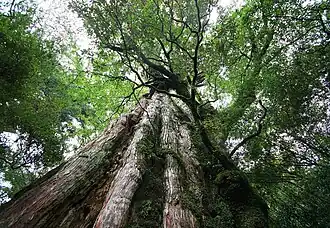
Most visitors come to walk among the ancient yakusugi — cedar trees over 1,000 years old, each revered and named. The most famous, Jōmon Sugi, is estimated to be between 2,100 and 7,200 years old. The pristine yakusugi forests inspired Hayao Miyazaki's 1997 film Princess Mononoke. Wild deer (shika) and monkeys (saru) roam freely throughout the island. The main settlements are Miyanoura and Anbō on the north and east coasts respectively. Administratively, Yakushima Town also encompasses neighbouring Kuchinoerabu island.
Planning Yakushima? Tell us your dates and we’ll tailor the trip.
Ask on WhatsAppHow do you get there?
By Plane
Yakushima Airport (KUM) is located between Miyanoura and Anbō on the island's eastern coast. Japan Air Commuter (JAC) operates direct flights from Kagoshima (35 minutes), Fukuoka (1 hour 10 minutes), and Osaka-Itami (1 hour 30 minutes). Flight frequency varies by season; advance booking is recommended.
From the airport, buses serve both Miyanoura and Anbō ports. Taxis are available at the terminal but can be scarce outside peak arrival times. Car rental agencies can deliver vehicles to the airport by prior arrangement.
By Car / Road
The Toppy and Rocket jetfoil ferries connect Kagoshima port to Yakushima (approximately 2 hours, 4 times daily). Roundtrip adult tickets cost approximately ¥25,900. Ferries may stop at Ibusuki or Tanegashima en route. All services are cancelled in heavy seas (waves over 3 metres). Book at least the day before, as boats fill up.
Timetables are published online (Japanese). Status symbols: ○ (normal), △ (operating, may reroute), ※ (may cancel), 欠 (cancelled). Ferries arrive at either Miyanoura or Anbō port — confirm which before booking onward transport.
Rental cars are the most practical way to explore Yakushima. Small cars start around ¥5,000/day; regular cars ¥6,300–10,000/day. Scooter (50cc baiku) rental is approximately ¥4,000/day. Mountain bikes can be hired in Miyanoura for ¥800/day.
Bus: A coastal highway encircles the island, with buses running roughly hourly from 07:00 to 18:00, connecting the airport, both ports, beaches, and hot springs. Infrequent buses serve hiking trailheads: 4 daily to the Arakawa trail (Jōmon Sugi), 2 to Yakusugiland, and 6 daily to Shiratani Unsuikyo. Fares are distance-based (e.g., Miyanoura to Arakawa trailhead ¥1,400 one-way). Unlimited bus passes: 1 day ¥2,500, 2 days ¥4,000, 4 days ¥5,000 (half price for children).
Taxis are scarce outside ferry arrival times. Cash up before arriving — the nearest ATM accepting foreign cards is at the Miyanoura post office (a 30-minute walk from the port).
What are the things to do?
Jōmon Sugi (縄文杉) — The island's most iconic attraction: a massive ancient cedar estimated at 2,100–7,200 years old. Reached via the Arakawa Trail (a 10-hour round trip from the trailhead, mostly along an old logging railway). Guided tours recommended.
Shiratani Unsuikyo (白谷雲水峡) — A moss-draped forest ravine that inspired the setting of Princess Mononoke. Multiple trail loops from 1 to 5 hours. Entry ¥500.
Yakusugi Museum (屋久杉自然館) — Exhibits on the island's natural wonders and logging history. You can touch a cross-section of a 1,660-year-old yakusugi. English pamphlet available. Open 09:00–17:00 daily (closed 1st Tue of each month, Dec 29–Jan 1). ¥600. In Anbō.
Yakushima Fruit Garden — Tropical fruit farm on the southwest coast with seasonal papaya, mango, guava, and starfruit. Open 08:30–16:30 daily. Near Kurio.
Wildlife encounters — Deer and monkeys are common outside towns. The best spot is the narrow coastal road south of Nagata in the west, where deer cross the road and monkeys warm themselves on the asphalt in the afternoons.
Ōko-no-taki Falls — One of Japan's top 100 waterfalls, a 88-metre cascade easily viewed from the road on the west coast.
Hiking — Yakushima's primary activity. Options range from short forest walks (Shiratani Unsuikyo, 1–5 hours) to full-day epics (Jōmon Sugi via Arakawa Trail, 10 hours). Multi-day ridge traverses are possible for experienced hikers with proper gear.
Snorkelling and diving — The island's clear subtropical waters offer coral reefs, sea turtles, and tropical fish. Dive operators in Anbō and Isso offer courses and fun dives from ~¥8,000.
Kayaking — River and sea kayaking tours available, including trips up the Anbo River through forested gorges.
Hot springs (onsen) — Several natural outdoor baths (rotenburo) are scattered around the coast, most free and accessible by car. Hirauchi Kaichu Onsen and Yudomari Onsen are tidal rock pools on the south coast that emerge at low tide.
Stargazing — With minimal light pollution, Yakushima's night sky is extraordinary when the clouds clear.
Planning Yakushima? Want these on a customised itinerary?
Ask on WhatsAppWhere to eat?
Yakushima's food scene is modest but sincere, built around fresh seafood and island-grown produce.
- Flying fish (tobiuo) — The island's signature catch, served as sashimi, grilled, or as tempura. Available at restaurants in Miyanoura and Anbō. Sashimi plates from ¥800.
- Deer meat (shikaniku) — Yakushima's abundant deer appear on menus as jerky, stew, or grilled steak. Unusual but locally sustainable. Mains from ¥1,200.
- Island vegetables — Goya (bitter melon), purple yam, and sweet potato appear in home-style dishes at minshuku and family restaurants.
- Mango — Yakushima produces premium mangoes in summer. Try mango desserts and juices at cafés and the Fruit Garden (seasonal).
- Minshuku dinners — Most guesthouses include home-cooked dinner and breakfast in the rate, featuring local fish, vegetables, and rice. This is often the best dining experience on the island.
- Vegetarian options are very limited; inform your minshuku in advance if needed.
Where to drink?
- Local shōchū — Kagoshima's sweet potato spirit is widely available. Yakushima also produces its own small-batch labels.
- Craft beer — A handful of local breweries produce island-themed ales, available at cafés and izakaya in Miyanoura.
- Tap water is safe and delicious — Yakushima's mountain water is exceptionally pure. Carry a refillable bottle.
- Cafés — Several relaxed cafés in Miyanoura and Anbō serve coffee, tea, and tropical fruit smoothies.
Planning Yakushima? We’ll book the stays and dining for you.
Ask on WhatsAppWhere to stay?
- Budget: Hostels and guesthouses in Miyanoura and Anbō from ~¥3,500–5,000/night (dorm) or ~¥5,000–7,000 (private room). Camping grounds available at Isso Beach and other coastal sites.
- Mid-range: Minshuku (family inns) with two meals from ~¥8,000–12,000/person. Yakushima Green Hotel (Miyanoura, from ~¥8,000). Sankara Hotel & Spa (Oku, sea-view rooms from ~¥15,000).
- Upscale / heritage: Sankara Hotel & Spa is the island's most refined property, with a pool, spa, and beachfront setting (from ~¥25,000/person with meals). Luxury eco-lodges in the western hills offer private villas from ~¥30,000.
What should you buy?
- Yakusugi crafts — Small items made from fallen cedar wood (not freshly logged), including keychains, incense, and ornamental carvings. Available at shops in Miyanoura and Anbō (¥300–5,000).
- Local citrus products — Tachibana orange marmalade, limoncello, and shikuwasa juice. Sold at farm shops and the Fruit Garden.
- Yakushima tea and honey — Mountain-grown green tea and wild-flower honey from local apiaries.
- Handmade pottery and crafts — Small studios in Miyanoura and Kurio produce island-themed ceramics.
Where to go next?
- Tanegashima (jetfoil ferry 1–1.5 hours) — Japan's surfing island and home to JAXA's Space Center. A natural pair with Yakushima.
- Kagoshima City (jetfoil ferry 2 hours; flight 35 minutes) — Sakurajima volcano, Sengan-en garden, and Satsuma history.
- Amami Oshima (ferry via Kagoshima, ~13 hours; or fly via Kagoshima) — UNESCO-listed mangrove forests, subtropical beaches, and unique Ryukyuan culture.
- Okinawa (flight via Kagoshima or direct charter) — The subtropical island chain's beaches, Shuri Castle, and vibrant food scene.
Nearby in Kagoshima
More places to explore around Yakushima.

Guide content as of June 2026. Portions adapted from Wikivoyage, CC BY-SA 4.0.

Contact Us
Get in touch with us.
Get in touch
Contact Us
Tell us where you'd like to go and how you like to travel. A real Tripcuro planner — not a bot — will craft an itinerary around you.
- Personalised, hassle-free planning end-to-end
- Transparent pricing, no hidden costs
- 24/7 support for complete peace of mind