
Ibaraki
Japan · Prefecture · 16 destinations with guides
Photography coming soonWhy visit?
Ibaraki Prefecture sits in the northeastern corner of the Kanto region, stretching from the Pacific coast inland to the rolling foothills of Mount Tsukuba. It borders Fukushima to the north, Tochigi to the west, and Chiba to the south, with Tokyo less than an hour away by train from much of the prefecture. The capital, Mito, anchors the center, while Tsukuba — Japan's flagship science city — dominates the south, and a long, surf-ready coastline runs from Kashima up through Oarai and Hitachinaka.
Ibaraki is famously ranked by Japanese nationals as one of the country's least attractive prefectures for tourism, but that reputation hides a varied, useful destination — particularly for travelers based in Tokyo who want a one- or two-day escape without the crowds. The pull here is breadth rather than icons: Japan's most photographed flower park, the world's tallest bronze Buddha, a top-tier aquarium, surfing beaches, samurai-era gardens, and a research city with one of the country's most internationally diverse food scenes.
Character-wise, Ibaraki is rural, agricultural, and unpretentious. It is Japan's leading producer of natto (fermented soybeans) and a major source of chestnuts and melons. Cars dominate outside Mito and Tsukuba, English support is limited beyond those two cities, and most highlights are spread out — a guide who treats Ibaraki as a string of day trips, rather than a single itinerary, will get the most out of it.
When is the best time to visit?
Spring (late March–May) is the headline season. Mito's Kairakuen — one of the Three Great Gardens of Japan — peaks during the Mito Plum Blossom Festival in late February through late March, when roughly 3,000 plum trees of around 100 varieties bloom. In late April and early May, Hitachi Seaside Park's hills turn electric blue with around 4.5 million nemophila (baby blue eyes) — one of the most photographed sights in Japan and worth booking around.
Summer (July–August) is beach and festival season. The coastline from Kashima to Oarai draws surfers and swimmers from greater Tokyo, with official lifeguard stations active from late July into early August. Expect humid 30°C+ days. Hitachi Seaside Park hosts Rock in Japan Festival, one of the country's largest rock festivals, with attendance in the tens of thousands.
Autumn (October–November) brings kochia bushes turning crimson at Hitachi Seaside Park (mid-October), Mount Tsukuba's foliage, and the Tsuchiura All-Japan Fireworks Competition in early November — one of the country's three most prestigious fireworks events.
Winter is cold but dry and quiet, with clear views from Mount Tsukuba and far fewer crowds at coastal sights; the plum blossoms then start the cycle again in late February.
Tell us your dates and we'll shape a Ibaraki route around them.
WhatsAppHow do you get around?
Ibaraki has no Shinkansen station, so movement within the prefecture relies on the JR Joban Line, the Tsukuba Express, and an extensive but slow bus network.
- From Tokyo to Mito: the Limited Express Hitachi / Tokiwa from Shinagawa or Ueno reaches Mito in about 65–80 minutes. Local Joban Line trains take just over 2 hours.
- From Tokyo to Tsukuba: the Tsukuba Express from Akihabara reaches Tsukuba in about 45 minutes. Tsukuba is not on the JR network, so a Japan Rail Pass does not cover it.
- Mito to Tsukuba: there is no direct rail link. The most reliable option is a highway bus (about 1.5 hours) or driving via the Joban Expressway.
- Mito to Kashima: roughly 1 hour by car or via the Kashima Rinkai Tetsudo line connecting through Mito.
- Coast access: Oarai (for Aqua World) and Katsuta/Hitachinaka (for Hitachi Seaside Park) are both reachable by Joban Line plus a short connecting train or bus.
JR Kanto highway buses from Tokyo and Shinjuku stations serve most major Ibaraki destinations directly, often faster and cheaper than the train. Within cities, intercity bus operators commonly use the local "Ibappi" prepaid card, which is not compatible with Suica/Pasmo — carry cash for buses unless you specifically want the Ibappi card.
For travelers planning to visit more than two non-rail sights (Ushiku Daibutsu, the Ami outlet mall, Warp Station Edo, Kasama), renting a car at Mito or Tsukuba station is by far the most efficient option. Ibaraki Airport (IBR) offers free long-term parking and a 2.5-hour, ¥500 (air-passenger) bus to Tokyo Station — useful mainly for budget flights to Sapporo, Fukuoka, Okinawa, Shanghai, or Taipei.
Where should you go?
- Mito — the prefectural capital and cultural anchor, home to Kairakuen Garden, Lake Senba, and Japan's top concentration of natto producers.
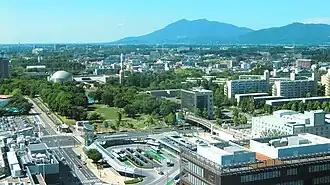
- Tsukuba — Japan's purpose-built science city, with Mount Tsukuba on its doorstep and an unusually international dining scene.
- Kashima — pilgrimage town built around the ancient Kashima Jingu shrine and home of J-League powerhouse Kashima Antlers.
- Tsuchiura — gateway to Lake Kasumigaura and host of the All-Japan Fireworks Competition each November.
- Ushiku — site of the 120-metre Ushiku Daibutsu, the world's tallest bronze Buddha statue.
- Tone — rural riverside area along the Tone River, good for slow-paced countryside detours.
Want the scenic legs and stays booked for you? Just ask.
WhatsAppWhat should you eat?
Natto is the prefecture's defining dish — fermented soybeans, sticky and pungent, eaten over rice for breakfast. Mito is the production capital; Kame-Jirushi-style natto-based sweets and souvenir packs are sold in every station shop. Locals will almost always ask whether you've tried it; honest answers are welcome, and "too stinky" gets a laugh.
Anko (anglerfish) hot pot is the signature winter dish of the northern coast, particularly around Hitachi and Kita-Ibaraki, where the fatty liver (ankimo) is treated as a delicacy. Hitachi-gyu beef from the northern hills is a respected wagyu line, and the prefecture's chestnuts (especially from Kasama) and melons are famous nationally — Kasama's Mont Blanc desserts are a worthwhile detour in autumn.
Coastal towns turn out excellent fresh seafood; Nakaminato fish market near Hitachi Seaside Park is the standout, with sashimi-grade tuna and seasonal sanma at well below Tokyo prices. Tsukuba is the prefecture's wildcard — its high foreign-resident population from the surrounding research institutes supports a genuinely diverse food scene including Mexican, Iranian, and West African restaurants that are rare elsewhere in rural Japan.
To drink, look for Nest Beer, the highly regarded microbrew from Hitachinaka, widely available in better izakaya across the prefecture, and locally produced sake from Mito and Ishioka.
What is the culture like?
- Mito Plum Blossom Festival (Mito no Ume Matsuri) — late February to late March at Kairakuen, with tea ceremonies, classical music, and night illuminations.
- Nemophila Harmony — mid-April to early May at Hitachi Seaside Park; the kochia red-leaf display follows in mid-October.
- Rock in Japan Festival — early August at Hitachi Seaside Park; one of Japan's largest rock festivals.
- Tsuchiura All-Japan Fireworks Competition — first Saturday of November; one of Japan's three top fireworks contests, drawing over half a million spectators.
- Ishioka Festival (Hitachi-no-kuni Sosha-gu Reitaisai) — mid-September; one of the Kanto region's three great festivals, with floats and lion dances over three days.
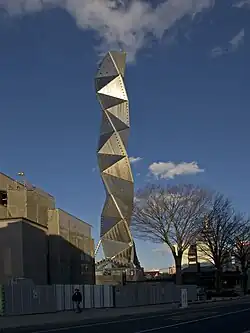
Locally, Ibaraki has strong traditions in Kasama-yaki pottery, centered on the artisan town of Kasama and complemented by world-standard art museums in Mito (Mito Arts Tower, designed by Arata Isozaki), Kasama, Kita-Ibaraki, and Tsukuba. NHK's Warp Station Edo backlot near Tsukuba offers a rare public look at the outdoor sets used for the broadcaster's flagship year-long Taiga historical dramas.
Travelling during a festival? We'll plan around the crowds.
WhatsAppWhat are the standout experiences?
- The Nemophila hills at Hitachi Seaside Park — walk the Miharashi Hill in late April when 4.5 million blue flowers blur into the Pacific horizon; one of Japan's most distinctive seasonal landscapes.
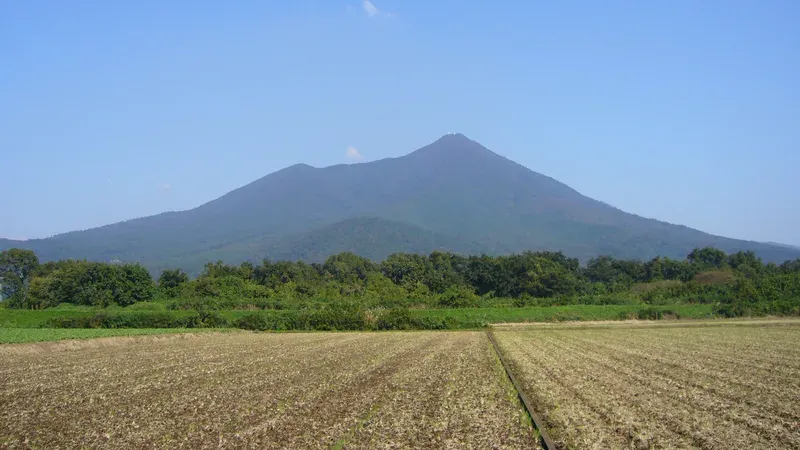
- Climb (or cable-car) Mount Tsukuba — the 877-metre twin-peaked mountain has been a sacred site for over a thousand years, with shrines, ropeway access, and clear-day views to Tokyo and Mount Fuji.
- Stand under the Ushiku Daibutsu — at 120 metres, three times the height of the Statue of Liberty; an elevator climbs into the chest for a viewing window. Adult admission ¥800.
- Aqua World Oarai — one of the country's top aquariums, on the ocean, famous for its sunfish collection and dolphin shows; pair with the long, surfable Oarai Sun Beach next door.
- Stroll Kairakuen at dawn during plum season — built in 1842 as one of Japan's Three Great Gardens, it is best at the first opening when the 3,000 plum trees are uncrowded and the adjoining Kobuntei villa is open to walk through.
Top Destinations
Every destination in Ibaraki with a guide — tap a place for the full guide.

Kasama
Kasama (笠間) is a small city in central Ibaraki Prefecture, set among…
Mito
Mito (水戸, Mito-shi) is the capital of Ibaraki Prefecture, in the…
Mount Tsukuba
Mount Tsukuba (筑波山, Tsukuba-san) is a twin-peaked mountain rising 877…
Oarai
Oarai (大洗) is a coastal town on the Pacific shore of Ibaraki…
Tsukuba
Tsukuba (つくば) is a city in Ibaraki Prefecture, in the Kantō region…
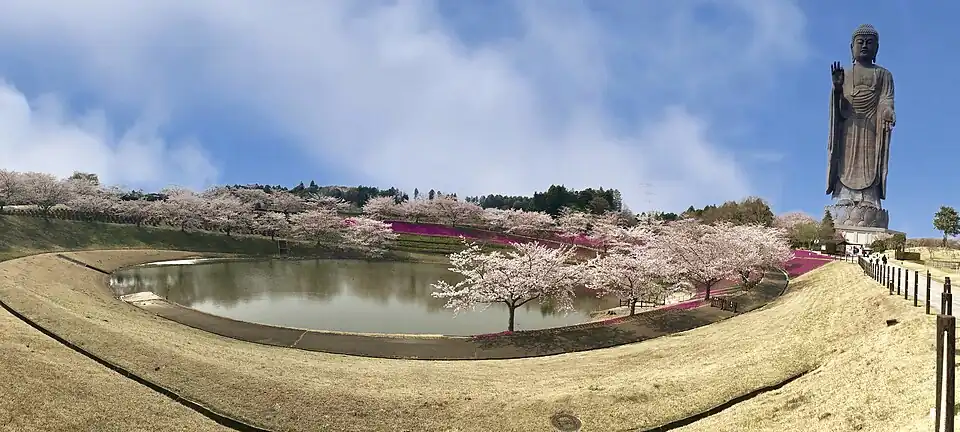
Ushiku
Ushiku (牛久) is a city in southern Ibaraki Prefecture, on the Kanto…
Daigo
Daigo (大子町, Daigo-machi) is a town in northwestern Ibaraki…
Fukuroda Falls
Fukuroda Falls (袋田の滝, Fukuroda no Taki) is a celebrated waterfall in…
Hitachi
Hitachi (日立市, Hitachi-shi) is a coastal city in northern Ibaraki…
Hitachi Seaside Park
Hitachi Seaside Park (国営ひたち海浜公園, Kokuei Hitachi Kaihin Kōen) is a…
Hitachinaka
Hitachinaka (ひたちなか市) is a coastal city in eastern Ibaraki Prefecture…
Ishioka
Ishioka (石岡市) is a city in central Ibaraki Prefecture, nestled at the…
Itako
Itako (潮来市) is a small city in southeastern Ibaraki Prefecture…
Kairakuen
Kairakuen (偕楽園) is one of Japan's "Three Great Gardens" — ranked…
Kashima
Kashima (鹿嶋市, Kashima-shi) is a coastal city in eastern Ibaraki…
Tsuchiura
Tsuchiura (土浦市) is a city in southern Ibaraki Prefecture, situated on…
Pair the highlights of Ibaraki into one easy trip — we'll plan the route.
WhatsApp
Contact Us
Get in touch with us.
Get in touch
Contact Us
Tell us where you'd like to go and how you like to travel. A real Tripcuro planner — not a bot — will craft an itinerary around you.
- Personalised, hassle-free planning end-to-end
- Transparent pricing, no hidden costs
- 24/7 support for complete peace of mind