
Mito
Ibaraki, Japan
Why visit Mito?
Mito (水戸, Mito-shi) is the capital of Ibaraki Prefecture, in the Kantō region of Japan, lying in the centre of the prefecture some distance north-east of Tokyo. It is best known as the home of one of Japan's "Three Great Gardens" — Kairakuen — and as a city steeped in the history of the Tokugawa shogunate.
When Tokugawa Ieyasu reunited Japan in 1603 and set up his shogunate at Edo (now Tokyo), he installed members of his own clan as lords of just three domains: Mito, present-day Nagoya and Wakayama. These three cadet branches, the Gosanke, were eligible to provide a shogun should a ruling line fail, and were thus among the most loyal of Tokugawa loyalists. Yet Mito also produced a school of fiercely nationalist Confucian scholars — the Mito School — whose ideas helped redefine the Japanese nation and lay the ideological groundwork for the imperial revival of the Meiji Restoration. The city carries this dual legacy of shogunal loyalty and revolutionary thought.
Mito has a temperate Kantō climate — warm, wet summers and cool, fairly dry winters with occasional snow. The single best time to visit is February and March, when Kairakuen's 3,000 plum trees bloom; cherry blossoms follow in April. The city is fairly spread out, with the historic core — Kairakuen, the Kōdōkan school, the river and lake — separate from the modern station district.
Planning Mito? Tell us your dates and we’ll tailor the trip.
Ask on WhatsAppHow do you get there?
By Plane
Ibaraki Airport (IBR), about 80 km from Tokyo, opened in 2010 on a former air-base site as a secondary airport, with connections to several cities in China, Taiwan, Vietnam, the Philippines and within Japan. From the airport, buses run to Mito Station in about one hour (around ¥1,100). From Narita Airport, the Rose Liner limousine bus runs to Mito Station in about two hours (around ¥2,900), nine times daily. From Haneda, limousine buses run directly to Mito (about 2 hours, around ¥3,500) but only in the afternoon and evening; otherwise transfer via train.
By Train
Mito is on the JR Jōban Line, which starts at Ueno Station in Tokyo and runs to Sendai. Limited express trains leave Ueno for Mito every 30 minutes during the day — Hitachi on the hour, Tokiwa at half past — taking 65–75 minutes for around ¥4,220 (no charge with a Japan Rail Pass). Local trains cover the journey in about two hours for around ¥2,210.
By Car / Road
Mito can be reached by highway bus from Tokyo Station in about two hours — around ¥2,080 one way, or ¥3,900 for a round trip bought from the driver. Buses are frequent (at least twice an hour, more in rush hour) with no reserved seats, so arrive early. If coming from an airport, take the bus directly to Mito rather than going via Tokyo.
Mito Station is a major terminal for the JR Jōban and Suigun lines and the private Kashima Line. The bus network is extensive but complex; the bus for Kairakuen leaves from terminal 6 on the station's north side. Note that the ubiquitous Suica and Pasmo IC cards cannot be used on Mito's buses — Ibaraki Kōtsū uses its own "Ibappi" card. Taxis are always available, with a flag-fall around ¥660. Kairakuen is an easy half-hour walk from the station's South Exit along the river and lakeshore. By far the best way to explore the areas near the station is by bicycle: excellent paths run atop the levees of the Naka River, offering leisurely rides with views of the rice plains. Car rental is available near the station.
What are the things to do?
Gardens
- Kairakuen Garden (偕楽園) — One of Japan's Three Great Gardens, famed for its 3,000 plum trees that bloom in February and March. Walkways run through stands of cedar and bamoo and past azalea and bush clover, with overlooks of Lake Semba. Open Apr 1–Sep 15 06:00–19:00, Sep 16–Mar 31 07:00–19:00; only parking charges apply.
- Kobuntei (好文亭) — A well-preserved old-style samurai residence within Kairakuen, with fine woodwork, thatched roofs, painted paper doors and lovely upper-floor views; ¥200.
- Nanatsudo Park (七ツ洞公園) — An English-style garden.
Shrines and history
- Tokiwa Shrine (常磐神社) — A large Shintō shrine at Kairakuen's south gate, dedicated to Mito lords Tokugawa Mitsukuni and Tokugawa Nariaki. Open Mon–Fri 09:30–15:30, Sat–Sun 09:00–16:00.
- Giretsukan (義烈館) — A small museum on the Tokiwa Shrine grounds with samurai-era relics, including a huge rolling taiko drum and an old cannon; ¥300.
- Kōdōkan (弘道館) — The former han school for samurai, founded in 1841 by lord Tokugawa Nariaki, with surviving buildings declared a site of national significance; ¥400. Five minutes' walk north-east of the station.
Arts
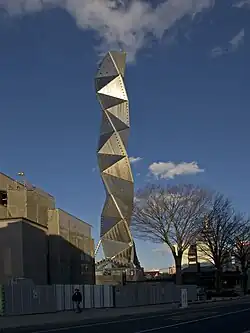
- Art Tower Mito (水戸芸術館) — A contemporary arts complex founded in 1988, its landmark spiral tower rising 100 m above the plaza; near the station.
Mito's calendar centres on its garden seasons — the plum festival at Kairakuen in February and March is the city's signature event, followed by cherry blossoms in April. In summer, the Kōmon Festival (水戸黄門まつり), held since 1961 on the first full weekend of August, brings a much-loved fireworks display that reflects beautifully off the lake. Beyond the festivals, the great pleasure of Mito is cycling the Naka River levee paths and strolling the garden-and-shrine district.
Planning Mito? Want these on a customised itinerary?
Ask on WhatsAppWhere to eat?
Mito's most famous food is nattō (納豆) — sticky, pungent fermented soybeans, an acquired taste even for many Japanese. Another local speciality is yoshiwara-denchū (吉原殿中), a finger-sized cake created by the Mito clan from rice cake coated in candy and soybean flour. The station area has many budget and mid-range options, and the AEON Mall Mito-Uchihara has around 40 eateries.
- Sansui (山翠) — A popular restaurant featuring Mito and Ibaraki specialities such as ankō (monkfish) hotpot and various nattō dishes.
- Gandhi (ガンジー) — An Indian curry and naan restaurant, a good vegetarian-friendly option.
- For casual meals, the station area offers a wide spread of noodle shops and family restaurants.
Where to drink?
Drunken Duck, on the south side of Mito Station (tel +81 29-232-3999), is an English-style pub serving Australian-style food, with WiFi. The station area has a good range of izakaya and bars for an evening out, and Ibaraki sake is widely available. Green tea is the everyday non-alcoholic drink. Tap water in Japan is safe to drink.
Planning Mito? We’ll book the stays and dining for you.
Ask on WhatsAppWhere to stay?
- Budget: Business hotels around Mito Station provide reliable low-cost rooms.
- Mid-range: Mito Prince Hotel (水戸プリンスホテル), at Sakuragawa 2-2-11, a three-minute walk from Mito Station (tel +81 29-227-4111), is a convenient mid-tier hotel; several other business hotels cluster near the station.
- Upscale / heritage: For a more upmarket stay, larger hotels near the station offer fuller service.
What should you buy?
The biggest shopping destination is AEON Mall Mito-Uchihara (イオンモール水戸内原), beside Uchihara Station — when it opened in 2006 it was the largest mall in Japan and it remains more than adequate for shopping and dining. Around Mito Station, souvenir-style foods and trinkets are sold, with nattō-flavoured crackers a popular buy, the area being famous for nattō. The Fashion Cruise mall and a Costco lie just north in Hitachinaka city. Prices are fixed; bargaining is not customary in Japan.
Where to go next?
- Kairakuen — The celebrated plum garden on the city's edge, the prime local attraction.
- Hitachi Seaside Park — A vast flower park to the north-east, famous for blue nemophila in spring.
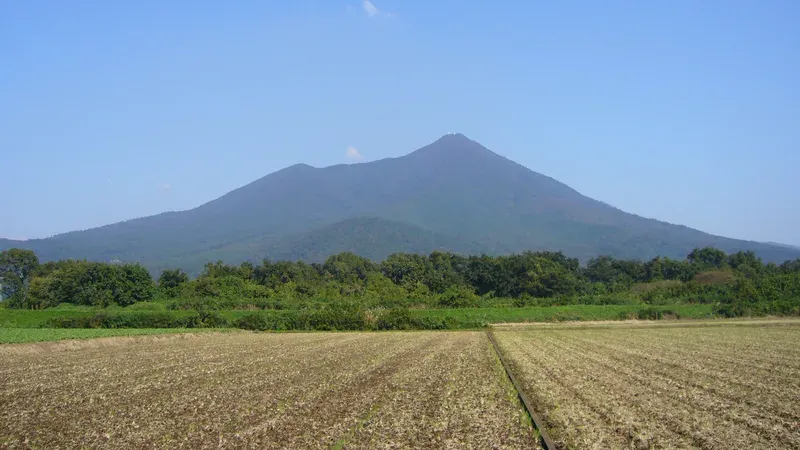
- Tsukuba — A science city to the south-west, with the JAXA Space Center and Mount Tsukuba.
- Tsuchiura — A lakeside city on Lake Kasumigaura, between Mito and Tokyo.
- Kasama — A nearby town known for pottery and the Kasama Inari Shrine.
- Ōarai — A coastal town near Mito with beaches, an aquarium and ferry connections.
Nearby in Ibaraki
More places to explore around Mito.
Guide content as of May 2026. Portions adapted from Wikivoyage, CC BY-SA 4.0.

Contact Us
Get in touch with us.
Get in touch
Contact Us
Tell us where you'd like to go and how you like to travel. A real Tripcuro planner — not a bot — will craft an itinerary around you.
- Personalised, hassle-free planning end-to-end
- Transparent pricing, no hidden costs
- 24/7 support for complete peace of mind