
Ushiku
Ibaraki, Japan
Why visit Ushiku?
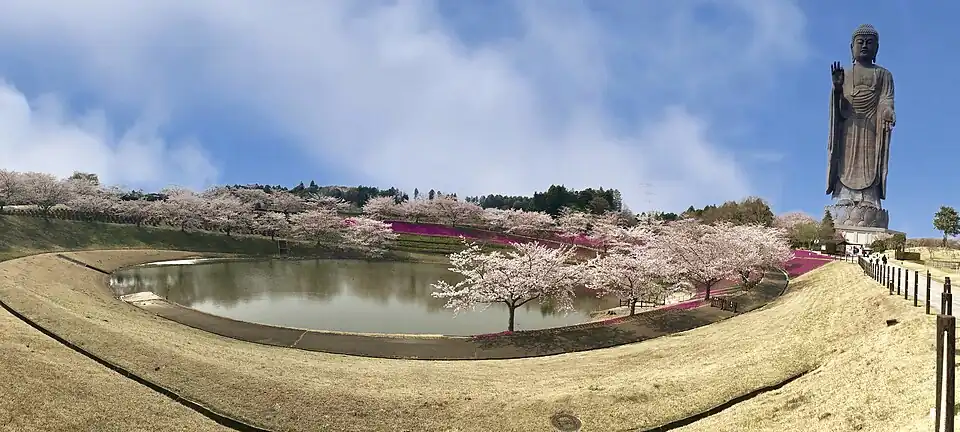
Ushiku (牛久) is a city in southern Ibaraki Prefecture, on the Kanto Plain about 50 km northeast of central Tokyo. Unusually for a Japanese city, Ushiku has a growing population — most of Japan is ageing and shrinking — because it functions as a bedroom community both for Tokyo and for the research hub of Tsukuba Science City nearby. It is a calm, residential place rather than a tourist town, but it has one landmark of genuine renown: the colossal Ushiku Daibutsu, among the tallest standing Buddha statues in the world.
Ushiku also carries a quiet heritage in winemaking. The Ushiku Chateau, a set of red-brick winery buildings dating from the Meiji era, marks one of the earliest serious wine ventures in Japan and was recognised as part of a Japan Heritage designation. Add a lakeside setting near Lake Ushiku and a scattering of parks and gardens, and Ushiku makes an easy, low-key half-day or day excursion from Tokyo or Tsukuba — most memorable for the surreal experience of standing beneath a 120-metre bronze Buddha.
The climate is typical of the inland Kanto Plain: hot, humid summers and cool, dry winters with occasional light snow. The best times to visit are spring, when cherry blossoms bloom around the Daibutsu's grounds, and autumn, with mild weather and seasonal flowers. The city's points of interest are spread out — the Daibutsu sits in open countryside south of the centre, while the Chateau and the lake lie in other directions — so some planning of transport is needed.
Planning Ushiku? Tell us your dates and we’ll tailor the trip.
Ask on WhatsAppHow do you get there?
By Plane
The nearest major airport is Narita International Airport (NRT), about 35–40 km to the southeast — relatively close by Japanese standards. There is no direct rail line, but the airport connects via the Tokyo-area rail network or by transferring through Tsuchiura. Haneda Airport (HND) is roughly 60 km southwest, reached via central Tokyo.
By Train
Ushiku Station is on the JR Joban Line. Rapid and limited-express services link it with Ueno and Tokyo stations in roughly 50–60 minutes; the Joban Line also runs north to Tsuchiura and Mito. The Ushiku Daibutsu is some distance from the station — reached by a Kantetsu bus from the station, or by taxi. Some travellers also use Hitachino-Ushiku Station on the same line.
By Car / Road
By car from Tokyo, take the Joban Expressway to the Tsukuba/Ushiku-area interchanges, then local roads — roughly 1 hour in light traffic. The Ushiku Daibutsu has a large free car park, making driving the most convenient way to combine the city's scattered sights. National routes connect Ushiku with Tsuchiura, Tsukuba and Ryugasaki.
Ushiku's attractions are spread out and not all walkable from the station, so plan around buses or a car. Kantetsu buses from Ushiku Station serve the Ushiku Daibutsu and other destinations, though frequency is limited — check timetables in advance. Taxis are available at the station for the short hops to the Daibutsu or Chateau. There are no ride-hailing apps in regular local use. The residential streets are safe and quiet; tourist scams are not a concern. For visitors combining several sights, a rental car or a planned bus itinerary works best.
What are the things to do?
Ushiku Daibutsu (牛久大仏) — The city's defining sight: a bronze standing Buddha rising about 120 metres including its base, one of the tallest Buddha statues anywhere. An elevator carries visitors up inside to a viewing level around 85 metres, looking out from the statue's chest over the surrounding plain. The grounds include landscaped gardens, a pond and a small zoo area. Admission: around ¥800 to enter the statue, about ¥500 for garden access only.
Ushiku Chateau (牛久シャトー) — Historic red-brick winery buildings from the Meiji era, recognised as a Japan Heritage site; the grounds, restaurant and shop give a sense of Japan's early winemaking.
Iris garden (観光アヤメ園) — A public park with irises, open around the clock as a free open space; at its best when the irises bloom in early summer.
Lake Ushiku (牛久沼) — A reedy lowland lake on the city's edge, with walking paths and birdlife, pleasant for a quiet stroll.
Visit the Daibutsu in cherry-blossom season — The grounds around the great Buddha are planted with cherry trees, and seeing the statue framed by blossom in spring is the classic Ushiku experience.
Ride the elevator inside the Buddha — A genuinely unusual experience: ascending within the hollow bronze figure to gaze out over the Kanto Plain.
Wine tasting at Ushiku Chateau — Explore the heritage winery grounds and sample wines on site.
Stroll the seasonal flower displays — The Daibutsu gardens cycle through flowers across the year, and the iris garden peaks in early summer.
Easy day trip combination — Pair Ushiku with the science museums of Tsukuba or the lakeside city of Tsuchiura.
Planning Ushiku? Want these on a customised itinerary?
Ask on WhatsAppWhere to eat?
Ushiku is a residential city with ordinary, reliable dining rather than a celebrated food scene. Restaurants concentrate near the station and along the main roads, and the major sights have their own eateries.
- Restaurants and cafés near Ushiku Station (budget–mid-range) — A range of casual options including ramen, soba, family restaurants and fast food, typically ¥700–1,500.
- Ushiku Daibutsu grounds dining (budget) — The Daibutsu complex has food stalls and a restaurant area serving noodles, curry and snacks for visitors.
- Ushiku Chateau restaurant (mid-range) — The historic winery hosts a restaurant where meals can be paired with the estate's wine.
- Roadside family restaurants (budget–mid-range) — Standard Japanese chain restaurants along the highways offer a familiar, inexpensive meal.
Vegetarians will find noodle and rice dishes at most casual restaurants, though dashi stock should be checked; halal and gluten-free options are very limited.
Where to drink?
Ushiku's signature drink is wine — the historic Ushiku Chateau makes the city a small but meaningful name in Japanese winemaking, and tasting there is the local highlight. Elsewhere, the usual range of cafés, izakaya and convenience stores near the station serve coffee, tea, sake and beer. Vending machines for soft drinks are everywhere. Tap water is safe to drink throughout the city.
Planning Ushiku? We’ll book the stays and dining for you.
Ask on WhatsAppWhere to stay?
Ushiku is overwhelmingly a day-trip destination from Tokyo or Tsukuba, and dedicated tourist accommodation is limited.
- Budget: Simple business hotels and guesthouses near Ushiku Station offer rooms from roughly ¥5,000–7,000 per night.
- Mid-range: Mid-tier business hotels in Ushiku and neighbouring Tsuchiura or Tsukuba provide comfortable rooms, typically ¥8,000–13,000 per night.
- Upscale / heritage: There is little in the upscale tier within the city itself; for higher-end stays, look to the larger hotels of Tsukuba.
What should you buy?
Ushiku's most distinctive buys reflect its two icons. The Ushiku Chateau shop sells locally produced wine and wine-related goods. Around the Ushiku Daibutsu, souvenir shops carry Buddhist charms, statue-themed keepsakes and local snacks. Otherwise, shopping is everyday and suburban — supermarkets and roadside stores for general goods. Prices are fixed throughout; bargaining is not customary in Japan.
Where to go next?
- Ryugasaki (~15–20 min) — Neighbouring city with parks and a relaxed local character.
- Tsuchiura (~15–20 min by train) — Lakeside city on Lake Kasumigaura, famous for its summer fireworks competition.
- Tsukuba (~30–40 min) — Science City with research museums and access to Mount Tsukuba.
- Toride (~20 min by train) — Riverside city on the Joban Line toward Tokyo.
- Kashiwa (~30 min by train) — Larger commercial city in Chiba Prefecture on the way to Tokyo.
Nearby in Ibaraki
More places to explore around Ushiku.
Guide content as of May 2026. Portions adapted from Wikivoyage, CC BY-SA 4.0.

Contact Us
Get in touch with us.
Get in touch
Contact Us
Tell us where you'd like to go and how you like to travel. A real Tripcuro planner — not a bot — will craft an itinerary around you.
- Personalised, hassle-free planning end-to-end
- Transparent pricing, no hidden costs
- 24/7 support for complete peace of mind