
Tsukuba
Ibaraki, Japan
Why visit Tsukuba?
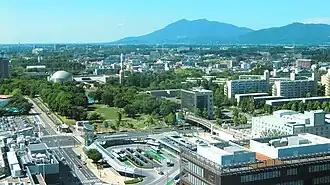
Tsukuba (つくば) is a city in Ibaraki Prefecture, in the Kantō region north of Tokyo. Unlike most Japanese cities, Tsukuba was largely planned and built from the 1960s onward as Tsukuba Science City — a purpose-made centre for research and higher education, intended to relieve Tokyo and concentrate the nation's scientific brainpower in one place. Today it is home to the University of Tsukuba, one of Japan's most respected public universities (and the alma mater of several Nobel laureates), the JAXA space agency's main research centre, and dozens of national research institutes.
The result is an unusual city: modern, spacious, low-rise and exceptionally well laid out, threaded with bicycle paths and green corridors rather than the dense tangle of an older Japanese town. Yet Tsukuba is not all laboratories. It stands at the foot of Mount Tsukuba, a much-loved twin-peaked mountain steeped in legend and poetry, offering shrines, hiking trails, a cable car and sweeping views over the Kantō plain. The surrounding countryside is mostly agricultural.
Tsukuba has a temperate Kantō climate — warm, humid summers and cool, fairly dry winters. The science museums are pleasant year-round; Mount Tsukuba is best in spring and autumn, with plum blossom on its slopes in late winter and foliage in October. The city divides loosely into the central district around the Tsukuba Express station and the campus, and the rural Mount Tsukuba area to the north.
Planning Tsukuba? Tell us your dates and we’ll tailor the trip.
Ask on WhatsAppHow do you get there?
By Train
The Tsukuba Express Line (TX) connects Tsukuba directly to Akihabara in central Tokyo in about 45 minutes for ¥1,150; no reservation is needed. From Narita Airport, the simplest option is the Narita Kūkō Kōtsū express bus direct to Tsukuba Station's bus terminal, running six times a day for around ¥2,400; a train route is possible but requires at least two changes and cannot use a Japan Rail Pass.
By Car / Road
Highway buses (高速バス) run to Tsukuba from Tokyo Station's Yaesu south exit; most go to the University of Tsukuba, but you can alight at Tsukuba Center, the bus hub by the Tsukuba Express station — about 70 minutes for around ¥1,150 each way. By car, Tsukuba is reached via the expressway network from Tokyo.
Tsukuba is extremely accessible and well laid-out. The infrastructure is built around two major roadways — the Higashi-Ōdori on the east and the Nishi-Ōdori on the west — running either side of the university, with the campus linked to downtown by a dedicated network of bicycle paths and bridges known as the Pedestrian Way. Bicycle rental is available in front of the train station (ask for "rent-a-cycle"): about ¥500 per day, open 09:00–18:30, with bikes to be returned by 18:30 unless rented for several days. For Mount Tsukuba, the Tsukuba-san Shuttle Bus runs from the Tsukuba Express station to Tsukuba Shrine (¥720 each way) and on to Tsutsujigaoka near the top (around ¥1,000); the last bus back is at 17:00.
What are the things to do?
- Tsukuba Space Center — JAXA's research centre, with free exhibits on rockets, satellites and Japan's role in the International Space Station; entrance on Gakuen East Road. Open 10:00–17:00; free. Guided tours (in Japanese) run with reservations.
- Tsukuba Expo Center — Marked by a large orange rocket model visible from the station; features an H2 rocket display, a planetarium, robots and undersea vehicles. Admission ¥410, or ¥820 including the planetarium.
- Science Square Tsukuba — A museum showcasing research from the National Institute of Advanced Industrial Science and Technology (AIST), with hands-on interactive displays and 90-minute tours. Open Tue–Sun 09:30–17:00.
- The Science Museum of Map and Survey — At 1 Kitasato; open 09:30–16:30; free.
- Mount Tsukuba Shrine (筑波山神社) — At the foot of the hiking path and cable car, notable for a huge bell and Nikkō-style carvings.
Tsukuba's main draw for active visitors is Mount Tsukuba, a double-peaked mountain with a rich history. Several hiking trails climb it — the most direct reaches the top in about an hour, while the longest passes shrines and a large Buddha-like stone; for the less fit, a cable car runs to the top (around ¥580 one way, with restaurants and shops at the terminus). The true summit of Nantai-san is a short hike from there, while the twin peak of Nyotai-san has a dramatic granite formation, a small shrine and the famous toad-shaped rock, Gama-ishi. In the city itself, exploring the science museums is the signature activity, and the flat, well-connected layout makes Tsukuba ideal for cycling between sights.
Planning Tsukuba? Want these on a customised itinerary?
Ask on WhatsAppWhere to eat?
Tsukuba's dining is varied, reflecting its university-and-research population.
- Ton-Q (とんQ) — 13-12 Higashiarai; daily 10:00–22:00. Excellent tonkatsu (breaded, deep-fried pork cutlet); ¥1,000–2,000.
- Menya AOI (麺や 蒼) — Delicious miso ramen in a thick soup, with large servings; around ¥800.
- Tsukuba Sansuitei (山水亭) — 254 Onozaki. Traditional Japanese food; around ¥3,000.
- Heartland (ハートランド) — 3584-11 Shimana; 11:30–14:45 and 18:00–21:00. A small Italian restaurant; around ¥2,000.
- West House (ウエストハウス) — 2-14-12 Ninomiya; 11:00–21:45, closed Thursdays. Western food, and a famous 60 cm-tall parfait, "Bikkuri Thunder Mountain" (¥3,000, said to feed ten); mains around ¥1,000.
- El Torito (エルトリート) — American-style Mexican food, a rare find in Japan.
Where to drink?
Many bars and izakaya cluster in the Kuidaore district, near the crossing of Kita-Ōdori and Nishi-Ōdori. Bar Dali (Amakubo 3-15-1, across from a 7-Eleven on the Tsukuba University bus route) gets lively after 19:00, and Bar Progress (Amakubo 2-4-21) is a gathering spot for researchers and students. Green tea is the everyday non-alcoholic drink. Tap water in Japan is safe to drink.
Planning Tsukuba? We’ll book the stays and dining for you.
Ask on WhatsAppWhere to stay?
- Budget: Hotel New Takahashi Takanodai (ホテルニューたかはし高野台店) is a no-frills hotel for researchers and students, around ¥4,000.
- Mid-range: Daiwa Roynet Hotel Tsukuba (ダイワロイネットホテルつくば), at Azuma 1-5-7 next to Tsukuba Center along Chuo-dori, around ¥8,000.
- Upscale: Hotel Nikko Tsukuba (ホテル日航つくば), at Amakubo 1-1364-1 next to Tsukuba Station, from around ¥11,500.
What should you buy?
Tsukuba's local specialty is Gama no Abura (ガマの油), "toad oil," an ointment that has existed since the Edo period and is tied to Mount Tsukuba's toad legends. The city has several large shopping centres — LALA GARDEN, Q't and SEIBU — and Iias (イーアス), a three-floor mall one stop away at Kenkyū-Gakuen on the Tsukuba Express, with stores, restaurants, a cinema and a pet shop. Right-On, a Japanese denim chain, has its flagship store here (Azuma 1-11; 10:00–21:00). Prices are fixed; bargaining is not customary in Japan.
Where to go next?
- Tsuchiura — A lakeside city on Lake Kasumigaura, a short trip away.
- Mito — The capital of Ibaraki Prefecture, home of Kairakuen Garden.
- Kasama — A nearby town known for pottery and the Kasama Inari Shrine.
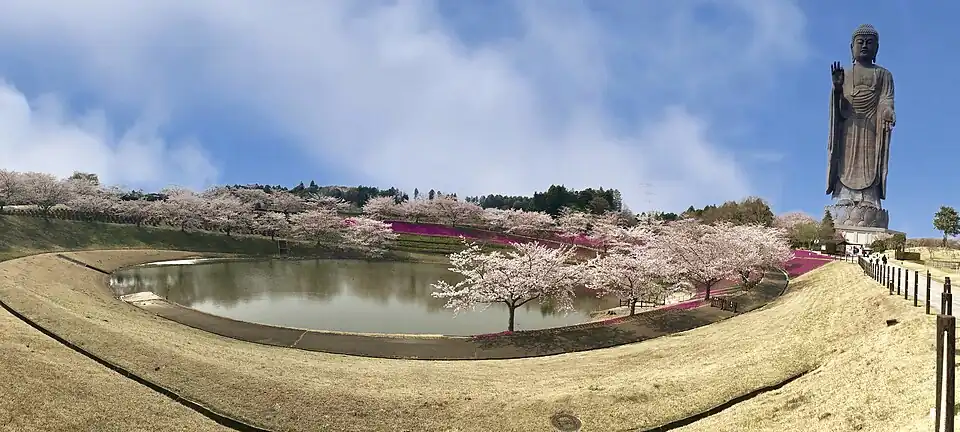
- Ushiku — A neighbouring city, home of the towering Ushiku Daibutsu.
- Ishioka — A historic town to the north, near Ibaraki Airport.
- Tokyo — Just 45 minutes away via the Tsukuba Express to Akihabara.
Nearby in Ibaraki
More places to explore around Tsukuba.
Guide content as of May 2026. Portions adapted from Wikivoyage, CC BY-SA 4.0.

Contact Us
Get in touch with us.
Get in touch
Contact Us
Tell us where you'd like to go and how you like to travel. A real Tripcuro planner — not a bot — will craft an itinerary around you.
- Personalised, hassle-free planning end-to-end
- Transparent pricing, no hidden costs
- 24/7 support for complete peace of mind