
India
Southern Asia · 710 destinations across 36 regions
Photography coming soonOverview
India is a land of staggering diversity — the world's most populous nation and one of its oldest civilisations, stretching from the snow-capped Himalayas to tropical backwaters, from searing deserts to lush rainforests. Travellers come for the iconic monuments (the Taj Mahal, Jaipur's palaces, the cave temples of Ajanta and Ellora), but stay for the sensory overload: street food that changes every hundred kilometres, festivals that fill every calendar month, and a living tapestry of religions, languages and traditions that has no parallel anywhere on earth. India rewards the curious and the patient — it can be overwhelming, but for those who embrace its chaos, it is endlessly fascinating.
India suits every kind of traveller. Budget backpackers can get by on ₹1,500–2,500 (US$18–30) a day; mid-range travellers live comfortably on ₹4,000–8,000 (US$48–95); and luxury seekers will find world-class heritage hotels, palace stays and wellness retreats at a fraction of Western prices. Whether you are drawn to spiritual seeking in Varanasi, wildlife safaris in Madhya Pradesh, the beaches of Goa and Kerala, or the tech-hub buzz of Bangalore, India delivers experiences that are genuinely unavailable anywhere else.
Geography & Climate
India occupies most of the Indian subcontinent, covering 3.29 million km² — the seventh-largest country by area. The northern frontier is defined by the Himalayan range, with peaks exceeding 8,000 m (including Kangchenjunga at 8,586 m on the Sikkim–Nepal border). South of the mountains, the Indo-Gangetic Plain stretches across northern India, one of the world's most fertile and densely populated regions. The Deccan Plateau dominates the peninsula, flanked by the Western and Eastern Ghats mountain ranges. The Thar Desert covers much of Rajasthan, while the coastlines — over 7,500 km of them — range from the mangrove swamps of the Sundarbans to the palm-fringed beaches of Goa and Kerala.
India's climate is dominated by the monsoon. The southwest monsoon (June–September) delivers 70–90% of annual rainfall to most of the country. Winters (November–February) are dry and mild in the south, cold in the north (Delhi drops to 2–8°C, the Himalayas see heavy snow). Summers (March–May) bring extreme heat to the plains — Rajasthan and central India regularly exceed 45°C. The northeast monsoon (October–December) brings rain to Tamil Nadu and the southeast coast. The Andaman and Nicobar Islands and Lakshadweep maintain a tropical maritime climate year-round.
Tell us your dates and we'll tailor your India trip around them.
WhatsAppWhen to Visit
The best time for most of India is the cool, dry season from October to March. This window covers the peak tourist season (November–February) when Rajasthan, Delhi, Agra, Goa and Kerala are at their most pleasant, with daytime temperatures of 20–30°C.
Regional breakdown:
- Himalayan North (Jammu & Kashmir, Ladakh, Himachal, Uttarakhand): May–September for trekking and hill stations; Ladakh is accessible June–September only.
- Rajasthan & the Plains: October–March; avoid April–June (extreme heat) and July–September (monsoon humidity).
- Goa & the West Coast: November–February (dry, 25–32°C); monsoon (June–September) brings dramatic rain but some beach shacks close.
- Kerala & the South: October–March; the northeast monsoon hits Tamil Nadu in October–December.
- Northeast India: October–April; heavy monsoon rains June–September make travel difficult.
- Andaman & Nicobar Islands: November–April; monsoon season (May–October) brings rough seas.
Key festivals worth planning around: Diwali (October/November), Holi (March), Durga Puja/Dussehra (September/October), Pushkar Camel Fair (November), Republic Day parade in Delhi (26 January), Onam in Kerala (August/September), Pongal in Tamil Nadu (January), and the Kumbh Mela (every 12 years at four rotating sites).
Visa & Entry
Most foreign nationals require a visa to enter India. India offers an e-Visa facility (evisa.gov.in) to citizens of over 160 countries, available for tourism (30-day, 1-year, and 5-year options), business, medical, and conference purposes. The e-Visa must be applied for at least 4 days before travel; processing typically takes 72 hours. Citizens of Nepal and Bhutan do not need a visa. Japan, South Korea and a few other nations qualify for visa-on-arrival at select airports.
Always verify current requirements with the Indian embassy or consulate in your country before travel. Passport must be valid for at least 6 months from the date of arrival with at least 2 blank pages.
Want us to time your trip around a festival? We'll handle it.
WhatsAppMoney & Costs
The currency is the Indian Rupee (INR), symbol ₹. As of 2025, approximately ₹83 ≈ US$1. Notes circulate in denominations of ₹10, 20, 50, 100, 200, 500 and 2,000 (the ₹2,000 note has been withdrawn from circulation but remains legal tender).
Daily budgets:
- Budget: ₹1,500–2,500 (US$18–30) — dorm beds or basic guesthouses, street food and dhabas, public transport.
- Mid-range: ₹4,000–8,000 (US$48–95) — 3-star hotels, restaurant meals, auto-rickshaws and occasional domestic flights.
- Luxury: ₹15,000–50,000+ (US$180–600+) — heritage hotels, palace stays, private drivers, fine dining.
ATMs are widespread in cities and towns (HDFC, SBI, ICICI, Axis Bank are reliable). Visa and Mastercard are accepted at hotels, upscale restaurants and shops; cash is essential for markets, street food, small towns and rickshaws. UPI digital payments (PhonePe, Google Pay, Paytm) are ubiquitous — some travellers set up a UPI wallet. Tipping: ₹50–100 for restaurant service (if not already included), ₹200–500/day for guides, ₹100–200 for porters.
Getting In
Major international airports:
- Delhi (DEL) — Indira Gandhi International; India's busiest, hub for northern India.
- Mumbai (BOM) — Chhatrapati Shivaji Maharaj; hub for western India and long-haul connections.
- Bangalore (BLR) — Kempegowda; gateway to southern India.
- Chennai (MAA) — key entry for Tamil Nadu and the southeast.
- Kolkata (CCU) — gateway to eastern India and the northeast.
- Hyderabad (HYD) — Rajiv Gandhi International.
- Kochi (COK) — Cochin; popular entry for Kerala.
- Goa (GOI/GOX) — Manohar International (GOX, new) and Dabolim (GOI).
Land borders: India shares open or semi-open crossings with Nepal (multiple points including Sunauli/Belahiya, Raxaul/Birgunj, Kakarbhitta), Bhutan (Phuentsholing), Bangladesh (Benapole/Petrapole, Akhaura), and Myanmar (Moreh/Tamu). The Pakistan border at Wagah/Attari is open for the daily flag-lowering ceremony but general tourist crossing is restricted.
Ferry/cruise: Cruise ships dock at Mumbai, Goa (Mormugao), Kochi, Chennai and Kolkata. There are no regular international ferry services.
We handle the bookings and budgeting — you just travel.
WhatsAppGetting Around
Domestic flights: India has an extensive domestic network. IndiGo dominates (60%+ market share), with Air India, SpiceJet, Vistara (now merged with Air India), Akasa Air and Go First (currently grounded) offering alternatives. Book early for fares as low as ₹2,500–4,000 (US$30–48) one-way between major cities.
Railways: Indian Railways is one of the world's largest networks — over 68,000 km of track, 7,000+ stations. Classes range from unreserved General to AC First Class. Book via the IRCTC website or app (irctc.co.in) — foreign tourists can also use the Foreign Tourist Quota at major stations. The Shatabdi and Rajdhani express services are fast and comfortable; the Vande Bharat trains are the newest high-speed option. Long-distance trains (e.g. Delhi–Mumbai, 16 hours) should be booked 2–4 weeks ahead.
Buses: State-run and private buses connect virtually every town. Volvo/AC buses are comfortable for overnight routes. RedBus and other platforms allow online booking.
Taxis & rideshare: Uber and Ola operate in all major cities. For shorter distances, auto-rickshaws and cycle-rickshaws are ubiquitous — negotiate the fare beforehand or insist on the meter. In cities like Mumbai, the black-and-yellow taxis and auto-rickshaws use meters reliably; in Delhi and many other cities, you will need to negotiate.
Common scams: Unofficial taxi touts at airports (use pre-paid taxi counters or app-based cabs); "the monument is closed today" touts who redirect you to shops; inflated prices at tourist shops; fake SIM card sellers. Always use official counters and registered services.
Culture & Etiquette
India is culturally complex, and customs vary by region, religion and community. Some general guidelines:
- Greetings: "Namaste" (palms together) is universal and respectful. Handshakes are common in business and urban settings, especially between men. Avoid physical contact with the opposite gender unless initiated by them.
- Dress: Modest clothing is expected at religious sites — cover shoulders and knees. Remove shoes before entering temples, mosques, gurdwaras and many homes. A scarf or shawl is useful for women visiting mosques and some temples.
- Religious sites: Photography may be restricted. Ask before photographing people, especially at religious ceremonies. Do not point your feet at people or religious objects. The left hand is considered unclean — use the right hand for eating, giving and receiving.
- Food: Many Hindus are vegetarian; beef is taboo in most states. Muslims avoid pork. Alcohol is restricted or banned in Gujarat, Bihar, Nagaland, Mizoram and parts of other states. Eating with the right hand is traditional.
- Tipping: Not always expected but appreciated — ₹50–100 at restaurants, round up auto-rickshaw fares, tip hotel porters ₹50–100 per bag.
- Photography: Always ask permission before photographing people, especially in rural areas and tribal regions. Some monuments charge extra for camera use.
Prefer to talk it through? We're a WhatsApp message away.
WhatsAppSafety
India is generally safe for tourists, but vigilance is warranted. Petty crime (pickpocketing, bag snatching) occurs in crowded areas and on public transport — keep valuables secure and use hotel safes. Women travellers should exercise particular caution, especially after dark and in isolated areas; consider women-only compartments on metro trains (available in Delhi, Mumbai, Chennai) and use app-based cabs rather than hailing taxis at night.
Regional cautions: Avoid the India–Pakistan border areas (except Wagah for the ceremony). Parts of Jammu & Kashmir and the northeast have travel restrictions — check the latest advisories. Maoist/Naxalite activity affects parts of Chhattisgarh, Jharkhand and Odisha's interior.
Health: Drink only bottled or purified water. Avoid ice in street stalls. Hepatitis A and typhoid vaccinations are recommended; malaria prophylaxis for rural/forest areas. Air quality in Delhi and other north Indian cities is hazardous from October–February — consider an N95 mask. Carry basic medication; pharmacies are widely available. Emergency number: 112 (general), 100 (police), 102 (ambulance), 108 (emergency services).
Top Regions
- Himalayan North (Jammu & Kashmir, Ladakh, Himachal Pradesh, Uttarakhand) — Dramatic mountain scenery, hill stations, Buddhist monasteries and world-class trekking.
- The Plains (Punjab, Haryana, Uttar Pradesh, Bihar, Delhi) — The heartland: the Taj Mahal, Varanasi's ghats, Amritsar's Golden Temple, and India's capital.
- Western India (Rajasthan, Gujarat, Maharashtra, Goa) — Desert forts and palaces, Mumbai's energy, Bollywood, Ajanta & Ellora caves, and Goa's beaches.
- Central India (Madhya Pradesh, Chhattisgarh) — Wildlife safaris (tigers at Kanha, Bandhavgarh), Khajuraho's temples, Bhimbetka rock art, and tribal heritage.
- Eastern India (West Bengal, Odisha, Jharkhand, Sikkim) — Kolkata's colonial charm, Jagannath Temple at Puri, Konark's Sun Temple, and Sikkim's Himalayan vistas.
- North-Eastern India (Assam, Meghalaya, Manipur, Nagaland, Arunachal Pradesh, Mizoram, Tripura) — Tribal cultures, Kaziranga's one-horned rhinos, living root bridges, and pristine landscapes.
- Southern India (Kerala, Tamil Nadu, Karnataka, Andhra Pradesh, Telangana) — Temple towns, Kerala's backwaters, Bangalore's tech scene, Hampi's ruins, and Pondicherry's French colonial heritage.
Tell us your dates and we'll tailor your India trip around them.
WhatsAppTop Destinations
- Delhi — India's sprawling capital: Mughal-era Red Fort and Jama Masjid, colonial Lutyens' architecture, and chaotic, vibrant bazaars.
- Agra — Home to the Taj Mahal, the incomparable white marble mausoleum and one of the Seven Wonders of the World.
- Jaipur — The Pink City: Amber Fort, City Palace, Hawa Mahal, and a gateway to Rajasthan's desert heritage.
- Varanasi — One of the world's oldest continuously inhabited cities; the sacred ghats on the Ganges and the evening Ganga Aarti ceremony are unforgettable.
- Mumbai — India's financial capital and home of Bollywood: colonial architecture, street food, Marine Drive, and the Gateway of India.
- Goa — Portuguese-colony heritage, palm-fringed beaches, vibrant nightlife, and a laid-back atmosphere unlike anywhere else in India.
- Kerala Backwaters — Serene houseboat cruises through palm-lined canals and lagoons, especially around Alleppey (Alappuzha) and Kumarakom.
- Hampi — The awe-inspiring ruins of the Vijayanagara Empire, a UNESCO World Heritage Site of boulder-strewn landscapes and ancient temples.
- Amritsar — The Golden Temple, the holiest Sikh shrine, with its stunning architecture and the world's largest community kitchen.
- Khajuraho — Medieval Hindu and Jain temple complexes famed for their intricate erotic sculptures, a UNESCO site.
- Ranthambore & Kanha National Parks — Premier tiger reserves offering India's best wildlife safaris.
- Darjeeling & Sikkim — Tea plantations, Himalayan panoramas including Kangchenjunga, and a gateway to India's northeast frontier.
Regions & States
India has 36 regions with guides — pick one to drill into its destinations.

Andaman and Nicobar Islands
22 destinations
Andhra Pradesh
24 destinations
Arunachal Pradesh
20 destinations

Assam
25 destinations
Bihār
19 destinations
Chandigarh
1 destination
Chhattīsgarh
19 destinations
Dādra and Nagar Haveli and Damān and Diu
4 destinations
Delhi
7 destinations
Goa
22 destinations
Gujarāt
23 destinations
Haryāna
20 destinations
Himāchal Pradesh
24 destinations

Jammu and Kashmīr
24 destinations
Jhārkhand
20 destinations
Karnātaka
26 destinations

Kerala
31 destinations
Ladākh
15 destinations
Lakshadweep
11 destinations

Madhya Pradesh
28 destinations
Mahārāshtra
26 destinations

Manipur
23 destinations
Meghālaya
15 destinations
Mizoram
15 destinations
Nāgāland
15 destinations

Odisha
24 destinations
Puducherry
5 destinations

Punjab
18 destinations
Rājasthān
24 destinations
Sikkim
18 destinations
Tamil Nādu
24 destinations
Telangāna
19 destinations
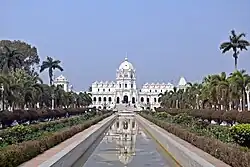
Tripura
23 destinations

Uttar Pradesh
21 destinations
Uttarākhand
24 destinations

West Bengal
31 destinations
Not sure where to start in India? Tell us how you like to travel and we'll shape the route.
WhatsAppTop Destinations
The places first-time and returning travellers ask for most.
Agartala
Agartala (Bengali: আগরতলা) is the capital of Tripura and, after Guwah…
Agra
Agra, on the banks of the Yamuna some 200 km southeast of Delhi, was…
Aizawl
Aizawl is the capital and largest city of Mizoram, draped along a ser…
Ajodhya Hill and Forest Reserve Area
The Ajodhya Hill and Forest Reserve Area is a hilly, forested upland…
Alappuzha
Alappuzha — still widely known by its older name Alleppey — is a low-…
Amaravati
Amaravati is the planned legislative capital of Andhra Pradesh, laid…
Amritsar
Amritsar is the spiritual and cultural heart of Sikhism and one of th…

Anantapur
Anantapur is a city of more than half a million people in the Rayalas…
Andro
Andro (Meitei: ꯑꯟꯗ꯭ꯔꯣ) is a small town in the Imphal Valley of Manipu…

Araku Valley
Araku Valley is a hill station in the Eastern Ghats of northern Andhr…

Athirappilly Falls
Athirappilly Falls, often called the "Niagara of India," is a spectac…

Ayodhya
Ayodhya, on the banks of the Sarayu river in the Awadh region of Utta…

Contact Us
Get in touch with us.
Get in touch
Contact Us
Tell us where you'd like to go and how you like to travel. A real Tripcuro planner — not a bot — will craft an itinerary around you.
- Personalised, hassle-free planning end-to-end
- Transparent pricing, no hidden costs
- 24/7 support for complete peace of mind