
Assam
India · State · 25 destinations with guides
Photography coming soonOverview
Assam is the largest and most populous of India's "seven sister" states, a land of red hills, green tea gardens and the broad blue thread of the Brahmaputra. Wrapped around the river's vast braided flood plain — at times 16 km wide — the state stretches roughly 1,000 km from the Himalayan foothills in the east to the Bangladesh border in the west. With an area of 78,438 km² it is comparable in size to Ireland or Austria, and home to more than 31 million people. The Barak Valley in the south, separated from the main Brahmaputra Valley by the hills of Karbi Anglong and Dima Hasao, forms a distinct, largely Bengali-speaking pocket of the state.
What defines Assam as a travel destination is its extraordinary natural richness. It is one of the world's great biodiversity zones, and within an 80–100 km journey you can pass from tropical rainforest and wet paddy fields to near-Alpine conditions in the foothills. Two UNESCO World Heritage Sites — Kaziranga and Manas — protect the planet's largest population of one-horned rhinoceros and a tiger reserve in the Eastern Himalayan foothills respectively. Add Majuli, claimed as one of the largest river islands in the world and a centre of Vaishnav monastic culture, and the green expanse of tea estates that produce around a quarter of the world's tea, and the case for visiting becomes clear.
Assam is also a genuine crucible of cultures, a meeting point of South Asian and Southeast Asian worlds. The Assamese language itself shows hybridity between Indo-Iranian, Tibeto-Burman and Tai-Kadai roots, and the state is home to dozens of distinct ethno-cultural groups — Bodo, Karbi, Mishing, Dimasa, Tiwa, Rabha and many more. For almost 600 years from the 13th century the region was a unified sovereign kingdom under the Ahoms and Koches, and that long history is written into temples, royal burial mounds and old capitals. Despite all this, Assam remains decidedly off the standard tourist trail — which is much of its appeal.
When to Visit
The best window is the cool, dry season from mid-October to April. National parks including Kaziranga typically open to visitors from around November and close with the onset of the monsoon in spring; the heart of the wildlife season runs November to March, when grasslands are short and animals easy to spot.
Spring (March–April) and autumn (September–October) are the most pleasant times for general travel, with moderate temperatures and rainfall. Summer is temperate by Indian standards — highs of 35–38°C — but very humid, while winter minimums drop to 6–8°C with foggy nights and mornings. The monsoon brings heavy downpours, flooding along the Brahmaputra and frequent afternoon thunderstorms locally called Bordoicila; many parks shut entirely during this period.
For festivals, time a visit to mid-January for Magh Bihu (the harvest festival, with its bonfires and feasting) or mid-April for Rongali Bihu, the Assamese new year and the state's most exuberant celebration. The Kaziranga Elephant Festival is also usually held in the cool season.
Tell us your dates and we'll shape a Assam route around them.
WhatsAppGetting Around
Guwahati is the natural hub for almost all travel within Assam. Lokpriya Gopinath Bordoloi International Airport connects the city to the rest of India, and smaller airports at Dibrugarh, Jorhat, Silchar and Tezpur handle regional flights.
Rail is the workhorse for long hops along the Brahmaputra Valley. The Guwahati–Dibrugarh line threads the length of Upper Assam, calling at Nagaon, Jorhat and Tinsukia, while a separate line crosses the hills south to Silchar and the Barak Valley. Trains are comfortable and inexpensive but can be slow.
For road travel, state and private buses and shared taxis link all major towns. Approximate driving distances from Guwahati: Kaziranga about 200 km (4–5 hours), Jorhat about 300 km, Tezpur about 180 km, Dibrugarh about 440 km, and Silchar a long mountain road of around 300 km. Reaching Majuli requires a ferry across the Brahmaputra from Nimati Ghat near Jorhat. Within parks and remote areas, hired jeeps and, around Kaziranga, elephant-back safaris are the usual means of getting about.
Top Destinations
- Guwahati — capital and largest city, the gateway to the northeast, with the hilltop Kamakhya temple, riverfront ghats and 2,000 years of history.
- Dibrugarh — Upper Assam tea town, home to parks, gardens and temples, and a base for Dibru-Saikhowa.
- Golaghat — old urban centre serving as a southern gateway to Kaziranga, with ancient ruins and 17th–19th-century sacred sites.
- Jorhat — considered the cultural centre of Assam and the last capital of the Ahom kingdom; jumping-off point for Majuli.
- Nagaon — birthplace of the great saint-scholar Srimanta Sankardeva, near the Bordua shrine.
- Silchar — heart of the Bengali-speaking Barak Valley, with tea gardens, the Bhuban Hills and the old Cachari capital of Khaspur.
- Tezpur — ancient town and self-styled cultural capital, scattered with ruins and backed by Himalayan views.
- Tinsukia — far-eastern town famous for its endless stretches of tea gardens.
- Dibru-Saikhowa National Park — riverine wilderness rich in birds, with feral horses on the Brahmaputra islands.
- Kaziranga National Park — UNESCO World Heritage Site and the single best place on earth to see the one-horned rhino.
- Manas National Park — UNESCO-listed tiger reserve in the Eastern Himalayan foothills, with clear rivers and sandy beaches.
- Nameri National Park — one of the most scenic parks in the state, superb for birdwatching with a strong chance of tigers.
- Hoollongapar Gibbon Sanctuary — dense forest home of India's only ape, the western hoolock gibbon.
- Majuli — vast river island and centre of Vaishnav monasteries (satras) and Mishing village life.
- Bongaigaon — commercial and industrial hub in Lower Assam with monuments of Assamese culture.
- Bordua — birthplace of Srimanta Sankardeva, drawing visitors to study Sattriya dance and Vaishnavism.
- Borgang — picturesque rural setting for experiencing the folklore and culture of village Assam.
Want the scenic legs and stays booked for you? Just ask.
WhatsAppCuisine
Assamese food is light, subtle and built around the river and the wet paddy fields, leaning on minimal spice and plenty of fresh herbs. A typical meal centres on rice with dal, leafy greens (xaak) and a fish curry — fish from the Brahmaputra and its wetlands is a staple. The most distinctive dish is masor tenga, a sour, soupy fish curry soured with tomato, lemon or the thekera fruit, perfect against the humid climate. Khar, an alkaline preparation made with raw papaya and filtered ash, is the dish that opens many traditional meals.
Look out for aloo pitika (mashed potato with mustard oil and onion), pork with bamboo shoot favoured by many of the state's hill communities, smoked and dried fish, and the duck curry often paired with ash gourd. Sweets and snacks include pitha — rice-flour cakes prepared especially around Bihu — and til pitha rolled with sesame and jaggery. Finish with a cup of strong local tea, the produce that made Assam famous.
Guwahati has the widest spread of restaurants, from heritage Assamese thali houses in the Pan Bazar and Uzan Bazar areas to riverside eateries near the ghats. Vegetarians are well catered for, though fish and meat are central to most traditional menus; ask in advance at smaller village establishments.
Culture & Festivals
The defining festival of Assam is Bihu, celebrated three times a year and marking the agricultural calendar. Rongali (Bohag) Bihu in mid-April is the Assamese new year and the most joyous, with days of husori singing, dancing and feasting. Magh (Bhogali) Bihu in mid-January is the harvest festival of bonfires, community feasts and traditional games, while Kongali (Kati) Bihu in October is a quieter, more contemplative observance.
Religious life adds further dates: the Ambubachi Mela at Guwahati's Kamakhya temple, usually in June, is one of the great gatherings of eastern India. Vaishnav monastic culture, centred on the satras of Majuli and the shrine at Bordua, sustains the graceful Sattriya dance, now recognised as one of India's classical dance forms, along with devotional borgeet songs and masked bhaona theatre.
Assam's crafts are world-class. The state is the only place on earth where all four major silk types are produced, including the golden Muga silk unique to Assam, the peace silk Eri, paat and tassar; the weaving village of Sualkuchi is the traditional heart of the industry. Bell-metal and brass work thrives at Sarthebari, and the state's many ethno-cultural groups each contribute distinct textiles, music and instruments such as the dhol, pepa and gogona.
Travelling during a festival? We'll plan around the crowds.
WhatsAppNotable Experiences
- Rhino safari in Kaziranga — track one-horned rhinos, wild elephants, swamp deer and tigers by jeep through tall elephant grass, or join an early-morning elephant-back safari as mist lifts off the grasslands.
- Satra-hopping on Majuli — cross the Brahmaputra by ferry to the great river island and visit centuries-old Vaishnav monasteries, watch bhaona mask-making and Sattriya rehearsals, and stay in a Mishing stilt-house village.
- Climb to Kamakhya temple, Guwahati — visit the hilltop shrine on Nilachal Hill, one of the most important Shakta pilgrimage sites in India, and look out over the city and the river below.
- Tea-estate stays in Upper Assam — base around Jorhat, Dibrugarh or Tinsukia in a colonial-era planter's bungalow, walk the tea gardens at dawn and tour a working factory to see Assam's signature brew made.
- Wildlife and birding at Nameri or Manas — raft the clear rivers and walk the foothill forests of Nameri for some of the finest birdwatching in India, or explore Manas, a UNESCO tiger reserve on the Bhutan border.
Top Destinations
Every destination in Assam with a guide — tap a place for the full guide.

Bongaigaon
Bongaigaon is a busy town of around 93,000 people in Lower Assam, Ind…
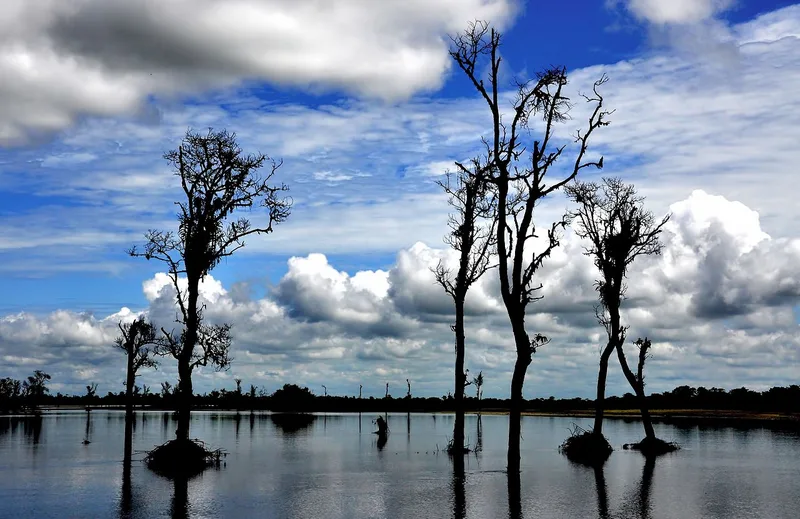
Dibru-Saikhowa National Park
Dibru-Saikhowa National Park is a remote, water-laced wilderness in t…

Dibrugarh
Dibrugarh, in Upper Assam on the south bank of the Brahmaputra, is th…

Golaghat
Golaghat, in Upper Assam, is one of the state's oldest urban settleme…
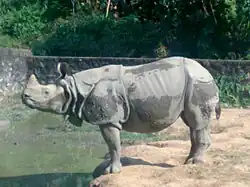
Guwahati
Guwahati, the capital and largest city of Assam, sprawls along the so…
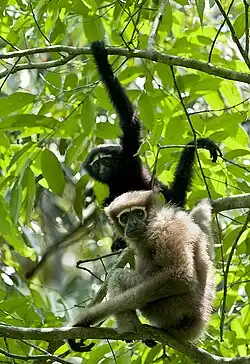
Jorhat
Jorhat, a city of around 150,000 people in Upper Assam, carries an ou…
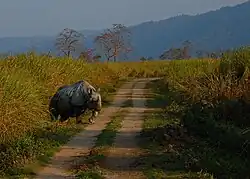
Kaziranga National Park
Kaziranga National Park (pronounced kah-zih-rawng-ah; Assamese Kājira…
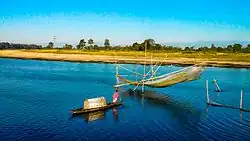
Majuli
Majuli (pronounced mah-zoo-lih), also spelled Majoli, is the largest…
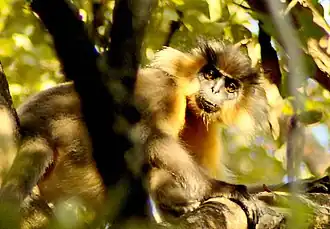
Manas National Park
Manas National Park is a UNESCO World Heritage Site in Lower Assam, s…
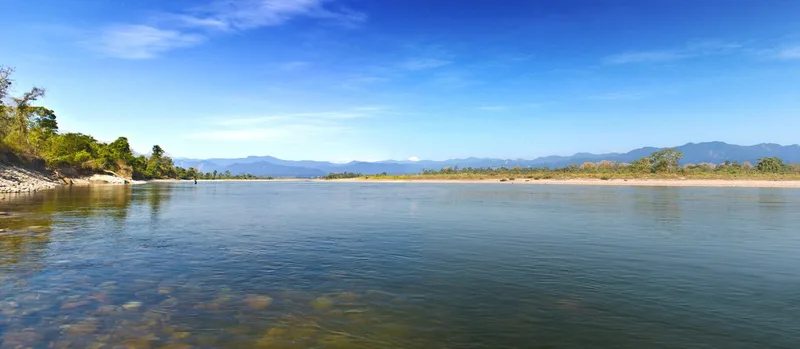
Nameri National Park
Nameri National Park is a roughly 200-km² tiger reserve in the foothi…
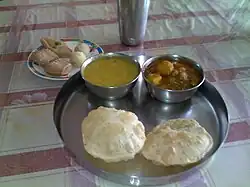
Silchar
Silchar is the largest city of the Barak Valley, the southern arm of…
Tezpur
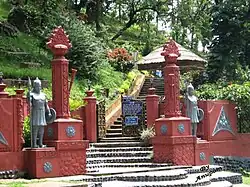
Tezpur — pronounced tehz-poor, "town of blood" in legend — is the lar…
Tinsukia
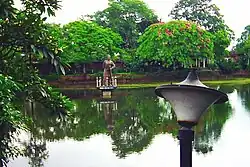
Tinsukia (pronounced tih-nih-soo-kih-ah; Assamese Tinichukīẏā) is wid…
Barpeta
Barpeta is a town in lower Assam, on the north bank of the Brahmaputr…
Bordua
Bordua — better known by the name of its great religious complex, Bor…
Borgang
Borgang is a small village in the Sonitpur district of Assam, India,…
Dhubri
Dhubri is the principal town of westernmost Assam, set on the north b…
Goalpara
Goalpara is a district town in lower Assam, set on the south bank of…
Haflong
Haflong is the only hill station in Assam and the largest town and he…
Hajo
Hajo is an ancient pilgrimage town in Kamrup district, about 24 km no…
Hoollongapar Gibbon Sanctuary
Hoollongapar Gibbon Sanctuary is a compact, evergreen forest reserve…
Nagaon
Nagaon — formerly spelled Nowgong — is a city in Central Assam, about…
Orang National Park
Orang National Park (officially Rajiv Gandhi Orang National Park) is…
Sibsagar
Sibsagar (also spelled Sivasagar; Assamese: শিৱসাগৰ) is a historic ci…
Sivasagar
Sivasagar (also spelled Sibsagar; Assamese: শিৱসাগৰ) is a historic to…
Pair the highlights of Assam into one easy trip — we'll plan the route.
WhatsApp
Contact Us
Get in touch with us.
Get in touch
Contact Us
Tell us where you'd like to go and how you like to travel. A real Tripcuro planner — not a bot — will craft an itinerary around you.
- Personalised, hassle-free planning end-to-end
- Transparent pricing, no hidden costs
- 24/7 support for complete peace of mind