
Himāchal Pradesh
India · State · 24 destinations with guides
Photography coming soonOverview
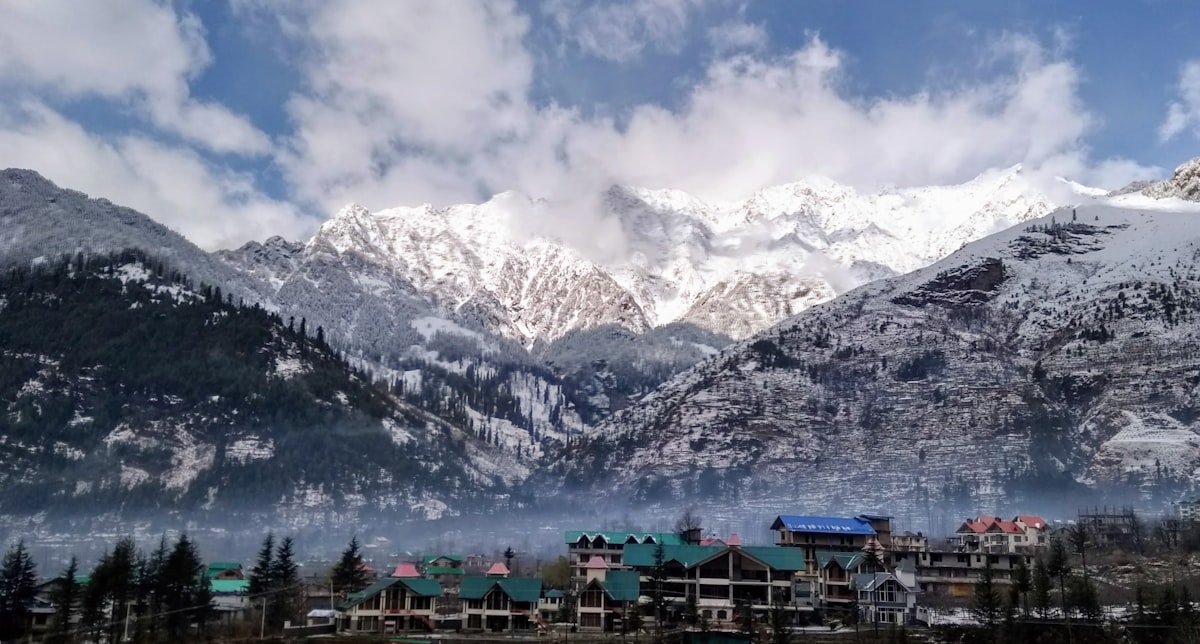
Himāchal Pradesh is India's quintessential mountain state — a 56,000 sq km stack of Himalayan ridgelines, terraced apple orchards, deodar forests and high-desert valleys that climbs from the Shivalik foothills to peaks above 6,000 m on the Tibetan frontier. The land tilts relentlessly upward: the Dhauladhar wall rises almost vertically behind Dharamshala, the Pir Panjal divides the temperate Kullu valley from the rain-shadow desert of Lahaul and Spiti, and the Sutlej, Beas, Chenab and Ravi rivers cut deep gorges through it all. Shimla, the colonial summer capital perched on a forested spur, remains the administrative seat and a symbol of the state's hill-station heritage.
For travellers, Himāchal divides neatly into moods. The lower hills are classic Raj-era hill stations — Shimla, Dalhousie, Kasauli — with promenades, churches and toy-train romance. The Kullu and Parvati valleys are the adventure and backpacker heartland, centred on Manali. Dharamshala and McLeod Ganj host the Tibetan government-in-exile and the residence of the Dalai Lama, giving the Kangra region a distinctly Tibetan-Buddhist character. And beyond the high passes, Lahaul, Spiti and Kinnaur open onto a stark, monastery-dotted trans-Himalayan world that feels closer to Tibet than to India.
What defines the state as a destination is range: you can be drinking filter coffee on a colonial mall in the morning and standing below a Buddhist gompa at 4,000 m two days later. It is one of India's safest, cleanest and most walkable states, built for slow travel by bus, trek and toy train.
When to Visit
The state has sharply different seasons by altitude, so timing depends on where you are headed.
- March–June is peak season for the lower hill stations. Shimla, Manali, Dharamshala and Dalhousie are pleasantly cool (15–25°C) while the plains swelter; expect crowds, higher hotel rates and traffic on the Chandigarh–Shimla and Chandigarh–Manali roads, especially on weekends and around May.
- July–September brings the monsoon. Hillsides turn lush but landslides and road closures are common, particularly on the Kinnaur and Spiti roads. Lahaul–Spiti, lying in the rain shadow, is actually at its most accessible now — the high passes (Rohtang, Kunzum) are open and the valleys are dry.
- October–November is arguably the finest window: clear skies, golden poplars, apple harvest, thin crowds and crisp mountain views before the snow.
- December–February is deep winter. The high valleys close as passes snow shut, but Shimla, Manali, Narkanda and Kufri become snow destinations, and Manali is the gateway for winter sports.
Festival highlights worth planning around: the Kullu Dussehra (a week-long international fair in October, when village deities are carried in procession to Kullu), the Shivratri fair at Mandi (February–March), the Lavi trade fair at Rampur (November), the Winter Carnival at Manali (January) and the Summer Festival at Shimla (late May–June).
Tell us your dates and we'll shape a Himāchal Pradesh route around them.
WhatsAppGetting Around
Himāchal is mountain terrain, so distances on the map are deceptive — figure on slow, winding roads and generous travel times.
Rail is limited and mostly scenic. The UNESCO-listed Kalka–Shimla narrow-gauge toy train (96 km, ~5–6 hours, 102 tunnels) is a destination in itself. The Kangra Valley Railway, another narrow-gauge line, runs from Pathankot through Kangra towards Joginder Nagar. Most of the state has no rail; broad-gauge railheads are at Chandigarh, Kalka, Una and Pathankot on the plains' edge.
Bus is the workhorse. HRTC (Himachal Road Transport Corporation) runs an extensive, reliable and cheap network — ordinary, semi-deluxe and a/c Volvo coaches — linking virtually every town. Overnight Volvo services connect Delhi and Chandigarh with Shimla, Manali and Dharamshala. For remote routes (Spiti, Kinnaur, Pangi) buses are infrequent; check schedules locally and travel early in the day.
Taxi is the practical choice for the high valleys and for groups; rates are union-controlled and posted at taxi stands. Shared taxis (sumos/jeeps) cover Kinnaur–Spiti routes.
Rough road distances and times: Shimla–Manali ~250 km (7–8 hrs), Shimla–Dharamshala ~230 km (8 hrs), Manali–Dharamshala ~250 km (7–8 hrs), Manali–Kaza (Spiti) ~200 km (8–10 hrs over the Kunzum La, summer only), Shimla–Kalpa (Kinnaur) ~240 km (8–9 hrs). The Atal Tunnel below Rohtang Pass now keeps Manali–Lahaul open year-round, a major change for winter access.
Top Destinations
- Shimla — the colonial summer capital and state capital; the Ridge, Mall Road and the Kalka toy train.
- Manali — Kullu valley hub for adventure sports, trekking and the gateway to Lahaul–Spiti.
- Dharamshala & McLeod Ganj — seat of the Tibetan government-in-exile and the Dalai Lama; Buddhist culture below the Dhauladhar.
- Kasol & the Parvati Valley — riverside backpacker villages and trekking trails.
- Kaza & Spiti Valley — high-altitude desert with ancient monasteries (Key, Tabo, Dhankar).
- Kalpa & Kinnaur — apple country with views of Kinnaur Kailash.
- Dalhousie & Khajjiar — quiet Raj-era hill station and an alpine meadow nicknamed "mini Switzerland".
- Chamba — historic temple town in the Ravi valley.
- Bir–Billing — one of the world's top paragliding sites.
- Kufri & Narkanda — winter-sports and apple-belt towns near Shimla.
Want the scenic legs and stays booked for you? Just ask.
WhatsAppCuisine
Himachali food is mountain comfort food — hearty, slow-cooked and built around lentils, rajma (kidney beans), local grains and dairy. The signature spread is the dham, a ceremonial vegetarian feast served on festive occasions, traditionally cooked by a hereditary cook caste (the botis) and eaten seated on the floor; it typically includes rice, madra (chickpeas or beans simmered in yoghurt), khatta (a tangy tamarind or mango preparation), lentils and a sweet such as mittha (sweet rice with dried fruit).
Other regional specialties to look for: siddu (a steamed wheat-flour bun with a savoury or sweet stuffing, served with ghee — a Kullu and Shimla favourite), chha gosht (marinated lamb in a yoghurt-and-gram-flour gravy), tudkiya bhath (a Chamba-style spiced pulao), babru (a stuffed fried bread) and aktori (a buckwheat pancake from Lahaul–Spiti). Apples are everywhere — fresh, as juice, cider and jam — and Spiti is known for green peas and barley dishes.
Travellers find strong Tibetan food across McLeod Ganj, Manali and the Buddhist valleys: momos, thukpa and thenthuk are ubiquitous and cheap. Trout farms in the Kullu and Tirthan valleys serve fresh fish. Local home-brewed liquors include apple and apricot spirits and a barley brew in the high valleys. Vegetarians are very well served statewide; pure-veg restaurants are common, and dham is entirely vegetarian.
Culture & Festivals
Himāchal's culture braids together Hindu hill traditions and, in the north and east, Tibetan Buddhism. Village life across the Kullu, Mandi and Shimla regions revolves around devta worship — local deities housed in ornate wooden temples and carried in palanquins (raths) to fairs, where they "meet" other gods. This living tradition peaks at the Kullu Dussehra (October), an internationally known week-long fair where hundreds of village deities converge on Kullu after the rest of India's Dussehra has ended.
Other major festivals: the Mandi Shivratri fair (February–March), one of the largest deity gatherings in the state; the Lavi fair at Rampur (November), a centuries-old trans-Himalayan trade fair; the Minjar fair at Chamba (July–August), marking the maize harvest; the Halda festival in Lahaul (winter); and Losar, the Tibetan New Year, celebrated in Spiti, Lahaul, Kinnaur and the Buddhist communities of Dharamshala (February–March). Manali's Winter Carnival (January) and Shimla's Summer Festival (late May) are tourism-oriented events.
The state's crafts are distinctive: Kullu shawls and caps in bold geometric borders, Kinnauri shawls, Chamba rumal (fine double-satin-stitch embroidered handkerchiefs), Pahari miniature painting (the Kangra school), woodcarving on temples, and silver jewellery. Folk music and the chain-dance nati of Kullu — once recognised for a record-large gathering of dancers — are central to village celebrations.
Travelling during a festival? We'll plan around the crowds.
WhatsAppNotable Experiences
- Ride the Kalka–Shimla toy train. The UNESCO World Heritage narrow-gauge railway climbs ~1,500 m through 102 tunnels and over arched viaducts; the heritage carriages and the Barog tunnel stretch are the highlights.
- Drive the Spiti circuit. Loop from Shimla through Kinnaur to Kaza and back via Manali (or the reverse), taking in the cliff-hugging monasteries of Tabo (over a thousand years old), Dhankar and Key, the high village of Komic and the green pea fields of the Spiti valley — one of India's great road journeys, summer only.
- Paraglide at Bir–Billing. Take-off at Billing (~2,400 m) and landing at Bir, a site that has hosted a paragliding World Cup and draws pilots from around the world; tandem flights run spring and autumn.
- Trek the Dhauladhar and Kullu trails. Classic routes include the Triund day-hike above McLeod Ganj, the Hampta Pass crossing from Kullu green into Lahaul desert, and treks in the Great Himalayan National Park, a UNESCO World Heritage site near the Tirthan valley.
- Experience Tibetan McLeod Ganj. Visit the Tsuglagkhang complex (the Dalai Lama's temple), the Norbulingka Institute and Tibetan museums, and time a visit to a public teaching by the Dalai Lama when the schedule allows.
Top Destinations
Every destination in Himāchal Pradesh with a guide — tap a place for the full guide.
Bilaspur (Himachal)
Bilaspur is a district town in central Himachal, set on the banks of…
Bir
Bir is a village in the Kangra Valley of Himachal, set at about 1,500…
Chamba
Chamba is an ancient town and former princely capital in the far west…
Dalhousie
Dalhousie is a quiet colonial-era hill station in the Chamba district…
Dharamshala
Dharamshala is a hill town in the Kangra Valley, spread across the sl…
Great Himalayan National Park
The Great Himalayan National Park (GHNP) is a UNESCO World Heritage S…
Hamirpur (Himachal)
Hamirpur is a district town in central-western Himachal, set in the l…
Kalpa
Kalpa is a small apple-orchard village in Kinnaur district, perched a…
Kangra
Kangra is an ancient town in the Kangra Valley of western Himachal, s…
Kasauli
Kasauli is a small, leafy cantonment town in Solan district, set at a…
Kaza
Kaza is the largest town and subdivisional headquarters of the Spiti…
Keylong
Keylong is the administrative headquarters of the Lahaul and Spiti di…
Kinnaur
Kinnaur is a remote, mountainous district in eastern Himachal, border…
Kullu
Kullu is the valley town that gives its name to the broad Kullu Valle…
Manali
Manali sits at about 2,050 m near the head of the Kullu Valley, on th…
Mandi
Mandi is a historic town in the heart of Himachal, set at about 800 m…
McLeod Ganj
McLeod Ganj is the upper, predominantly Tibetan suburb of Dharamshala…
Nahan
Nahan is the headquarters of Sirmaur district, a clean, well-laid-out…
Palampur
Palampur is a green hill town in the Kangra Valley, set at about 1,20…
Pin Valley National Park
Pin Valley National Park lies in the Spiti subdivision of the Lahaul…
Shimla
Shimla (Hindi: शिमला), formerly spelt Simla, is the capital of Himach…
Solan
Solan is a busy district town set at about 1,500 m on the Kalka–Shiml…
Spiti
Spiti is a remote, high-altitude valley in the far north-east of Hima…
Una
Una is a district town in the south-western corner of Himachal, set a…
Sample itinerary
See how a trip to Himāchal Pradesh comes together — a real Tripcuro plan, day by day.
Pair the highlights of Himāchal Pradesh into one easy trip — we'll plan the route.
WhatsApp
Contact Us
Get in touch with us.
Get in touch
Contact Us
Tell us where you'd like to go and how you like to travel. A real Tripcuro planner — not a bot — will craft an itinerary around you.
- Personalised, hassle-free planning end-to-end
- Transparent pricing, no hidden costs
- 24/7 support for complete peace of mind