
Nótio Aigaío
Greece · Administrative region · 41 destinations with guides
Photography coming soonWhy visit?
Nótio Aigaío (Νότιο Αιγαίο), the South Aegean, is one of Greece's thirteen administrative regions and arguably the country's most iconic island destination. Stretching across the central and southeastern Aegean Sea, it encompasses two celebrated archipelagos — the Cyclades and the Dodecanese — along with a scattering of smaller island groups. The region comprises dozens of inhabited islands, from world-famous names like Santorini and Mykonos to tiny, barely touched outcrops like Kasos and Megisti, each with its own character, architecture, and traditions.
The Cyclades, clustered in the centre of the Aegean, are defined by their stark, wind-sculpted landscapes of white-washed villages, blue-domed churches, and terraced hillsides dropping into turquoise coves. The Dodecanese, stretching along the Turkish coast in the southeast, are larger, greener, and layered with medieval, Ottoman, and Italian-era architecture — a legacy of centuries of shifting sovereignty. Together they offer an extraordinary range of experiences: from the volcanic caldera of Santorini and the nightlife of Mykonos to the monastic silence of Patmos and the untouched wilderness of Karpathos.
As a travel destination, the South Aegean is Greece distilled to its essence — ancient ruins, island cuisine, crystalline water, and a rhythm of life that shifts with the meltemi winds and the ferry schedule. The region's administrative capital is Ermoupoli on Syros, a handsome neoclassical port town that sees a fraction of the crowds of its more famous neighbours, making it one of the Aegean's best-kept secrets.
When is the best time to visit?
Peak season runs from late June through August, when temperatures hover between 30–35°C, the meltemi (strong northerly wind) blows steadily across the Cyclades, and islands like Mykonos and Santorini are at their most crowded and expensive. Hotel prices can triple compared to spring, and ferry tickets on popular routes sell out days in advance. The upside is guaranteed sunshine, a full calendar of cultural events, and every restaurant, bar, and beach club in operation.
Shoulder seasons — April to mid-June and September to mid-October — are the sweet spot for most visitors. Spring brings wildflowers carpeting the arid Cycladic hillsides, comfortable temperatures of 18–28°C, fewer crowds, and significantly lower accommodation rates. Autumn offers warm sea temperatures (still 22–25°C in September), mellow light, and the grape and olive harvests. Ferry and flight schedules are still frequent in shoulder season, though some smaller island routes thin out after mid-October.
Off season runs from November through March. Many island hotels, restaurants, and tourist services close entirely, particularly on smaller Cycladic islands. Syros and Rhodes — both with year-round populations — remain lively, and winter can be atmospheric: dramatic storms, empty villages, and deeply discounted rooms. Temperatures range from 8–15°C, and rainfall is heaviest December through February. Some ferry routes reduce to two or three sailings per week.
Key regional festivals include Greek Orthodox Easter (movable, usually April or May), celebrated with particular intensity on Tinos and Syros; the Feast of the Assumption on 15 August, when even the tiniest islands hold panigiria (open-air festivals with music, food, and dancing); the Miaoulia naval festival in Ermoupoli (late June), honouring the Greek War of Independence; and the Kastellorizo Megisti Yacht Race (October). Santorini hosts an international music festival in September, and Rhodes stages a medieval festival in its Old Town during summer months.
Tell us your dates and we'll shape a Nótio Aigaío route around them.
WhatsAppHow do you get around?
The South Aegean is an island region — there is no railway network. Inter-island travel is dominated by ferries and, increasingly, domestic flights.
Ferries are the backbone of the Aegean. Blue Star Ferries, SeaJets, Zante Ferries, and Dodekanisos Seaways operate the main routes. High-speed catamarans (SeaJets, Hellenic Seaways) connect Athens' port of Piraeus to Mykonos in around 2.5 hours and Santorini in around 5 hours; conventional ferries take 5–8 hours but are cheaper and more stable in rough weather. Rhodes is reached from Piraeus in 15–18 hours by conventional ferry or via a stopover flight. Between islands, dense webs of smaller ferries and hydrofoils link the Cyclades — Paros to Naxos is under an hour, Naxos to Koufonisia around two hours — though schedules thin dramatically outside peak season. Book via Ferryhopper or direct with operators.
Flights connect the larger islands to Athens (ATH) year-round. Santorini (JTR), Mykonos (JMK), Rhodes (RHO), Kos (KGS), Karpathos (AOK), and Astypalaia (JTY) have airports with scheduled service from Olympic Air and Aegean Airlines. Some islands also have summer charter connections to European cities. Flight times from Athens are 30–50 minutes.
On each island, local KTEL buses connect the main town to beaches and villages. Frequencies vary from every 20 minutes (Santorini, Mykonos, Rhodes) to two or three daily services (smaller islands). Taxis are available on mid-size and larger islands but scarce — pre-book where possible. Rental cars, scooters, and ATVs are widely available and often the most practical way to explore, especially on larger islands like Naxos, Rhodes, and Kos. Roads range from well-paved highways on Rhodes to narrow, winding tracks on smaller islands. Distances are short — most islands can be crossed end-to-end in under an hour.
Where should you go?
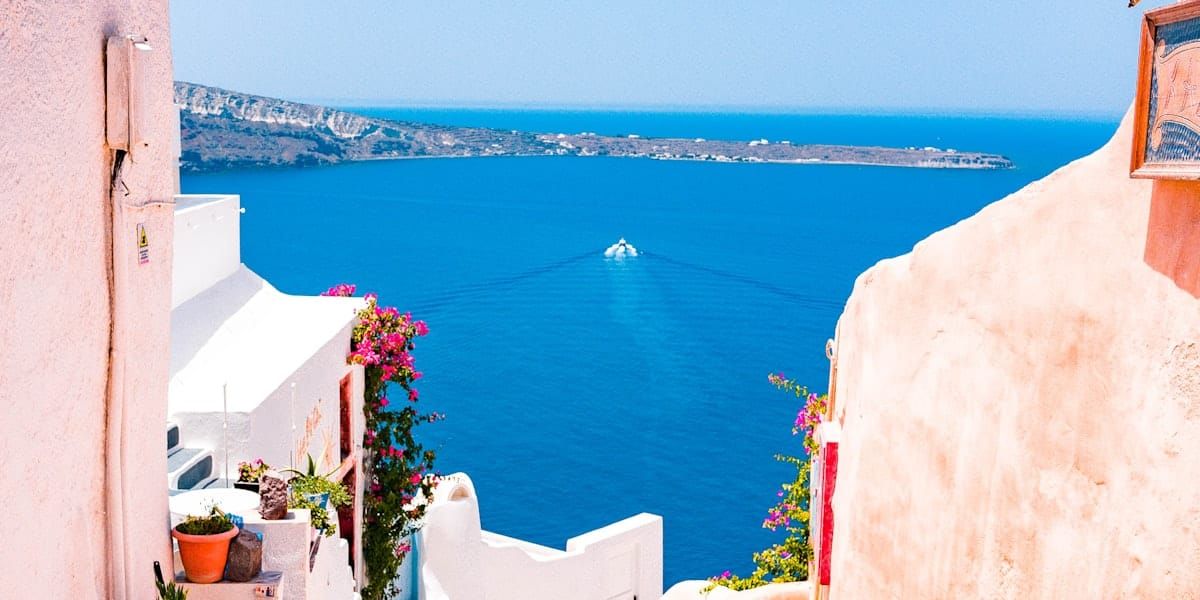
- Santorini — the iconic volcanic caldera with cliffside villages of Fira and Oia, legendary sunsets, and world-class wineries
- Mykonos — cosmopolitan nightlife, windmill-dotted hillsides, and some of Greece's most famous beaches
- Naxos — the largest and greenest Cycladic island, with long sandy beaches, mountain villages, and the iconic Portara gateway
- Paros — elegant villages, excellent windsurfing at Golden Beach, and a central hub for exploring neighbouring islands
- Syros — the administrative capital Ermoupoli, with a stunning neoclassical harbour, year-round cultural life, and far fewer tourists
- Tinos — the spiritual heart of Greek Orthodoxy (Church of Panagia Evangelistria), renowned marble-carving villages, and serious food culture
- Andros — lush, mountainous, with outstanding hiking trails and the excellent Museum of Contemporary Art
- Milos — a volcanic island of surreal coastal rock formations, colourful fishing villages, and over 70 beaches
- Ios — a youthful party island that also hides quiet hilltop villages and ancient ruins
- Sifnos — the gastronomic capital of the Cyclades, with pottery workshops and a network of footpaths
- Serifos — wild, rugged, and largely untouched, with a dramatic hilltop Hora and empty beaches
- Folegandros — a cliff-edge Hora with one of the most beautiful village squares in the Aegean
- Amorgos — remote and spiritual, famous for the cliffside Monastery of Hozoviotissa and the film location of The Big Blue
- Kea — the closest Cycladic island to Athens, popular for weekend escapes and ancient lion-carved trail markers
- Kythnos — quiet and traditional, with thermal springs and unspoiled coves
- Antiparos — a small, laid-back island just off Paros, with a celebrated cave and celebrity visitors
- Koufonisia — twin tiny islands with Caribbean-clear waters and an almost car-free, barefoot atmosphere
- Sikinos — one of the quietest inhabited Cyclades, with a monastery Hora and vineyard terraces
- Anafi — a remote, near-deserted island at the edge of the Cyclades, with Greece's tallest cliff face
- Kimolos — a volcanic neighbour of Milos with pristine beaches, chalk-white rock formations, and a sleepy village
- Rhodes — the largest Dodecanese island, dominated by a UNESCO-listed medieval Old Town and the ruins of Kamiros
- Kos — the island of Hippocrates, with an ancient Asklepion, lively nightlife, and excellent cycling infrastructure
- Karpathos — mountainous and traditional, where villages like Olympos preserve archaic customs, dialect, and dress
- Patmos — the "Jerusalem of the Aegean," where St. John wrote the Apocalypse; deeply spiritual with a fortified monastery
- Leros — a peaceful island with Italian-era Art Deco architecture, a deep natural harbour, and excellent diving
- Kalymnos — the sponge-divers' island, now a world-renowned rock-climbing destination with dramatic limestone cliffs
- Symi — a photogenic harbour town of pastel neoclassical mansions, reached by boat from Rhodes
- Astypalaia — a butterfly-shaped island bridging the Cyclades and Dodecanese, with Venetian ruins and unspoiled beauty
- Nisyros — a volcanic island with a walkable active crater, whitewashed villages, and a deeply local atmosphere
- Tilos — a pioneer of eco-tourism in the Dodecanese, with rare birdlife and a famously relaxed pace
- Chalki — a tiny, colourful harbour island near Rhodes, with virtually no cars and crystal-clear water
- Kasos — the southernmost Dodecanese island, rugged and fiercely independent, with exceptional local cuisine
- Lipsi — a small, tranquil cluster near Patmos, with lovely beaches and authentic island tavernas
- Megisti (Kastellorizo) — Greece's easternmost inhabited island, with a dramatic fjord-like harbour and painted Ottoman-era houses
- Fira — the bustling cliffside capital of Santorini, with caldera views, museums, and nightlife
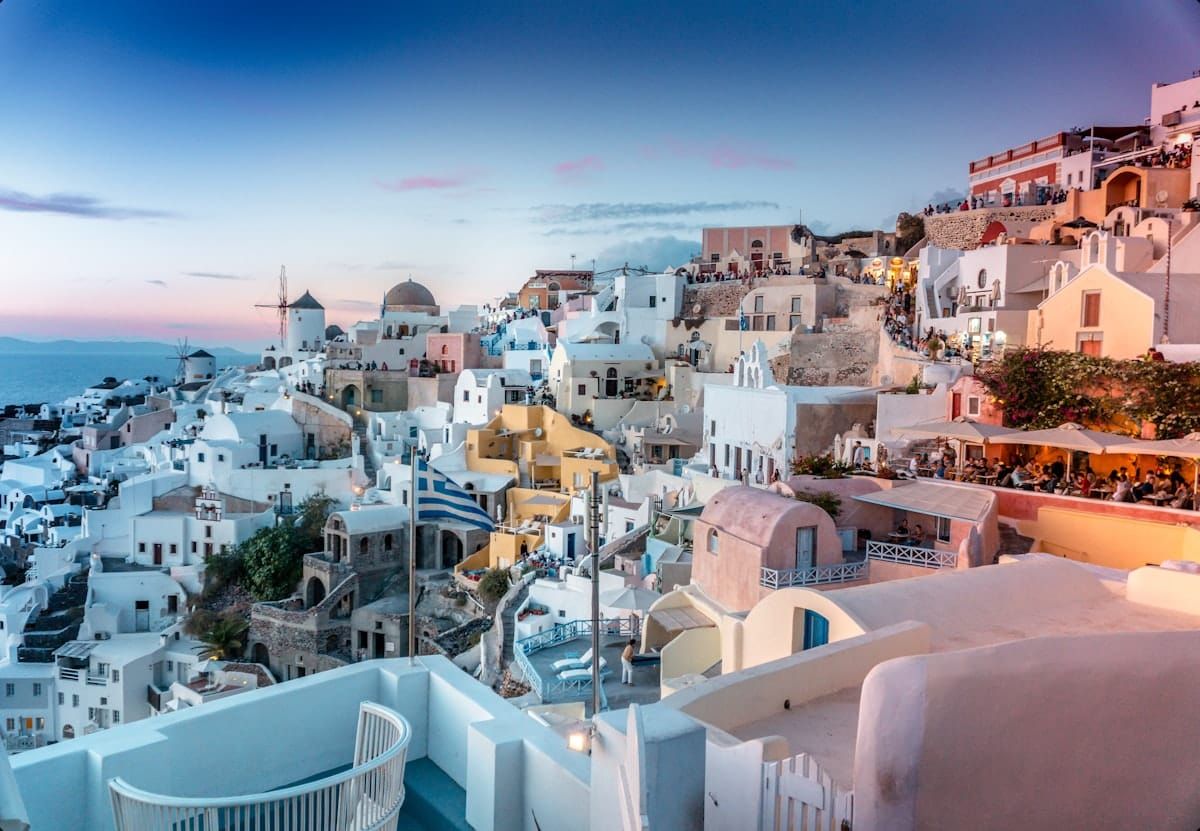
- Oia — Santorini's most famous village, synonymous with the sunset over the caldera and blue-domed churches
- Ermoupoli — the elegant neoclassical capital of Syros and of the South Aegean region, with twin hills and a grand square
- Lindos — a whitewashed village on Rhodes crowned by an ancient acropolis overlooking a sheltered bay
- Naoussa — a former fishing village on Paros turned stylish resort, with Venetian harbour ruins
- Apollonia — the main inland town of Sifnos, connected by a walking trail to the coastal village of Vathi
- Pothia — the colourful port capital of Kalymnos, built amphitheatrically around a wide harbour
Want the scenic legs and stays booked for you? Just ask.
WhatsAppWhat should you eat?
The South Aegean's cuisine is shaped by the sea, arid terrain, and centuries of maritime trade. Cycladic cooking tends toward simplicity: sun-dried tomatoes, capers, barrel-aged feta, split-pea fava, and fresh goat or lamb. The Dodecanese incorporate more Middle Eastern and Anatolian influences — spices, stuffed vine leaves, pilafs, and sweets.
Signature dishes include kopanisti — a peppery, tangy whipped cheese produced mainly on Tinos and Mykonos; louza — air-dried pork loin seasoned with pepper and spices, a Cycladic charcuterie staple; revithada — a slow-baked chickpea stew that is the Sunday lunch tradition of Sifnos; amygdalota — almond macaroons found across the Cyclades, especially on Naxos and Syros; and meletinia — sweet cheese pastries unique to Santorini. Fresh seafood is ubiquitous: grilled octopus, fried calamari, and catch-of-the-day served simply with lemon and olive oil.
Sifnos stands out as the gastronomic island of the Cyclades, with a culinary tradition tied to its clay-pot cooking and the legacy of the chef Nikolaos Tselementes, who was born here. Seek out tavernas in Apollonia and Vathi for clay-pot stews. Naxos produces Greece's finest potatoes, Graviera cheese, and Kitron liqueur from the citrus leaves of the citron tree. Rhodes and Kos have strong Ottoman-influenced sweets — melekouni (sesame and honey bars) on Rhodes, and katimeria (fried pastries with honey and cinnamon) on Kos.
For dining, expect taverna meals of €12–25 per person on smaller islands, rising to €30–50 at upscale restaurants in Santorini, Mykonos, or Rhodes Old Town. Vegetarian options are solid across the region — Greek cuisine is naturally vegetable-forward — though vegan-specific menus are limited outside the largest towns.
What is the culture like?
The South Aegean's cultural identity is deeply tied to Orthodox Christianity, seafaring, and centuries of Venetian, Ottoman, and Italian rule that left distinct architectural and artistic marks. The Cyclades are the birthplace of classical marble sculpture — the Naxian quarries produced the colossal kouroi now scattered across Greek museums, and Tinos remains the centre of Greece's living marble-carving tradition, taught at the Panormos School of Fine Arts.
Greek Orthodox Easter (usually April or May) is the region's most important celebration. On Syros, both Catholic and Orthodox communities celebrate together in a rare display of shared faith, with candlelit processions through Ermoupoli. On Tinos, the Epitaphios procession winds through the marble-paved streets of Pyrgos village. The Feast of the Assumption (15 August) brings panigiria to nearly every island — open-air festivals with live music, traditional dancing, lamb on the spit, and freely flowing wine.
The Miaoulia festival in Ermoupoli (late June) commemorates the Greek War of Independence with re-enactments of naval battles, fireworks over the harbour, and theatrical performances. The Festival of the Aegean (also Ermoupoli, usually July) is an opera and classical music festival held in the restored Apollo Theatre, a miniature copy of La Scala. Rhodes hosts a Medieval Festival in its Old Town during summer, with jousting, street theatre, and concerts within the Knights' Quarter. Santorini's Ifestia (volcano festival, usually in September) re-enacts the island's volcanic eruption with fireworks over the caldera.
Local crafts persist: pottery on Sifnos (visit the kilns of Vathi), weaving on Andros and Naxos, and sponge-cutting traditions on Kalymnos, where returning sponge-divers were once greeted with processions.
Travelling during a festival? We'll plan around the crowds.
WhatsAppWhat are the standout experiences?
Watching the sunset from Oia, Santorini — the caldera sunset is the most photographed scene in the Greek islands. Arrive early at the castle ruins or book a table at a cliffside restaurant; the spectacle of light shifting over the volcanic crater is unforgettable.
Sailing or island-hopping the Small Cyclades — the islands of Koufonisia, Schinoussa, Iraklia, and Donousa form a tiny, low-key archipelago best explored by local ferry or chartered sailboat. Barefoot beaches, sea caves, and tavernas where the fish is still wet from the net.
Visiting the Monastery of Hozoviotissa on Amorgos — clinging to a sheer cliff 300 metres above the sea, this 11th-century monastery is one of the most dramatic religious sites in Greece. Modest dress required; monks offer rakomelo (honey-spiked raki) to visitors.
Exploring Rhodes' medieval Old Town — a UNESCO World Heritage Site and one of the best-preserved medieval towns in Europe. Walk the Street of the Knights, visit the Palace of the Grand Master, and lose yourself in the labyrinthine Turkish quarter.
Climbing on Kalymnos — the island has become one of the world's premier sport-climbing destinations, with over 3,000 bolted routes on limestone cliffs ranging from beginner-friendly to elite. The climbing community has its own festival (usually October) and a dedicated infrastructure of climbing shops, guides, and guesthouses.
Top Destinations
Every destination in Nótio Aigaío with a guide — tap a place for the full guide.
Amorgos
Amorgos is a remote, rugged island in the eastern Cyclades…
Anafi
Anafi is a small, tranquil island in the Cyclades archipelago of the…
Andros
Andros is the northernmost and second-largest island of the Cyclades…
Antiparos
Antiparos is a Cycladic island in the Aegean Sea, situated 1.5 km…
Apollonia
Apollonia (Greek: Απολλωνία) is the capital and main town of Sifnos…
Astypalaia
Astypalaia (Greek: Αστυπάλαια) is a remote, butterfly-shaped island…
Chalki
Chalki (Greek: Χάλκη, also spelled Halki or Chalce) is a tiny…
Ermoupoli
Ermoupoli (Ερμούπολη), the capital of Syros island and the…
Fira
Fira (Greek: Φηρά) is the capital and principal town of Santorini…
Folegandros
Folegandros (Greek: Φολέγανδρος) is a small, rugged island in the…
Ios
Ios is a small island in the Cyclades archipelago of the South…
Kalymnos
Kalymnos (Greek: Κάλυμνος) is a rugged, mountainous island in the…
Karpathos
Karpathos (Greek: Κάρπαθος) is the second largest of the Dodecanese…
Kasos
Kasos (Greek: Κάσος) is the smallest inhabited island of the…
Kea
Kea (Greek: Κέα), also known as Tzia (Τζια), is the westernmost of…
Kimolos
Kimolos (Greek: Κίμωλος) is a tiny, quiet island in the western…
Kos
Kos (Greek: Κως, also spelt Cos) is the third-largest island of the…
Koufonisia
Koufonisia is a tiny pair of islands — Ano (Upper) Koufonisi and Kato…
Kythnos
Kythnos (Greek: Κύθνος) is one of the western Cyclades islands in the…
Leros
Leros (Greek: Λέρος) is a small, green, mountainous island in the…
Lindos
Lindos is a medieval village perched on a steep hillside on the…
Lipsi
Lipsi (Greek: Λειψοί), also transliterated as Leipsoi, is a small…
Megisti
Megisti (Μεγίστη), better known internationally by its Italian name…
Milos
Milos is a volcanic Greek island in the Aegean Sea, just north of the…
Mykonos
Mykonos (Greek: Μύκονος) is one of the most famous islands in the…
Naoussa
Naoussa (Greek: Νάουσα) is a charming fishing village on the…
Naxos
Naxos (Greek: Νάξος) is the largest and most fertile island in the…
Nisyros
Nisyros (Greek: Νίσυρος) is a small, roughly circular volcanic island…
Oia
Oia (Greek: Οία, sometimes spelled Ia, pronounced EE-ah) is what most…
Paros
Paros (Greek: Πάρος) is one of the great islands of the Cyclades…
Patmos
Patmos (Greek: Πάτμος) is a small, spiritually charged island in the…
Pothia
Pothia (Greek: Πόθια), also written as Pothaia or simply called…
Rhodes
Rhodes (Greek: Ρόδος, Ródos) is the largest of the Dodecanese islands…
Santorini
Santorini is an archipelago of five volcanic islands in the Cyclades…
Serifos
Serifos is a small, rugged island of roughly 65 km² in the western…
Sifnos
Sifnos is a small island in the Western Cyclades, covering roughly 91…
Sikinos
Sikinos is a quiet island in the southern Cyclades, situated between…
Symi
Symi (Greek: Σύμη, also frequently spelled Simi) is a small island of…
Syros
Syros is an island in the Cyclades archipelago of the South Aegean…
Tilos
Tilos is a small, tranquil island in the Dodecanese chain of the…
Tinos
Tinos (Greek: Τήνος) is a Cycladic island in the Aegean Sea, lying…
Sample itinerary
See how a trip to Nótio Aigaío comes together — a real Tripcuro plan, day by day.
Greece: Athens & Milos Adventure
6 Nights · Greece · Family · 5 women
Three nights in Acropolis-view Athens paired with three on the volcanic island of Milos — kayaking, private boat days to Kleftiko, scuba, and golden-hour villages.
Highlights: Acropolis at dawn · Lycabettus sunset hike · Kleftiko private boat day · Sarakiniko moonscape · Cape Sounion sunset sail · Klima's sea-cliff village
Greece Express: Athens, Saronic Islands & Santorini
6 Nights · Greece · Couple
A brisk, budget-to-midrange loop through Greece's greatest hits: ancient Athens, three Saronic islands by ferry, then a Santorini finale of caldera walks, black-sand beaches and the Oia sunset.
Highlights: Timed-entry Acropolis and the quieter Ancient Agora in central Athens · Saronic island-hopping: car-free Hydra, pine-clad Poros, pistachio-famous Aegina · Temple of Aphaia, part of the sacred triangle with the Parthenon and Sounion · Fira-to-Imerovigli caldera path, the 'balcony of the Aegean' · Akrotiri, the 'Pompeii of the Aegean', plus black-sand beaches · Classic Oia sunset from the Byzantine castle ruins
Pair the highlights of Nótio Aigaío into one easy trip — we'll plan the route.
WhatsApp
Contact Us
Get in touch with us.
Get in touch
Contact Us
Tell us where you'd like to go and how you like to travel. A real Tripcuro planner — not a bot — will craft an itinerary around you.
- Personalised, hassle-free planning end-to-end
- Transparent pricing, no hidden costs
- 24/7 support for complete peace of mind