
Milos
Nótio Aigaío, Greece
Why visit Milos?
Milos is a volcanic Greek island in the Aegean Sea, just north of the Sea of Crete, and the southwesternmost island in the Cyclades archipelago. Shaped like a horseshoe around a vast natural harbour, Milos has been inhabited for over 11,000 years and has a rich geological history that produced the obsidian prized by Neolithic traders across the Mediterranean. The island gained worldwide fame in 1820 when a local farmer unearthed the Venus de Milo — a Hellenistic statue of Aphrodite now housed in the Louvre — near the ancient theatre at Trypiti.
Today Milos is known above all for its extraordinary coastline: over 70 beaches ranging from the white lunar rock formations of Sarakiniko to the sea-cave labyrinth of Kleftiko and the thermal springs of Paliochori. Unlike neighbouring Mykonos or Santorini, Milos retains an unpolished, laid-back character. Fishing villages with colourful syrmata (boat garages carved into soft volcanic rock) line the harbour, and the hilltop capital Plaka feels frozen in time. The island has a strong mining heritage — sulphur, bentonite, perlite and kaolin are still extracted — and the excellent Mining Museum in Adamantas tells that 11,000-year story.
The climate is typical Cycladic: hot, dry summers and mild, wetter winters. July and August see temperatures of 28–35°C with the fierce meltemi wind providing some relief; winters rarely drop below 8–10°C. Rain is scarce from May through September and frequent from November to March. The landscape is arid with low scrub, chaparral and scattered fig trees, though spring wildflowers briefly paint the hillsides in April and May.
Adamantas (Αδάμαντας) on the northern shore is the main harbour and commercial centre. Plaka, also called Chora, sits on the hill above and is the island's most picturesque settlement. Trypiti lies just below Plaka near the catacombs and ancient theatre. Pollonia (Apollonia) is a small seaside village on the northeast tip, serving as the secondary port and the departure point for ferries to neighbouring Kimolos.
Planning Milos? Tell us your dates and we’ll tailor the trip.
Ask on WhatsAppHow do you get there?
By Plane
Milos Island National Airport (MLO) lies about 5 km southeast of Adamantas. It has a single short runway that handles turboprop aircraft. Olympic Air and Sky Express operate up to five daily flights year-round from Athens International Airport (ATH), with a flight time of approximately 40 minutes. One-way fares typically range from €60–€120 depending on season and how far ahead you book; Sky Express sometimes offers promotional fares.
From the airport to Adamantas, there is no dedicated airport bus. A taxi costs around €15–€20 and takes roughly 10 minutes. Some hotels and guesthouses offer free pick-up — ask when booking. Alternatively, pre-arranged transfers can be booked online. Car rental agencies will deliver vehicles to the airport.
By Car / Road
Milos is reached by sea, not by road. Once on the island, the drive from Adamantas to Plaka is about 5 km (10–15 minutes) on a paved two-lane road. Pollonia is roughly 7 km from Adamantas (15 minutes). Most of the island's main roads are paved, though some western beaches (Thiorichia, Agios Sostis) and coastal tracks require a 4×4 or quad bike. Petrol is available in Adamantas; there is no petrol station in Plaka or Pollonia.
KTEL bus services connect Athens to the port of Piraeus (a 10-minute metro ride from central Athens), from where ferries depart for Milos. There is no direct bus-ferry combination — you arrange the segments independently.
The island has a single bus company operated by KTEL Milos. Routes connect Adamantas with Plaka, Trypiti, Pollonia and several beach access points. A ticket costs €2 per journey (as of 2023) and is bought from the driver. Buses run roughly hourly in peak season and less frequently in shoulder months; schedules change seasonally so check the KTEL website or the posted timetable at Adamantas bus stop close to your travel dates.
Car rental is the most practical way to explore, particularly for reaching beaches on the island's remote west coast. Expect €35–€60 per day for a small car in peak season, less in shoulder. Book early in summer as demand exceeds supply. Driving is on the right; roads are generally good but narrow in villages. Parking in Plaka and Adamantas harbour can be difficult in July and August.
Motorcycle and scooter rentals are widely available at around €25–€35 per day. A valid motorcycle licence (or car licence for scooters under 50cc) is required. Scooters are excellent for short hops but lack clearance for the rough western tracks.
Quad bikes are popular and can be rented with a standard car driving licence. They come in 150cc and 300cc variants; the larger ones handle unpaved roads more confidently. Prices range from €30–€50 per day.
Water taxis and boat tours are the only practical way to reach Kleftiko and some of the island's more remote sea caves. Half-day tours from Adamantas typically cost €25–€40 per person and include swimming stops and sometimes a light meal. Full-day catamaran tours run €80–€120.
OpenStreetMap-based offline maps (e.g., OsmAnd, Maps.me) are strongly recommended — 4G coverage exists on most of the island but drops out on the west coast and in some valleys.
What are the things to do?
Historic and Archaeological Sites
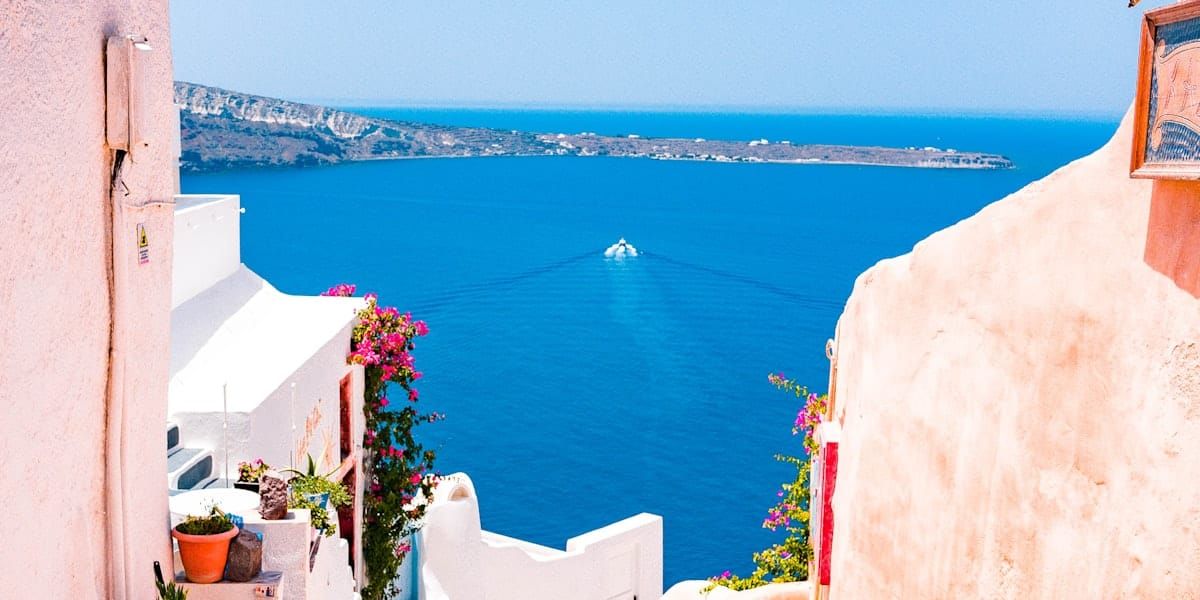
Plaka (Chora) — The hilltop capital of Milos, a maze of whitewashed alleys, churches and balconies draped in bougainvillea. A path leads up to the Venetian castle at the summit, built in the 13th century on ancient foundations. The castle is also home to the Church of Panagia Skiniotissa. On the way up you will pass the Church of Panagia Thalassitra, the island's patron of sailors. From the castle or the terrace of the Church of Panagia Korfiatissa the sunset over the Aegean is magnificent. Free access at all hours.
Ancient Theatre of Milos — A well-preserved Roman-era theatre near Trypiti, hewn from the volcanic hillside, with seven rows of marble seats and commanding views over the bay. Under conservation but open for viewing. It was in the fields near here that a farmer discovered the Venus de Milo in 1820. Free entry.
Catacombs of Milos — Among the largest early Christian catacombs in Greece, carved from soft volcanic tuff in the 1st–5th centuries CE, predating the more famous Roman catacombs. Located at Trypiti, roughly 150 metres from the theatre. Open Tue–Sun, 08:30–15:30; admission €4 (reduced €2).
Archaeological Museum of Milos — Housed in a neoclassical building designed by Ernst Ziller in Adamantas. A faithful reproduction of the Venus de Milo stands at the entrance. Collections span Neolithic obsidian tools, Archaic pottery, and Hellenistic sculpture. Open Tue–Sun, 08:30–15:30; admission €4.
Mining Museum — At the entrance to Adamantas (http://milosminingmuseum.com), this museum presents 11,000 years of mining history through audiovisual exhibits, ore samples, geological maps and miners' tools. Open daily in summer, reduced hours in winter; admission €5.
Fylakopi — Ruins of a major Cycladic-period settlement on the coast road between Adamantas and Pollonia. Excavations have revealed three successive building phases from roughly 2300–1100 BCE. Little remains visible above ground, but information panels provide context. Free entry.
Villages and Traditional Architecture
Klima — A tiny waterfront hamlet below Trypiti famous for its syrmata, traditional fishermen's houses where the basement is carved into the volcanic rock and serves as a boat garage, while the living quarters are at street level. The brightly painted doors make this one of the most photographed spots on the island, especially at sunset.
Pollonia (Apollonia) — A relaxed seaside village on the northeast tip, with a sandy main beach, waterfront tavernas and regular small-boat service to Kimolos (about 15 minutes, €3–€5).
Schinopi, Areti and Fourkovouni — Tiny fishing settlements with syrmata, almost untouched by tourism and beautiful for quiet exploration.
Paliorema (Theiafes) — On the southeast coast, the ruins of a sulphur mine that operated until 1957 stand above a yellow-pebbled beach. Access is via a rough dirt track (4×4 or quad recommended).
Beaches
Sarakiniko — Milos's most iconic beach: smooth white volcanic rock sculpted by wind and waves into surreal, moon-like formations. Crystal-clear turquoise water for swimming and cliff-jumping. Best visited early morning or late afternoon to avoid peak-season crowds; no shade, bring sun protection.
Kleftiko — Dramatic white sea caves and rock arches on the southwest coast, once a pirate hideout. Accessible only by boat (water taxi or organised tour from Adamantas). Arguably the finest snorkelling on the island.
Paliochori — A long beach on the southeast coast with multi-coloured volcanic cliffs, natural hot springs and beach tavernas that cook food in the geothermal sand. Sunbeds and umbrellas available in summer.
Firiplaka — A spacious south-coast beach with fine golden sand, shallow water and colourful cliffs. Family-friendly; sunbeds and a cantina in season.
Tsigrado — A secluded cove south of Firiplaka, reached by descending a steep cliff via ladder and rope — adventurous but rewarding, with vivid blue water and minimal crowds.
Plathiena — A quiet sandy beach on the north coast near Plathiena bay, with a simple taverna and lovely sunset views.
Firopotamos — A small pebbly cove near Trypiti with syrmata and a peaceful, local atmosphere.
Sikia — A hidden beach on the far south coast accessible by a rough path; largely undeveloped and uncrowded.
Boat tour to Kleftiko — The must-do excursion. Half-day and full-day trips depart from Adamantas harbour, sailing along the dramatic southwest coast, stopping at sea caves, snorkelling sites and sometimes Arkoudes (bear-shaped rock formations). Prices start around €25 for a group boat, €80+ for a catamaran.
Sea kayaking — Guided half-day and full-day sea-kayak tours explore the coastline around Kleftiko and the south coast, including cave passages inaccessible to larger boats. No prior experience needed; tours typically cost €50–€70.
Snorkelling and diving — Milos's volcanic geology creates underwater caves, arches and rock formations with excellent visibility. Several operators in Adamantas offer guided dives (€45–€70 per dive) and snorkelling excursions. Certification courses are available.
Windsurfing — The meltemi wind in July and August makes the island a viable, if lesser-known, windsurfing spot. Equipment rental and lessons are available at some beaches.
Hiking — Several marked trails cross the island, including a scenic route from Plaka to the summit of Profitis Ilias (751 m), the highest point, and coastal walks to remote beaches. Spring and autumn are best; summer heat is oppressive for long walks.
Horseback riding — Beach and countryside riding excursions are available through a local stable, typically in the late afternoon to enjoy cooler temperatures and golden light.
Wine tasting — Milos has a small but growing wine scene. A few local producers cultivate Assyrtiko and other Cycladic grape varieties; ask locally for tasting opportunities.
Day trip to Kimolos — The tiny neighbouring island is just 15 minutes by boat from Pollonia, offering quiet beaches, a charming main village and excellent seafood. Ferries run several times daily in summer.
Planning Milos? Want these on a customised itinerary?
Ask on WhatsAppWhere to eat?
Milos has a strong food culture centred on fresh seafood, local cheese and Cycladic specialties. Key local dishes include pitarakia (small fried cheese pies made with local manoura cheese), karpouzopita (a savoury watermelon pie unique to the island), and goat or lamb slow-roasted with sun-dried tomatoes and herbs. Waterfront tavernas in Adamantas, Pollonia and Trypiti serve the bulk of visitors; Plaka and smaller inland villages offer more traditional, family-run options. Budget €12–€18 for a taverna meal with a drink; upscale restaurants run €25–€40.
Budget
Giakos, Adamantas. One of the few year-round restaurants, famous for its gyros and quick service. A filling meal for €6–€10. The island's de facto fast-food institution.
Belivanis, Triovasalos. Excellent grilled meats — souvlaki, liver and hamburgers — at very fair prices. Simple setting, popular with locals. €8–€14.
Mid-range
Enalion, Pollonia (☏ +30 22870-41415). A family-owned taverna known for the best pitarakia on the island, octopus in honey sauce, kakavia (traditional fish stew) and slow-marinated lamb with garden vegetables. An excellent selection of 50 Greek wine labels. Reservations recommended in summer. €18–€30.
Flisvos, Adamantas. Directly across from the port, well known for reliable Greek seafood and taverna classics. Prices have crept up due to popularity but quality remains good. €15–€25.
O! Chamos, Adamantas (☏ +30 22870-21672). Local dishes with a creative touch — courgette and goat cheese fritters, slow-roasted suckling pig in grape must and mustard. €18–€28.
Upscale
Archondoula, Plaka (☏ +30 22870-21384). Traditional-meets-fusion cooking: Greek-style coq au vin, pot-roasted goat with artichokes. Intimate setting in the Chora. €25–€35.
Empourio, Empourio village (☏ +30 22870-21389). Traditional fare such as goat roasted in a wood oven and rooster in red wine sauce, in a quiet inland village setting. €20–€30.
Ergina, Trypiti (☏ +30 22870-22523). Family-style cooking with a spectacular terrace view over Adamantas Bay. Specialties include onion and anevato (soft goat cheese) pie and goat cooked in sun-dried tomato paste. €20–€30.
Sweets
- Palaios, Plaka (☏ +30 694-691-6905). Local sweets, the island's best mille-feuille, and homemade ice cream. Ideal for an after-dinner treat while strolling the Chora.
Dietary notes: vegetarian options are available at most tavernas (Greek salad, gemista, briam, spanakopita) but dedicated vegetarian or vegan restaurants are absent. Gluten-free diners will find grilled fish and meat straightforward; bread accompanies virtually every meal. Halal is not specifically catered for.
Where to drink?
Greece's national spirit is ouzo, and Milos is no exception — enjoy it ice-cold with a meze of octopus and olives at a waterfront table. Local wine production is small; most restaurants serve decent Greek labels from the mainland and other islands (Assyrtiko from Santorini, Moschofilero from the Peloponnese). Craft beer has arrived modestly; local bottles appear in some shops alongside mainstream Greek brands (Fix, Mythos, Alfa).
Akri, Adamantas. An elegant bar with a balcony overlooking the harbour, good cocktails and curated music.
Mikro Café, Adamantas. Excellent cocktails with a view over the port; a popular spot for sundowners.
Bakaliko, Plaka. A quiet wine bar in the Chora with a relaxed atmosphere and a small but interesting Greek wine list.
Utopia, Plaka. Another Plaka option with a calm setting, perfect for an evening drink after watching the sunset from the castle.
Tap water in Milos is generally safe for brushing teeth but has a distinct mineral taste from the volcanic geology. Most residents and visitors drink bottled water, which is inexpensive and readily available.
Planning Milos? We’ll book the stays and dining for you.
Ask on WhatsAppWhere to stay?
Accommodation in Milos ranges from simple rooms and studios to boutique cave hotels. Prices fluctuate dramatically between peak and off-season: expect to pay two to three times the shoulder-season rate in July and August. Book well ahead for peak season — the best properties fill months in advance.
Budget
Chronis Hotel and Bungalows, Adamas 84801 (☏ +30 22870-22226, [email protected]). Set in an orchard of banana, lemon and bougainvillea trees near the town beach. Rooms include air-conditioning, TV and balcony with garden view. From €50–€80 in shoulder season, rising in peak.
Windmill stays in Trypiti — Several renovated traditional windmills on the hillside above Trypiti are available for short-term rental, offering a unique and atmospheric stay. Prices start around €60–€100 per night depending on size and season.
Mid-range
Portiani Hotel, Adamas (☏ +30 22870-22940, [email protected]). A well-located hotel steps from the port with air-conditioned rooms and sea views. Check-in 14:00, check-out 12:00. From €70 in shoulder, €120+ in peak.
Kamara Cave Suites, Pera Triovasalos 84800 (☏ +30 690-918-5442, [email protected]). Cave-style suites carved into the volcanic rock with modern comforts and Cycladic design. From €90 in shoulder, €160+ in peak.
Upscale
Eiriana Luxury Suites (☏ +30 22870-22730). Environmentally conscious boutique suites with Cycladic architecture and a dedicated mobile app for guests. From €150 in shoulder, €250+ in peak.
White Pebble Suites & Spa, Pollonia ([email protected]). Twelve adult-only sea-view suites with a courtyard swimming pool and private plunge pools on select terraces. Check-in 14:00, check-out 11:00. From €220 per night.
What should you buy?
Milos is not a major shopping destination, but the island produces several distinctive specialities worth taking home:
Local cheeses — Manoura, a soft cheese preserved in olive oil, is the island's signature dairy product. Graviera and kopanisti are also produced locally. Haralambakis in Pachena is a well-regarded producer.
Spoon sweets and preserves — Glyko koufeto (white pumpkin in syrup) is the most famous; other varieties include cherry tomato, fig and bitter orange. Glykofilema in Adamantas and Paradosiaka Edesmata also in Adamantas sell a wide range of preserves, capers, sun-dried tomatoes in olive oil, kritamo (sea fennel) and homemade sesame snaps (pasteli).
Honey — Greek thyme honey from local apiaries is sold at markets and small shops.
Handmade ceramics and jewellery — A handful of workshops in Plaka and Adamantas produce pottery and jewellery inspired by Cycladic art; these make distinctive souvenirs.
Shopping hours are typically 09:00–14:00 and 17:30–21:00 in summer, with reduced hours in winter. Bargaining is not customary in Greece.
Where to go next?
Kimolos — A quiet, barely-touristed island just 15 minutes by boat from Pollonia. Sandy beaches, a charming hilltop village (Chorio) and excellent grilled fish. Multiple daily departures in summer.
Santorini (Thira) — The iconic caldera island, 2–3 hours by high-speed ferry from Adamantas. Dramatic cliff-top villages, wine tasting and extraordinary sunsets. Regular ferry connections year-round.
Folegandros — A tranquil Cycladic island 1–1.5 hours by ferry, with a spectacular clifftop Chora, excellent hiking and uncrowded beaches. The antithesis of Mykonos.
Sifnos — Known across Greece for its food culture, particularly chickpea stew (revithada). About 1.5–2 hours by ferry. Charming villages and well-marked hiking trails.
Naxos — The largest Cycladic island, 2–3 hours by ferry. Combines long sandy beaches, a Venetian old town, mountain villages and the famous Portara gateway. Good base for onward island-hopping.
Athens (Piraeus port) — The capital is reachable by overnight ferry (6–8 hours) or high-speed catamaran (3.5–4 hours) from Adamantas. Multiple daily services in summer, reduced in winter. Fares range from €35 (deck) to €75 (cabin) on conventional ferries.
Sample itinerary
Milos features in a real Tripcuro trip — see the full day-by-day plan.
Nearby in Nótio Aigaío
More places to explore around Milos.
Guide content as of July 2026. Portions adapted from Wikivoyage, CC BY-SA 4.0.

Contact Us
Get in touch with us.
Get in touch
Contact Us
Tell us where you'd like to go and how you like to travel. A real Tripcuro planner — not a bot — will craft an itinerary around you.
- Personalised, hassle-free planning end-to-end
- Transparent pricing, no hidden costs
- 24/7 support for complete peace of mind