
Oia
Nótio Aigaío, Greece
Why visit Oia?
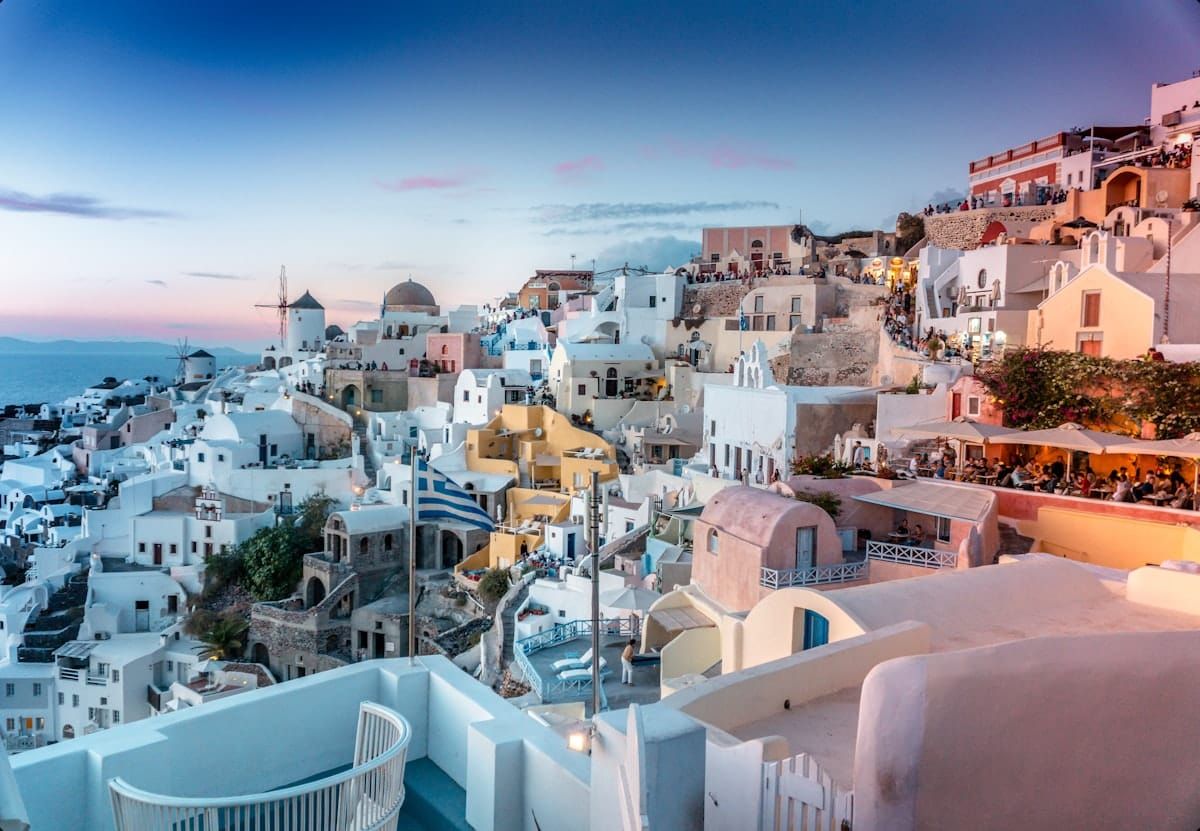
Oia (Greek: Οία, sometimes spelled Ia, pronounced EE-ah) is what most people picture when they think of Santorini, and even the Greek islands in general: steep volcanic cliffs crowned with picturesque white houses, churches with deep blue domes, and iconic windmills lost in time. Perched at the northern tip of Thira — the main island of the Santorini archipelago, roughly 200 km south of the Greek mainland — Oia's narrow, labyrinthine streets lined with art galleries and gift shops draw over two million visitors every year. It is the island's most photogenic settlement and arguably the single most recognisable village in all of Greece.
Oia's recorded history stretches back to the 13th century, when the Venetian Duchy of Naxos established feudal rule on Santorini. The citadel known as Apanomeria (Agios Nikolaos Castle) became the nucleus of the settlement; its surviving ruins form the oldest part of today's village. Ottoman rule began in 1579, and the name Apanomeria persisted until it was changed to Oia in the mid-19th century. Maritime trade boomed in the late 1800s — Amoudi Bay developed into a thriving port linking Alexandria to Russia, and by the turn of the century Oia's fleet numbered 130 sailing vessels. The decline of sail, two World Wars, and the devastating earthquake of 9 July 1956 (magnitude 7.8, with a 7.2 aftershock centred just offshore) levelled nearly the entire town. By 1977 the population had fallen to just 306.
A bold decision to rebuild Oia as a tourist attraction transformed the ruins into today's "picture-perfect" village: surviving churches and castle fragments were restored, and all utilities were buried underground to keep the skyline uncluttered. Modern Oia is largely an artificial town — almost entirely given over to boutique hotels, caldera-view restaurants, and upmarket shops. It is especially popular as a honeymoon destination and is immensely sought after by couples from around the world for wedding photography. The climate is typical of the southern Cyclades: hot, dry summers cooled by the meltemi wind, and mild but rainy winters. Rainfall is scarce from May through September.
Planning Oia? Tell us your dates and we’ll tailor the trip.
Ask on WhatsAppHow do you get there?
By Plane
Santorini (Thira) National Airport (JTR) sits on the east side of the island, about 17 km from Oia (roughly 25–30 minutes by road). It receives direct flights from Athens (45 min, year-round with Aegean Airlines and Sky Express) and seasonal charters from dozens of European cities (April–October). A taxi from the airport to Oia costs around €30–40. There is no airport bus directly to Oia; you would need to take the KTEL bus to Fira and transfer.
By Car / Road
The road from Fira to Oia is about 11 km along the island's northern spine and takes 20–25 minutes by car or taxi. It is winding and narrow in places — drive cautiously, especially after dark. Car rental is available at the airport and in Fira (from roughly €30–50/day in peak season). Note that motorised vehicles are banned inside Oia itself; you must park outside the village.
The KTEL Santorini public bus runs roughly every hour between Fira and Oia Bus Station. The fare is €2 per person, cash only — bring coins for the exact amount. Taxis from the port (Athinios) to Oia cost about €20 per group (€25 for a private ride without additional passengers).
The most scenic way to arrive is on foot: the 11 km caldera-edge footpath from Fira to Oia takes about 3 hours at a moderate pace, with breathtaking views of the volcanic crater and the neighbouring islands.
Oia is car-free. The only way to explore is on foot, by donkey, or by foot-donkey on the steep staircase connecting Amoudi Bay to the village. Donkeys can be hired at the steps for the climb up, though many visitors prefer to walk for the freedom to stop and photograph at will. Garbage collection in Oia is famously done by donkey as well.
The village is compact — end to end it takes only 20–30 minutes to walk. During peak season (especially July–August) the narrow lanes become congested, particularly around the sunset-viewing areas near the castle. Bicycles are impractical in the crowds. Wear comfortable shoes with good grip; the paths are uneven stone and can be slippery.
What are the things to do?
Oia is itself the main attraction — a few hours of aimless wandering along its stepped paths and staircases reveals stunning architecture and caldera views at every turn.
Historic Sites
- Londsa Castle (Kasteli Agios Nikolaos) — Ruins of a 15th-century Byzantine fortress in the oldest part of town, largely destroyed by the 1956 earthquake. Only a tower base and facade survive, but it remains the most popular sunset-viewing spot on the island. Free, open 24/7.
- Panagia Platsani (Ιερός Ναός Παναγίας του Ακάθιστου Ύμνου) — The iconic blue-domed Greek Orthodox church at the centre of Oia, one of the most photographed buildings in Greece. Free.
Bays & Beaches
- Amoudi Bay (Όρμος Αμμούδι) — The moon-shaped harbour below the cliffs, reached by 300-odd steps from Oia. Surrounded by barren cliffs and lined with seafood tavernas. Superb for sunset watching, though it gets crowded in the evenings. Free.
- Armeni Bay — Harder to reach than Amoudi and therefore far quieter. Limited facilities but excellent for swimming. Free.
- Katharos Beach — A quiet pebble beach just west of the village, with the adjacent Katharos Lounge serving food and drinks. Free.
Museums & Churches
Naval Maritime Museum — ☎ +30 2286 071156. Wed–Mon 10:00–14:00 & 17:00–20:00. Housed in a traditional captain's mansion, the collection includes figureheads, seamen's chests, historic maritime equipment, ship models, and maps, with special attention to the history of the Hellenic Navy.
Agios Georgios Church — A small Greek Orthodox church near the caldera. Free.
Saint Georgios Oia Holy Orthodox Church (Ιερός Ναός Αγίου Γεωργίου Οίας) — Another photogenic Orthodox church. Free.
Fira–Oia Caldera Hike — The 11 km trail along the volcanic rim is the most spectacular walk on Thira, offering sweeping views of the caldera and the archipelago. Takes about 3 hours at a moderate pace. The path starts at Amoudi Bay and heads east through the village toward Fira, well-marked with signs. Going Fira→Oia is more uphill (300 m+ climb), so Oia→Fira is considered easier. Free.
Sunset Watching — Oia's world-famous sunset draws hundreds nightly to the castle area and Amoudi Bay. Arrive at least an hour early for a good spot, or book a caldera-view restaurant table.
Caldera Massages Studio — At the sunset point next to Kastro Restaurant, ☎ +30 22860 71504. Professional massages in cave-style treatment rooms. Open daily April–October. Sunset packages combine a massage with sunset viewing and a bottle of sparkling wine on the terrace.
Donkey Ride — Hire a donkey on the steep staircase between Amoudi Bay and Oia for the quintessential Santorini experience. Expect to pay €5–10 per ride.
Day Trip to Nea Kameni — Boat excursions depart from nearby harbours to the volcanic island of Nea Kameni in the centre of the caldera, where you can hike to the crater rim and swim in the hot springs. Half-day trips typically cost €30–50.
Planning Oia? Want these on a customised itinerary?
Ask on WhatsAppWhere to eat?
Oia's dining scene skews upscale, with caldera-view restaurants charging a premium. Portions of classic Greek dishes — souvlaki, moussaka, grilled octopus, fresh fish — are widely available. Santorini's own produce features prominently: cherry tomato salad, fava, white aubergine, and local capers. Vegetarian options are plentiful (Greek salads, stuffed vine leaves, fava); vegan and gluten-free choices are more limited but growing.
Budget
- Piatsa (near the bus terminal) — ☎ +30 22860 72492. 10:00–23:45 daily. Souvlaki and grill house; affordable by Oia standards.
- Niko's (near the bus station) — ☎ +30 22860 71105. Good-value kalamaki with pita.
- PitoGyros — ☎ +30 22860 71119. Fri–Sun 12:00–23:00. Traditional grill house.
Mid-range
- Roka — ☎ +30 2286 071896. 12:30–22:30 daily. Traditional home-style Greek food; warm, friendly staff. A local favourite, especially at sunset.
- Lotza — ☎ +30 22860 71357. 10:00–23:00 daily. Generous souvlaki portions; Greek salads and meze.
- Mia's Restaurant — ☎ +30 22860 72072. Daily 12:30–00:00. Greek restaurant on the cliffside with caldera views.
Upscale
- Ambrosia Restaurant — On the caldera near the main church, ☎ +30 22860 71413. Lunch and dinner, April–October. Mediterranean cuisine in a cave-style setting with spectacular views. Reservations essential; dinner seating times are inflexible.
- 1800-Floga Restaurant — ☎ +30 22860 71152. Daily 18:00–23:00. Elevated Greek-inspired and international dishes; excellent for a romantic dinner. Expect around €110 for two with wine.
- Ammoudi Bay Tavernas — Three side-by-side seafood tavernas at the harbour serving fresh grilled fish. A little overpriced but charming, with the bonus of waterfront dining below the cliffs.
Where to drink?
Santorini produces excellent wines, and Oia's restaurants and bars showcase them. Look for Assyrtiko, the island's signature dry white grape, and Vinsanto, a sweet amber dessert wine made from sun-dried grapes — both benefit from the volcanic terroir. Cocktails and local craft beers are available at caldera-view bars, though at steep prices (expect €10–16 for a cocktail). Ouzo and raki are served as complimentary aperitifs at many tavernas.
Tap water on Santorini is desalinated and not recommended for drinking — stick to bottled water, widely available. Cafés line the main pedestrian lane; the Perfume Bar (☎ +30 2286 072257) doubles as a spa and cocktail venue. Nightlife in Oia is low-key compared to Fira or Kamari — think sunset drinks and quiet evening bars rather than clubs.
Planning Oia? We’ll book the stays and dining for you.
Ask on WhatsAppWhere to stay?
Oia accommodation is dominated by cave-style boutique hotels carved into the caldera cliff, many with private plunge pools and jaw-dropping sunset views. Prices reflect the scenery: Oia is the most expensive place to stay on Santorini. Book well ahead for June–September.
Budget
- Youth Hostel Anna — Dorm beds from roughly €25–40/night in shoulder season; basic but clean, with a communal terrace. Limited availability in peak months.
- Oia Sunset Villas — Simple studios and apartments a short walk from the centre, from about €60–90/night in shoulder season.
Mid-range
- Heliotopos Hotel — A traditional cave-hotel near the caldera with individually decorated rooms and breakfast included. Rooms from roughly €150–250/night depending on season and view.
- Oia Suites — Stylish suites with partial caldera views, a pool, and modern amenities. Rates start around €180–300/night.
Upscale / Heritage
- Canaves Oia Suites — Luxury cave suites with infinity pools overlooking the caldera. One of Oia's most celebrated properties. Rates from €400–800+/night.
- Katikies Hotel — Iconic white-washed luxury hotel on the caldera edge, with a renowned restaurant (Selene) and multiple pools. Rates from €500–1,200+/night in peak season.
What should you buy?
Oia's narrow lanes are packed with shops catering to tourists. Jewellery is a particular speciality — look for pieces inspired by ancient Greek and Minoan designs in gold and silver. The Mnemossyne Gallery (☎ +30 2286 072142) is a well-regarded hand-crafted jewellery shop. Art galleries are numerous: Oia Treasures Art Gallery (☎ +30 2286 072148, 10:00–12:00 daily) features local artists, and Wave (☎ +30 2286 071010) combines art, jewellery, and gems. Atlantis Books on Nomikos Street (☎ +30 22860 72346) is an internationally famous independent bookshop with a wide selection in multiple languages — worth a browse even if you are not buying.
Local products to look for include Santorini wines (the volcanic soil produces distinctive Assyrtiko whites and Vinsanto dessert wine), capers, cherry tomatoes, and fava (split-pea purée unique to the island). Prices in Oia are significantly higher than elsewhere on Santorini — for groceries and everyday items, shop in Fira instead. Bargaining is not customary in Greek shops.
Where to go next?
- Fira (11 km, 20 min by car/bus or 3 hrs on foot) — Santorini's bustling capital with the island's best nightlife, the Museum of Prehistoric Thera, and more caldera views.
- Imerovigli (8 km from Oia) — The "balcony of the Aegean," a quieter caldera-village perched at the highest point of the rim. Excellent for hiking to Skaros Rock.
- Akrotiri Archaeological Site (20 km, 30 min) — The remarkably preserved Bronze Age settlement buried by the volcanic eruption of c. 1600 BC, often called the "Pompeii of the Aegean." Entry €12.
- Red Beach / White Beach (near Akrotiri) — Dramatic volcanic beaches with striking red and white cliff backdrops. Reached by a short hike or boat taxi.
- Nea Kameni — The volcanic island in the centre of the caldera, reachable by boat from Fira or Amoudi. Hike to the crater rim and swim in sulphurous hot springs. Half-day excursions €30–50.
- Thirassia — The quiet island across the caldera, reachable by boat from Amoudi Bay. A glimpse of what Santorini was like before mass tourism — small tavernas, few cars, and unspoiled views.
Sample itinerary
Oia features in a real Tripcuro trip — see the full day-by-day plan.
Nearby in Nótio Aigaío
More places to explore around Oia.
Guide content as of July 2026. Portions adapted from Wikivoyage, CC BY-SA 4.0.

Contact Us
Get in touch with us.
Get in touch
Contact Us
Tell us where you'd like to go and how you like to travel. A real Tripcuro planner — not a bot — will craft an itinerary around you.
- Personalised, hassle-free planning end-to-end
- Transparent pricing, no hidden costs
- 24/7 support for complete peace of mind