
Santorini
Nótio Aigaío, Greece
Why visit Santorini?
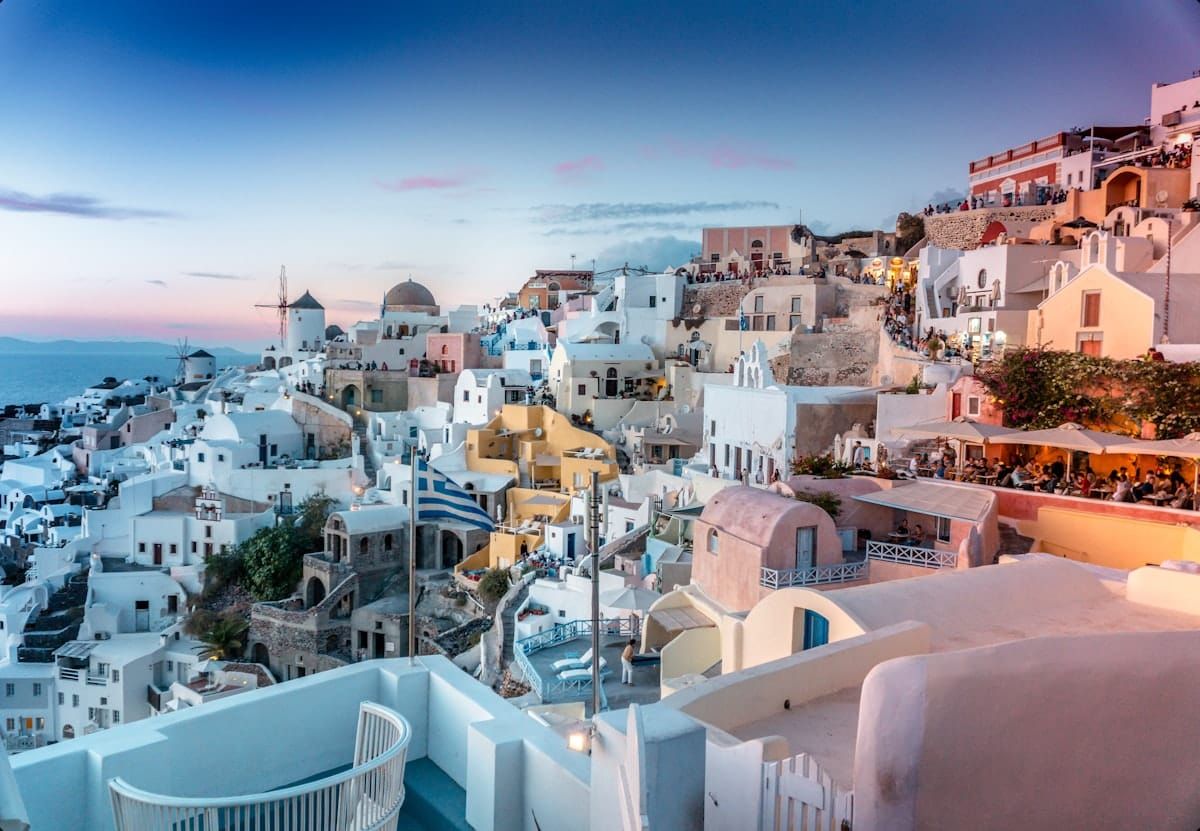
Santorini is an archipelago of five volcanic islands in the Cyclades group of the Greek islands, set in the southern Aegean Sea roughly 200 km southeast of mainland Greece. Once a single landmass, the island was torn apart around 1600 BCE by one of the largest volcanic eruptions in recorded history — an event so cataclysmic that some scholars link it to the legend of Atlantis and to the decline of Minoan civilisation on nearby Crete. What remains is a dramatic caldera: a vast, sea-filled crater rimmed by sheer cliffs up to 300 m high, with the whitewashed villages of Fira, Imerovigli, and Oia perched along its lip. The combination of explosive geology, Cycladic architecture, world-class sunsets, and distinctive volcanic wines makes Santorini unlike any other Greek island.
The main island, Thira (73 km², population roughly 15,500), holds nearly all accommodation and tourist infrastructure. Smaller inhabited islands include Thirasia (9 km², under 500 residents) across the caldera, while Nea Kameni and Palea Kameni — barren volcanic cones born from post-eruption activity — sit at the caldera's centre and are accessible by excursion boat. Aspronisi, the smallest island, is uninhabited and rarely visited. Traditional Cycladic architecture — dense clusters of cubic whitewashed stone buildings — fills most villages, interspersed with blue-domed churches, cave houses carved into the rock, family wineries, and the occasional Venetian castle ruin. Much of the island was rebuilt after a devastating earthquake in 1956, which paradoxically spurred its transformation into the iconic tourism destination it is today.
Santorini's climate is hot-summer Mediterranean. Summers (June–August) are scorching — daytime highs reach 30°C or more, with extreme UV and virtually no shade — and the islands are crowded with cruise-ship passengers and package tourists. Spring (April–May) brings mild temperatures, wildflowers carpeting the normally barren terrain, and comfortable hiking conditions. Autumn (September–October) is warm but quieter, with gradually increasing rainfall. Winters (November–March) are cool and windy, with most seasonal businesses closed, though Fira retains a small year-round community with a handful of open restaurants.
Planning Santorini? Tell us your dates and we’ll tailor the trip.
Ask on WhatsAppHow do you get there?
By Plane
Santorini (Thira) National Airport (JTR) sits on the east side of the island, north of Monolithos village, roughly 6 km from Fira. The airport is small and gets overwhelmed in peak season — arrive early as queues are long and passengers are sometimes only allowed to check luggage two hours before departure.
Domestic flights: Year-round service from Athens (ATH) via Aegean Airlines, Sky Express, and Volotea, with a flight time of 30–45 minutes. Volotea also flies year-round from Thessaloniki (SKG). Olympic Air connects Athens and seasonally Thessaloniki. Fares from Athens range roughly €40–120 one-way depending on how far ahead you book.
International seasonal flights (May–October): An extensive network connects Santorini directly to European cities, including London (Gatwick, Heathrow, Stansted, City), Paris (CDG, Orly), Amsterdam, Rome (Fiumicino), Milan (Malpensa), Vienna, Frankfurt, Munich, Dublin, Barcelona, Zurich, Helsinki, Oslo, Copenhagen, Stockholm, Doha (Qatar Airways), Budapest, Bucharest, Warsaw, Kraków, Bristol, Manchester, Birmingham, and many more. Airlines on these routes include British Airways, easyJet, Ryanair, Lufthansa, Condor, Eurowings, Norwegian, Transavia, Wizz Air, Vueling, Jet2, TUI Airways, and others. Book early — these routes sell out quickly.
Getting from the airport to town: A public bus (KTEL) runs from the airport to Fira's central bus station (roughly 20 minutes, around €2). Taxis are scarce — pre-book if possible; the fare to Fira is approximately €15–20, to Oia around €25–30. Many hotels offer airport pickup (often for a fee comparable to a taxi). There is no train or metro on the island.
By Car / Road
The main ferry port is Athinios, on the island's west coast roughly 10 km south of Fira. Ferries from Piraeus (the port of Athens) take 5–8 hours on a conventional ferry or around 2.5–4 hours on a high-speed catamaran. Operators include Blue Star Ferries, SeaJets, and Hellenic Seaways. A standard deck ticket costs roughly €30–40; high-speed catamarans run €55–70. The port is small and chaotic in peak season — the road down is narrow and congested. There are bus and taxi connections from Athinios to Fira and other villages, but expect long waits when a ferry unloads.
Santorini is also connected by ferry to other Cycladic islands including Ios (30 minutes), Naxos (1.5–2 hours), Paros (2–2.5 hours), Mykonos (2–3 hours), and Crete (Heraklio, 2–3.5 hours).
Santorini has no metro, no train, and no ride-hailing apps. The primary means of getting around are the public KTEL bus network, rental vehicles, taxis, and boats.
Public buses: The KTEL bus network is centred on Fira's main bus station and connects to Oia, Kamari, Perissa, Akrotiri, the airport, Athinios port, and most major villages. Fares are €1.80–2.50 depending on route. Buses run frequently in summer (every 15–30 minutes on popular routes) but thin out dramatically off-season. The buses are often overcrowded in July and August — arrive early or expect to stand.
Taxis: Only around 25–30 taxis serve the entire island. They queue at Fira's central square and the airport but are scarce everywhere else. Pre-booking is strongly advisable; expect to pay €15–30 for most cross-island trips. There is no taxi meter — agree on the fare before departure. Some visitors use private transfer services booked through their hotel, which are more reliable if pricier.
Car/ATV/scooter rental: Many visitors rent a car, ATV (quad bike), or scooter to explore independently. Daily car rental starts around €25–40 in shoulder season, rising to €50–80+ in peak. ATVs are popular but risky — the roads are narrow, poorly surfaced in places, and Santorini has one of Greece's higher road-accident rates. A regular car is the safer choice. Driving is on the right. Fuel stations are limited (a few near Fira and on the main roads). Parking in Oia and Fira is extremely difficult in summer — arrive early or park outside and walk.
Water taxis and excursion boats: Boats connect Athinios and Fira's old port (Skala) to Thirasia and the volcanic islands. From Fira's old port you can take a donkey ride, walk the 588-step path, or ride the cable car (€6 one-way) up to Fira town. Excursion boats to Nea Kameni's volcano and the hot springs on Palea Kameni depart from the old port and Athinios — typical cost is €20–40 for a half-day group tour.
Walking: The Fira-to-Oia caldera-edge hiking trail (roughly 10 km, 3–4 hours) is one of the island's highlights and an excellent way to see the caldera villages. Other walking paths connect villages across the interior, though waymarking is inconsistent and summer heat makes daytime walking unpleasant.
What are the things to do?
Akrotiri Archaeological Site — A remarkably preserved Bronze Age Minoan settlement buried by the volcanic eruption of 1600 BCE, often called the "Pompeii of the Aegean." Multi-storey buildings, frescoes, pottery, and a sophisticated drainage system have been excavated under a modern protective roof. Open daily 08:00–20:00 (shorter hours off-season, closed some Mondays in winter). Admission around €12. Located near Akrotiri village in the south of the island.
Museum of Prehistoric Thera (Fira) — Houses frescoes and artefacts from the Akrotiri excavation, including the famous "Blue Monkeys" fresco and gold ibex figurine. A must-see companion to the site itself. Open Tue–Sun 08:00–15:00 (extended summer hours). Admission around €6.
Ancient Thera (above Kamari) — Ruins of a Hellenistic city (9th century BCE–720 CE) perched on Mesa Vouno mountain at 360 m altitude. Temples, an agora, a theatre, and residential quarters with panoramic views of the east coast. Reached by a winding road from Kamari or by footpath (steep, 45 minutes). Open Tue–Sun 08:30–15:30. Admission around €4.
Oia — The island's most iconic village: cube-like whitewashed houses with colourful façades cling to the rim of 150 m cliffs above the caldera. The ruined Venetian castle at its tip is the island's most famous sunset-viewing spot. The neighbourhood of Ammoudi, below the cliffs, is reached by 300-odd steps and has waterfront fish tavernas.
Fira — The island's capital and main commercial hub, strung along the caldera cliff with museums, galleries, restaurants, and nightlife. Key cultural venues include the Megaro Gyzi (a 17th-century mansion hosting art exhibitions and concerts) and the Archaeological Museum of Thera (Archaic and Classical artecasts from Ancient Thera). The cable car from the old port below is an experience in itself.
Imerovigli — A quieter village just north of Fira along the caldera, also perched on the cliff edge. The walk from Fira to Imerovigli (about 2 km along the rim) offers some of the best caldera views on the island. Skaros Rock, a promontory jutting into the caldera, was the site of a medieval Venetian fortress.
Nea Kameni volcano and hot springs — Half-day boat excursions land on the volcanic island at the caldera's centre, where you can hike to the active crater (sulphur vents, steaming ground) and swim in the warm, iron-rich waters of the Palea Kameni hot spring. Group tours run €25–40 from the old port or Athinios.
Pyrgos — The highest village on the island, with a well-preserved Venetian castle at its summit, narrow winding streets, and panoramic views. Less touristy than Fira or Oia, it offers a glimpse of pre-tourism Santorini life.
Perissa and Kamari beaches — Kamari's black volcanic-sand beach and Perissa's long dark-sand stretch on the southeast coast are the island's main beach destinations. Both are lined with tavernas, bars, and sunbed rentals. Red Beach, near Akrotiri, has striking red volcanic cliffs — access is by a short (and somewhat unstable) path from the parking area.
Hike the Fira-to-Oia trail — A roughly 10 km caldera-edge path passing through Fira, Imerovigli, and on to Oia. Allow 3–4 hours. Best in spring or autumn; start early in summer to avoid the midday heat. Free and unmissable.
Caldera boat tour — Half-day and full-day catamaran or traditional boat cruises around the caldera, typically including a stop at Nea Kameni's volcano crater, a swim in Palea Kameni's hot springs, and lunch or barbecue on board. Evening sunset cruises are also popular. Group tours from roughly €30–60; private catamaran charters from €200–500+.
Wine tasting — Santorini's volcanic soil produces distinctive wines, particularly the white Assyrtiko grape (crisp, mineral) and the sweet Vinsanto dessert wine (sun-dried grapes, aged in oak). Notable wineries offering tastings and tours include Santo Wines (caldera views from the terrace), Estate Argyros (one of the oldest, near Megalochori), Venetsanos Winery (restored 19th-century caldera-edge winery), and Gavalas (family-run, in Megalochori). Tastings typically cost €10–20 for 3–5 wines.
Scuba diving and snorkelling — The volcanic geology creates interesting underwater terrain. Caldera Divers and other operators offer introductory dives and PADI courses (from roughly €60 for a discover-scuba experience). The waters around the volcanic islands have interesting rock formations and marine life.
Cooking class — Several operators in Fira and Pyrgos run hands-on classes featuring Santorini specialities: cherry tomato fritters (tomatokeftedes), fava (yellow split-pea purée), and local wine pairings. Typically €60–90 per person for a half-day session.
Sunset at Oia — Arrive at least an hour early to secure a spot at the Venetian castle ruins; in peak season, hundreds of people gather nightly. The spectacle is free but the crowds are intense. Alternatively, watch from a caldera-view restaurant in Imerovigli or from a sunset cruise.
Day trip to Thirasia — A short boat ride from the old port brings you to the quieter, undeveloped island of Thirasia across the caldera. A handful of tavernas, a small village, and caldera views without the crowds.
Donkey or mule ride — Traditional but controversial. Donkeys carry tourists up and down the 588 steps between Fira town and the old port below. The cable car is faster and more humane, though the donkey path remains a cultural fixture. Animal welfare groups have raised concerns about the treatment of working animals on this route.
Planning Santorini? Want these on a customised itinerary?
Ask on WhatsAppWhere to eat?
Santorini's cuisine is shaped by its volcanic terroir. The island produces several PDO (Protected Designation of Origin) ingredients: cherry tomatoes (tomatinia), white eggplant, capers, yellow split peas (fava), and chloro (a creamy local goat cheese). Signature dishes include tomatokeftedes (cherry-tomato fritters), fava (silky yellow split-pea purée dressed with olive oil and onion), chloro cheese, and fresh seafood.
Metaxy Mas (Exo Gonia) — A beloved, mid-range taverna in a restored village house with caldera views. Known for creative takes on Santorini classics: fava with caramelised onions, slow-cooked lamb, and homemade desserts. Main courses €10–18. Book ahead in summer.
Ouzeri (Fira) — A casual, unpretentious spot for meze and ouzo near the caldera. Tomatokeftedes, grilled octopus, local cheese plates, and fried courgette. Mains €8–14. Popular with locals as well as tourists.
Ammoudi Fish Taverna (Oia, Ammoudi Bay) — Reached by descending 300 steps from Oia (or by donkey). Fresh fish grilled on the dockside, served at waterside tables. Choose your fish by weight from the display — expect €20–40 per person depending on the catch of the day. The setting at sunset is exceptional.
Krinos (Perissa) — Reliable beachfront taverna serving traditional Greek dishes at budget-friendly prices. Grilled meats, moussaka, fresh salads. Mains €7–12. Good for families and casual dining.
Pelican Kipos (Fira) — A mid-to-upper-range restaurant in a garden courtyard setting with live Greek music on some evenings. Santorini cherry-tomato salad, grilled fish, and an extensive Greek wine list. Mains €14–25.
Dietary notes: Greek cuisine is naturally heavy on vegetables, olive oil, and legumes, making it quite vegetarian-friendly — fava, tomatokeftedes, horiatiki (Greek salad), and grilled vegetables are widely available. Vegan options are increasingly common in tourist areas. Gluten-free diners can usually find grilled fish, meat, and salads, though bread is served with every meal. Halal options are very limited on the island.
Where to drink?
Wine: Santorini is one of Greece's most important wine regions. The volcanic, mineral-rich soil and strong Aegean winds produce intensely flavoured wines. Assyrtiko is the flagship — dry, crisp, with pronounced minerality. Nykteri (literally "night wine") is a fuller, oak-aged Assyrtiko harvested at night. Vinsanto is the island's sweet dessert wine made from sun-dried Assyrtiko and Aidani grapes, aged in oak barrels for years — rich, raisiny, and complex. These are available at every restaurant and bar; most wineries offer tastings (see Do section).
Beer: Greek beers Fix, Mythos, and Alfa are ubiquitous. Craft beer has arrived — Noctua (an Athenian brewery) is available in some bars, and a few island-based operations produce small-batch ales.
Cocktails and nightlife: Fira is the nightlife hub, with bars and clubs along the caldera edge and on the main square. Koo Club, Enigma, and Tropical are long-running venues. Oia has cocktail bars with caldera views (expensive but atmospheric). Kamari and Perissa have more relaxed beach-bar scenes.
Coffee: Greeks take their coffee seriously. Freddo espresso (iced espresso, €2–3) and freddo cappuccino (iced espresso topped with cold milk foam, €3–4) are the summer drinks of choice. Traditional Greek coffee (ellinikos kafes) is served in small cups, sweet or unsweetened. Cafés are everywhere.
Water safety: Tap water on Santorini is not potable — it is desalinated sea water. Drink bottled water, widely available (€0.50–1 per 1.5 L bottle). Many hotels provide complimentary bottled water.
Planning Santorini? We’ll book the stays and dining for you.
Ask on WhatsAppWhere to stay?
Budget (€30–80/night):
- Youth Hostel Anna (Perissa) — A long-running hostel near Perissa's black-sand beach. Dorm beds from roughly €15–25; private rooms from €40–60. Basic but clean, with a communal kitchen and sociable atmosphere.
- Villa Katerina (Kamari) — A family-run guesthouse a short walk from Kamari beach. Simple rooms with balconies from €35–65 in shoulder season. Friendly hosts, good value for a beachside location.
Mid-range (€100–250/night):
- Cosmopolitan Suites (Fira) — Boutique hotel carved into the caldera cliff in Fira with infinity pool and cave-style rooms. Caldera-view suites from €120–220 in shoulder, considerably higher in peak. Strong breakfast included.
- Astra Suites (Imerovigli) — Perennially well-reviewed property with spacious suites overlooking the caldera. Pool, hot tub, and attentive staff. Rates from €140–250 in shoulder season.
Upscale (€300–800+/night):
- Canaves Oia Suites (Oia) — A luxury property built into the caldera cliff face in Oia, with infinity pool, cave suites, and fine dining. Rates from €350–800+ depending on season and suite category. Consistently ranked among the top hotels in Greece.
- Grace Hotel Santorini, Auberge Resorts Collection (Imerovigli) — A high-end boutique hotel with 20 suites, an infinity pool suspended over the caldera, and a Michelin-level restaurant. Rates from €400–900+ per night. Adults-only.
Note on cave houses: Many of Santorini's most atmospheric accommodations are traditional cave houses (yposkafa) — rooms carved into the volcanic rock, naturally cool in summer. They range from simple guesthouses to ultra-luxury suites. They are often described as "cave hotel" or "cave suite" — worth seeking for the quintessential Santorini experience.
What should you buy?
Wine — Assyrtiko (dry white) and Vinsanto (sweet dessert wine) are Santorini's flagship wines. Estate Argyros, Sigalas, Gaia, Domaine Economou, and Santo Wines are widely available. Bottles range from €8–15 for a good Assyrtiko to €20–40 for aged Vinsanto. Buy from the wineries directly for the best prices and selection.
Volcanic soil products — Pumice stone, volcanic ash face masks, and locally produced cosmetics are sold in shops in Fira and Oia. Look for the "Santorini" branding — some imported pumice is passed off as local.
Handmade jewellery and art — Oia and Fira have numerous galleries and jewellery shops. Gold and silver jewellery inspired by Cycladic and Minoan motifs is popular. Prices vary widely; expect €30–200+ for quality handmade pieces.
Local food products — Cherry tomatoes (tiny, intensely sweet — a PDO product), capers, white eggplant, dried fava beans, and local honey. Available at markets in Fira and from producers around Megalochori and Vothonas. A jar of cherry tomato paste runs €3–5.
Ceramics and pottery — Reproductions of Akrotiri frescoes on tiles, plates, and bowls are a common souvenir. Quality ranges from mass-produced to genuine artisan work. The better studios in Fira and Oia charge €15–80+.
Bargaining: Prices in shops and markets are generally fixed. Some modest negotiation is acceptable at smaller stalls and for higher-value items like jewellery or art, but heavy haggling is not part of the culture.
Where to go next?
- Ios — A 30-minute ferry ride from Santorini. Known for its lively nightlife and Mylopotas beach. A youthful, party-oriented contrast to Santorini's more romantic vibe.
- Naxos — The largest of the Cyclades, roughly 1.5 hours by high-speed ferry. Long sandy beaches, the iconic Portara temple gate, the atmospheric old town (Kastro), and the mountainous interior with traditional villages.
- Paros — About 2 hours by high-speed ferry. A refined island with whitewashed villages (Naoussa, Parikia), excellent beaches, and a slower pace than Santorini. Good base for exploring nearby Antiparos.
- Crete (Heraklio) — Reachable by ferry in 2–3.5 hours or by air in under an hour. Greece's largest island offers the Palace of Knossos, Venetian harbours, the Samariá Gorge, and a distinct regional cuisine. A natural companion to a Cyclades itinerary.
- Folegandros — A small, tranquil island about 1 hour by ferry. Its clifftop Hora rivals Santorini's for drama but without the crowds. Excellent for walking, quiet beaches, and a handful of excellent tavernas.
- Anafi — The closest island to Santorini (roughly 1 hour by ferry), even quieter and more remote. A single small village, pristine beaches, and an escapist atmosphere.
Sample itinerary
Santorini features in a real Tripcuro trip — see the full day-by-day plan.
Nearby in Nótio Aigaío
More places to explore around Santorini.
Guide content as of July 2026. Portions adapted from Wikivoyage, CC BY-SA 4.0.

Contact Us
Get in touch with us.
Get in touch
Contact Us
Tell us where you'd like to go and how you like to travel. A real Tripcuro planner — not a bot — will craft an itinerary around you.
- Personalised, hassle-free planning end-to-end
- Transparent pricing, no hidden costs
- 24/7 support for complete peace of mind