
Fira
Nótio Aigaío, Greece
Why visit Fira?
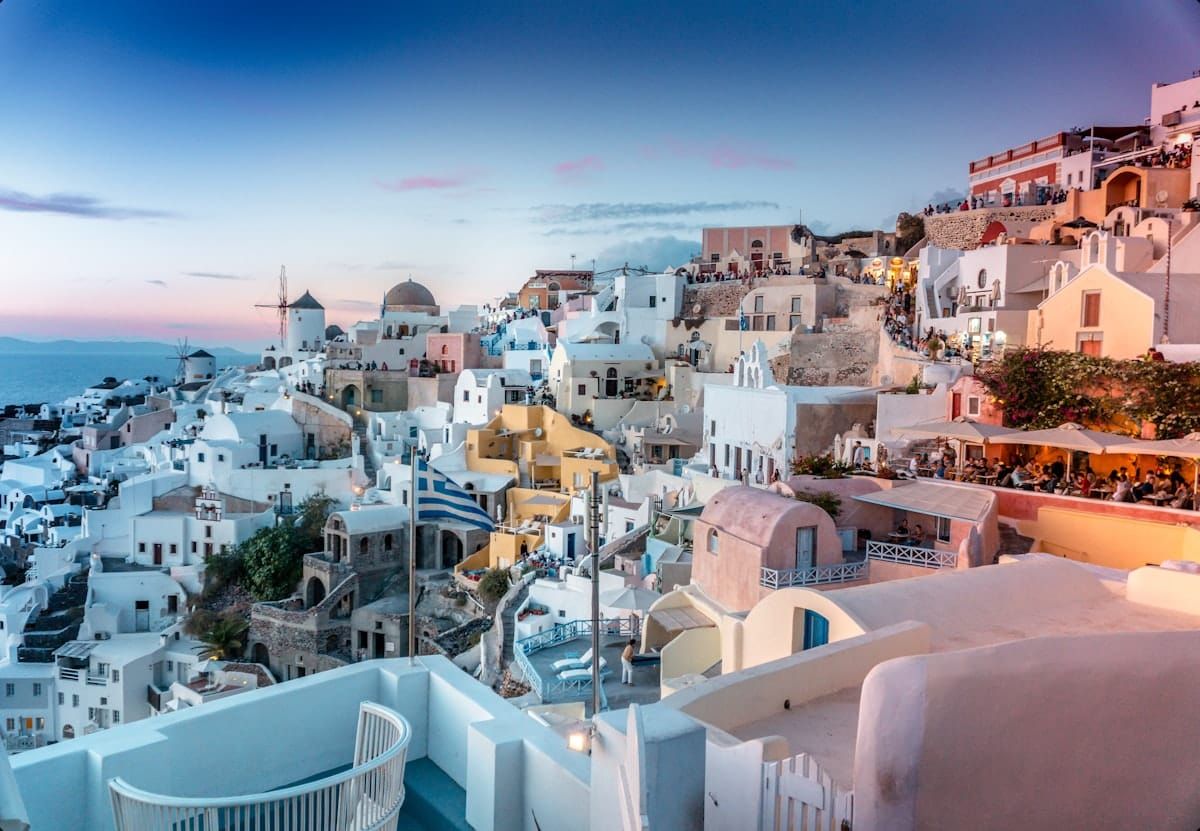
Fira (Greek: Φηρά) is the capital and principal town of Santorini (Thira), the dramatic volcanic island in the southern Cyclades. Perched on the edge of a 300-metre caldera cliff, the town commands sweeping views across the submerged crater to the islets of Nea Kameni, Palea Kameni, and — on clear days — the islands of Ios, Anafi, and Folegandros beyond. Its name derives from an alternative pronunciation of "Thira", the ancient name of the island itself. Fira rose to prominence in the late 18th century when declining Aegean piracy allowed islanders to settle away from fortified hilltop villages, and it has served as Santorini's administrative centre ever since.
The town's character is defined by its vertiginous setting: whitewashed cubic houses, blue-domed churches, and narrow stepped lanes cling to the volcanic cliff face, connected by a labyrinth of paths that are navigable only on foot or by donkey. Cruise-ship passengers flood the caldera rim promenade daily from May to October, but wander a few streets inland and Fira reveals quieter neighbourhoods, family-run tavernas, and workshops of local artisans. The Museum of Prehistoric Thira — housing extraordinary frescoes from the Bronze Age settlement at Akrotiri — and a cluster of handsome churches make the town more than just a viewpoint.
Santorini has a hot-summer Mediterranean climate. Summers are dry, sunny, and windy (the meltemi blows strongly from July to September, sometimes disrupting ferry schedules). Winters are mild and damp, with occasional heavy rainfall in January and February. Fira is the one place on the island that stays reasonably active year-round, though many hotels and restaurants close from November to March.
Planning Fira? Tell us your dates and we’ll tailor the trip.
Ask on WhatsAppHow do you get there?
By Plane
Santorini (Thira) Airport (JTR IATA) lies about 6 km southeast of Fira, roughly a 10-minute drive. It handles seasonal direct flights from many European cities (London, Paris, Rome, Amsterdam, and others) from April to October via carriers such as easyJet, Ryanair, and Aegean Airlines, as well as year-round domestic connections to Athens (ATH) — the flight takes about 45 minutes and fares start around €40–80 one-way on Aegean or Sky Express if booked early. Olympic Air also operates a Thessaloniki–Santorini route in summer.
From the airport to Fira: a taxi costs approximately €20–25 (there is no meter; agree on the fare before departing). Pre-arranged hotel transfers typically run €30–40. KTEL buses meet some flights and charge about €2.00 for the 10–15-minute ride to Fira bus station. There is no train or metro on Santorini.
By Car / Road
Santorini is an island — you cannot drive here from elsewhere. If you are touring the Greek mainland by car, the nearest major ports with ferry connections are Piraeus (Athens, ~8–9 hours by conventional ferry or ~5 hours by high-speed) and Heraklion or Rethymno on Crete (~2 hours by high-speed ferry). Renting a car on arrival is straightforward: several agencies operate from both the airport and Fira. Roads on the island are generally paved but narrow and winding; a small car or quad bike is preferable. Fuel prices hover around €1.70–1.90/litre (2025).
Ferries dock at Athinios Port, the island's main harbour, about 10 km south of Fira. The port sits at the base of the caldera cliffs; all vehicles must climb a steep, winding access road with seven hairpin bends. KTL buses meet every arrival and run passengers up to Fira bus station in about 15 minutes (€2.30). Taxis are also available but scarce — pre-booking is advisable in peak season. Major ferry operators serving Santorini include Blue Star Ferries, SeaJets, and Zante Ferries, with connections to Paros, Naxos, Mykonos, Ios, Crete, and Athens (Piraeus).
Fira's centre is compact and best explored on foot. The caldera-rim promenade and the stepped lanes descending toward the Old Port are pedestrian-only; many interior streets are too narrow for cars. Wear sturdy shoes — the volcanic stone steps can be slippery, and donkeys have right-of-way on the paths.
KTEL buses are the backbone of island public transport. Fira bus station is the hub, with hourly (or more frequent in peak season) services to Oia (€1.80, 20 min), Kamari (€1.60, 15 min), Perissa (€2.20, 25 min), Akrotiri (€1.80, 20 min), and the airport (€2.00). Tickets are purchased on board, cash only — bring coins, though the fare collector can usually make change.
Taxis are scarce on Santorini — there are only about 30 on the entire island. A short hop within Fira costs around €10; longer trips (e.g. Fira to Oia) can run €25–35. Pre-booking through your hotel is strongly recommended in peak months.
Quad bikes (ATVs) are a popular and practical option, available from rental agencies throughout Fira for around €25–40 per day. They handle the island's narrow roads well and are easier to park than cars. Helmets are legally required but enforcement is lax — wear one anyway.
On foot: the celebrated Fira-to-Oia caldera hike (11 km, about 3 hours) starts from Agiou Mina Street and follows the cliff edge through Firostefani and Imerovigli to Oia. It is free, spectacularly scenic, and well-signed. Go northward for slightly more uphill; southbound from Oia is marginally easier.
What are the things to do?
Museums
- Museum of Prehistoric Thira — The island's standout museum, housing vivid wall frescoes and artefacts from the Bronze Age settlement at Akrotiri (destroyed by the volcanic eruption of c. 1600 BC). Pottery, jewellery, and tools from Neolithic through late Cycladic periods. Ermou Street, near the cable car station. Open 08:30–15:30 daily except Tuesdays. €10 (free on 6 March, 18 April, 18 May, and the last weekend of September for European Heritage Days).
- Archaeological Museum of Thera — A smaller collection spanning Proto-Cycladic figurines (3rd millennium BC) through Classical-era pottery and inscriptions. Near the Orthodox cathedral. Tu–Su 08:00–15:00. €2 (reduced €1).
- Folklore Museum — Housed in a cave dwelling, this museum traces Santorini life from cave-houses to the modern era, with displays on cobbling, blacksmithing, distilling, and winemaking. Guided tours (~45 min) are strongly recommended. Fira centre. Monday 10:00–17:00. €5.
- Megaro Gyzi Museum — Ethnographic collection of maps, engravings, and Cycladic costumes from the 15th–19th centuries, set in a 17th-century mansion. Also features old manuscripts and a photography exhibition. Near the Catholic cathedral. Open May–October. Free or nominal entry.
- Roger Tourte Exposition — Watercolours and hand-drawn maps of the Cyclades by French-born artist J.R. Tourte (d. 1972), displayed in pleasantly cool underground tunnels. Fira centre.
Religious Architecture
Catholic Church of the Dormition (The Three Bells of Fira) — Santorini's most photographed church, famous for its blue dome and triple bell tower against the caldera backdrop. The current structure dates to 1757, though a Jesuit presence on the site predates it by a century. Damaged in the 1956 earthquake and restored. Visible from the Fira–Oia hiking trail. Free, open all hours.
Orthodox Metropolitan Cathedral — Built in 1827 in traditional Cycladic style with a frescoed interior and courtyard. Badly damaged in 1956 and carefully restored. Fira centre. Free.
Cathedral of Saint John the Baptist — The Catholic diocesan cathedral of Santorini (founded 1204), a baroque blue-grey and cream building from 1823, restored after the 1956 earthquake.
Dominican Convent — Founded in 1595, the oldest Catholic convent in Greece; the current building is from 1864. The church houses the venerated icon of Our Lady of the Rosary flanked by St Dominic and St Catherine.
Watch the sunset from the caldera rim — The evening ritual of Fira. Find a bar or restaurant with a west-facing terrace along the promenade and watch the sun sink behind Nea Kameni, painting the white cliffs gold and pink. Arrive at least 45 minutes early in peak season to secure a good table.
Descend to the Old Port — Take the Santorini Cable Car (3 minutes, €10 one-way, capacity 1,200 passengers/hour — queues are rare except when cruise ships dock) or brave the 588 Karavolades Steps on foot or by donkey (also €10). The port itself is tiny — mostly boat tour departure points — but the journey up and down is the experience.
Hike the caldera to Oia — The 11 km trail from Agiou Mina Street in Fira through Firostefani and Imerovigli to Oia takes about 3 hours at a moderate pace, with 300 m of elevation gain. Breathtaking views of the caldera, volcanic islets, and neighbouring Cycladic islands. Free; go early morning to beat the heat. Bring water and sun protection.
Boat tour to Nea Kameni — The active volcanic island in the centre of the caldera, reached in about 10 minutes from the Old Port. A 1 km gravel trail leads to sulphur vents and the 130 m summit. Bring water, proper shoes, and sun protection — there is no shade or supplies on the island. €5 entrance fee; boat tours from numerous agencies at the Old Port, typically €20–40 return including Palea Kameni.
Swim in the Palea Kameni hot springs — Most caldera boat tours stop at the volcanic hot springs on Palea Kameni, where warm mineral water seeps into a sheltered bay. The water is naturally heated and tinged orange by sulphur. Wear an old swimsuit — the minerals stain fabric.
The White Door Theatro — Intimate theatre famous for "The Greek Wedding", a comedy set in 1940s Greece. Performances run several evenings per week in summer. ☎ +30 2286021770.
Kokkalo cooking classes — Learn to prepare traditional Greek dishes (moussaka, dolmades, spanakopita) in a hands-on session at this restaurant on 25 Martiou Street. Afternoon and evening sessions available. ☎ +30 2286025407.
Santorini Zen Spa — Massage and relaxation treatments. Open 09:00–20:00 daily. ☎ +30 6985824393.
Planning Fira? Want these on a customised itinerary?
Ask on WhatsAppWhere to eat?
Santorini's volcanic soil produces distinctive ingredients — cherry tomatoes with intense sweetness, white aubergine, caper leaves, and the island's signature fava (a creamy split-pea purée drizzled with olive oil and capers). Seafood is, unsurprisingly, excellent. Greek taverna staples (grilled octopus, moussaka, stuffed vine leaves) are well represented, alongside creative Cycladic cuisine that showcases local produce.
- Ouzeri (budget) — A casual spot for meze and ouzo, serving simple plates of grilled halloumi, tomato fritters (tomatokeftedes — a Santorini must-try), and fried calamari. Expect €10–18 per person.
- Pelican Kipos (mid-range) — Garden restaurant in a courtyard setting, known for seafood pasta and traditional Greek dishes. Mains €12–22.
- Argo Restaurant (mid-range) — Long-running taverna near the bus station with a broad menu of Greek classics and fresh fish. Reliable and reasonably priced for Fira. Mains €12–25.
- Volcano Blue (upscale) — Caldera-view dining with a focus on contemporary Greek cuisine — think seared tuna with Santorini caper sauce, slow-cooked lamb with fava purée. Mains €20–35; reservations essential for sunset tables.
- Kokkalo (upscale) — Refined Greek cooking in an elegant setting; also offers cooking classes (see the Do section). Mains €18–30. ☎ +30 2286025407.
Vegetarian travellers will find ample options — fava, horiatiki (Greek salad), grilled vegetables, and gemista (stuffed peppers and tomatoes) are standard at every taverna. Vegan and gluten-free options are less explicitly labelled but naturally available in Greek cuisine; ask staff.
Where to drink?
Fira has Santorini's liveliest nightlife. The caldera rim bars fill up for sunset and often stay open past 02:00 in summer.
- Local wine — Santorini is one of Greece's premier wine regions, with vineyards trained in the distinctive kouloura (basket) shape to protect grapes from wind. The indigenous Assyrtiko grape produces crisp, mineral white wines; Aidani and Athiri are other local varieties. Winery visits and tastings are available at Santo Wines (near Pyrgos, about 10 min from Fira) and Venetsanos Winery (near Megalochori). A tasting flight typically costs €15–25.
- Vinsanto — The island's legendary sweet dessert wine, made from sun-dried Assyrtiko and Aidani grapes, aged in oak barrels. Available by the glass (€6–10) in most wine bars.
- Cafés and bars — The caldera promenade is lined with cocktail bars where a sundowner costs €10–18. For something cheaper and more local, duck into the side streets where a Greek coffee (ellinikos) is €2–3 and a draught beer (bira) is €4–5.
- Tap water on Santorini is desalinated and safe to drink but has a flat taste; most locals and visitors prefer bottled water (€1–2 for 1.5 litres from a shop, €3–4 in a restaurant).
Planning Fira? We’ll book the stays and dining for you.
Ask on WhatsAppWhere to stay?
Accommodation in Fira commands a premium for caldera views. Rooms on the inland side of town are substantially cheaper. Book well in advance for July–August.
- Budget: Caveland Hostel — A well-regarded hostel in nearby Karterados (the inland "suburb" south of Fira, about 10 min walk), set in converted wine caves. Dorm beds from €25–35/night; private rooms from €60–80. Pool and communal kitchen.
- Budget: Villa Renos — Simple guesthouse on the caldera edge with basic but clean rooms and an astonishing view for the price. Doubles from €60–90 in shoulder season.
- Mid-range: Porto Fira Suites — Boutique hotel on the caldera rim with a pool, stylish rooms, and caldera views. Doubles from €150–250 depending on season.
- Mid-range: Aressana Spa Hotel & Suites — Contemporary hotel near the cable car with a spa, pool, and breakfast terrace. Doubles from €180–300.
- Upscale: Cosmopolitan Suites — Luxury boutique property carved into the caldera cliff, with infinity pool, cave suites, and panoramic sunset views. Suites from €350–600.
- Upscale: Athina Luxury Suites — Ultra-premium caldera-edge suites with private jacuzzis, butler service, and fine-dining restaurant. Suites from €400–800+.
What should you buy?
Fira is Santorini's commercial heart, with the island's densest concentration of shops. The caldera promenade and the stepped lanes below it are lined with boutiques selling jewellery (much of it locally designed, inspired by ancient Cycladic motifs), art galleries, ceramics, and high-end fashion. Prices are elevated — this is a tourist capital — but the selection is unrivalled on the island.
- MATI Gallery — Sculptures, drawings, and jewellery by Greek artist Yorgos Kypris, established 1990. 10:00–00:00 daily. Free entry. ☎ +30 22860 23814.
- Local products — Look for Santorini fava (yellow split-pea purée, a PDO product), cherry tomatoes (tomatinia), white aubergine, capers, and Vinsanto dessert wine — all produced on the island and available in delicatessen shops around Fira. A 375 ml bottle of quality Vinsanto costs €15–30.
- Jewellery — Several workshops produce gold and silver pieces inspired by Minoan and Cycladic designs. Prices range from €30 for silver pendants to several thousand for bespoke gold work.
- Bargaining is not customary in fixed-price shops, but polite negotiation may be possible in markets or for high-value art purchases.
Where to go next?
- Oia (11 km north, 20 min by bus or 3 hours on foot) — The island's most famous village, known for the iconic sunset viewpoint at the castle ruins, blue-domed churches, and upscale boutiques. The caldera hike from Fira is unmissable.
- Akrotiri (15 km south, 20 min by bus) — The remarkably preserved Bronze Age settlement buried by the volcanic eruption of c. 1600 BC, often called the "Pompeii of the Aegean". Excavated under a modern protective roof. €12 entry.
- Kamari (10 km southeast, 15 min by bus) — Santorini's most popular beach resort, with a long stretch of black volcanic sand, beach bars, and open-air cinema. A good change of pace from the caldera.
- Perissa / Perivolos (15 km south, 25 min by bus) — Another black-sand beach, longer and less crowded than Kamari, with water sports and beachfront tavernas.
- Ios (35 km north, 45 min by high-speed ferry) — A youthful, party-oriented island with beautiful beaches and a charming hilltop Chora. Regular ferry connections from Santorini.
- Crete (Heraklion, 120 km, ~2 hours by high-speed ferry) — Greece's largest island, home to the Minoan palace of Knossos, dramatic gorges, and outstanding cuisine. Multiple daily ferry connections.
Sample itinerary
Fira features in a real Tripcuro trip — see the full day-by-day plan.
Nearby in Nótio Aigaío
More places to explore around Fira.
Guide content as of July 2026. Portions adapted from Wikivoyage, CC BY-SA 4.0.

Contact Us
Get in touch with us.
Get in touch
Contact Us
Tell us where you'd like to go and how you like to travel. A real Tripcuro planner — not a bot — will craft an itinerary around you.
- Personalised, hassle-free planning end-to-end
- Transparent pricing, no hidden costs
- 24/7 support for complete peace of mind