Egypt
Northern Africa · 227 destinations across 27 regions
Photography coming soonWhy visit?
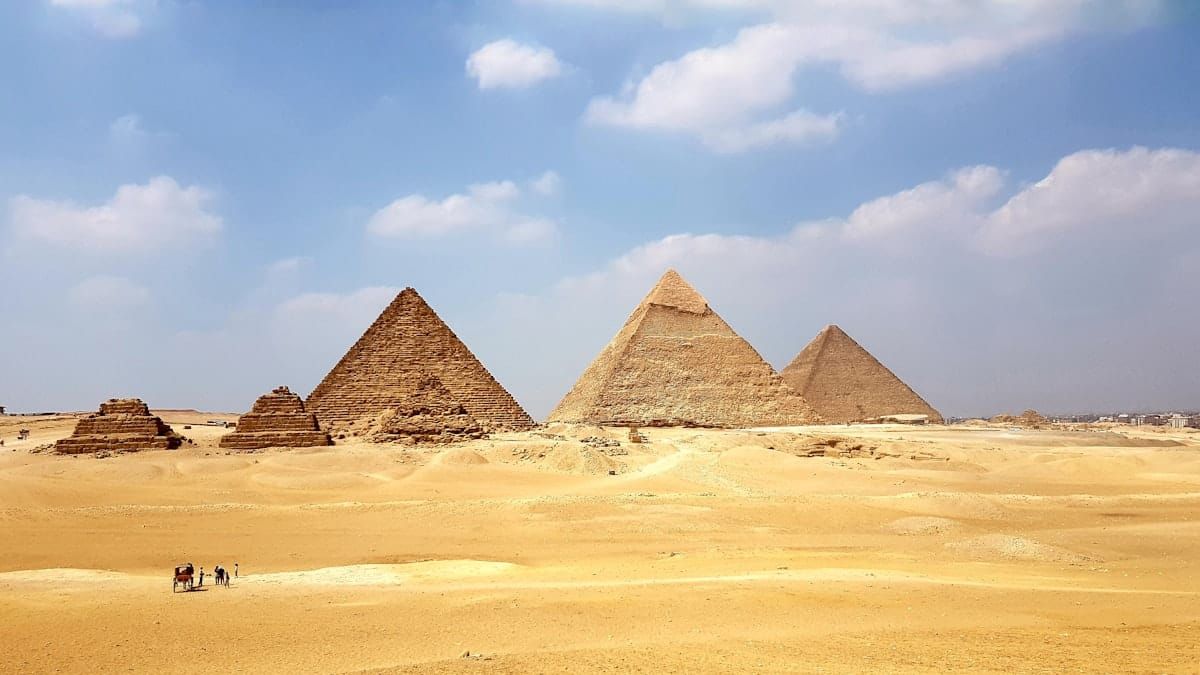
Few countries deliver history at the scale Egypt does. This is where one of humanity's first great civilisations took root along the Nile more than 5,000 years ago, and the monuments it left behind — the Pyramids of Giza, the temples of Karnak and Luxor, the tombs of the Valley of the Kings, the rock-cut colossi of Abu Simbel — remain among the most extraordinary things a traveller can stand in front of anywhere on Earth. Egypt effectively invented tourism: people have been coming to gawp at these wonders since the days of the Greeks and Romans, and you join a line of visitors that stretches back two millennia.
But Egypt is far more than its antiquities. It's the chaotic, café-lined energy of Cairo; the slow glide of a felucca down the Nile at Aswan; world-class coral reefs in the Red Sea; Bedouin tea in the silence of the Sinai mountains; and palm-fringed desert oases that feel like another planet. The Egyptian people are famously warm and hospitable, quick with a joke and a glass of sweet tea.
It suits almost everyone: history lovers and first-time adventurers, divers and beach-resort holidaymakers, backpackers stretching a budget and luxury travellers on a private dahabiya. The one constant is that nothing here is subtle — Egypt is intense, occasionally exhausting, and unforgettable.
What is the landscape and climate like?
Egypt straddles northeast Africa and the Sinai land bridge into Asia, making it transcontinental. It is dominated by two features: the Nile, whose thin green valley and delta hold the vast majority of the country's ~114 million people, and the desert — the Western (Libyan) Desert and Eastern Desert — which make up over 90% of the land but are almost empty. The country fronts the Mediterranean to the north and the Red Sea to the east.
Broad regions:
- Lower Egypt — the northern Nile Delta and Mediterranean coast (Cairo, Alexandria). Confusingly "lower" because it's downstream.
- Middle & Upper Egypt — the southern Nile Valley, home to the greatest concentration of pharaonic temples (Luxor, Aswan).
- Red Sea Coast & Sinai — resort and diving country.
- Western Desert — vast sand seas dotted with the oases of Siwa, Bahariya, Farafra, Dakhla and Kharga.
The climate is overwhelmingly hot desert. Summers (June–August) are scorching and rainless — Luxor and Aswan routinely top 40°C (104°F), while the coasts are slightly cooler but humid. Winters (November–March) are mild and pleasant, though desert nights and Sinai peaks get genuinely cold, and the far north coast sees some rain. Watch for the khamsin, hot sand-laden winds that blow in roughly March–May, dropping visibility and spiking temperatures. Flash floods occasionally hit the Sinai and southern deserts after rare heavy rain — a real hazard for desert campers.
Tell us your dates and we'll tailor your Egypt trip around them.
WhatsAppWhen is the best time to visit?
- Peak season (October–April): The obvious choice. Cool enough to spend full days at open-air sites in Luxor, Aswan and Giza. December–early January is the busiest and priciest stretch, especially over Christmas/New Year.
- Shoulder (October and April–May): Warm but manageable, with thinner crowds and better rates — a sweet spot if you can handle some heat.
- Off season (June–September): Brutally hot inland; sightseeing means very early starts. However, this is high season on the Red Sea and Mediterranean, when resorts in Hurghada, Sharm el-Sheikh and Alexandria fill with beachgoers.
Festivals worth planning around:
- Abu Simbel Sun Festival (22 February & 22 October) — dawn sunlight penetrates the temple to illuminate the inner sanctuary; a major event.
- Ramadan (dates shift ~11 days earlier each year) — atmospheric evenings but reduced daytime hours for some restaurants and services.
- Coptic Christmas (7 January) and Sham El-Nessim (spring, Coptic-calendar Monday) — a nationwide springtime picnic holiday.
Do you need a visa?
Most visitors need a tourist visa. Common options:
- e-Visa: Available online (visa2egypt.gov.eg) for many nationalities — single-entry around USD 25, multiple-entry around USD 60. Apply a week or so ahead.
- Visa on arrival: Citizens of many countries (including the US, UK, EU, Canada, Australia, Gulf states and others) can buy a visa sticker on arrival at major airports for about USD 25, paid in cash before passport control.
- Visa-free / eased entry: A number of Arab and African nationalities enter without a visa; rules vary widely.
- Sinai-only stamp: If you fly into Sharm el-Sheikh, Taba or Nuweiba and stay within the South Sinai resort strip (Sharm, Dahab, Nuweiba, St Catherine), you can get a free 15-day Sinai entry permit — but this does not cover Mount Sinai's St Catherine area for everyone or travel to the rest of Egypt, for which you need a full visa.
Passports should be valid for at least six months. This is general guidance only — entry rules change frequently; confirm requirements with an Egyptian embassy or the official e-Visa portal before you travel.
Want us to time your trip around a festival? We'll handle it.
WhatsAppHow much does it cost?
The currency is the Egyptian Pound (EGP, also written £E or LE), divided into 100 piastres. The pound has devalued sharply in recent years and floats freely — in the mid-2020s it has traded around 48–50 EGP to USD 1, so always check the current rate, as prices below are approximate.
Rough daily budgets (excluding international flights):
- Budget: ~600–1,200 EGP (USD 12–25) — hostels/budget hotels, street food (koshary, ta'meya), public transport and trains.
- Mid-range: ~2,500–5,000 EGP (USD 50–100) — comfortable 3-star hotels, restaurant meals, guided day trips, domestic flights.
- Luxury: ~10,000+ EGP (USD 200+) — 5-star hotels, private guides and drivers, premium Nile cruises and dahabiyas.
Cash, ATMs & cards: Egypt is largely a cash economy. ATMs are plentiful in cities and resorts (Banque Misr, CIB, NBE); withdraw pounds rather than relying on foreign cash. Cards work in hotels, upscale restaurants and shops but rarely at sites, markets or with taxis — carry small notes. Keep some change for entry tickets and tips.
Tipping (baksheesh) is woven into daily life and expected for almost any small service — bathroom attendants, someone who shows you a tomb detail, hotel staff, drivers. Budget 5–20 EGP for minor services, round up taxis, and tip restaurants ~10% (check if a service charge is already added). On Nile cruises, a per-day tip pool for crew is customary.
How do you get there?
Major international airports (IATA):
- Cairo International (CAI) — the main hub, served by EgyptAir (Star Alliance) and most global carriers.
- Hurghada (HRG) and Sharm el-Sheikh (SSH) — Red Sea/Sinai resort gateways, heavy on charter and European budget flights.
- Luxor (LXR) and Aswan (ASW) — convenient direct access to Upper Egypt's temples.
- Marsa Alam (RMF) — southern Red Sea resorts.
- Borg El Arab (HBE) — serves Alexandria.
Land borders: Open crossings include Taba (to Eilat, Israel) and Rafah (to Gaza — frequently closed/restricted). The Libya border is generally not advised for tourists. Crossing to/from Sudan overland is possible but bureaucratic.
Sea entry: Cruise ships call at Alexandria, Port Said and Red Sea ports (Safaga, for Luxor excursions). A passenger ferry runs between Nuweiba (Sinai) and Aqaba, Jordan, a popular link for combining Egypt with Petra.
We handle the bookings and budgeting — you just travel.
WhatsAppHow do you get around?
- Domestic flights: EgyptAir and budget carriers connect Cairo with Luxor, Aswan, Hurghada, Sharm el-Sheikh, Abu Simbel and Marsa Alam — a big time-saver given the distances.
- Trains: Egyptian National Railways runs the Nile corridor (Alexandria–Cairo–Luxor–Aswan). The sleeper train (Watania) between Cairo and Luxor/Aswan is a comfortable overnight option; newer fast/air-conditioned services are improving. Buy tickets in advance for sleepers.
- Intercity buses: Reliable companies like Go Bus and Blue Bus cover Cairo, Alexandria, the Red Sea coast, Sinai and the Suez cities with modern coaches.
- Nile cruises & feluccas: The classic Luxor–Aswan cruise (3–4 nights) is a highlight; smaller dahabiyas and traditional felucca sailboats offer slower, atmospheric alternatives.
- City transport: Uber and Careem operate in Cairo, Alexandria and other large cities — far less hassle than haggling with street taxis. Cairo also has an expanding Metro (cheap, with women-only carriages).
Common scams to watch for:
- "The site/museum is closed today" — almost always a ploy to redirect you to a shop or pricier "alternative."
- Taxi meters ignored or "broken" — agree a fare first, or use an app.
- Camel/horse touts at Giza quoting a low "ride up" price, then demanding a large fee to come back down — settle the full round-trip price and tips in writing/photo first.
- Papyrus, perfume and "free" gifts that become aggressive sales pitches; unsolicited "guides" who attach themselves to you and then demand baksheesh.
- Luxor in particular has a reputation for persistent hassle — polite firmness ("la, shukran" = "no, thank you") and not engaging is the best defence.
What are the local customs?
Egypt is a predominantly Sunni Muslim society with a significant Coptic Christian minority (~10%). It's conservative by Western standards but used to tourists.
- Greetings: "As-salāmu ʿalaykum" (peace be upon you) is the standard greeting; a little Arabic goes a long way. Handshakes are common; many religious men or women may prefer not to shake hands with the opposite sex — follow their lead.
- Dress: Modesty is appreciated everywhere and expected at religious sites. Cover shoulders and knees; women should carry a scarf to cover the head when entering mosques, and everyone removes shoes. Beachwear is fine only at resorts and pools.
- Ramadan: During the fasting month, avoid eating, drinking or smoking in public during daylight out of respect.
- Photography: Ask before photographing people. Never photograph military, police, bridges, the Suez Canal or government buildings. Some sites charge a camera/photo fee or ban flash and tripods.
- Friday is the main day of prayer; the weekend is Friday–Saturday.
- Use your right hand for eating and giving/receiving; alcohol is available in hotels, bars and resorts but drink discreetly elsewhere. Public displays of affection are best kept minimal.
Prefer to talk it through? We're a WhatsApp message away.
WhatsAppIs it safe?
Egypt's main tourist regions — Cairo, Giza, the Nile Valley (Luxor/Aswan), the Red Sea resorts and the South Sinai coast — are generally safe for visitors, with a heavy and visible security/tourist-police presence. Petty crime exists but violent crime against tourists is rare; the bigger day-to-day issue is persistent commercial hassle.
Regional cautions:
- North Sinai has an active security/insurgency situation and is off-limits to tourists. This is distinct from the South Sinai resorts (Sharm el-Sheikh, Dahab, St Catherine), which are heavily secured and routinely visited.
- The Western Desert near the Libyan border and remote desert areas require permits and should only be visited with licensed operators; some zones are restricted.
- Desert travel carries flash-flood and extreme-heat risks — go with experienced guides and carry plenty of water.
Women travellers should be prepared for catcalling and unwanted attention; dressing modestly, projecting confidence and using ride apps at night all help.
Health:
- Don't drink tap water — stick to sealed bottled water, and be cautious with ice and unpeeled raw produce. "Pharaoh's revenge" (travellers' diarrhoea) is common; pack rehydration salts.
- Recommended vaccinations typically include Hepatitis A and typhoid, plus routine immunisations (consult a travel clinic). Sun protection and a hat are essential.
- Emergency numbers: 122 (police), 123 (ambulance), 180 (fire). Pharmacies are widespread and well-stocked.
Which regions stand out?
- Greater Cairo & Giza — the sprawling, electric capital and the Pyramids on its doorstep; the unmissable starting point.
- Upper Egypt (Nile Valley) — Luxor and Aswan, the densest concentration of pharaonic temples and tombs on the planet.
- Red Sea Coast — Hurghada, El Gouna and Marsa Alam, with reef diving, watersports and all-inclusive resorts.
- Sinai Peninsula — South Sinai's diving meccas (Sharm el-Sheikh, Dahab) plus Mount Sinai and St Catherine's Monastery.
- Alexandria & the Mediterranean Coast — Egypt's cosmopolitan second city and breezy summer beaches.
- Western Desert & Oases — Siwa, Bahariya, Farafra and the surreal White Desert for adventure and oasis culture.
- Suez Canal Cities — Port Said, Ismailia and Suez, with cosmopolitan heritage and the great shipping artery.
Tell us your dates and we'll tailor your Egypt trip around them.
WhatsAppWhere should you go?
- Cairo — the chaotic, captivating capital: the Egyptian Museum, the Grand Egyptian Museum, Islamic Cairo, Khan el-Khalili bazaar and Coptic Cairo.
- Giza — the last surviving Wonder of the Ancient World: the Great Pyramid, its companions and the Sphinx.
- Luxor — the "world's greatest open-air museum," gateway to Karnak, Luxor Temple and the Valley of the Kings.
- Aswan — Egypt's most relaxed Nile city, with Philae Temple, the High Dam, Nubian villages and sunset feluccas.
- Abu Simbel — Ramses II's colossal rock temples rescued from Lake Nasser, in the deep south near Sudan.
- Alexandria — Mediterranean elegance, the Bibliotheca Alexandrina, Qaitbay Citadel and seafood corniches.
- Sharm el-Sheikh — Sinai's flagship resort town and a launchpad for Ras Mohammed and Tiran reef diving.
- Dahab — laid-back backpacker hub on the Sinai coast, home to the famous Blue Hole dive site.
- Hurghada — the Red Sea's biggest resort base, with diving, snorkelling and day trips to Luxor.
- Siwa Oasis — a remote, otherworldly oasis near Libya with salt lakes, the Oracle Temple and Berber-Siwi culture.
- Saqqara & Memphis — the Step Pyramid of Djoser and the ruins of Egypt's ancient capital, an easy day trip from Cairo.
- St Catherine & Mount Sinai — the world's oldest continuously inhabited monastery and a sunrise hike up Mount Sinai.
Regions & States
Egypt has 27 regions with guides — pick one to drill into its destinations.
Ad Daqahlīyah
12 destinations
Al Baḩr al Aḩmar
9 destinations
Al Buḩayrah
11 destinations
Al Fayyūm
9 destinations
Al Gharbīyah
8 destinations
Al Iskandarīyah
4 destinations
Al Ismā'īlīyah
7 destinations
Al Jīzah
11 destinations
Al Minūfīyah
9 destinations
Al Minyā
9 destinations
Al Qāhirah
7 destinations
Al Qalyūbīyah
11 destinations
Al Uqşur
7 destinations
Al Wādī al Jadīd
7 destinations
As Suways
2 destinations
Ash Sharqīyah
14 destinations
Aswān
7 destinations
Asyūţ
11 destinations
Banī Suwayf
8 destinations
Būr Sa‘īd
2 destinations
Dumyāţ
8 destinations
Janūb Sīnā'
8 destinations
Kafr ash Shaykh
12 destinations
Maţrūḩ
8 destinations
Qinā
9 destinations
Shamāl Sīnā'
6 destinations
Sūhāj
11 destinations
Not sure where to start in Egypt? Tell us how you like to travel and we'll shape the route.
WhatsAppTop Destinations
The places first-time and returning travellers ask for most.
10th of Ramadan
10th of Ramadan City is a planned industrial new city in Sharqia…
15th of May City
15th of May City is a satellite city administered by Egypt's New…
6th of October City
6th of October City is a city or town in Giza Governorate, part of…
Abnub
Abnub is a town in the Nile Valley of Upper Egypt.
Abu al-Matamir
Abu al-Matamir is a town in Beheira Governorate, about 50 km…
Abu Hammad
Abu Hammad is a town and the administrative center of Abu Hammad…
Abu Hummus
Abu Hummus is a town in Beheira Governorate in Egypt's Nile Delta…
Abu Kebir
Abu Kebir (Abu Kabir) is a city in Sharqia Governorate in Egypt's…
Abu Qir
Abu Qir is an ancient coastal town located approximately 25 km east…
Abu Qurqas
Abu Qurqas (also spelled Abu Qirqas) is a town and markaz in Minya…
Abu Simbel
Abu Simbel is a small village in southern Egypt, home to one of the…
Abu Suwir
Abu Suwir (also spelled Abu Sueir or Abu Suweir) is a small town in…

Contact Us
Get in touch with us.
Get in touch
Contact Us
Tell us where you'd like to go and how you like to travel. A real Tripcuro planner — not a bot — will craft an itinerary around you.
- Personalised, hassle-free planning end-to-end
- Transparent pricing, no hidden costs
- 24/7 support for complete peace of mind