
Al Qāhirah
Egypt · Governorate · 7 destinations with guides
Photography coming soonWhy visit?
Al Qāhirah — Cairo — is Egypt's capital governorate and the political, cultural, and economic nerve centre of the Arab world. Situated on the eastern bank of the Nile in the apex of the Delta, the governorate encompasses the sprawling metropolis of Greater Cairo along with newer satellite cities extending eastward into the desert. With a population exceeding ten million within the governorate boundaries (and over twenty million in the broader metropolitan area), it is one of the largest urban concentrations on Earth.
Cairo's character is forged from layer upon layer of history. The modern city overlays a Roman fortress (Babylon), the Fatimid-era founding of Al-Qahira (969 CE), Mamluk mosques and madrasas, Ottoman-era markets, and Khedive-era boulevards modelled on Paris. The result is a sensory torrent: medieval alleyways give way to Belle Époque squares, colonial-era villas sit beside glass towers, and the calls to prayer from a thousand minarets reverberate over a city that never sleeps.
Beyond the historic core, the governorate is rapidly expanding eastward. New Cairo, El Shorouk, and the ambitious New Administrative Capital represent Egypt's 21st-century urban vision — planned communities with wide boulevards, modern universities, and government mega-projects. Helwan to the south, once an independent city, now forms Cairo's industrial and residential fringe. Together, these districts make Al Qāhirah a governorate of stark contrasts: medieval and modern, chaotic and planned, deeply traditional and boldly futuristic.
When is the best time to visit?
The ideal time to visit Cairo is from October through April, when daytime temperatures range from 20–28°C and the air is dry and clear. November through February is peak tourist season — expect cooler evenings (sometimes dropping to 10°C) and occasional rain, but the weather is generally excellent for walking and sightseeing.
Summer (June–September) is brutally hot, with temperatures regularly exceeding 38°C and often hitting 42°C in July and August. The heat is dry, but the sheer intensity combined with urban heat-island effects makes midday outdoor activity inadvisable. Air quality also deteriorates in summer due to dust and traffic fumes.
Ramadan (dates shift annually with the Islamic calendar) transforms Cairo's social rhythms — streets are quiet during the day, then erupt with life after sunset iftar meals. The month culminates in Eid ul-Fitr, a three-day celebration. Coptic Christmas (7 January) and Sham Ennessim (spring Monday after Coptic Easter) are also widely observed. The Cairo International Film Festival (November–December) and the Cairo International Book Fair (late January–February) draw large crowds.
Tell us your dates and we'll shape a Al Qāhirah route around them.
WhatsAppHow do you get around?
Cairo has the most extensive public transport network in Egypt. The Cairo Metro — Africa's first metro system, opened in 1987 — operates three lines covering over 80 km, connecting Helwan in the south to the northern suburbs and eastward to New Cairo's edge. Fares are extremely cheap (a few Egyptian pounds), and trains run every few minutes during peak hours. Women-only carriages are available.
Beyond the metro, the city relies on a vast fleet of public buses, microbuses, and the newer Bus Rapid Transit (BRT) system. Ride-hailing apps (Uber, Careem, inDrive) are widely used and generally the most comfortable option for visitors. Traditional black-and-white taxis exist but often require fare negotiation; insist on the meter or use an app.
For travel to the newer eastern satellite cities (New Cairo, El Shorouk, the New Administrative Capital), private car or ride-hailing is the most practical option — these areas were designed around automobile infrastructure. The new electric monorail, connecting East Cairo to the New Administrative Capital, was under construction as of the early 2020s and is expected to significantly improve connectivity.
Cairo International Airport lies about 22 km northeast of downtown and is reachable by taxi (45–90 minutes depending on traffic) or the airport bus.
Where should you go?
- Cairo — the historic megacity core, home to the Pyramids of Giza, the Egyptian Museum, Khan el-Khalili bazaar, Islamic Cairo's mosques, and Coptic Cairo's churches
- New Cairo — a sprawling planned satellite city in the eastern desert with modern malls, the American University in Cairo campus, and upscale residential compounds
- El Shorouk — a newer residential city east of Cairo, popular with middle-class families seeking quieter suburban living
- Bdr City — a planned industrial and residential city on the Cairo–Suez road
- 15th of May City — a small satellite city south of Cairo, originally built for workers
- New Administrative Capital — Egypt's massive new government district 45 km east of Cairo, featuring the Iconic Tower (Africa's tallest building), a new parliament, and grand ministries
- Helwan — a historic southern suburb with sulphur springs, a university, and industrial zones along the Nile
Want the scenic legs and stays booked for you? Just ask.
WhatsAppWhat should you eat?
Cairo is Egypt's gastronomic capital, offering everything from street stalls to Michelin-worthy fine dining. The city's signature dishes include koshari (a carb-loaded bowl of rice, lentils, macaroni, chickpeas, and fried onions doused in tomato-vinegar sauce), ful medames (slow-cooked fava beans), and ta'ameya (Egyptian falafel made with fava beans rather than chickpeas).
Iconic eating experiences include a meal at one of the downtown institutions like Abou Tarek (the self-proclaimed king of koshari), or a late-night shawarma on Sharia Al-Azhar. Khan el-Khalili's El Fishawi café, operating continuously since 1797, serves mint tea and Turkish coffee amid brass lanterns and mirror-work walls.
Upper-end dining clusters in Zamalek, Garden City, and New Cairo's Fifth Settlement, where Egyptian chefs are reinterpreting traditional dishes alongside international cuisine. Rooftop restaurants overlooking the Nile offer memorable sunset dining. Street food is ubiquitous — feteer (layered pastry), corn on the cob grilled over charcoal, and fresh sugarcane juice are sold from carts throughout the city.
Vegetarian and vegan eating is straightforward given the prevalence of bean, legume, and vegetable-based dishes. Alcohol is available in hotel restaurants, expat-oriented bars, and some licensed establishments, but most local restaurants are dry.
What is the culture like?
Cairo has been the cultural capital of the Arab world for over a millennium. The city's Azhar Mosque and Al-Azhar University (founded 970 CE) remain the foremost centre of Sunni Islamic scholarship. The Coptic Orthodox Church, headquartered in Cairo's Coptic Quarter, traces its roots to the earliest days of Christianity.
Major cultural events include Ramadan celebrations with decorated streets, fanous (lantern) displays, and communal iftar tents. Cairo International Film Festival (November–December) brings international cinema to downtown theatres. The Cairo International Book Fair (late January–February), one of the world's largest, draws millions of visitors to the fairgrounds in New Cairo.
Egyptian music — from Umm Kulthum's legendary classical Arabic songs to contemporary Mahraganat electro-folk — is inseparable from Cairo's identity. The Cairo Opera House in Zamalek hosts ballet, symphony, and Arabic music performances. Khan el-Khalili remains a living bazaar where traditional metalwork, inlaid wood, glass lanterns, and perfumes are crafted and sold.
Coptic Christmas (7 January) is celebrated with midnight masses at the Hanging Church and other historic Coptic churches. Sham Ennessim, the pharaonic-origin spring festival, sees Cairenes flocking to public parks and the Nile corniche with picnics of fesikh, lettuce, and coloured eggs.
Travelling during a festival? We'll plan around the crowds.
WhatsAppWhat are the standout experiences?
Walk Islamic Cairo from Bab Zuweila to Al-Azhar — a single walk through the medieval heart of the city passes some of the finest Mamluk architecture in the world: mosques, madrasas, mausoleums, and caravanserais, culminating at the venerable Al-Azhar Mosque and its surrounding market streets.
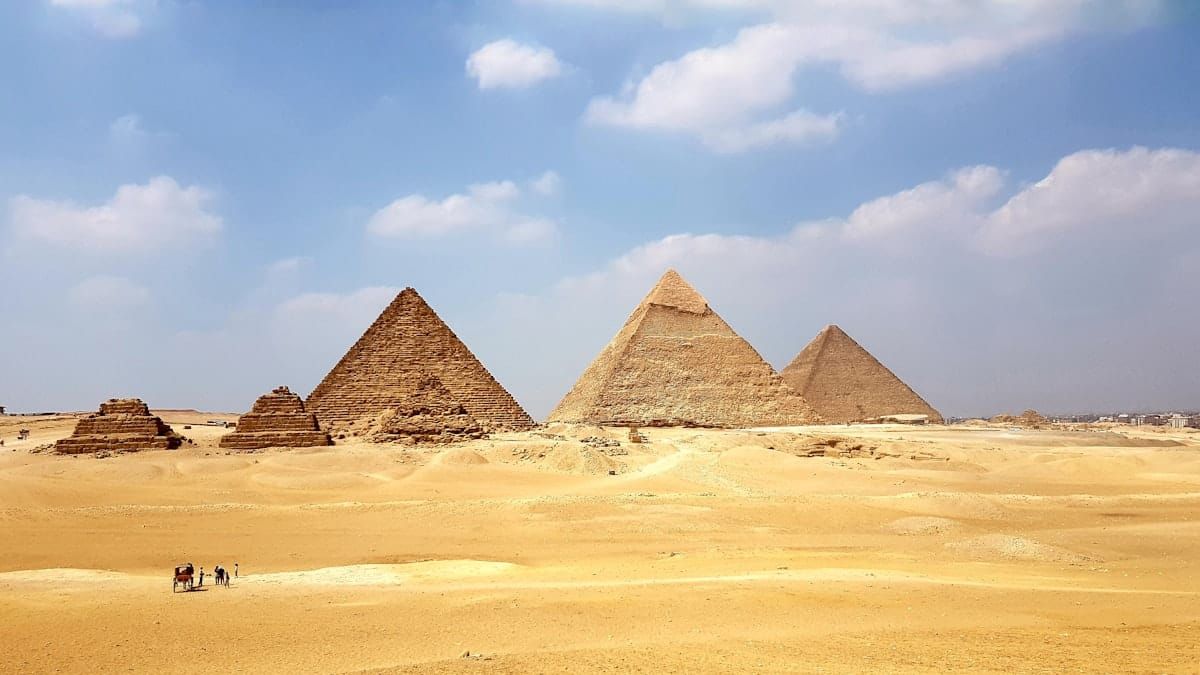
Sunset from the Giza Plateau — while the Pyramids are a must-see at any time, the late-afternoon light transforms the limestone blocks to gold, and the view from the desert bluff behind the Sphinx — with the pyramids in the foreground and Cairo's skyline beyond — is unforgettable.
Explore Khan el-Khalili bazaar after dark — the centuries-old souk comes alive in the evening with brassworkers, spice merchants, and the clatter of backgammon at El Fishawi café. The sensory overload of sounds, smells, and colours is quintessential Cairo.
Cross the Nile by felucca at sunset — hire a traditional sailing boat from one of the Zamalek or Garden City jetties for a peaceful hour on the river, watching the city light up as dusk falls.
Visit Coptic Cairo's cluster of ancient churches — the walled quarter of Old Cairo contains the Hanging Church (Al-Mu'allaqa), the Church of St. Sergius (built over the crypt where the Holy Family is said to have sheltered), and the Ben Ezra Synagogue, all within a few hundred metres of each other.
Top Destinations
Every destination in Al Qāhirah with a guide — tap a place for the full guide.
15th of May City
15th of May City is a satellite city administered by Egypt's New…
Badr City
Badr City is a planned satellite city in the Eastern Desert on the…
Cairo
Cairo is the capital of Egypt and the largest city in the Arab world…
El Shorouk
El Shorouk ("the Sunrise") is a planned satellite city in the Eastern…
Helwan
Helwan is a southern district of Greater Cairo with roots going back…
New Administrative Capital
Egypt's New Administrative Capital is a purpose-built city about 45…
New Cairo
New Cairo is a large planned district east of Cairo, developed as…
Sample itinerary
See how a trip to Al Qāhirah comes together — a real Tripcuro plan, day by day.
Pair the highlights of Al Qāhirah into one easy trip — we'll plan the route.
WhatsApp
Contact Us
Get in touch with us.
Get in touch
Contact Us
Tell us where you'd like to go and how you like to travel. A real Tripcuro planner — not a bot — will craft an itinerary around you.
- Personalised, hassle-free planning end-to-end
- Transparent pricing, no hidden costs
- 24/7 support for complete peace of mind