

Shangrila
Yunnan Sheng, China
Why visit Shangrila?
Shangrila (香格里拉, Xiānggélǐlā), formerly known as Zhongdian (中甸) and called Gyalthang in Tibetan, sits at roughly 3,200 m on the eastern edge of the Tibetan plateau in northwestern Yunnan. Historically part of the old Tibetan province of Kham, the area was placed under Yunnan administration by the Qing in the 18th century, and today the town blends Tibetan, Han, Naxi, Bai, Yi and Lisu communities — though the surrounding countryside remains overwhelmingly Tibetan. The name change from Zhongdian in 2001 was an unabashed marketing move borrowing from James Hilton's 1933 novel Lost Horizon, but unlike Lijiang further south, Shangrila has retained genuine character: working monasteries, grassland villages, and yak-dotted plateaus all within easy reach.
The town is compact and oriented north–south along Changzheng Road. The atmospheric Dukezong Old Town (独克宗古城) sits at the southern end — largely rebuilt after a catastrophic fire in January 2014, but still home to evening square-dancing, Tibetan-style shophouses and a giant prayer wheel on the hill — while the long-distance bus station anchors the north. Most monasteries, lakes and grasslands lie within a 5–30 km radius.
The altitude is the single biggest practical consideration: arrive slowly if you can, drink plenty of water, and expect cold nights year-round. The sweet spot for visiting is late May through early October, when wildflowers bloom on the grasslands and skies are mostly clear. Winters (December–February) are bitterly cold with frequent snow on the passes, and the shoulder months can deliver all four seasons in a day.
Planning Shangrila? Tell us your dates and we’ll tailor the trip.
Ask on WhatsAppHow do you get there?
By Plane
Diqing Shangri-La Airport (DIG) lies a short distance south of the old town. There are daily flights from Kunming, Lhasa and Chongqing, with seasonal connections to Chengdu and other Chinese hubs. A taxi from the airport into town takes 15–20 minutes.
By Train
The Shangri-La Railway Station is on the west side of the old town, on the Lijiang–Shangri-La line that opened in late 2023. Trains run from Kunming (roughly 4½–5½ hours) and Lijiang (roughly 1 hour 20 minutes). Booking via the official 12306 app or at the station counter is straightforward; popular departures sell out in peak summer and during Golden Week, so book a few days ahead.
By Car / Road
Shangrila is the main hub for overland travel between Yunnan and Tibet (national highway G214), and road quality has improved enormously over the last decade.
- Lijiang → Shangrila: around 2½ hours on the expressway.
- Dali → Shangrila: about 6 hours; both day and night buses run.
- Kunming → Shangrila: roughly 12 hours by bus, day or sleeper.
- Deqin → Shangrila: a scenic 4-hour drive, with a worthwhile stop at Benzilan roughly midway.
For travellers heading further into Tibet, there are occasional long-distance buses toward Lhasa and Chamdo, though departures are not daily — confirm at the bus station before planning around them. Foreign travellers should check the latest permit situation for crossing into Tibet, as restrictions change without notice.
The compact core means much of the old town is walkable. A local bus line runs from the old town up to Songzanlin Monastery for a low flat fare, and another connects the old town to the long-distance bus station.
- Taxis: cheap for short hops in town; a bit more out to Songzanlin Monastery.
- Bicycles: a great way to explore. Mountain bike rentals are available from several shops near the old town.
- Motorbikes: a few outfitters rent bikes and run guided minibike routes; ask at your guesthouse for a currently reputable operator.
- Ride-hailing: Didi works in town for short trips but coverage thins out once you head into the grasslands.
Watch for the standard Chinese-tourist-town scams: overpriced "tours" pitched at hostels, taxi drivers refusing to use the meter, and sketchy bike rentals — check tyres and brakes before riding off, and clarify the return/deposit policy up front. The altitude is the real hazard — take the first day slowly.
What are the things to do?
Old Town & Squares
- Dukezong Old Town — The rebuilt old quarter at the south end of Changzheng Road. Cobbled lanes, Tibetan-style shophouses and a hilltop temple crowned by a giant Tibetan prayer wheel (a steep but quick climb). Nightly square dancing kicks off in the evening on the main square and runs for a couple of hours — locals of all ages join in and visitors are welcome. Free.
Monasteries & Temples
- Songzanlin Monastery (松赞林寺 / Ganden Sumtseling) — A few kilometres north of town and the single biggest sight in the region: a sprawling 17th-century Gelugpa institution often called "the Little Potala." Look beyond the two main temples to the smaller temples downhill near the white stupa — one reflects the pre-Buddhist Bon tradition with striking demonic murals; the other has some of the finest artwork on site and a rooftop with a sweeping view of Shika Snow Mountain. The stupa itself, built to honour a visiting senior lama, is a key local pilgrimage point — walk it clockwise and spin the prayer wheels. Reachable by local bus or a short taxi ride north.
Museums
- Diqing Tibetan Autonomous Prefecture Museum — on the south side of the old town's main square. Good orientation to Khampa Tibetan culture and the prefecture's history.
- Diqing Long March Museum — north side of the same square. A focused take on the Red Army's passage through the region.
Lakes, Parks & Grasslands
Pudacuo (Putacuo) National Park — One of the first national parks in China, set high in alpine forest and grassland with two main lakes (Shudu and Bita). Plan for at least a half-day, ideally a full day.
Napa Lake (纳帕海) — A seasonal lake-and-grassland just west of the old town over the hill. Best in summer when wildflowers carpet the meadows and black-necked cranes appear in autumn. A perimeter-road entry fee is enforced at checkpoints.
Shika Snow Mountain — Cable cars climb to over 4,400 m for panoramic views of the plateau.
Wander the old town at dusk and join the nightly square dancing on the main square — nobody minds beginners.
Ride Tibetan horses in the grasslands outside town. Taxi drivers know the staging points, and short rides are typically arranged on the spot.
Cycle around Napa Lake — rent a mountain bike near the old town and pedal out over the hill. Stick to the main perimeter road; some side tracks are in poor condition.
Visit Nixi Tibetan Village — north of Shangri-La and famed for black pottery with a long tradition. You can watch potters work, try the wheel yourself, and have lunch in a traditional Tibetan home.
Day-trip to Pudacuo National Park for a half-day boardwalk hike around the two lakes.
Overnight to Deqin and Feilai Si for sunrise over Meili Snow Mountain — a several-hour drive north, breaking the trip at Benzilan.
Stay with a local family — many Tibetan households open their homes to travellers for a small contribution toward food.
Acclimatise gently on day one — a slow walk around the old town and an early night is genuinely the best "activity" for the first 24 hours at altitude.
Planning Shangrila? Want these on a customised itinerary?
Ask on WhatsAppWhere to eat?
Local cuisine is Khampa Tibetan in character, with Yunnanese, Naxi and Han Chinese influences layered on top. Expect lots of yak (meat, butter, cheese, yoghurt), highland barley (qingke), tsampa, hot-pot-style stews, and pickled vegetables that compensate for the short growing season. Signature dishes to look for: yak butter tea — an acquired taste, salty and rich; yak meat hotpot; matsutake mushrooms in season (July–September); highland barley wine; and Yunnan staples like rice noodles and Naxi baba (flatbread).
Vegetarian options exist but are not the default — temple-style vegetarian restaurants and Western-leaning cafés in the old town are the easiest path. Halal Hui restaurants are present along Changzheng Road.
- Budget — old town noodle stalls: a hearty bowl of rice noodles or hand-pulled noodles; look for places packed with locals at lunch.
- Mid-range — Tibetan family-style restaurants around Dukezong Old Town: a spread of yak dishes, momos and butter tea.
- Mid-range — Western-leaning cafés in the old town: pizza, burgers and good coffee for travellers who need a break from yak.
- Hotpot — yak hotpot houses on Changzheng Road; matsutake hotpot in season is a splurge worth making.
Where to drink?
- Yak butter tea — the everyday drink of the plateau; sample it in any Tibetan teahouse.
- Sweet milk tea and butter tea sets — served by the pot in old-town teahouses, usually with tsampa on the side.
- Highland barley wine — locally distilled, sometimes infused with herbs.
- Shangri-La wine — a French-influenced winery in the region produces reds from grapes grown at high altitude; bottles turn up on better restaurant menus.
- Coffee — the old town has a healthy crop of Western-style cafés serving Yunnan beans; good for warming up on cold afternoons.
- Bars — a small but lively scene around the old town with live Tibetan music on weekends.
Water: tap water is not safe to drink. Stick to bottled or boiled water; most hotels and guesthouses provide a thermos of hot water in the room. At altitude, hydration matters more than usual — aim for noticeably more water than you'd drink at sea level, and go easy on alcohol for the first day or two.
Planning Shangrila? We’ll book the stays and dining for you.
Ask on WhatsAppWhere to stay?
Budget
- Tibetan-run guesthouses popular with overlanders offer dorms and simple private rooms, often with useful local route information and gear rental.
- Old-town hostels cluster in Dukezong, with dorm beds and basic privates.
Mid-range
- A Tibetan-style boutique lodge on the edge of town offers views toward Songzanlin.
- Dozens of rebuilt Tibetan-style courtyard guesthouses in Dukezong offer heated doubles with breakfast.
Upscale / Heritage
- Banyan Tree Ringha — a luxury resort about 20 minutes outside town set among traditional Tibetan farmhouses, rebuilt with under-floor heating and standalone bathtubs.
- International-brand full-service properties on the edge of town offer reliable amenities and oxygen-enriched rooms.
Heating, hot water and oxygen support are the variables that matter most at this altitude — confirm all three when booking, especially in winter.
What should you buy?
The old town is wall-to-wall with souvenir shophouses, and quality varies wildly — assume that anything pitched as "antique" is not.
Worth shopping for:
- Nixi black pottery — distinctive smoke-fired Tibetan ware; buy at the source in Nixi village if you can.
- Tibetan textiles and woollens — yak-wool scarves, blankets and traditional chuba robes.
- Thangka paintings — religious scroll paintings; prices reflect the artist's training and the materials, with hand-ground mineral pigments costing more than printed reproductions.
- Silver and turquoise jewellery — Khampa-style rings, pendants and prayer-wheel charms.
- Yak butter, yak cheese, dried yak meat and tsampa (roasted barley flour) — easy to pack for the rest of the trip.
Bargaining is expected in the old town shophouses — opening prices on souvenirs are typically two to three times what you should pay. Fixed-price boutiques and museum shops are the exception.
Where to go next?
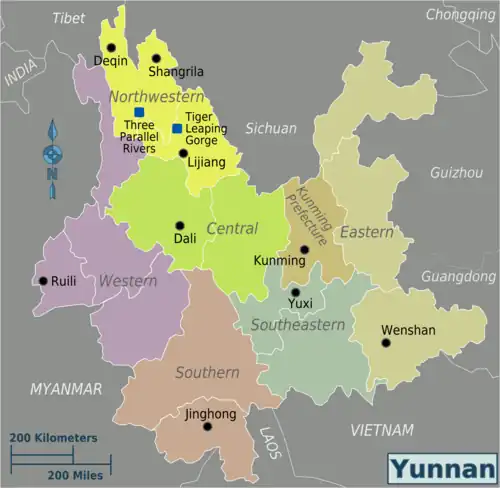
- Lijiang (丽江) — 2½ hours by expressway or ~1 hour 20 minutes by train. UNESCO-listed Naxi old town, Black Dragon Pool, and a softer landing for altitude on the way down.
- Deqin & Feilai Si (德钦 / 飞来寺) — 4 hours north by road. Base for sunrise views of the Meili Snow Mountain range and trekking to the Mingyong Glacier.
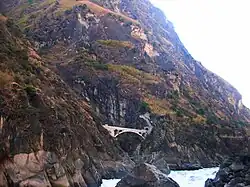
- Tiger Leaping Gorge (虎跳峡) — 2–3 hours south toward Lijiang. One of China's great hikes; the two-day high trail is the classic itinerary.
- Benzilan (奔子栏) — about 2 hours north on the Deqin road. A worthwhile overnight stop with a bend in the Jinsha River and access to the historic Dongzhulin Monastery.
- Yading National Park via Daocheng — a long bus journey east into Sichuan; three sacred snow peaks and some of the most spectacular alpine scenery in the country.
- Dali (大理) — 6 hours south by bus. Erhai Lake, Bai culture and a noticeably warmer, lower-altitude rest before heading on to Kunming.
Nearby in Yunnan Sheng
More places to explore around Shangrila.
Guide content as of July 2026. Portions adapted from Wikivoyage, CC BY-SA 4.0.

Contact Us
Get in touch with us.
Get in touch
Contact Us
Tell us where you'd like to go and how you like to travel. A real Tripcuro planner — not a bot — will craft an itinerary around you.
- Personalised, hassle-free planning end-to-end
- Transparent pricing, no hidden costs
- 24/7 support for complete peace of mind