
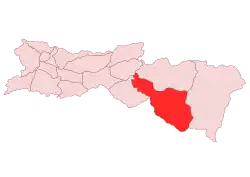
Ruili
Yunnan Sheng, China
Why visit Ruili?
Ruili (瑞丽 Ruìlì) is a county-level border city in the Dehong Dai and Jingpo Autonomous Prefecture, tucked into the far southwestern corner of Yunnan against the Myanmar frontier. Known anciently as Mengmao and closely tied to the history of China's Dai ethnic group, Ruili has long been a meeting point of cultures, faiths, and trade routes — including a stretch of the wartime Burma Road. The town across the border, Muse, is one of the busiest land crossings between China and Myanmar, and that proximity gives Ruili a character unlike anywhere else in Yunnan: golden Theravada-style pagodas glittering above tropical foliage, Jingpo silver workshops, jade arcades the size of department stores, and night markets where Burmese, Dai, Jingpo, and Han traders mingle.
The city sits on a humid lowland plain ringed by hills, north of the Tropic of Cancer but with a distinctly subtropical monsoon climate. Winters (Nov–Feb) are mild and dry with cool mornings, while summers (May–Oct) are hot, very humid, and drenched by monsoon rain. The dry season from November to April is the most pleasant window for travel; April is also when the Dai Water Splashing Festival turns Ruili into one of China's liveliest celebrations.
Ruili divides into a handful of useful zones: the compact city centre around Nanmao Street and Renmin Road; Jiegao Border Area (姐告区), the special economic enclave pressed against Muse and home to the main land crossing and jade markets; Jiele (姐勒) to the north, anchored by the Jiele Golden Pagoda; Mangling (芒令) to the west with the famous "One Tree Forest" banyan; a rainforest zone to the east; and a rural belt of Dai villages and rice paddies along the border to the south.
Planning Ruili? Tell us your dates and we’ll tailor the trip.
Ask on WhatsAppHow do you get there?
By Plane
Dehong Mangshi Airport (LUM) in nearby Mangshi is the principal regional airport, roughly 2 hours east of Ruili by expressway, with multiple daily flights to Kunming and direct connections to several other major Chinese cities. Airport shuttle buses run to Ruili's bus station; a taxi or pre-booked car is the alternative.
Ruili itself has a small local airport, but service has historically been intermittent — check current schedules before relying on it.
By Train
There is no railway to Ruili. Combine a flight or bus to Mangshi or Baoshan with an onward road connection.
By Car / Road
The Hangrui Expressway (G56) is the main road artery, linking Ruili to Mangshi, Baoshan, Dali, and onward to Kunming. National highways also pass through. Driving times: Mangshi around 2 hours, Baoshan around 4 hours, Dali around 6 hours, Kunming around 10 hours.
Long-distance buses from Kunming's South Bus Station to Ruili take 10–12 hours; sleeper buses run overnight. Buses from Baoshan and Dali are the most common approach.
Central Ruili is small and walkable — most hotels, the jade markets, and the night market are within 15 minutes on foot of one another. For longer hops to Jiegao, Jiele, or the rainforest zone, options include:
- City buses — flat, low fares; routes connect the centre to Jiegao (about 7 km south) and Jiele (about 5 km northeast).
- Taxis — most cross-city rides are inexpensive. Insist on the meter ("打表"); some drivers quote flat rates for tourists.
- Ride-hailing — Didi works in Ruili and is generally cheaper and clearer than hailing on the street.
- E-scooters and tuk-tuks — three-wheeled motor-taxis ply the back streets and run to Jiegao; agree the price first.
Cautions: at jade markets be wary of "tour guide" touts who steer you to commission shops; in the border area carry your passport at all times — there are checkpoints, and the Jiegao zone has its own ID inspection on entry. Cross-border excursions to Muse are restricted for most foreign passport holders; verify current rules before attempting.
What are the things to do?
Temples and pagodas
- Jiele Golden Pagoda — Ruili's iconic Dai stupa cluster, glittering on a low rise northeast of the centre. The most photogenic of the local pagodas, especially at sunset.
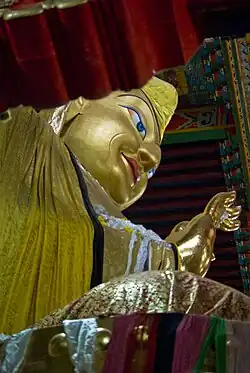
- Hansha Temple — a working Theravada monastery in Hansha village (Mangling) with carved wooden halls and resident monks; visit respectfully, dress modestly.
- Leizhuangxiang Pagoda — smaller but atmospheric, set among banyans on Ruili's western fringe.
Nature and landscape
- One Tree Forest — a single centuries-old banyan in Mangling whose aerial roots have grown into a grove covering thousands of square metres.
- Moli Tropical Rainforest Scenic Area — east of town; jungle boardwalks and a waterfall. Allow half a day.
- Nongdao border villages and rice paddies — south of the city; striking dry-season scenery and Dai bamboo-stilt houses.
- Hot springs around Ruili — the region's "geothermal country" reputation rests on several developed bathing complexes in the surrounding countryside.
Border and trade
- Jiegao "One-Border-Two-Nations" — a village split by the China-Myanmar boundary, where you can stand astride the line.
- Jiegao Border Trade Zone & jade markets — a sprawling commercial enclave of jade-trading halls.
Cultural sites
A small ethnic-culture display in central Ruili covers Dai, Jingpo, De'ang, Achang, and Lisu cultures.
Catch the Water Splashing Festival in mid-April — Ruili's Dai New Year is one of the largest in China, with days of street water fights, dragon-boat races on the Ruili River, lantern releases, and Peacock Dance performances.
Walk the night market on Nanmao Street and around Bianmao Street — grills, tropical fruit, jade stalls, Burmese goods, and Dai snack vendors light up after sundown.
Take a jade-buying lesson — for serious buyers, a half-day tour of the Jiegao markets with a Mandarin-speaking friend or hired guide is invaluable; learn to spot dyed and resin-treated stones before opening your wallet.
Cycle or scooter through Nongdao — flat lanes, Dai temple villages, and border markers in the rice fields.
Soak at a hot spring resort — try one of the developed complexes in the surrounding countryside.
Day-trip to Wanding (畹町), the historic Burma Road border town east of Ruili — quieter than Jiegao, with a small memorial hall on the Burma Road.
Photograph Theravada monasteries at dawn — the local pagodas are at their best in early morning light when monks are receiving alms.
Planning Ruili? Want these on a customised itinerary?
Ask on WhatsAppWhere to eat?
Ruili's table is one of the most distinctive in China: a hybrid of Dai sour-spicy-herbal cooking, Jingpo grilled and pounded dishes, and clear Burmese and Shan influence. Signature things to try:
- Dai pineapple rice — sticky rice steamed inside a halved pineapple.
- Sapie / cold rice-noodle salad — a uniquely Dai cold-noodle dish dressed in a bitter, herbal sauce based on minced beef or fish offal; an acquired but rewarding taste.
- Grilled tilapia with lemongrass and chilli.
- Jingpo "pounded" dishes — green papaya, dried beef, or cucumber pounded with chillies, garlic, and lime in a wooden mortar.
- Shan noodles — fish or chicken noodle soups with clear cross-border influence.
- Tropical fruits — mangosteen, durian, rambutan, and small sweet pineapples in season.
Budget grills and sticky-rice stalls fill the Bianmao night market and Nanmao Street after dark. Dai-style sit-down restaurants around Ruili Square and Renmin Road offer set meals with a sampler of Dai specialties at mid-range prices; Jingpo-style restaurants serve the full pounded-dish-and-bamboo-tube-rice experience for a bit more.
Dietary notes: vegetarian options exist (lots of bamboo shoot, banana flower, and pumpkin dishes), but many "vegetable" plates are cooked with fish sauce or dried shrimp — clarify if strictly vegetarian. Halal noodle and rice places are scattered around the centre, serving the local Hui community.
Where to drink?
- Yunnan coffee is taking over Ruili as it has the rest of southwest China; small specialty cafés around Renmin Road serve single-origin Dehong beans.
- Sugarcane juice, fresh coconut, and tropical fruit shakes are sold from carts city-wide — a near-essential during humid afternoons.
- Dai rice wine — homemade, low-alcohol, sometimes flavoured with herbs; commonly served at Dai restaurants.
- Chinese beers are everywhere; imported Myanmar beer occasionally appears in border-area bars.
- Pu'er and green tea at teahouses around the city centre.
- A small nightlife scene of KTV bars and Burmese-flavoured live-music pubs clusters along Renmin Road and near Bianmao Street.
Water: do not drink tap water. Bottled water is cheap and ubiquitous; boiled water dispensers are available in most hotels. Ice in roadside drinks is usually made from filtered water in established shops but is a small risk at informal stalls.
Planning Ruili? We’ll book the stays and dining for you.
Ask on WhatsAppWhere to stay?
Budget
- Guesthouses around Nanmao Street and the bus station offer clean, simple Chinese-style rooms; cash or WeChat Pay only at smaller ones.
Mid-range
- Reliable national chain hotels are central and offer dependable mid-tier comfort.
Upscale
- A long-established four-star property popular with jade traders sits in the city centre.
- Hot-spring resort hotels in the surrounding countryside offer full-board packages with in-room or outdoor geothermal pools.
What should you buy?
Ruili is, more than anything, a jade and gem city. The Jiegao Jade Market and central markets are the main hunting grounds for Burmese jadeite, ranging from cheap keychain trinkets to bangles costing a small fortune. Other regional specialties:
- Burmese rubies, sapphires, spinel and amber — sold loose or set; insist on certification for anything above a modest sum.
- Dai silverware and Jingpo silver jewellery — chunky bangles, betel-nut boxes, and ceremonial ornaments.
- Bamboo and lacquerware from Dai craftspeople.
- Burmese goods — thanaka wood paste, longyi sarongs, teak carvings, coffee, and dried fruit — widely available in Jiegao.
- Pu'er tea and shade-grown Yunnan coffee from the wider Dehong region.
Bargaining is expected, especially in the jade arcades — opening prices can be several times the realistic level, and walking away nearly always brings a counter-offer. For any significant purchase, buy from a licensed shop with a printed receipt and certificate; tout-led "wholesale warehouse" visits are best avoided.
Where to go next?
- Mangshi (芒市) — Dehong's prefectural capital, roughly 100 km / ~2 hours east, with a notable pagoda complex and the regional airport.
- Tengchong (腾冲) — roughly 175 km / ~3 hours northeast; volcanic landscapes, the Heshun heritage town, and excellent hot springs.
- Baoshan (保山) — roughly 240 km / ~4 hours northeast; tea country and a useful rail hub onward.
- Dali (大理) — roughly 400 km / ~6 hours by bus, or via high-speed rail from Baoshan; Erhai Lake and the Bai cultural heartland.
- Wanding (畹町) — roughly 30 km / 40 minutes east; small, atmospheric border town on the historic Burma Road.
- Lijiang (丽江) — reachable by a short flight from Mangshi; the UNESCO-listed Naxi old town and gateway to Tiger Leaping Gorge.
Nearby in Yunnan Sheng
More places to explore around Ruili.

Guide content as of July 2026. Portions adapted from Wikivoyage, CC BY-SA 4.0.

Contact Us
Get in touch with us.
Get in touch
Contact Us
Tell us where you'd like to go and how you like to travel. A real Tripcuro planner — not a bot — will craft an itinerary around you.
- Personalised, hassle-free planning end-to-end
- Transparent pricing, no hidden costs
- 24/7 support for complete peace of mind