
Yongzhou
Hunan Sheng, China
Why visit Yongzhou?
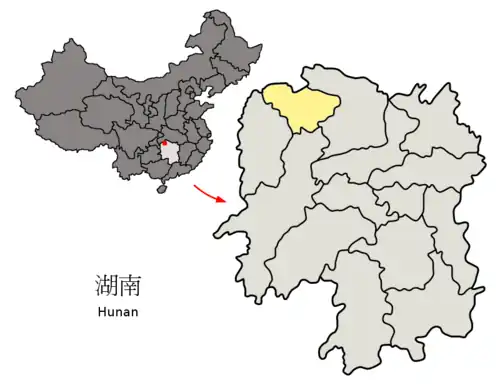
Yongzhou (Chinese: 永州), historically known as Lingling and poetically as Xiaoxiang, is a prefecture-level city tucked into the deep south of Hunan, where the province brushes up against Guangxi and Guangdong. The city sits on the southern bank of the Xiang River — the same waterway that defines Changsha and Xiangtan further north — and is fed from the south by the Xiaoshui, the two rivers meeting near the urban core. Yongzhou's roots run back over two thousand years to the ancient state of Chu; it served as a cultural and economic node through the Tang and Song dynasties, when the exiled Tang writer Liu Zongyuan made it part of the Chinese literary canon. Today it remains better known to Chinese travellers than international ones, which is exactly its appeal.
The single most distinctive thing about Yongzhou is Nüshu, a phonetic script developed in rural Jiangyong County and historically understood only by women — nowhere else on earth has anything quite like it. Beyond the script, the prefecture's pull is the surrounding "Xiangnan" landscape: green karst-edged hills, river towns, caves and waterfalls, and a handful of well-preserved ancient villages. The urban centre is functional rather than scenic; the rewards are in the surrounding counties.
Climate is mid-subtropical, humid, with four distinct seasons. Spring (March–May) and autumn (October–November) are the sweet spots: mild, drier, and good for the rural drives that justify the trip. Summer is hot, sticky, and rainy; winter is short and cool, occasionally dipping below freezing. Time your visit around the shoulder seasons unless you're heading specifically to the rivers to swim in July or August.
Planning Yongzhou? Tell us your dates and we’ll tailor the trip.
Ask on WhatsAppHow do you get there?
By Plane
Most travellers arrive instead via Changsha Huanghua International Airport, a considerable distance north, with onward high-speed rail or coach to Yongzhou. Guilin Liangjiang International Airport, southwest across the Guangxi border, is the closest large airport for travellers approaching from the south.
By Train
Yongzhou Station, in the Lengshuitan district, is the conventional-speed hub, with frequent services to Changsha and onward to other Hunan cities. High-speed trains on the Hengyang–Liuzhou corridor reach Yongzhou via a dedicated high-speed line; book a week or two ahead during national holidays. Coming from Guangzhou or Shenzhen, transfers via Hengyang or Guilin are the most common routings. Check the schedule on the 12306 app or website before locking in plans, as frequencies shift seasonally.
By Car / Road
Driving offers the most flexibility because the prefecture's headline sights are spread across rural counties, with drive times of a few hours from Changsha, Hengyang, or Guilin. Long-distance coaches connect Yongzhou to Changsha, Hengyang, Guilin, and Shenzhen from the city's main bus terminals, but trains are faster and more comfortable for the same fare bracket.
The city has a workable public bus network covering the central business district and stretching to the district south of the centre where most in-city sights sit. Taxis are abundant and cheap, with metered fares. Didi ride-hailing works city-wide and is the most reliable option for non-Mandarin speakers — link a Chinese payment method before you arrive, since cash-only foreign cards rarely work in the app.
For the rural counties — Jiangyong, Ningyuan, Jianghua — public transit thins out quickly. Either hire a car with driver for the day or rent and self-drive; a Chinese driving licence is required to rent, as international licences are not recognised. Walkability in the urban centre is reasonable along the Xiang River parks, but the city is spread out enough that you'll be in taxis between sights. Watch for the usual taxi-meter-off routine at the train station — insist on the meter or use Didi.
What are the things to do?
In and near the city
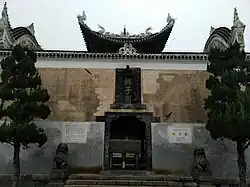
- Liuzi Temple — a Tang-era memorial temple dedicated to the exiled writer Liu Zongyuan, whose essays on Yongzhou's landscape are part of the school curriculum across China. Stone tablets, cloistered courtyards, and a quiet riverside setting.
- Yongzhou Museum — the prefecture's main museum, with archaeology, calligraphy, and a Nüshu-script section worth seeing before heading out to Jiangyong.
- Xiaoxiang Park — a large urban park along the Xiang where locals walk, picnic, and ride fairground attractions in the evening.
Out in the counties
Jiangyong County — Nüshu villages — south of the city. The cluster of old villages where Nüshu was developed and where its last natural inheritors lived. A museum displays manuscripts, embroidery, and traditional "third-day books." A half-day trip from Yongzhou with a driver.
Ningyuan Temple of Culture (Wenmiao) — one of the largest surviving Confucian temples in southern China, with intricate stone-carved dragon columns.
Jiuyi Mountain — legendary burial site of the ancient sage-king Shun, with a temple complex, forest trails, and karst peaks. A full-day trip combined with Ningyuan Wenmiao.
Jianghua Yao Autonomous County — the southernmost county and the cultural heartland of Hunan's Yao minority. Worth combining with Jiangyong if you have an extra day.
Walk the Xiang River esplanades at dawn or dusk — the promenades on both banks are the city's social spine.
Trace Liu Zongyuan's landscape essays — a literary pilgrimage following the Tang essayist's descriptions of the countryside around Liuzi Temple and the Xiao River bend. Worth doing with a translated copy of the essays in hand.
Visit a Nüshu calligraphy workshop in Jiangyong — several heritage workshops offer short demonstrations and try-it-yourself sessions; ask hotels in the county seat to arrange.
Swim or float a stretch of the Xiaoshui River in summer — locals head to quiet bends for cold-water swimming on hot afternoons.
Day-trip to Jiuyi Mountain for half-day hiking through bamboo forest to the legendary mausoleum.
Karaoke and night markets — like any Chinese prefecture city, the nightlife centres on karaoke bars and roadside stalls in the newer district.
Planning Yongzhou? Want these on a customised itinerary?
Ask on WhatsAppWhere to eat?
Yongzhou's food sits at the intersection of Hunan and Guangxi cuisines: it has the fire of Hunan cooking but leans heavier on rice noodles in a Guangxi style than the Xiang River cities further north. Breakfast in Yongzhou means a steaming bowl of noodles in clear bone broth — every neighbourhood has a specialist. Signature dishes include Ningyuan duck blood, duck stewed down with its own blood, ginger, chili, and rice wine; Dong'an chicken, a nationally recognised geographical-indication dish — poached chicken finished with vinegar, chili, ginger, and Sichuan peppercorn; and a two-thousand-year-old local tradition of braising small river snails in a fierce chili broth, eaten at night-market stalls along the river.
Budget noodle counters serve breakfast bowls cheaply and are open long hours; mid-range Hunanese restaurants around the city serve blood duck, smoked pork, and river fish; and a mall food court serves reliable hotpot for groups. Strict vegetarians should ask for noodles "without meat." For halal, look for the green "qingzhen" signage; small Hui restaurants cluster near the bus stations.
Where to drink?
Tea is the everyday drink — green tea and Hunan dark tea from Anhua, served free at most sit-down restaurants. Yongzhou snake wine is the prefecture's signature alcohol: rice wine infused with whole snakes, often combined with medicinal herbs. Treat it as a curiosity rather than a session drink. Local rice baijiu is sold by the bottle in supermarkets. National milk-tea chains have branches around the central business district, popular with younger residents. The bar scene is small but concentrated around the newer district and the riverfront, with a handful of cocktail-and-live-music bars.
Tap water in Yongzhou is not potable. Stick to bottled water, boiled hotel-room water, or the thermos of hot water set out in restaurants.
Planning Yongzhou? We’ll book the stays and dining for you.
Ask on WhatsAppWhere to stay?
- Budget — national chains such as Home Inn and Hanting have central branches with reliable rooms.
- Mid-range — Vienna International and Atour both operate branches, offering more comfortable rooms near the main commercial district.
What should you buy?
Yongzhou isn't a designer-shopping destination — what to buy here is regional foodstuff and Nüshu crafts. A large mall in the newer district is the default downtown shopping anchor; a Hunan-based supermarket chain is the best place to buy vacuum-packed local specialities, rice wine, and chili pastes to take home. Nüshu embroidery and fan-script souvenirs are better bought at source in Jiangyong County than from city-centre tourist shops, both cheaper and made by the actual inheritors of the tradition. Local specialty products worth taking home include dry-packed Dong'an chicken and a locally distilled snake wine. Bargaining is mild in markets; fixed-price in malls and supermarkets.
Where to go next?
- Hengyang — a couple of hours by train. Base camp for Mount Heng, one of China's Five Great Mountains and a major Buddhist and Taoist pilgrimage site.
- Guilin (Guangxi) — a few hours by car or rail. Iconic karst landscape, Li River cruises, and rock climbing around Yangshuo.
- Changsha — under two hours by high-speed rail. Hunan's capital — Mao Zedong's old stomping ground, the Hunan Provincial Museum's Mawangdui tombs, and a serious night-market food scene.
- Chenzhou — a couple of hours by train east. Gateway to Dongjiang Lake and its famous early-morning mist.
- Yangshuo (Guangxi) — a few hours by road via Guilin. Limestone-peak cycling, Yulong River bamboo-rafting, and Western backpacker comforts after rural Hunan.
- Shaoyang — a couple of hours north. Less visited Hunan prefecture with access to Langshan, a UNESCO Danxia landform park.
Nearby in Hunan Sheng
More places to explore around Yongzhou.
Guide content as of July 2026. Portions adapted from Wikivoyage, CC BY-SA 4.0.

Contact Us
Get in touch with us.
Get in touch
Contact Us
Tell us where you'd like to go and how you like to travel. A real Tripcuro planner — not a bot — will craft an itinerary around you.
- Personalised, hassle-free planning end-to-end
- Transparent pricing, no hidden costs
- 24/7 support for complete peace of mind