
Jingzhou
Hubei Sheng, China
Why visit Jingzhou?
Jingzhou (è?†å·ž) is a prefecture-level city of around 5.1 million people on the middle Yangtze in southern Hubei, sitting on the alluvial plains where the river broadens before its long run east to Wuhan. Its calling card is history: as Ying, capital of the State of Chu, it was the political and cultural heart of one of the great civilisations of the Spring and Autumn and Warring States periods, and during the Three Kingdoms era it was the prize fought over by Cao Cao, Liu Bei and Sun Quan — every Chinese reader of the Romance of the Three Kingdoms knows the phrase "borrowing Jingzhou." What survives today, most visibly, is the magnificent Ming-Qing era city wall: a near-complete brick-and-rammed-earth circuit some 10.5 km long enclosing the old Jingzhou District, one of the best-preserved ancient city walls in southern China.
The city has two centres. Jingzhou District (è?†å·žåŒº) to the west holds the walled old city, the museum, Guandi Temple and most of the historical sights. Shashi District (沙市区) to the east is the modern commercial core, a former Yangtze treaty-port with a livelier riverfront, more restaurants and most of the mid-range hotels. The two are about 10 km apart and linked by frequent buses. Most visitors come for one or two days en route between Wuhan and Yichang/the Three Gorges.
The climate is humid subtropical: hot, wet, sticky summers (July highs 32 °C with frequent thunderstorms) and cool, dry winters (January 2–8 °C, occasional frost). The plum-rain period from late June to mid-July brings the heaviest downpours. Best time to visit: late March to early May and late September through October, when temperatures are mild, the city walls are pleasant to walk and the Yangtze haze lifts.
Planning Jingzhou? Tell us your dates and we’ll tailor the trip.
Ask on WhatsAppHow do you get there?
By Plane
Jingzhou Shashi Airport (SHS) (è?†å·žæ²™å¸‚机场), on Zhangyao Line in Shashi District about 20 km east of the old city, reopened in 2021 as a small regional airport. Direct flights connect to Beijing, Shanghai, Guangzhou, Shenzhen, Kunming, Xiamen, Chongqing and a handful of other domestic hubs — there are no international services. A taxi to Shashi runs about ¥40–50 (25 min); to Jingzhou Ancient City around ¥70–90 (40 min). An airport shuttle bus meets most flights and runs to the city for ¥15.
For wider connections most travellers fly into Wuhan Tianhe (WUH), ~230 km east, then continue by high-speed rail; or Yichang Sanxia (YIH), ~150 km west.
By Train
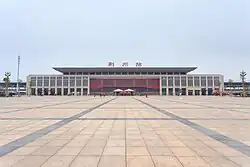
- Jingzhou Railway Station (è?†å·žç«™), Jingchu Avenue, Jingzhou District — the main high-speed station, on the Hanyi (Wuhan–Yichang) line. Frequent G- and D-trains run to Wuhan (~1 hr 15 min, ¥80–130), Yichang East (~40 min, ¥40–55), Chongqing North (~4 hr), Shanghai Hongqiao (~5–6 hr) and Beijing West (~5 hr). The station sits between the two urban districts; bus 22 (the "tourist line") runs to the Ancient City, taxis charge ¥20–30.
- A second station, Shashi Station (沙市站), serves slower conventional trains and is convenient for Shashi-side hotels.
Book via the official 12306 app or website; foreign passports work but require collecting a paper ticket or pairing the passport with the ticket gate's manual line. Tickets for weekends and holidays sell out 10–15 days in advance.
By Car / Road
Jingzhou sits on the G42 Shanghai–Chengdu Expressway and the G55 Erenhot–Guangzhou Expressway, making road access straightforward:
- Wuhan — 230 km east, ~3 hours via G42. Tolls roughly ¥110.
- Yichang — 150 km west, ~1 hr 45 min via G42.
- Yueyang (Hunan) — 200 km south, ~2 hr 30 min via G55.
- Changsha — 380 km southeast, ~4 hr 30 min.
Long-distance buses connect Jingzhou to most cities in Hubei and beyond:
- Jingzhou Passenger Transport Hub (è?†å·žå®¢è¿?枢纽站), east side of Jingzhou Railway Station, â˜? +86 716 4303219 — 69 intercity routes, with shuttle links to the railway station.
- Shashi Long-Distance Bus Station (沙市长途客è¿?ç«™), 190 Beijing West Road, Shashi District, â˜? +86 716 4316565 — useful if you're heading to Shashi-side accommodation.
Buses to Wuhan run roughly hourly (¥80–100, 3 hr 30 min), Yichang every 30–60 minutes (¥50, 2 hr).
Most sights cluster inside or just outside the Ancient City in Jingzhou District, and a half-day's walking will cover the core. To bridge the gap with Shashi or reach the museum and Fantawild park, you'll want public transport.
- City buses are cheap (¥1–2 flat), pay by transit card, WeChat or Alipay QR. Route 22 (Tourist Line) is the most useful for visitors, running between the railway station, Fantawild Oriental Heritage and the Garden Expo Park. Routes 1, 14, 19, 23, 51 and 103 all hit the main historical sights — Zhang Juzheng's Former Residence, Guandi Temple, the Museum.
- Taxis are mint-green or burgundy (franchise) or blue-and-white (state-run), all metered. Daytime (05:00–23:00) starts at ¥7 for the first 2 km, then ¥1.7/km up to 10 km and ¥2.5/km beyond. Night flag-fall is ¥10 for 3 km. Hail one or call 95128 (the official dispatch line, no service surcharge). Book ahead via the 95128 出行æœ?务 WeChat mini-program. Drivers may not carry change for ¥50/¥100 notes — keep ¥10s and ¥20s handy.
- Ride-hailing: Didi (滴滴出行) works city-wide and is usually a few yuan cheaper than taxis; you'll need a Chinese phone number or a recent Didi international setup linked to a foreign card.
- Bicycle / e-bike: Hellobike, Meituan and Qingju shared bikes are everywhere — about ¥1.5 per 15 minutes, unlock with the apps, return inside the marked geofence zones. Around the East Gate, electric bikes rent for ~¥30 per 2 hours, ideal for circling the city wall.
- Walking is genuinely pleasant inside the Ancient City. The wall's full perimeter is about 10.5 km — allow 3 hours on foot, 1 hour by e-bike.
Watch for: drivers idling outside the railway station offering "fixed-rate" trips (always insist on the meter or use 95128/Didi); QR-code "donation" approaches near temple gates; counterfeit silver "Chu coins" pushed at souvenir stalls.
What are the things to do?
Ancient city and walls
- Jingzhou Ancient City (è?†å·žå?¤åŸŽ), 2 Zhang Juzheng Street, Jingzhou District, â˜? +86 716 8455077. Open 24 hours; free to enter the walled town and walk the streets; ¥35 to climb sections of the wall (combined ticket with Binyang Tower available). Built originally as the Chu capital and rebuilt in brick and rammed earth in 1646 with sticky-rice lime mortar, the wall is about 10.5 km in circumference and pierced by nine gates. The east, north, west and "Big South" gates are the most photogenic, each with a barbican (瓮城) and tower. Walking the ramparts at sunset is the city's signature experience.
- Binyang Tower (宾阳楼), east gate of the Ancient City, â˜? +86 716 8450389. 08:00–21:00, ¥35. The reconstructed 1987 Ming-style gate tower at Yinbin Gate, double-eaved with a hip-and-gable roof; inside are Three Kingdoms statues, weapons displays and a small exhibition on the wall's history. The best vantage for photographs of the old city.
Temples and historical sites
- Guandi Temple (å…³å¸?庙), 48 Aimin Road, Jingzhou District, â˜? +86 716 8467774. 08:00–17:30, ¥20. Founded in 1396 (Hongwu reign of the Ming) on the site where Guan Yu — the Three Kingdoms general turned god of war and loyalty — once garrisoned. Reconstructed in 1987 to Qing-era plans. Includes the main hall with a 7 m statue of Guan Yu, the Sanyi Tower commemorating the Peach Garden Oath, and a replica of the Green Dragon Crescent Blade. Major temple fairs on the 1st of the first lunar month and the 13th of the fifth.
- Zhang Juzheng Former Residence (张居正故居), 2 Jingnan Road, Jingzhou District, â˜? +86 716 8450389. 08:00–21:00, ticket roughly ¥30. A reconstructed Ming-Qing courtyard complex (~7,000 m²) honouring Jingzhou-born Zhang Juzheng (1525–1582), the powerful Wanli-era Grand Secretary whose "Single Whip" tax reforms reshaped Ming finance.
Museums
- Jingzhou Museum (è?†å·žå?šç‰©é¦†), 166 Jingzhong Road, â˜? +86 716 8494808. 09:00–17:00, last admission 16:00, closed Mondays. Free (bring passport for ID registration). One of China's best regional museums, anchored by extraordinary Chu-state lacquerware and silks, Warring States bronzes, and — its single most famous holding — the Western Han male corpse from Phoenix Hill (Tomb 168), unearthed in 1975 and preserved with skin, hair and internal organs intact after more than 2,100 years. Allow at least two hours.
Modern attractions
- Fantawild Oriental Heritage (è?†å·žæ–¹ç‰¹ä¸œæ–¹ç¥žç”»), Jiqi Avenue, Jingzhou District. 09:30–18:00 (extended in summer), ¥280 adult / ¥220 child. A large theme park built around Chinese myth and history, with motion-platform rides, a Three Kingdoms VR show and an evening light spectacle. A good half-day for families.
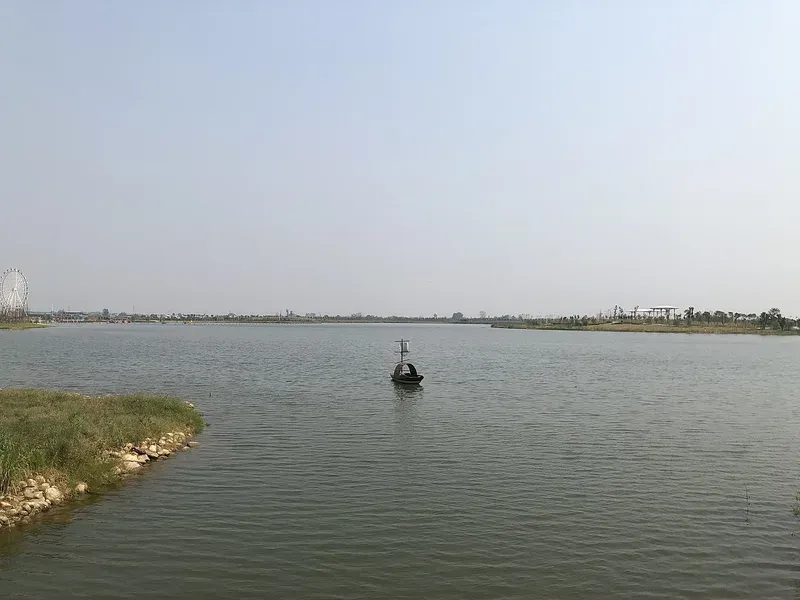
- Jingzhou Garden Expo Park (è?†å·žå›å?šå›), Jiqi Avenue. 09:00–17:00, ¥60. A 580-hectare garden park built for the 2019 Hubei Garden Expo, with themed pavilions for each Hubei prefecture and walking trails along Beihu Lake.
Day-trip sites
Xiongjia Tomb (Chu Royal Tombs) (熊家冢), Chuandian Town, Jingzhou District, ~30 km north. 08:30–17:00, ¥60. The largest known royal Chu tomb complex, with a vast on-site museum over the chariot-and-horse pits — 43 chariots and 164 horses, the largest such ensemble found in China.
Walk or cycle the city wall — the canonical Jingzhou activity. Start at the East Gate (Binyang Tower), circle clockwise to the Big South Gate, then continue past the New North Gate; ~3 hours on foot, ~1 hour by rented e-bike. Best at sunset.
Take a Yangtze evening cruise from Shashi Pier — short sightseeing cruises (~1 hour, ¥80–120) run on summer evenings from the Shashi Riverfront, with views of the Yangtze bridges lit up. Schedules vary; check at the pier or via your hotel.
Catch a Three Kingdoms re-enactment show. Costumed performances of pivotal Three Kingdoms scenes — Guan Yu's stand at Jingzhou, Liu Bei "borrowing" the city — are staged on weekends and holidays at Binyang Tower and Guandi Temple. Free with site admission; check schedules at the gate.
Time it with the Duanwu (Dragon Boat) Festival in early summer. Hubei is the home province of Qu Yuan, after whom the festival is observed, and Jingzhou stages dragon-boat races on the moat and a major temple fair at Guandi Temple on the 13th of the fifth lunar month.
Day trip to the Honghu Ecotourism Area (洪湖è“?田生æ€?旅游区), 70 km southeast — a wetland of lotus ponds, fishing villages and reed-lined canals, best in July–August when the lotus bloom; reachable by intercity bus from Shashi (~1 hr 45 min) plus a short taxi.
Planning Jingzhou? Want these on a customised itinerary?
Ask on WhatsAppWhere to eat?
Jingzhou eats from two traditions: the broader Hubei (E-cai, é„‚è?œ) cuisine — freshwater fish, lotus root, sticky-rice savouries, and a deft hand with chilli — and a distinctive set of local Chu/Jingzhou specialties tied to the Yangtze and Honghu wetlands.
Signature dishes to seek out:
- Yutuo (鱼糕) — Jingzhou fish cake, a steamed loaf of pounded mandarin-fish paste, eggs and lard, sliced and served in clear soup or with greens. The dish reputedly traces to Chu-era court banquets.
- Babao Fan (å…«å®?饭) — Jingzhou-style "eight-treasure" sticky rice with lotus seeds, dates and candied fruit; a banquet dessert.
- Honghu lotus-root rib soup (莲藕排骨汤) — pork ribs simmered for hours with the slightly starchy, sweet local lotus root.
- Caitou Pen-Cai (财头盆è?œ) and dragon-phoenix platter — the celebratory big dishes of Jingzhou wedding banquets.
- Zaoshi (早食) breakfast — Hubei takes breakfast seriously: hot dry noodles (热干é?¢), beef rice noodles (牛肉粉), three-fresh dumplings (三鲜豆皮), and fried-rice cakes (米粑粑). Eat one before 09:00.
Where to eat:
- Budget — Shashi Snack Street (沙市美食街), around Zhongshan Road and Beijing Road, Shashi District. Stalls and hole-in-the-wall shops; bowls of beef noodles ¥10–15, doupi ¥6–8, dumplings ¥12. Best after dark.
- Budget — Liang's Hot-Dry-Noodles (æ¢?记热干é?¢), multiple branches around the Ancient City. A reliable breakfast stop; ¥8 for noodles, ¥3 for soy milk.
- Mid-range — Yutuo Wang (鱼糕王), Jingzhou District, near the East Gate. Specialises in Jingzhou fish cake done a dozen ways; mains ¥40–80, dinner for two around ¥150.
- Mid-range — Xiao Nan Men Lao Cantang (å°?å?—é—¨è€?é¤?厅), Big South Gate, Ancient City. A long-running family-run Hubei restaurant with strong lotus-root rib soup and braised river fish; ¥120–180 for two.
- Upscale — Jingchu Yipin (è?†æ¥šä¸€å“?), in the Shashi New Century Grand Hotel area. Banquet-style Jingzhou and broader E-cai cuisine in private rooms; ¥300+ per person.
Dietary notes: Vegetarian options exist (lotus-root, doufu, mushroom dishes, vegetable dumplings) but pure-vegan is harder — lard and stock are common. The small Hui Muslim community sustains a few halal (清真) noodle and lamb-skewer shops, look for the green crescent on the signboard. Gluten-free is impractical: wheat noodles, soy sauce and beer all feature heavily. Tap water should be boiled; ice in restaurants is fine in established places, less so at street stalls.
Where to drink?
Jingzhou is not a nightlife capital, but the riverside Shashi District has plenty of options once dark falls.
- Local alcohol: Hubei's mass-market beer is Xingyin (行å?Ÿé˜?), served everywhere on draft for ¥5–10 a bottle. The regional baijiu of choice is Bai Yun Bian (白云边), a fragrant sauce-aroma spirit from neighbouring Songzi; expect to be offered a glass at any banquet.
- Tea culture: Hubei is a major green-tea producer, and Enshi Yulu (steamed green tea) is the local pride. Old-school teahouses (茶馆) along Aimin Road and inside the Ancient City charge ¥30–60 for a pot with bottomless refills, often with light snacks of melon seeds and dried fruit.
- Cafés: Decent third-wave coffee has reached Jingzhou — try M Stand and Manner in Shashi's Wanda Plaza, plus several independent shops along Beijing West Road. Lattes ¥25–35.
- Bars and nightlife: Shashi's bar cluster runs along Yinhai Avenue (银海大é?“) and the Wanda Plaza riverfront, mostly Chinese-style "music bars" (livehouse-pub hybrids) with cover bands and beer towers; entry is usually free and a beer tower of Tsingtao runs ¥150–200. The Ancient City itself is quiet after about 22:00.
- Water: Tap water is not safe to drink. Stick to bottled water (¥2–3 a 500 ml bottle), boiled water (every hotel room has a kettle) or hot tea. Ice in upmarket restaurants and chain cafés is made from filtered water; avoid it at street stalls.
Planning Jingzhou? We’ll book the stays and dining for you.
Ask on WhatsAppWhere to stay?
Budget
- Jingzhou Lvyu Youth Hostel (è?†å·žç»¿å®‡é?’å¹´æ—…èˆ?), inside the Ancient City near the East Gate — dorm beds ¥60–90, private doubles ¥160–200. Backpacker mainstay; English-speaking staff, bike rental, walking tours of the wall.
- 7 Days Inn Jingzhou Railway Station Branch (7天酒店è?†å·žç?«è½¦ç«™åº—) — clean budget chain rooms from ¥150–220, useful if you're catching an early train.
Mid-range
- Hanting Hotel Jingzhou Ancient City East Gate (汉庭酒店è?†å·žå?¤åŸŽä¸œé—¨åº—) — reliable mid-range chain just outside the East Gate; doubles ¥260–360.
- Atour Hotel Shashi Wanda Plaza (亚朵酒店沙市万达广场店) — design-forward chain hotel above the Shashi Wanda Plaza shopping area; doubles ¥420–550 with a strong breakfast buffet.
Upscale / heritage
- Jingzhou New Century Grand Hotel (è?†å·žå¼€å…ƒå??都大酒店), Beijing East Road, Shashi District — the most established 5-star in town, with a large pool, several restaurants and easy taxi access to both districts; doubles ¥650–950.
- Crowne Plaza Jingzhou (è?†å·žçš‡å† å?‡æ—¥é…’店), near the Garden Expo — international chain standard, doubles ¥700–1,100.
What should you buy?
Jingzhou's shopping skews local and historical rather than luxury. Two areas matter:
- Jingzhou District (Ancient City) — souvenir lanes radiate from Zhang Juzheng Street and the East Gate, selling Chu-style lacquerware reproductions, painted gourds, silk fans, Three Kingdoms figurines and "tiger-head" embroidered shoes.
- Shashi commercial district — modern shopping along Beijing Road and Jiangjin Road, with the Wushang Mall and Wanda Plaza for international brands and electronics.
Local specialties to look for:
- Chu-style lacquerware (楚å¼?漆器) — black-and-red bowls, boxes and lacquered tomb-figurine reproductions; the museum gift shop is a more reliable place to buy good pieces than street stalls.
- Honghu lotus-root products — dried lotus root, lotus-seed paste, lotus tea.
- Bamboo crafts from Songzi and Jianli counties.
- Yulu ("jade dew") tea — Hubei's signature steamed green tea, sold loose in tea shops along Aimin Road.
Bargaining is expected at souvenir stalls and in the Ancient City lanes (start at 40–50 % of the asking price); fixed prices apply at the museum shop, Wushang and Wanda.
Where to go next?
- Yichang — 150 km / ~45 min by high-speed train. Gateway to the Three Gorges Dam and most Yangtze cruises upriver to Chongqing.
- Wuhan — 230 km / ~1 hr 15 min by high-speed train. Hubei's vast capital: Yellow Crane Tower, East Lake, and one of China's best Chu-era museum collections.
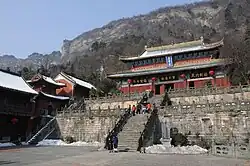
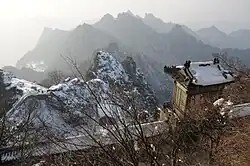
- Wudang Shan — ~5 hours by train (via Xiangyang). Sacred Taoist mountain range, birthplace of tai chi and home to Ming-era cliffside temples.
- Yueyang (Hunan) — 200 km south / ~1 hr 30 min by high-speed train. Tang-poetry-famous Yueyang Tower overlooking Lake Dongting.
- Honghu — 70 km southeast / ~1 hr 45 min by bus. Wetland lotus ponds and Red Army revolutionary-era sites; best in July–August.
- Shennongjia — ~5 hours by car or via Yichang. UNESCO-listed forest reserve famous for golden monkeys and the legend of the Yeren ("wild man").
Nearby in Hubei Sheng
More places to explore around Jingzhou.
Guide content as of May 2026. Portions adapted from Wikivoyage, CC BY-SA 4.0.

Contact Us
Get in touch with us.
Get in touch
Contact Us
Tell us where you'd like to go and how you like to travel. A real Tripcuro planner — not a bot — will craft an itinerary around you.
- Personalised, hassle-free planning end-to-end
- Transparent pricing, no hidden costs
- 24/7 support for complete peace of mind