
Shiyan
Hubei Sheng, China
Why visit Shiyan?
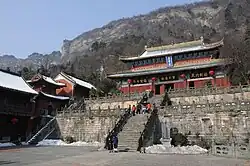
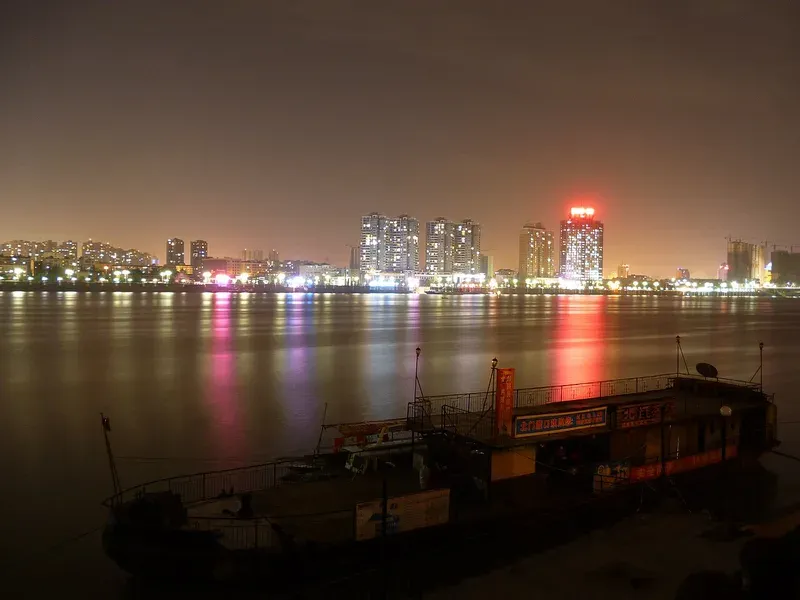
Shiyan (å??å °) sits in the rugged northwest corner of Hubei Province, where the Han River cuts through forested mountains on its way toward the Yangtze. Founded as a planned industrial city in the late 1960s — built largely to host Dongfeng Motor Corporation, one of China's "big three" automakers — Shiyan still has the wide boulevards and grid layout of a state-built factory town, but its hinterland is something altogether different: the sacred Wudang Mountains, a UNESCO World Heritage Site of Taoist temples clinging to forested peaks, and the Qinglong Mountain dinosaur egg fossil beds in Yunyang District. For most foreign visitors, "Shiyan" effectively means Wudangshan, and the city is a transit and supply base rather than a destination in itself.
The climate is humid subtropical, with hot, wet summers (July–August averages around 33°C with the year's heaviest rain) and cool, dry winters (January lows around freezing). Spring (April–May) and autumn (late September–October) are the prime windows: clear air, manageable temperatures on the mountain trails, and the cherry blossoms or autumn colour in the Wudang range. Summer is uncomfortable in the city and slippery on the mountain stone steps; midwinter brings cold mist that can shut down summit cable cars but rewards climbers with snowy temple roofs.
Administratively, the prefecture-level city covers a large mountain region. Travellers typically encounter three areas: Maojian District (茅箭区), the central downtown with the museum, People's Park, and the regular-speed railway station; Zhangwan District (张湾区), home to Dongfeng's auto plants and the high-speed Shiyan East Station; and the Wudang Mountains Special Zone under Danjiangkou, about 30 km southeast, which is the actual gateway to the scenic area.
Planning Shiyan? Tell us your dates and we’ll tailor the trip.
Ask on WhatsAppHow do you get there?
By Plane
Shiyan Wudangshan Airport (WDS) lies about 15 km from the city centre and 20 km from Wudangshan Scenic Area. It runs domestic flights to Beijing, Shanghai (Pudong and Hongqiao), Guangzhou, Shenzhen, Kunming, Xi'an, Chengdu, and Hangzhou, among others — no scheduled international service. An airport shuttle (Airport Bus No. 1) connects to the city centre, stopping near the Shiyan Museum and People's Park; metered taxis to Maojian District run roughly ¥40–60 and to the Wudangshan entrance roughly ¥80–120. Didi (æ»´æ»´) ride-hailing works at the airport.
By Train
Shiyan sits on the Han-Shi (Wuhan–Shiyan) high-speed line, which has cut Wuhan–Shiyan to about two hours and put Beijing within roughly six hours.
- Shiyan East Railway Station (å??堰东站) in Zhangwan District is the high-speed (G/D) hub. City buses 96, 98, and 99 link it to the centre and to Yunyang District.
- Shiyan Railway Station (å??å °ç«™), at 11 Chezhan Road, Maojian District, handles regular-speed trains only and is the most central option.
- Wudangshan West Railway Station (武当山西站) in Liuliping Town, Danjiangkou, takes high-speed trains and is the smartest arrival point if you're heading straight to the mountain — an unnumbered express bus shuttles passengers to the Wudangshan Scenic Area entrance for ¥10.
- Wudangshan Railway Station (武当山站) on National Highway 209 in Liuliping Town is the regular-speed counterpart; buses 202 and 203 run to the scenic area entrance.
Book on 12306 (the official China Railway site/app) or via Trip.com; passport-holders need to collect tickets at a window or use the passport-reading gates available at major stations.
By Car / Road
Shiyan is connected by the G70 Fuyin Expressway and the G59 Hohhot–Beihai Expressway. Approximate drive times: Wuhan ~5 hours (~500 km), Xi'an ~4 hours (~370 km), Xiangyang ~1.5 hours (~150 km), Yichang ~4 hours (~340 km). Mountain roads near Wudangshan are well-paved but winding; allow extra time in fog or rain.
Long-distance coaches use:
- Shiyan Central Bus Station (å??堰客è¿?中心站), 1 Renmin Road, Maojian District (☎ +86 719 8890276), in the city centre.
- Shiyan South Bus Station (å??堰汽车客è¿?å?—ç«™), 6 Chezhan Road, Maojian District (☎ +86 719 8888537), about 900 m northwest of Shiyan Railway Station.
- Wudangshan Special Zone Bus Station (武当山特区汽车客è¿?ç«™), 19 Taihe East Road, Danjiangkou (☎ +86 15871081327), a short walk from the main scenic area entrance.
A direct city-to-mountain bus from Shiyan runs about ¥10.
The downtown is walkable along Beijing Road and around People's Park, but Shiyan sprawls and the interesting bits (Wudangshan, Yunyang) are well outside it.
- City buses cost ¥1–2 with a flat fare; useful routes include 15, 16, 18, 28, 31, 85, 86, 87, and 99 through the centre. Pay cash (exact change) or scan with Alipay/WeChat Pay.
- Taxis are metered and cheap by Chinese standards; flagfall is low and most trips inside Maojian run under ¥20. Drivers rarely speak English — have your destination written in Chinese.
- Didi (滴滴出行) works throughout the city and to the airport and Wudangshan; it's the easiest option for non-Chinese speakers if you have a working WeChat or Alipay account.
- To Wudangshan from the train station, the cheap option is the Green Express bus parked outside; if it's not there, walk to the main road and flag a local bus heading east (right out of the station road). Some local buses terminate in Wudang town centre, where you transfer to another bus continuing east. Your stop is the gate marked by a line of taxis; from there you must buy a scenic-area ticket. Once on the mountain, internal buses are free with the sightseeing-vehicle ticket.
- Taxis to the Wudangshan gate start around ¥60 from the train station — ¥30 is achievable with bargaining, and as low as ¥10 on quiet days.
- Watch for the usual scenic-area scams: unlicensed "guides" offering shortcuts, and taxi drivers claiming the official entrance is "closed" to steer you to a private operator.
What are the things to do?
Wudang Mountains Special Zone
- Wudang Mountains (武当山) — the reason most travellers come. A sacred Taoist range whose ancient building complex is on the UNESCO World Heritage List. 13 Yongle Road, Taihe Subdistrict, Danjiangkou. Open 07:30–17:30. Entry ¥130; sightseeing-vehicle ticket ¥100. ☎ +86 719 5668567.
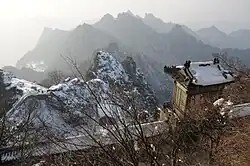
- Golden Hall (金殿 / 金顶) — the gilt-bronze summit shrine, built in the early 15th century at the same time as Beijing's Forbidden City as thanks to the god Zhen Wu. The highest point of the range and the climax of any visit.
- Purple Cloud Temple (紫霄宫) — a 12th-century Taoist temple complex on the southern slopes, one of the most architecturally complete on the mountain.
- South Cliff Palace (å?—岩宫) — a temple dramatically built into a sheer cliff face; the carved stone Dragon Head Incense Burner here is the iconic Wudang photograph.
- Three Taoist Temples of Qiongtai (ç?¼å?°ä¸‰è§‚) — a 600-year-old complex at the end of Carefree Valley, comprising the Upper (上观), Middle (中观), and Lower (下观) Temples.
- Carefree Valley (é€?é?¥è°· Xiaoyao Gu) — a hiking valley with monkeys, waterfalls, and pools deep enough to swim.
- Wudang Museum (武当å?šç‰©é¦†), 14 Bowuguan Road, Wudang Mountains Special Zone, Danjiangkou (Bus 208). 09:00–17:00, no entry after 16:30, closed Mondays. Free. ☎ +86 719 5667386.
Central Shiyan
- Shiyan Museum (å??å °å?šç‰©é¦†), 91 Beijing North Road, Maojian District. Local prehistory, dinosaur fossils from Yunyang, and exhibits on the Han River and the South-to-North Water Diversion Project. 09:00–17:00, no entry after 16:30, closed Mondays. Free. Bus stop "City Museum" (市å?šç‰©é¦†) outside; routes 15, 16, 18, 28, 31, 85, 86, 87, 99 and Airport Bus No. 1. ☎ +86 719 8489398.
- Shiyan People's Park (å??堰市人民公园), 48 Gongyuan Road, Zhangwan District. Lakes, pavilions, and a small zoo. Jul–Sep 07:30–20:00; Oct–Jun 07:45–18:00. Park free; zoo ¥30. ☎ +86 719 8683359.
Yunyang District
Qinglong Mountain Dinosaur Egg Fossil Group National Nature Reserve (é?’龙山æ??龙蛋化石群国家级自然ä¿?护区), Qinglongshan Village, Liupi Town, Yunyang District. Thousands of fossilised late-Cretaceous dinosaur eggs unearthed since the 1990s, displayed at an on-site museum. 08:00–18:00. ¥60. ☎ +86 719 7478006. Take Express 100 from Shiyan Central Bus Station to Yunyang Xintiandi (郧阳新天地), then the Yunyang Lake Tourist Bus (环郧阳湖旅游公交) to the final stop.
Climb Wudangshan. The classic route ascends from the scenic area gate via Purple Cloud Temple and South Cliff Palace, then takes the cable car or steep stone steps to the Golden Hall. Allow a long day, or two days with an overnight on the mountain to catch sunrise from the summit.
Study Wudang kung fu. Wudang is one of the two most famous internal martial-arts traditions in China (alongside Shaolin). Schools accept students for anything from a single class to multi-year residencies. Si Shifu (�师父) is well regarded for combat-oriented training; Purple Heaven Palace School focuses on Taiji as motion and form. Most schools provide accommodation, uniforms, and meals as a package.
Hike Carefree Valley. A gentler day on the mountain — waterfalls, swimming pools, monkeys, and the Three Temples of Qiongtai at the end.
Watch a martial-arts demonstration at Purple Cloud Temple, where daily public performances by resident students are part of the temple's living tradition.
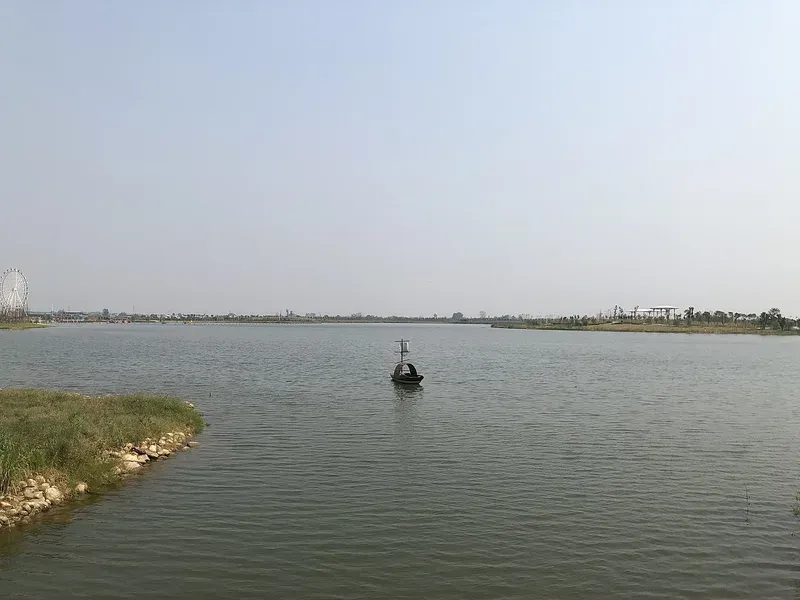
Day-trip to Danjiangkou Reservoir. The vast artificial lake created by Danjiangkou Dam is the source of the Middle Route of the South-to-North Water Diversion Project and a popular fish-eating destination.
Planning Shiyan? Want these on a customised itinerary?
Ask on WhatsAppWhere to eat?
Shiyan's food belongs to the broader Hubei tradition — rice-based, freshwater-fish heavy, and fond of chilli and pickles — with a strong vegetarian streak around Wudangshan thanks to the Taoist monasteries. Down in town, Dongfeng's worker canteens and the migration of cooks from Sichuan and Hunan have given the city a noticeably spicier palate than the provincial capital.
Signature local items to look out for:
- Lao You Bing (è€?油饼) — a traditional Shiyan street snack, pan- and deep-fried, crisp outside and soft inside.
- Gexian Mountain stewed chicken soup (葛仙山炖鸡汤) — slow-cooked with local herbs, a winter favourite.
- Gexian Mountain roast duck (葛仙山烤鸭) — locally seasoned and slow-roasted.
- Gexian Mountain red sugar ba ba (葛仙山红糖粑粑) — chewy glutinous-rice cakes with brown sugar.
- Three Gorges grilled fish (三峡烤鱼) — whole freshwater fish grilled then simmered in chilli broth at the table; ubiquitous in town.
- Wudang vegetarian (武当素斋) — temple-style dishes around the scenic area, often imitating meat dishes with tofu, mushrooms, and gluten.
Practical recommendations:
- Budget: street stalls along Renmin Road and Chezhan Road in Maojian District for Lao You Bing, hand-pulled noodles, and re gan mian (¥8–20 a meal).
- Budget: noodle shops near Shiyan Railway Station serve cheap bowls of beef or sour-and-spicy noodles for ¥10–15 — handy between trains.
- Mid-range: Three Gorges grilled fish restaurants in central Maojian, where a whole fish for two with sides runs ¥80–150.
- Mid-range: vegetarian restaurants inside the Wudangshan Scenic Area at Purple Cloud Temple, with set meals around ¥40–80 per person.
- Upscale: hotel restaurants at the four- and five-star properties in Maojian District for full Hubei banquet menus (¥200+ per head).
Halal (清真) noodle shops run by Hui Muslim families are common near the bus stations. Vegetarian options are easy at temples and in any Sichuan/Hunan restaurant; strict gluten-free is hard given the prevalence of soy sauce and wheat noodles.
Where to drink?
- Shiyan rice wine (å??堰米酒) — a sweet, low-alcohol fermented rice beverage drunk warm in winter and cold in summer; sold by the bowl at small restaurants and street stalls.
- Wudang Daocha (武当é?“茶) — the local green tea; teahouses around the Wudangshan scenic area serve it by the pot.
- Baijiu — Hubei brands like Bai Yun Bian (白云边) appear on most restaurant tables.
- Imported beers, wine, and cocktails are limited outside the larger hotels in Maojian District; a small KTV and bar scene clusters around Beijing Road and Renmin Road but is geared to local tastes.
Tap water is not safe to drink. Stick to bottled water (¥2–3 for a 500 ml bottle from any convenience store) or use the boiled-water dispensers in hotels and on long-distance trains. Ice in cheap restaurants is best avoided.
Planning Shiyan? We’ll book the stays and dining for you.
Ask on WhatsAppWhere to stay?
Budget
- Wudang Hostel — beds for around ¥40 a night, or pitch a tent for ¥10. Located on the grounds of an abandoned temple along a hiking trail high on the mountain; the hike up is long, but the on-site restaurant is good (breakfast ¥15, lunch and dinner ¥35 each) and frequented by local farmers.
- Chain budget hotels (7 Days Inn, Hanting, Home Inn) cluster around Shiyan Railway Station in Maojian District at ¥150–250 per night.
Upscale / heritage
- Hotels on Wudang Mountain itself are by and large very expensive — expect ¥800–2,000+ per night for the better mid-mountain properties, with prices rising sharply on weekends and during the May and October golden-week holidays.
- In central Shiyan, four-star international and domestic-chain properties in Maojian District typically run ¥500–900 per night.
What should you buy?
Shiyan is not a shopping city, but a few things are worth bringing home.
- Wudang Taoist crafts — incense, hand-copied scriptures, peach-wood swords, and Bagua mirrors are sold at stalls around Purple Cloud Temple and the scenic area entrance. Quality varies wildly; the temple-run shops are more reliable than roadside stalls.
- Tea. Wudang Daocha (武当é?“茶) is a regional green tea grown on the mountain's lower slopes. Sealed tins from supermarkets in central Shiyan are a safer bet than loose tea pressed on tourists.
- Gexian rice vinegar (葛仙米醋), a naturally fermented local seasoning, makes a compact, distinctive gift.
- Local markets. The wet markets and pedestrianised stretches along Beijing Road and Renmin Road in Maojian District are where day-to-day shopping happens.
- Bargaining is expected at tourist stalls and souvenir shops (start around 40–50% of the asking price); department stores and supermarkets are fixed-price.
Where to go next?
- Wudangshan Scenic Area — if you've based yourself in the city centre, the mountain itself is the obvious next move; ~30 km / 1 hour by bus or car.
- Xiangyang (襄阳) — the historic walled city on the Han River, with one of China's best-preserved moat-and-wall systems; ~150 km / 1.5 hours by high-speed rail.
- Nanyang (å?—阳) — across the provincial border in Henan, hometown of Zhuge Liang and a base for the Funiu Mountains; ~210 km / ~2 hours by car or rail.
- Yichang (宜昌) — gateway to the Three Gorges and the upstream end of most Yangtze cruises; ~340 km / ~3.5 hours by high-speed rail.
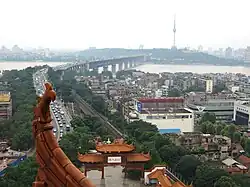
- Wuhan — the provincial capital, with the Yellow Crane Tower, East Lake, and Hubei Provincial Museum; ~500 km / ~2 hours by high-speed rail.
- Shennongjia Forestry District — Hubei's wild interior, a UNESCO-listed biosphere reserve famous for its forests and the legend of the "wild man"; ~250 km / ~5 hours by car.
Nearby in Hubei Sheng
More places to explore around Shiyan.
Guide content as of May 2026. Portions adapted from Wikivoyage, CC BY-SA 4.0.

Contact Us
Get in touch with us.
Get in touch
Contact Us
Tell us where you'd like to go and how you like to travel. A real Tripcuro planner — not a bot — will craft an itinerary around you.
- Personalised, hassle-free planning end-to-end
- Transparent pricing, no hidden costs
- 24/7 support for complete peace of mind