
Wudang Mountains
Hubei Sheng, China
Why visit Wudang Mountains?
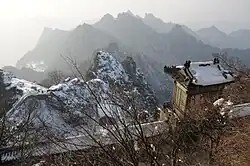
The Wudang Mountains (武当山, WÇ”dÄ?ng ShÄ?n) rise in the northwestern corner of Hubei Province, a serrated range of 72 peaks crowned by Tianzhu Peak (天柱峰, "Heavenly Pillar"), which tops out at 1,612 m. For more than a millennium this has been the spiritual heartland of Chinese Taoism — the cradle of Wudang neijia martial arts (the internal styles that gave rise to Tai Chi), the legendary training ground of the semi-mythical sage Zhang Sanfeng, and the southern counterpart to Beijing's Forbidden City under the Ming emperor Yongle, who poured imperial resources into building a parallel "celestial capital" here between 1412 and 1424. The result was a chain of palaces, halls, monasteries, gates and stone-paved pilgrim paths threaded up the ridges, the surviving fragments of which were inscribed as a UNESCO World Heritage Site in 1994.
The mountain's character is unmistakable: dense subtropical forest, mist-snagged crags, dragon-spined stone staircases, and the steady tinkle of bells from Taoist priests in indigo robes. Pilgrims, martial artists, and curious travellers share the same trails. The crown jewel is the Golden Hall (金殿) atop Tianzhu Peak — a gilded bronze shrine that has weathered six centuries of lightning storms. Other principal scenic areas spread down the slopes: Nanyan with its cliff-embedded shrines, Taizipo telling the story of the Zhenwu prince's enlightenment, the Yuxu Palace ruins at the northern foot, and the more remote Wulong and Qiongtai areas.
Climate is humid subtropical, sharpened by altitude. April–June and September–early November are the best windows — mild, clearer skies, rhododendrons in spring, maples in autumn. July and August are hot, very humid, and prone to thunderstorms (the Golden Summit is regularly clouded in). Winter brings snow, ice on the upper staircases, and genuinely cold temperatures at the summit; the cable car may close in bad weather, but the snow-dusted halls are spectacular if you're prepared. Layout-wise, almost all visitors stage from Wudangshan Town (武当山镇) at the base — that's where the tourist centre, ticket office, hotels and shuttle buses are concentrated. From there a network of park shuttles fans out to the trailheads of each scenic area.
Planning Wudang Mountains? Tell us your dates and we’ll tailor the trip.
Ask on WhatsAppHow do you get there?
By Plane
The nearest airport is Wudangshan Airport (WDS), also called Shiyan Wudangshan Airport, about 25 km northeast of Wudangshan Town. It handles domestic routes from Beijing, Shanghai, Guangzhou, Shenzhen, Chengdu, Xi'an and a handful of other Chinese cities. A taxi from WDS to Wudangshan Town runs roughly ¥80–120 and takes around 30–40 minutes; airport shuttle buses meet most arrivals.
For more flight options, Xiangyang Liuji Airport (XFN), about 110 km east, is a useful alternative, as is Wuhan Tianhe International (WUH), ~450 km east, which has the broadest international connections — pair it with a high-speed train onward.
By Train
Two stations matter:
- Wudangshan Railway Station (武当山站) — the conventional-rail station in Wudangshan Town itself, walking distance / short taxi from the tourist centre. Handy for slower services from Wuhan, Xiangyang, Shiyan, Xi'an and Chongqing.
- Wudangshan West High-Speed Railway Station (武当山西站) — on the Zhengzhou–Wanzhou (Zhengwan) high-speed line, about 20 km from the scenic area. This is the fast option: Wuhan ~2 hr, Zhengzhou ~2.5 hr, Chongqing ~4.5 hr, Xi'an via transfer. Shuttle buses and taxis (¥60–90) link it to Wudangshan Town.
Book via the 12306 official site/app or through Trip.com; bring your passport — it doubles as your ticket on Chinese high-speed rail. Buy a few days ahead during national holidays (Qingming, May Day, October Golden Week), when seats sell out.
By Car / Road
The G70 Fuyin Expressway runs past Wudangshan and connects to the broader Hubei road network.
- From Wuhan: ~450 km, 5–6 hr via the G70.
- From Xiangyang: ~130 km, ~1.5–2 hr.
- From Shiyan: ~30 km, 30–40 min — Shiyan is the regional hub and many travellers transit through it.
- From Xi'an: ~430 km, 5–6 hr via G70.
Long-distance buses run to Wudangshan Town's bus station from Shiyan (frequent, ¥15, 45 min), Xiangyang (¥45, 2 hr), Wuhan (~¥180, 6–7 hr) and Xi'an. Road quality on the expressways is good; mountain access roads inside the scenic area are managed by the park shuttle system, so private cars cannot drive up to the main sights.
Once you've bought your entrance ticket, park shuttle buses are the workhorse of the mountain — included in the ticket and the only way to reach most trailheads. They loop between the visitor centre and Nanyan, Wulong, Qiongtai, the cable car base station, and other key points, running roughly 07:00–17:30 with shorter winter hours.
The Wudangshan Cable Car (ç´¢é?“) from Qiongtai up toward the Golden Summit area saves a punishing climb. One-way is around ¥90, return ~¥170 (verify on arrival). The classic alternative is to walk up via the stone pilgrim staircases — count on 3–4 hours from Nanyan to the Golden Summit on foot. Many visitors take the cable car up and walk down, or vice versa.
In Wudangshan Town itself, taxis are cheap (flagfall ¥6–8, most trips ¥10–20) and Didi (滴滴出行) works reliably — install it before you arrive and link a payment method. Walkability is good in the town core. Cash is increasingly awkward in China; set up Alipay or WeChat Pay with international card support before the trip, since QR-code payment is the default everywhere from shuttle snacks to monastery offerings.
Scams are rare and low-stakes here compared to mega-cities, but watch for unofficial "guides" offering shortcuts at the visitor centre, and confirm taxi meters are running (or agree a price first) on rides to/from the train stations.
What are the things to do?
Golden Summit Scenic Area (金顶景区)
- Golden Hall (金殿) — the destination. A copper-and-gold imitation-wood shrine cast in 1416 under the Yongle Emperor, perched at 1,612 m atop Tianzhu Peak. Houses a bronze statue of Zhenwu. The Hall sits inside Taihe Palace (太和宫), a national key cultural relic. Sunrise here, with cloud-seas drifting below, is the iconic Wudang experience. Open roughly 07:30–17:30. Separate small ticket (~¥27) on top of the park entry. Reach via cable car + stairs or a long staircase climb through the Three Heavenly Gates (Yi-, Er-, San-Tianmen).
- Chaotian Palace (æœ?天宫) — "Palace facing Heaven," the symbolic halfway point on the climb where pilgrims traditionally rested before the final ascent.
Nanyan Scenic Area (å?—岩景区)
- Zixiao Palace (紫霄宫) — at the foot of Zhanqi Peak, the most architecturally complete surviving palace complex on the mountain and seat of the Wudang Taoist Association. Built in imperial Ming style with deep eaves and dragon-carved beams. National key cultural relic and an active religious site — be respectful around the priests. Roughly 08:00–17:00.
- Nanyan Palace (å?—岩宫) — facing the Golden Summit and built into a sheer cliff. The cliff-embedded Tianyi Zhenqing Hall (天乙真庆宫), a Yuan-dynasty stone construction, is the most striking of the 36 cliffside shrines on Wudang. Said to be where Zhenwu attained enlightenment.
- Longtou Xiang (龙头香) — a stone dragon's head jutting out over a thousand-foot drop near Nanyan, once used by pilgrims to burn incense in the most precarious act of devotion in China. Now fenced off, but the view is unforgettable.
Taizipo Scenic Area (太å?å?¡æ™¯åŒº)
- Taizipo (太å?å?¡ / Fuzhen Temple) — the "Crown Prince's Slope," telling the legend of young Zhenwu's cultivation. Famous architectural quirks: the One Pillar Twelve Beams hall and the Nine-Curved Yellow River Wall, a sinuous red wall that turns the approach into a meditative walk. A good warm-up stop on the way up the mountain.
- Mozhenjing (磨针井) — the "Needle-Grinding Well," where, in legend, an old woman patiently grinding an iron pestle into a needle convinced the young prince to persevere with his Taoist training.
Xuanyuemen Scenic Area (玄岳门景区)
At the northern foot of the range.
- Xuanyue Gate (玄岳门) — the great stone "Zhishi Xuanyue" archway built in 1552 (Jiajing reign), traditional gateway to the holy mountain. National key cultural relic.
- Yuxu Palace (玉虚宫) — ruins of what was once the largest palace on Wudang, founded 1412 and traditionally associated with Zhang Sanfeng's training. Even reduced to walls and platforms it conveys the imperial scale of the Yongle-era project.
- Yuanhe Temple (元和观) — 2.5 km east of Yuxu Palace, the first Taoist temple on the ancient pilgrim road.
Fushou Kangning Garden Scenic Area (ç¦?寿康å®?园景区)
- Longquan Temple (龙泉寺) — first of the Wudang "eight temples," dedicated to filial piety and the Great Emperor Xuanwu. The temple sits along the ancient sacred road between Taizipo and Zixiao.
- Tianjin Bridge (天津桥) — longest stone bridge on Wudang's Ancient Incense Road, spanning the Jiudu Stream, deliberately echoing the Jade Belt Bridge of the Forbidden City as part of the Ming "Forbidden City in the north, Wudang in the south" symbolism.
Qiongtai Scenic Area (��景区)
Lower-station area for the cable car, but worth seeing for itself: Laojun Cave (è€?å?›æ´ž), the Eight Immortals Temple (八仙观), and the Qiongtai Upper/Middle/Lower Temples (ç?¼å?°ä¸Šä¸ä¸‹è§‚) stepped down the ridge.
Wulong Palace Scenic Area (五龙宫景区)
The most remote and atmospheric of the major areas, on the western pilgrim road. Wulong Palace (五龙宫) — "Five Dragons Palace" — is one of the oldest Taoist foundations on the mountain. Far fewer crowds; ideal if you've already done the Golden Summit and want to feel what the pilgrim road was like before the tour buses.
Other features
Wind-Blown Rock (风动石 / "Turtle Rock") — a 5,000-kg boulder balanced on a cliff edge near the summit ridges that visibly wobbles in a strong wind. One of the mountain's classic geological oddities.
"Qiao Song" (峤竦) inscription — the two characters carved near the stone steps leading from the Golden Summit toward the South Heaven Gate, written by Wang Jixian, magistrate of Yongning Prefecture in the Qing Daoguang reign.
Climb the pilgrim road from Nanyan to the Golden Summit. Three to four hours of steep stone staircases through forest, past shrines and view-points. The classic Wudang day.
Watch (or take) a Tai Chi class. Wudang is the spiritual home of internal martial arts. Schools around Wudangshan Town and on the mountain offer everything from a single morning class to multi-week residential programs. The Wudang Taoist Traditional Kungfu Academy and the academies clustered around Yuxu Palace are well known to foreign students. Drop-in morning sessions typically run ¥100–200; residential programs run from a few hundred yuan per day with food and dormitory lodging.
See sunrise from the Golden Summit. Stay overnight near the top (small guesthouses operate seasonally) and walk out before dawn. Cloud-seas are common and unforgettable.
Catch a Taoist ritual at Zixiao Palace. Morning and evening chanting rituals are open to respectful observation; ask about festival dates — the Sanyuesan Temple Fair around the third day of the third lunar month (Zhenwu's birthday) is the year's biggest pilgrimage.
Hike the Wulong Palace road for solitude and old-growth forest — the quieter alternative to the main pilgrim route.
Day trip to the Danjiangkou Reservoir, the vast man-made lake north of the mountain that feeds Beijing's South-to-North Water Diversion Project — striking scenery and a different side of the region.
Planning Wudang Mountains? Want these on a customised itinerary?
Ask on WhatsAppWhere to eat?
Hubei cuisine (Chu cuisine, 楚è?œ) leans on freshwater fish, river prawns, fermented chili, and noodle breakfasts. On the mountain itself, expect Taoist vegetarian (ç´ æ–‹) menus — mushroom-heavy, beautifully presented, often built around bean-curd "mock meats." Signature dishes to look for: Wudang Daojia Yan Cai (武当é?“家宴è?œ, the temple banquet), Wuwei rou ("five-flavour" braised pork-style mock meat made from gluten), resaurus mushroom and bamboo shoot stir-fries, and Hubei classics like Reganmian (热干é?¢, hot-dry sesame noodles) for breakfast in the town.
- Budget — Wudangshan Town night-market street (off Taihe Lu). Skewers, hand-pulled noodles, Wuhan-style reganmian, baozi from ¥6–25 per dish. Best after 18:30.
- Budget — Yongle Lu noodle shops. A row of small local places near the train station serving breakfast noodles, dumplings and rice plates for ¥10–25.
- Mid-range — Daojia Suzhai (é?“å®¶ç´ æ–‹) restaurants near Zixiao Palace. Set vegetarian banquets in a temple-courtyard setting, roughly ¥80–150 per person.
- Mid-range — Wudang Shanzhen Lou (武当山ç??楼) and similar "mountain produce" restaurants in town. Wild mushroom hotpot, river fish, Hubei stir-fries; ¥80–180 per person.
- Upscale — restaurants inside the larger hotels (Tai He Hotel, Wudang Mountain Treasure Hotel). Hubei tasting menus, private rooms, ¥250–500 per person.
Vegetarian travellers are unusually well served thanks to Taoist temple cuisine — say "wo chi su" (我å?ƒç´ , I eat vegetarian). Halal options exist but are limited; look for 清真 (qÄ«ngzhÄ“n) signs, mainly in Shiyan rather than on the mountain itself. Gluten-free is genuinely difficult given the centrality of noodles and wheat-gluten mock meats — rice-based dishes (fried rice, congee, plain stir-fries) are the safe path.
Where to drink?
- Wudang Daocha (Taoist temple tea) — green tea grown on the lower slopes; teahouses in town and around Zixiao Palace serve it by the pot from ¥20–60.
- Herbal tonic wines — mountain-herb-infused baijiu (米酒 / è?¯é…’), drunk in small cups. Strong; sip don't shoot.
- Local baijiu and Hubei beers — Jinlongquan beer is the regional staple; Tsingtao and Snow are everywhere.
- Cafés — a modest but growing scene in Wudangshan Town along Taihe Lu and near the larger hotels, with the usual Luckin/Manner-style chains and a couple of independent spots.
- Bars — Wudang is not a nightlife destination; expect a handful of low-key bars in town rather than a real scene. Most evenings end early because most visitors are climbing pre-dawn.
Water safety: do not drink tap water anywhere in China. Hotels provide kettles and bottled water; refill at the boiled-water dispensers (开水) in stations and on shuttle buses. Bottled water is cheap (¥2–4 for 500 ml). The mountain spring water seen along trails is not reliably safe — treat it as scenery, not refreshment.
Planning Wudang Mountains? We’ll book the stays and dining for you.
Ask on WhatsAppWhere to stay?
Budget
- Wudangshan International Youth Hostel (武当山国际é?’å¹´æ—…èˆ?) — in Wudangshan Town close to the visitor centre; dorm beds around ¥60–90, private doubles ¥150–220. English-friendly, good for connecting with other travellers and martial-arts students.
- Family guesthouses (家庭旅馆) along Taihe Lu — many small operators; clean basic doubles from ¥120–200, often with breakfast included. Walk in or book on Ctrip/Trip.com.
Mid-range
- Wudangshan Tai He Hotel (武当山太和大酒店) — long-established 4-star in town, comfortable rooms typically ¥400–700 depending on season; convenient to the visitor centre and shuttle buses.
- Wyndham Garden Wudangshan (where present in town) and similar mid-tier international-brand options — modern rooms, English-capable front desks, typically ¥450–800.
Upscale / heritage
- Wudang Mountain Treasure Hotel (武当山金石酒店 / 武当山ç??å®?大酒店) — top-tier property in Wudangshan Town with Taoist-themed design and full facilities; ¥800–1,500 per night.
- On-mountain guesthouses near Nanyan and the Golden Summit — a handful of small, traditional-style inns operated within or beside the scenic areas. Spartan by city standards but unmatched for the sunrise climb; expect ¥300–700, sometimes higher in peak season. Book through your hotel or a Chinese-language booking site, as English availability is limited.
What should you buy?
Wudangshan Town's tourist street and the stalls near the visitor centre are the obvious shopping zones; you'll also find vendors at temple complexes selling devotional items.
- Taoist talismans, incense and prayer beads — sold at temple shops and along pilgrim paths; the ones blessed at Zixiao Palace are the most coveted.
- Wudang swords (武当剑) — straight, double-edged Tai Chi swords are a regional craft. Decent practice swords run ¥150–400; high-end forged blades from named smiths can run into the thousands.
- Tai Chi clothing and silk practice shoes — light cotton "daopao" robes and slip-on shoes, widely available and good value.
- Wudang Daocha (武当é?“茶) — local Taoist-temple tea, grown on the mountain's lower slopes; sold loose by weight.
- Medicinal herbs and tinctures — the mountain has a long pharmacopeial tradition; herbal shops sell Wudang Wuzi tonic mixes and pine-pollen products.
Bargaining is expected in tourist stalls and the sword/clothing markets — start around 50–60% of the asking price and meet somewhere in the middle. Fixed-price shops (chain teahouses, supermarket-style outlets) don't haggle.
Where to go next?
- Shiyan (å??å °) — ~30 km / 40 min by road. Regional hub city, home of Dongfeng Motors; useful transit point and a working-China contrast to the mountain.
- Danjiangkou Reservoir (丹江å?£æ°´åº“) — ~30 km north. Massive lake at the head of the South-to-North Water Diversion; boat trips, fish restaurants, and the Danjiangkou Dam.
- Xiangyang (襄阳) — ~130 km / 2 hr. One of China's best-preserved walled cities with a moat-ringed Ming-dynasty old town and Three Kingdoms heritage.
- Shennongjia Forest District (神农架) — ~250 km southeast, 4–5 hr drive. UNESCO-listed primeval forest, golden snub-nosed monkeys, and the legendary haunt of the Chinese "wild man."
- Wuhan (武汉) — ~2 hr by high-speed rail. Hubei's capital: Yellow Crane Tower, Yangtze River, East Lake, and famously good reganmian and hot-dry noodles.
- Xi'an (西安) — ~3–4 hr by high-speed rail or 5–6 hr by road. Terracotta Army, Tang-dynasty city walls, and Muslim Quarter — the natural next stop for travellers heading deeper into central China.
Nearby in Hubei Sheng
More places to explore around Wudang Mountains.
Guide content as of May 2026. Portions adapted from Wikivoyage, CC BY-SA 4.0.

Contact Us
Get in touch with us.
Get in touch
Contact Us
Tell us where you'd like to go and how you like to travel. A real Tripcuro planner — not a bot — will craft an itinerary around you.
- Personalised, hassle-free planning end-to-end
- Transparent pricing, no hidden costs
- 24/7 support for complete peace of mind