
Songzi
Hubei Sheng, China
Why visit Songzi?
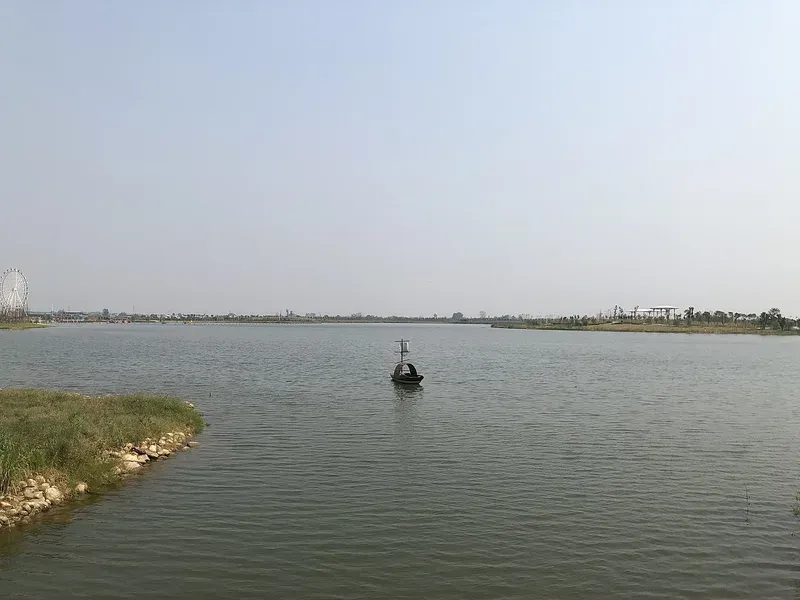
Songzi (æ?¾æ»‹) is a county-level city in the southwest of Hubei Province, administered under Jingzhou Prefecture. It sits on the south bank of the Yangtze River where the river leaves the Three Gorges region and begins its long meander across the Jianghan Plain, and the landscape reflects that transition — flat alluvial farmland in the north and east, low hills and reservoirs in the south and west as the terrain climbs toward the Wuling foothills. The city has been continuously settled for more than 1,500 years and was historically a county of the ancient Jingzhou administrative region; today it is a quiet agricultural and light-industrial town that sees very few foreign visitors, which is precisely its appeal for travellers who want a slice of rural Hubei without the crowds of Yichang or Wuhan.
The headline attraction is Hongyan Lake (洈水, Weishui), a large man-made reservoir set among forested hills in the southwest of the county — one of the largest earth-dam reservoirs in central China and the centrepiece of a national forest park. Beyond the lake, Songzi is a place to slow down: river towns along the Yangtze, citrus and tea hillsides, small Buddhist and Daoist sites, and unhurried county-seat streetlife in the central district of Xinjiangkou (新江å?£).
Climate is humid subtropical: hot, sticky summers (June–August routinely 32–36°C with heavy afternoon storms), short and damp winters (lows around 2–5°C, occasional frost, rare snow), and a long shoulder of pleasant weather. The best windows are late March to early May (rapeseed and citrus blossom, comfortable temperatures) and late September to early November (clear skies, good lake conditions, autumn colour in the forest park). Avoid July if you can — it is both the peak of the East Asian monsoon and the height of domestic holiday traffic at Hongyan Lake.
Planning Songzi? Tell us your dates and we’ll tailor the trip.
Ask on WhatsAppHow do you get there?
By Plane
The nearest major airport is Yichang Sanxia Airport (IATA: YIH), roughly 80–100 km northwest of Xinjiangkou, with daily flights to Beijing, Shanghai, Guangzhou, Chengdu and a rotating list of secondary cities. From the airport, the simplest option is a metered taxi or DiDi to Yichang East Railway Station and onward by train; a direct taxi all the way to Songzi runs roughly ¥250–350 depending on negotiation and time of day. Jingzhou Shashi Airport (SHS), about 90 km east, is a smaller alternative with limited domestic service.
By Train
Songzi is served by Songzi Railway Station (æ?¾æ»‹ç«™) on the Hanyi (Wuhan–Yichang) high-speed corridor, with frequent G- and D-series trains to Wuhan (≈2 h), Yichang East (≈25–35 min) and Jingzhou (≈30 min), plus longer-distance services toward Chongqing, Chengdu and Shanghai. The station sits a few kilometres outside the central built-up area of Xinjiangkou — taxis to the town centre run roughly ¥20–30. Book tickets via the 12306 official app or Trip.com; carry your passport, as it is required both for booking and for station entry. Buy at least a day ahead during Golden Week (early October) and Spring Festival.
By Car / Road
Songzi sits on the G55 Erenhot–Guangzhou Expressway and is well connected by road. Approximate drive times from major cities: Wuhan ≈ 3.5–4 h (~330 km), Yichang ≈ 1.5 h (~90 km), Jingzhou ≈ 1 h (~70 km), Changsha ≈ 4 h (~340 km). Road quality on the expressway is excellent; secondary roads into the Hongyan Lake area are paved but narrower and slower. Long-distance buses run from Songzi's passenger transport bus station to Wuhan, Yichang, Jingzhou and Changsha; departures thin out after mid-afternoon.
Central Xinjiangkou is small and walkable — most hotels, restaurants and the main commercial streets are within a 20–30 minute stroll of each other. For anything beyond that, use:
- City buses — flat fare typically ¥1–2, cash or local transit QR code. Routes cover the town centre and run out to the railway station and main suburbs.
- DiDi (滴滴出行) — works reliably in Songzi and is the easiest option for foreign visitors. Set it up with a foreign card before you arrive; in-app Chinese is unavoidable but the interface is largely icon-driven. Typical town-centre fares ¥8–15; railway station to centre ¥20–30.
- Metered taxis — plentiful in the centre; flagfall is low (around ¥6–8). Insist on the meter (打表 dÇŽ biÇŽo) and have your destination written in Chinese characters.
- E-bikes and shared bikes — Meituan and Hello Bike shared bikes are common in the central district; useful for short hops once you have a Chinese mobile number linked.
For Hongyan Lake and other out-of-town sights, hire a car for the day (negotiate ¥300–500 with your hotel) or take a long-distance bus from the bus station. Watch for the usual mainland scams: unmarked "black taxis" outside the railway station (refuse, walk to the official rank), and at lakeside scenic areas, hawkers selling "combo tickets" that bundle in services you don't need.
What are the things to do?
Hongyan Lake National Forest Park (洈水国家森林公园) — Songzi's signature attraction: a sprawling reservoir of forested islands and inlets in the southwest of the county, roughly 40 km from Xinjiangkou. Walking paths, boat trips, an old dam, and quiet lakeside villages. Best in spring and autumn.
- Hours: typically 08:00–17:30 (shorter in winter).
- Ticket: roughly ¥60–90 for the main scenic area; boat rides extra.
- Location: Hongyan (洈水) township, southwest Songzi.
Hongyan Dam (洈水大å??) — the earth dam itself is one of the largest of its type in China and worth a stop for the engineering and the views back across the reservoir.
- Included with park entry.
Lingxi River (ç?µæºªæ²³) scenic stretch — a quieter, less developed valley near Hongyan with hill walks, bamboo, and small farmhouse restaurants.
Yangtze riverfront at Chenerkou (陈二å?£) / Yangtze ferry crossings — north-edge river towns where the Yangtze leaves the Three Gorges system; good for a short visit and a riverside meal.
- Free; ferries are pay-as-you-go (a few yuan).
Old town streets of Xinjiangkou — not a polished tourist quarter, but a working county-seat downtown with small temples, a riverside park along the Songzi River (a Yangtze tributary), and a busy night market. Best wandered in the late afternoon.
Spend a full day at Hongyan Lake — combine a boat tour through the island clusters with a short forest hike and a lakeside fish lunch. Most visitors do this as a day trip from Xinjiangkou; an overnight at a lakeside guesthouse turns it into the highlight of a trip.
Cycle the rural backroads — the citrus and rapeseed country south of town is gentle, flat-to-rolling, and almost traffic-free between villages. Rent through a hotel or pick up a shared bike for short loops.
Walk the Yangtze bank at sunset from one of the small river towns — Chenerkou or the ferry crossings further east are good starting points.
Try a local fishing village meal — order whatever the family pulled out of the lake or river that morning; this is the most distinctive food experience in the area.
Day-trip to Yichang for the Three Gorges Dam, or to Jingzhou for the Ming-era city walls — both are under an hour by high-speed rail and pair naturally with a Songzi base.
Planning Songzi? Want these on a customised itinerary?
Ask on WhatsAppWhere to eat?
Songzi cooking sits within the broader Hubei (Chu) tradition — freshwater fish, lotus root, salted and cured meats, generous chilli but milder than neighbouring Hunan or Sichuan, and a strong river-and-lake influence thanks to the Yangtze and Hongyan Lake. Signature regional dishes to look for include mian wo (é?¢çª?) savoury rice-and-soy doughnuts at breakfast, re gan mian (热干é?¢) sesame-paste noodles (the Hubei staple), lotus root and pork rib soup (排骨藕汤), and any number of whole steamed or braised river fish. Most restaurants will accommodate basic vegetarian requests if you say wÇ’ chÄ« sù (我å?ƒç´ ), though pure-veg dedicated places are rare; halal options exist at Hui-run noodle shops marked with the green crescent and qÄ«ngzhÄ“n (清真) sign.
- Street breakfast around the central market (budget, ~¥8–15 per person) — soy milk, fried dough sticks, re gan mian, and steamed buns from stalls that open before 06:00 and shut by mid-morning.
- Hongyan Lake fish restaurants (mid-range, ~¥80–150 per person) — clustered around the main scenic-area entrance; order whole steamed lake fish, lotus root soup, and a stir-fried wild green. Pay attention to the price-per-jin on the live tank before pointing.
- Local Hubei home-style restaurants in Xinjiangkou (budget–mid, ~¥40–80 per person) — look for busy, lunchtime-only places near the bus station and central commercial streets. Hand-written menus on the wall; point if your Chinese is limited.
- Hotpot and grill streets in the evening (mid-range, ~¥80–120 per person) — Hubei-style hotpot leans toward fish-head pots (鱼头ç?«é”…) and is hearty rather than fiery.
Where to drink?
Hubei is green-tea country: any restaurant or teahouse will serve a basic loose-leaf green by the glass, and there are decent local hill-grown teas worth asking for by name. Baijiu (white spirit) is the default celebratory drink — local Hubei brands such as Baiyunbian (白云边), distilled in nearby Songzi/Jingzhou country, are the regional standard and turn up at any banquet. Beer is mainly Tsingtao and Snow (雪花), sold cheaply (¥4–8 a bottle) at corner shops; craft beer is largely absent. Coffee is increasingly available — at least one or two chain-style cafés operate in central Xinjiangkou, alongside bubble tea shops on every commercial block.
Nightlife is modest: a handful of KTVs, a few late-evening grill streets where people drink beer over skewers, and not much in the way of dedicated bars.
Water safety: do not drink tap water. Stick to bottled or boiled water (every hotel room has a kettle and free bottles), and be cautious with ice in low-end street stalls. Hot tea, bottled drinks, and properly cooked food are all fine.
Planning Songzi? We’ll book the stays and dining for you.
Ask on WhatsAppWhere to stay?
Songzi is firmly mid-market on the accommodation scale — there are no international five-stars, but there is a solid range of Chinese chain hotels in town and a cluster of resort-style places at Hongyan Lake.
- Budget (¥120–250 / night)
- 7 Days Inn (7天连é”?酒店) Songzi branch — predictable, clean, reliable Chinese budget chain near the central commercial area; book via Trip.com or Meituan.
- Local guesthouses (民宿/客栈) around Hongyan Lake — simple rooms in farmhouses, often including meals; book on the day through DiDi/local agents or via Meituan if your Chinese is up to it.
- Mid-range (¥280–500 / night)
- Hanting Hotel (汉庭) Songzi or Atour (亚朵) Songzi — standard Chinese mid-range business hotels in central Xinjiangkou; reliable rooms, breakfast included, English-language booking via Trip.com.
- Hongyan Lake lakeside hotels — several mid-range properties near the main scenic-area gate; quality varies, prefer ones with recent reviews on Ctrip/Trip.com.
- Upscale / heritage (¥600+ / night)
What should you buy?
Songzi is not a shopping destination, but a few things are worth a look:
- Songzi citrus and pomelo — the surrounding hillsides are heavily planted with mandarins and pomelos; in autumn and early winter roadside stalls sell them by the box at a fraction of city prices.
- Hongyan Lake freshwater fish products — smoked and dried fish, plus yú gÄ?o (fish cake) and chilli-fermented fish pastes, sold in shops near the lake and in Xinjiangkou's wet markets.
- Hubei tea — green teas from the surrounding hills; ask for Songzi bi luo chun (æ?¾æ»‹ç¢§èžºæ˜¥) style if available.
- Everyday markets — the central wet market and the evening street markets along the main commercial streets in Xinjiangkou are the most rewarding stops, more for atmosphere than souvenirs.
Bargaining is normal at outdoor markets and with hawkers around the scenic areas (expect to settle around 60–70% of the opening price); fixed-price in supermarkets, branded shops and most restaurants.
Where to go next?
- Yichang (宜昌) — ~90 km / ~30 min by high-speed rail. Gateway to the Three Gorges and the Three Gorges Dam; an essential pairing with Songzi.
- Jingzhou (è?†å·ž) — ~70 km / ~30 min by high-speed rail. Spectacular Ming-era city walls and Three Kingdoms history.
- Wuhan (武汉) — ~330 km / ~2 h by high-speed rail. Hubei's capital — Yellow Crane Tower, East Lake, and the country's best re gan mian.
- Three Gorges cruise from Yichang — multi-day boats upriver to Chongqing through the Qutang, Wu and Xiling gorges; book in Yichang.
- Shennongjia (神农架) — ~300 km northwest of Songzi. Mountainous national park, forests and (allegedly) the elusive "wild man" — a serious nature counterpoint to the lowland river towns.
- Zhangjiajie (张家界) — ~340 km south in Hunan; sandstone pillar landscape that inspired Avatar's Hallelujah Mountains, reachable by direct high-speed train from Songzi or via Yichang.
Nearby in Hubei Sheng
More places to explore around Songzi.
Guide content as of May 2026. Portions adapted from Wikivoyage, CC BY-SA 4.0.

Contact Us
Get in touch with us.
Get in touch
Contact Us
Tell us where you'd like to go and how you like to travel. A real Tripcuro planner — not a bot — will craft an itinerary around you.
- Personalised, hassle-free planning end-to-end
- Transparent pricing, no hidden costs
- 24/7 support for complete peace of mind