
Hubei Shennongjia
Hubei Sheng, China
Why visit Hubei Shennongjia?
Shennongjia (神农架) is a remote forestry district in northwestern Hubei, named after Shennong, the mythical "Divine Farmer" emperor said to have climbed these mountains on a wooden ladder to taste hundreds of medicinal herbs. Today it is one of China's most ecologically significant landscapes — a UNESCO World Heritage Site (inscribed 2016) and UNESCO Biosphere Reserve protecting one of the few intact mid-latitude subtropical forest ecosystems on Earth. The district straddles the watershed between the Yangtze and Han rivers, with elevations ranging from around 400 m in the river valleys to the 3,106 m summit of Shennongding ("Shennong Peak"), the highest point in central China east of the Tibetan plateau.
For travellers, the appeal is threefold: rare wildlife (most famously the Sichuan golden snub-nosed monkey, but also clouded leopards, takin and over 400 bird species), genuinely wild high-altitude scenery that feels nothing like the manicured "scenic spots" elsewhere in China, and the persistent local legend of the Yeren (野人, "wild man") — China's Bigfoot, whose alleged sightings have driven decades of expeditions into these forests. Add cool summer temperatures (a major draw for sweltering Wuhan and Chongqing residents) and you have a destination that fills up July–August and empties out by November.
Administratively, Shennongjia is a "forestry district" (林区) — a unique designation in China's hierarchy, treated as a prefecture-level unit but governed primarily for conservation. The tourist hub is Muyu (木鱼镇), a small town at around 1,200 m on the southern edge of the national park, lined with hotels, restaurants and the main park ticket office. The park itself is divided into several scenic areas (景区): Shennongding, Tianshengqiao, Guanmenshan, Tianyan, Xiangxiyuan and — separately, on the northwestern plateau — Dajiuhu ("Great Nine Lakes"). Climate is highland subtropical: May to October is the prime visiting window, with wildflowers in May–June, deepest greens in July–August, and turning leaves in October. November through April brings snow, road closures and shuttered scenic areas; do not plan a winter visit unless you specifically want the (limited) ski offering at Tianyan.
Planning Hubei Shennongjia? Tell us your dates and we’ll tailor the trip.
Ask on WhatsAppHow do you get there?
By Plane
Shennongjia Hongping Airport (HPG) sits on a flattened mountaintop at about 2,580 m elevation — one of the highest civilian airports in China — roughly 100 km north of Muyu by road (around 2.5 hours of mountain driving). It has limited seasonal service, mostly to Wuhan, Shanghai, Chongqing and Chengdu, and flights are weather-sensitive; cancellations and diversions are not unusual. A shuttle bus typically meets arriving flights for the run down to Muyu; private taxi transfers are also available but expensive given the distance.
For more reliable access, many travellers fly instead into Yichang Sanxia Airport (YIH) (about 4–5 hours by road from Muyu) or Wuhan Tianhe (WUH) (around 7–8 hours by road or via train + bus combination).
By Train
There is no railway station inside Shennongjia itself — the terrain rules it out. The nearest mainline option is Yichang East Railway Station (宜昌东站), with frequent high-speed services from Wuhan, Chongqing, Chengdu and Beijing. From Yichang East, take a long-distance bus or hired car onward to Muyu (around 4 hours). Xingshan (å…´å±±), closer to the park, has a station on the Zhengzhou–Wanzhou high-speed line and is the fastest rail-then-road combination from northern and central China — about 1.5–2 hours by road from Muyu.
By Car / Road
Self-drive is genuinely worthwhile here because the park's scenic areas are spread over a large area and shuttle schedules can be limiting. From Yichang: roughly 250 km / 4–5 hours via the G42 expressway and then mountain roads (G209/S307). From Wuhan: around 550 km / 7–8 hours. From Chongqing: around 500 km / 8 hours via Wushan. Roads in the park itself are paved but narrow, twisty and slow; in rain or fog, drive times double. Long-distance buses run from Yichang's bus station to Muyu daily, and from Wuhan less frequently. Inside the district, infrequent local buses connect Muyu to Songbai (the administrative seat) and Dajiuhu.
Distances inside the park are large and almost everything interesting is at altitude — walking between scenic areas is not realistic. Most visitors rely on the park's internal shuttle bus system, included or partially included with the entrance ticket: at the main gate in Muyu you transfer to shuttles that run circuits through Tianshengqiao, Xiangxiyuan, Jinhouling (Golden Monkey Ridge) and up to Shennongding. Dajiuhu is a separate ticketed area with its own shuttle system on the plateau.
In Muyu town itself, walking covers most needs. Didi (滴滴出行) ride-hailing works in Muyu and Songbai but coverage thins out fast on mountain roads — don't rely on it to get you back from a trailhead at dusk. Taxis are negotiated by destination rather than metered for out-of-town runs; agree the price before getting in. There are no tuk-tuks or motorcycle-taxis in any organised way. Self-drive rental is best arranged in Yichang or Wuhan; rentals inside Shennongjia are very limited.
Watch for: drivers offering "private tours" at the Muyu park gate who quote a low day rate but then steer you to commission-paying restaurants and shops; and altitude — Shennongding is high enough (3,106 m) that a small minority of visitors feel it, especially if they've come straight up from the Yangtze valley.
What are the things to do?
Almost all the headline sights sit inside the Shennongjia National Park ticketed area. A combined "all scenic areas" ticket is the usual purchase; single-area tickets exist but rarely save money once you factor in shuttle access.
Mountains and natural sights
- Shennongding (神农顶) — The 3,106 m summit area, reached via shuttle bus and a boardwalk staircase to a viewing platform. On clear mornings you get sea-of-clouds views over rolling subalpine fir forest; afternoons usually fog in. The single most iconic stop in the park. Entry is via the combined park ticket; shuttle access from Muyu side.
- Banbiyan (æ?¿å£?岩) — A subalpine meadow studded with weathered rock formations and twisted firs, on the way up to Shennongding. Easy boardwalk loop, often the spot where Yeren legends are recounted by guides.
- Dajiuhu National Wetland Park (大ä¹?æ¹–) — A high plateau (~1,700 m) of nine shallow lakes ringed by reeds, grazing horses and forested ridges. Misty dawns here are the postcard image of Shennongjia. Separate ticket and shuttle system; allow a half to full day. About 2.5 hours by road from Muyu.
- Tianshengqiao (天生桥) — Natural stone-arch bridge over a clear stream at lower elevation; pleasant, shaded river walk and waterfalls. Good rainy-day option when the high peaks are fogged in.
- Tianyan (天燕) — "Sky Swallow" scenic area in the north of the park, with the Yanzi Cave (燕å?æ´ž), home to large colonies of short-nosed fruit bats and Himalayan swiftlets. Quieter than the southern circuits.
- Guanmenshan (官门山) — A combined botanical garden, geological museum and small wildlife enclosure near Muyu — useful as a half-day primer if you only have one day in the area.
Wildlife
- Jinhouling / Golden Monkey Ridge (金猴岭) — Habitat of the Sichuan golden snub-nosed monkey (Rhinopithecus roxellana), a striking blue-faced, orange-furred primate. Sightings are reasonably common from the boardwalk in spring and autumn; rangers can sometimes point out troops.
Cultural and built sights
Shennong Altar (神农祭å?›), near Muyu — A large ceremonial sculpture of Shennong's head carved into a hillside, with a plaza used for traditional rites. Worth a short stop more for context than for the sculpture itself.
Hike the Shennongding boardwalks and ridge trails. A network of timber boardwalks links viewpoints around the summit; the full circuit is a moderate half-day walk above 2,800 m. Bring layers — it can be 15 °C cooler at the top than in Muyu.
Spend a sunrise at Dajiuhu. Stay overnight in Dajiuhu village or set off from Muyu at 04:00. The mist-on-water shots that dominate Chinese travel photography of Shennongjia are made in the first hour of light.
Birdwatching. Shennongjia is one of the best birding sites in central China — Temminck's tragopan, golden pheasant, koklass pheasant, three forktail species and an array of warblers and laughingthrushes. May–June is peak. Local guides can be arranged through Muyu hostels.
Track the Yeren myth. Whether or not you believe in the wild man, the legend is central to local identity. The small Yeren-themed exhibits at Guanmenshan and various roadside displays are worth a browse, and several hostels organise themed night walks in summer.
Stargazing. Far from any major city and at altitude, clear nights in Dajiuhu and around Shennongding deliver some of the best skies in eastern China. Check the moon phase before booking.
Soak after a long day. A handful of resort hotels in Muyu have hot-spring or hot-tub facilities — pleasant after a 12 km hiking day.
Day-trip to Three Gorges Dam. Several Muyu agencies sell combined Shennongjia + Three Gorges itineraries; the dam is around 4 hours away by road via Yichang.
Planning Hubei Shennongjia? Want these on a customised itinerary?
Ask on WhatsAppWhere to eat?
Shennongjia food is mountain Hubei cuisine — heartier and less sweet than lowland Wuhan cooking, with heavy use of cured pork, foraged greens, freshwater fish from the local rivers, potatoes and corn. Expect fewer chilli pyrotechnics than in neighbouring Sichuan but plenty of garlic, ginger, sour pickles and Sichuan pepper. Signature things to try:
- Lazhurou (腊猪肉) — Mountain-cured smoked pork, served stir-fried with leeks or in claypot.
- Yangyu cake (洋芋粑粑) — Pan-fried potato patties, a peasant staple turned restaurant snack.
- Wild fungi hotpot (野生è?Œç?«é”…) — In season, a simple chicken or pork-bone broth with a parade of foraged mushrooms.
- Hejiao (河鲜) — River fish, usually grilled or steamed whole.
- Baojiacai / wild mountain greens — Various foraged ferns and shoots, blanched with garlic.
- Sour-mash corn porridge (酸浆苞谷ç³?) — A rustic breakfast staple.
Most restaurants are clustered along the main street of Muyu; nearly all serve broadly similar menus, so pick by busyness. A few names that recur in local recommendations:
- Budget: small nóngjiÄ?yuè (农家ä¹?, "farmer's home") canteens in Muyu and Dajiuhu village serve set meals of rice, two vegetables and one meat for around ¥30–50 per head.
- Mid-range: hotel restaurants attached to the larger Muyu properties run full Hubei menus at ¥80–150 per head.
- Splurge: a handful of resort dining rooms inside Muyu's upper-tier hotels offer more curated wild-mushroom and cured-meat tasting menus.
Vegetarians do reasonably well thanks to the foraged-greens and fungi tradition; ask for sùshí (素食) and be specific that you don't want lard or pork stock. Halal options are limited; the nearest reliable Muslim restaurants are in Songbai and Yichang.
Where to drink?
The mountain water is part of the brand here, and you'll see locally bottled spring water everywhere — perfectly good. Tap water in hotels should be boiled before drinking, as in the rest of rural China; in-room kettles are standard.
- Yeren brand baijiu (野人酒) — A locally produced sorghum spirit, sold in dramatically packaged bottles featuring the wild man. More souvenir than fine spirit, but a fun gift.
- Medicinal liquors — Various clear spirits infused with local herbs and roots. Tasted in small cups; potent.
- Local craft beers and Wuhan-brewed lagers — Standard restaurant fare.
- Mountain green tea — Served free in most restaurants; ask for lÇœchá (绿茶).
- Wild fruit wines — Small producers around Muyu bottle kiwi and mountain-berry wines that turn up on hotel menus.
There is no real bar scene; nightlife in Muyu means a beer with dinner, a stroll along the main street, and an early night in preparation for a 5 a.m. start. Songbai has a couple of more conventional KTV-and-beer venues.
Planning Hubei Shennongjia? We’ll book the stays and dining for you.
Ask on WhatsAppWhere to stay?
Almost all visitors stay either in Muyu (best for park access from the south, most options) or in Dajiuhu village (best for sunrise on the wetland, far fewer rooms). Songbai, the administrative seat, is generally inconvenient for sightseeing.
Budget
- Muyu youth hostels and family guesthouses — Dorm beds from around ¥60–100, private rooms ¥150–250, especially along the side streets off Muyu's main road. Most arrange park transport.
- Dajiuhu farmstays (大ä¹?湖农家ä¹?) — Simple village rooms, around ¥150–250 with breakfast; book ahead in summer as supply is small.
Mid-range
- Shennongjia Wanyi International Hotel (神农架万怡国际酒店) and similar 4-star Muyu hotels — Comfortable rooms, on-site restaurant, around ¥400–700 in season.
- Shennongjia Junlan Hotel (å?›å…°å¤§é…’店), Muyu — Established mid-range option with reliable English-friendly front desk.
Upscale / heritage
- Shennongjia Tanshan Hot Spring Resort (神农架å?¦å±±æ¸©æ³‰åº¦å?‡é…’店) — The most polished resort in Muyu, with hot springs, larger rooms and a quieter forest setting just outside town; rates typically ¥800–1,500+ depending on season.
- InterContinental and similarly branded resort properties have entered the Shennongjia market in recent years on the Muyu approach road; expect ¥1,000–2,000 in peak summer.
Book well in advance for July, August and the October National Day holiday — the entire district can sell out and prices double.
What should you buy?
Shennongjia is a place to buy edible and medicinal souvenirs rather than crafts. The lower scenic-area exits and the main street of Muyu are lined with shops selling:
- Wild honey (野蜂蜜) — Cliff-hive and forest honey is a genuine local specialty; look for shops that let you taste before buying. Quality varies enormously.
- Dried mountain fungi and wild vegetables — Black fungus, morels, and pickled fern shoots ("juécài") are all local products.
- Medicinal herbs and roots — Astragalus, gastrodia (tianma), and various herbs tied back to the Shennong legend. If you don't read Chinese, treat these as decorative; do not self-prescribe.
- Tea — Hubei produces respectable green teas; some locally branded "Shennong" teas are sold in tins as gifts.
- Walnuts and chestnuts in autumn.
Bargaining is mild here compared to coastal tourist markets — a 10–20% discount on non-fixed-price items is reasonable, more if you buy in volume. Avoid any product made from wildlife (animal parts, "bear bile", carved horn): illegal in China and a serious customs problem coming home.
Where to go next?
- Yichang (宜昌) — ~250 km / 4–5 hours by road. Yangtze river city, gateway to the Three Gorges Dam and starting point for downstream Three Gorges cruises.
- Three Gorges Dam (三峡大å??) — ~4 hours from Muyu via Yichang. The world's largest hydroelectric project; ship-lock viewing platforms make a half-day trip.
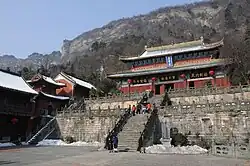
- Wudang Shan (武当山) — ~5–6 hours by road to the north. UNESCO-listed Taoist mountain complex of cliff-edge monasteries; spiritual heartland of internal martial arts and a natural pairing with Shennongjia for a Hubei mountains itinerary.
- Xingshan and Zhaojun's hometown (昭å?›æ•…里) — ~2 hours by road. Birthplace of Wang Zhaojun, one of the "Four Beauties" of ancient China; small museum and riverside old town, easy stop en route to Yichang.
- Shennong Stream (神农溪), near Badong — ~3–4 hours. A tributary of the Yangtze run by traditional pea-pod boats poled by Tujia boatmen; a popular half-day add-on to Three Gorges cruises.
- Wuhan (武汉) — ~7–8 hours by road or rail-plus-road via Yichang. Hubei's capital, with the Yellow Crane Tower, Hubei Provincial Museum (Marquis Yi of Zeng's bronze bells) and East Lake — the natural urban bookend to a wilderness trip.
Nearby in Hubei Sheng
More places to explore around Hubei Shennongjia.
Guide content as of May 2026. Portions adapted from Wikivoyage, CC BY-SA 4.0.

Contact Us
Get in touch with us.
Get in touch
Contact Us
Tell us where you'd like to go and how you like to travel. A real Tripcuro planner — not a bot — will craft an itinerary around you.
- Personalised, hassle-free planning end-to-end
- Transparent pricing, no hidden costs
- 24/7 support for complete peace of mind