
Taroko National Park
Hualien, Taiwan
Why visit Taroko National Park?
Taroko National Park (太魯閣國家公園, Tàilǔgé gúojiā gōngyuán) is one of Taiwan's nine national parks and arguably its most spectacular, protecting the marble canyon of Taroko Gorge and a vast mountainous hinterland on the island's east. The name "Taroko" means "magnificent and splendid" in the language of the Truku, the indigenous people of the region. Established in 1986, the park's creation was a milestone for Taiwan's environmental movement — a recognition that decades of rapid economic growth had come at a serious cost to the island's natural resources.
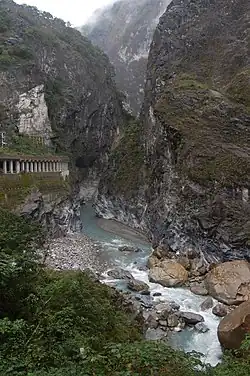
The park's most phenomenal feature is its sheer relief. In a single afternoon you can travel from rugged coastal cliffs, up through a maze of subtropical forested canyons, to high-elevation sub-alpine coniferous forest — the landscape rising from sea level to peaks over 3,400 metres in only about 60 km. At its heart is the world's deepest marble canyon, where slot-narrow sections rise 300 metres between walls just a dozen metres apart. The park is rich in wildlife: 144 bird species, over 30 large mammals including deer, boar and bear, monkeys, and hundreds of butterfly and reptile species. Visitor hubs include Xincheng near the entrance, the visitor centre at the park gate, and Tianxiang deep within the gorge.
The climate is subtropical and mild at low elevations (about 14°C in January, 27°C in July), turning sharply colder with altitude — Hehuan's high passes average below freezing in winter. Rainfall is abundant year-round; the gorge often stays clear even when Hualien is wet. Avoid the park during typhoons and prolonged heavy rain because of landslide and rockfall danger. The region is highly earthquake-prone — a major 2024 quake closed many trails — so always check current closures with the park before visiting.
Planning Taroko National Park? Tell us your dates and we’ll tailor the trip.
Ask on WhatsAppHow do you get there?
By Plane
The nearest airport is Hualien Airport (HUN), roughly 25 km south of the park entrance and about 7 km from Hualien City. Domestic flights link Hualien with Taipei Songshan, Taichung and Kaohsiung. From the airport, use taxis or ride-hailing, or transfer into Hualien City to pick up park-bound buses.
By Train
The closest station to the park entrance is Xincheng Station (新城); Hualien Station, farther south, is the main regional hub. Express trains from Taipei to Hualien take about 2 hours (around NT$440), local trains 3–4 hours. From Xincheng, shuttle and regular buses run into the park, or take a one-way taxi (around NT$200) or a taxi day tour (around NT$2,000). Reserve train tickets early in peak season.
By Car / Road
Provincial Highway 8 (the Central Cross-Island Highway) runs through the gorge from the entrance near Xincheng and climbs west toward the Hehuan high country; Highway 9 and the coastal Highway 11 link the area with Hualien City, roughly 25–30 km away. Driving gives flexibility but the gorge roads are extremely narrow and winding — drive cautiously. Regular buses and a Hualien–Tianxiang shuttle serve the park, and full-day bus tours depart Hualien for around NT$988 per person.
Buses are the simplest way to move through the park. Shuttle buses and regular routes (lines including 302, 1126, 1129, 1132, 1133, 1133A, 1141) run from Hualien and Xincheng stations to the major stops — Taroko Arch Gate, Visitor Center, Shakadang, Swallow Grotto, Tunnel of Nine Turns, Lushui and Tianxiang. One- and two-day passes cost roughly NT$250 / NT$400; EasyCard gives a deep discount and no change is given for cash. Schedules are loose, so plan ahead and never miss the last evening bus.
Renting a scooter in Hualien (around NT$400/day) suits experienced riders only; bicycles can be hired near the entrance for around NT$250/day. Many tunnels can be walked between adjacent sights. Park entry is free, but eco-protection zones, restricted mountain areas and high-mountain trails (such as the route up Hehuanshan or Zhuilu Old Trail's restricted sections) require permits — apply at least a week ahead, as daily quotas are limited; the official Taroko National Park website covers procedures.
What are the things to do?
Note: Following the 2024 earthquake, many trails and attractions remain closed. Confirm current status with the park visitor centre before setting out.
Gorge highlights
- Shakadang Trail (砂卡礑步道) — A near-flat riverside trail beside vivid turquoise water and folded marble; one of the most accessible walks.
- Eternal Spring Shrine (長春祠) — A shrine set against a waterfall, honouring workers who died building the cross-island highway.
- Swallow Grotto (燕子口) — A tight canyon section with a cliffside walkway (helmets issued).
- Tunnel of Nine Turns (九曲洞) — A walkway through the gorge's most dramatic marble narrows.
- Baiyang Waterfall Trail (白楊步道) — A tunnel-and-trail walk to a strong waterfall and the "Water Curtain" cave.
Mountains and beyond the gorge
Buluowan (布洛灣) — A pair of forested terraces with Truku cultural displays and gentle trails.
Hehuanshan area — High-alpine scenery along Highway 8's upper reaches, with treeless slopes and, in winter, occasional snow.
Qingshui Cliffs — Sheer coastal cliffs plunging into the Pacific at the park's northern edge.
Hiking — The park's core draw, from gentle riverside paths to demanding alpine climbs; match trails to fitness and current closures.
Apply for a high-mountain permit — For restricted backcountry and peaks, arrange permits at least a week ahead via the park.
Cycling — Riding Highway 8 through the gorge and up toward the mountains is a memorable challenge for the fit.
Wildlife watching — Quiet early-morning trails offer chances to see monkeys, deer, abundant birds and butterflies.
Truku cultural visits — Learn about the indigenous Truku at Buluowan's cultural displays and through community-run experiences.
Guided tours — Air-conditioned bus tours from Hualien cover the highlights efficiently but allow little hiking time.
Planning Taroko National Park? Want these on a customised itinerary?
Ask on WhatsAppWhere to eat?
Dining within the park is limited and functional rather than memorable.
- Budget — Snack stalls near the Visitor Center, Buluowan and Tianxiang, plus the Tianxiang 7-Eleven, cover quick bites.
- Mid-range — The restaurant at Silks Place Taroko in Tianxiang offers sit-down meals; the Catholic hostel in Tianxiang also serves food.
- Better dining — Eat in Hualien City for fresh Taiwanese food, seafood and indigenous Amis dishes such as zhutongfan (bamboo-tube rice); Dongdamen Night Market is the standout.
Carry your own food and ample water for hiking. Vegetarians should stock up in Hualien, where "素" eateries are common; in-park vegetarian options are thin. Halal and certified gluten-free food is not reliably available.
Where to drink?
Carry plenty of water for any hike — it is the most important supply in the park. Stores at Tianxiang and vending machines around the Visitor Center sell bottled drinks. There is no café or bar scene inside the park; for coffee and evening drinks, base yourself in Hualien City. Tap water in Taiwan is treated and safe once boiled, but in the park stick to bottled or your own filtered supply.
Planning Taroko National Park? We’ll book the stays and dining for you.
Ask on WhatsAppWhere to stay?
- Budget — In Xincheng, near the entrance, simple guesthouses and hostels run roughly NT$800–1,500; the Catholic Hostel in Tianxiang is a long-standing budget option deep in the gorge.
- Mid-range — Xincheng and the surrounding area have mid-range hotels and B&Bs, roughly NT$2,000–3,500 per night.
- Upscale — Silks Place Taroko (太魯閣晶英酒店) in Tianxiang is the park's premier resort hotel, with rates typically from around NT$8,000 and up. Camping is also possible at designated sites such as Heliu.
What should you buy?
Shopping inside the park is minimal — souvenir and snack stalls near the Visitor Center, Buluowan and Tianxiang, plus the 7-Eleven at Tianxiang (handy for snacks and EasyCard top-ups). Truku crafts such as woven textiles are sometimes sold at Buluowan. For a proper selection — indigenous hand-woven cloth, jade and stone carvings, and Hualien mochi — shop in Hualien City. Prices are fixed; bargaining is not customary.
Where to go next?
- Hualien City — About 25 km / 40–60 minutes south; the regional hub for food, lodging and transport.
- Qixingtan Beach — About 15 km / 30 minutes south; a scenic pebble bay between the park and Hualien.
- Xincheng — At the park entrance; the nearest train station, with hotels and a night market.
- Hehuan Mountain — West along Highway 8; a high-alpine drive above the treeline.
- Qingshui Cliffs — North along the coast; dramatic cliffs falling sheer into the Pacific.
- Ruisui — About 90 km / 1.5–2 hours south in the rift valley; hot springs and river rafting.
Nearby in Hualien
More places to explore around Taroko National Park.

Guide content as of May 2026. Portions adapted from Wikivoyage, CC BY-SA 4.0.

Contact Us
Get in touch with us.
Get in touch
Contact Us
Tell us where you'd like to go and how you like to travel. A real Tripcuro planner — not a bot — will craft an itinerary around you.
- Personalised, hassle-free planning end-to-end
- Transparent pricing, no hidden costs
- 24/7 support for complete peace of mind