
Taroko Gorge
Hualien, Taiwan
Why visit Taroko Gorge?
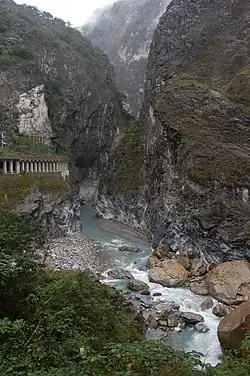
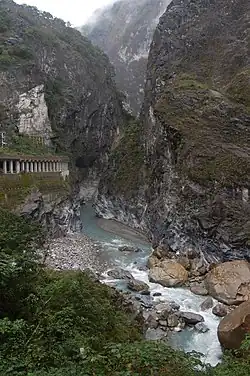
Taroko Gorge (太魯閣, Tàilǔgé) is a deep, rocky, tree-lined canyon with a boulder-strewn, blue-green river running through its floor — one of Taiwan's most celebrated natural wonders. The 19-km-long gorge cuts through the eastern edge of the Central Mountain Range, protected within Taroko National Park, and its dramatic scenery makes it an incredible place to hike, with trails ranging from flat and leisurely to strenuous and heart-pumping. The canyon is carved largely from marble, gneiss and schist; the name "Taroko" means "magnificent and splendid" in the language of the Truku, the indigenous people of the area.
What makes the gorge extraordinary is its relief and its narrowness. Over millions of years, rapid tectonic uplift combined with abundant water carved the world's deepest marble canyon — in places the slot narrows to a dozen metres across between walls 300 metres high. Most visitors come on a day trip from Hualien. The nearest town is Xincheng, near the park entrance, which has a train station and a handful of hotels, restaurants and shops; the visitor centre sits near the entrance; and Tianxiang, a small village with a couple of stores, lies deep inside the gorge past most of the main hiking trails.
The climate is subtropical and generally mild, with abundant rainfall year-round — the gorge often enjoys clear blue skies even when it is raining in Hualien. Low-elevation temperatures average about 14°C in January and 27°C in July. The biggest hazard is heavy rain: be especially cautious about entering the gorge during typhoons or extended downpours because of the danger of landslides and rockfall. The region is also seismically very active — a major earthquake in 2024 closed many trails and attractions, so always check the official park website for current closures before you travel.
Planning Taroko Gorge? Tell us your dates and we’ll tailor the trip.
Ask on WhatsAppHow do you get there?
By Plane
The nearest airport is Hualien Airport (HUN), about 25 km south of the gorge entrance and roughly 7 km northeast of Hualien City. Domestic flights connect Hualien with Taipei Songshan, Taichung and Kaohsiung. From the airport, taxis and ride-hailing reach the gorge area; you can also transfer into Hualien City and pick up gorge buses there.
By Train
The most useful station for the gorge is Xincheng Station (新城, sometimes signed Taroko/Xincheng), the closest stop to the park entrance. Hualien Station, farther south, is the larger hub. Express trains from Taipei to Hualien take about 2 hours (around NT$440) and local trains 3–4 hours; station names are announced in English and Chinese. From Xincheng, take shuttle or regular buses into the gorge, a one-way taxi (around NT$200), or a taxi day tour (around NT$2,000). Book trains ahead in peak season.
By Car / Road
The gorge is reached via Provincial Highway 8 (the Central Cross-Island Highway), which runs the length of the canyon from the entrance near Xincheng. Renting a car in Hualien is an option, but drive with great caution — the gorge roads are extremely narrow with numerous bends, shared by pedestrians, scooters, cars and large tour buses. Hualien City is roughly 25–30 km from the gorge entrance. Regular buses and a Hualien–Tianxiang shuttle service the route; numerous full-day bus tours also depart Hualien for around NT$988 per person.
The easiest way to explore is by bus. Shuttle buses and regular Hualien Bus / Taroko Bus routes (lines including 302, 1126, 1129, 1132, 1133, 1133A and 1141) run frequently from Hualien and Xincheng stations through the gorge, stopping at the major sights — Taroko Arch Gate, the Visitor Center, Shakadang, Swallow Grotto, Tunnel of Nine Turns, Lushui and Tianxiang. One- and two-day passes cost roughly NT$250 / NT$400; an EasyCard gives a steep discount, and no change is given for cash fares. Schedules are approximate — buses can run early or late — so plan around them and don't miss the last bus back in the evening.
Renting a scooter in Hualien (around NT$400/day) gives freedom but the narrow, bend-heavy gorge is not for first-timers. Bicycles can be rented near the park entrance for around NT$250/day. Many of the road tunnels can be walked between nearby sights. Park entry is free, but permits (apply at least a week ahead) are required for restricted wilderness and eco-protection areas.
What are the things to do?
Note: Following the 2024 earthquake, many trails and attractions have been closed. Always confirm current status with the Taroko National Park visitor centre before setting out.
Shakadang Trail (砂卡礑步道) — A near-flat riverside trail along strikingly clear turquoise water beneath folded marble cliffs; one of the gorge's most accessible and rewarding walks.
Eternal Spring Shrine (長春祠, Changchun Shrine) — A picturesque shrine set against a cascading waterfall, built to honour workers who died constructing the cross-island highway.
Swallow Grotto (燕子口, Yanzikou) — A dramatic stretch where the canyon narrows tightly and pockmarked cliffs once hosted nesting swallows; helmets are issued for the cliffside walkway.
Tunnel of Nine Turns (九曲洞, Jiuqudong) — A walkway through the gorge's most spectacular narrows, where sheer marble walls close in over the river.
Tianxiang (天祥) — A small village deep in the gorge with the Xiangde Temple, a pagoda and a suspension bridge; the usual turnaround point.
Baiyang Waterfall Trail (白楊步道) — A tunnel-and-trail walk to a powerful waterfall, including the famous "Water Curtain" cave.
Hiking — The headline activity, from gentle riverside paths (Shakadang) to demanding climbs; choose trails to match fitness and current closures.
Cycling the gorge — For the fit and adventurous, riding Highway 8 through the canyon is a memorable, if challenging, experience.
Guided day tours — Air-conditioned bus tours from Hualien cover the main sights efficiently, though itineraries are tight and leave little time for serious hiking.
River and waterfall trails — Walks to the Eternal Spring Shrine and Baiyang Waterfall combine canyon scenery with rushing water.
Birdwatching and wildlife spotting — The park hosts 144 bird species plus deer, boar, monkeys and butterflies; quiet early-morning trails offer the best chances.
Photography at the narrows — The slot-canyon sections at Swallow Grotto and the Tunnel of Nine Turns are the gorge's most dramatic stretches.
Planning Taroko Gorge? Want these on a customised itinerary?
Ask on WhatsAppWhere to eat?
Dining inside the gorge is limited and generally unremarkable — the restaurants at Tianxiang are convenient rather than memorable. Most visitors carry their own food and water, especially for hiking, where adequate water is essential.
- Budget — Snack stalls near the Visitor Center and Tianxiang, and the Tianxiang 7-Eleven, cover quick bites and drinks.
- Mid-range — The restaurant at the Silks Place hotel in Tianxiang offers sit-down meals; the Catholic hostel in Tianxiang also serves food.
- Better dining — For a proper meal, eat in Hualien City, where Dongdamen Night Market and the city's restaurants serve fresh Taiwanese food, seafood and indigenous Amis specialities such as zhutongfan (bamboo-tube rice).
Vegetarian travellers should stock up in Hualien, where "素" vegetarian eateries are easy to find; in-gorge options are minimal. Halal and certified gluten-free food is not reliably available in the gorge.
Where to drink?
Bring plenty of water for any hiking — it is the single most important supply in the gorge. The 7-Eleven and stores at Tianxiang sell bottled drinks, and the Visitor Center area has vending machines and basic refreshments. There is no bar or café scene inside the park; for coffee and an evening drink, base yourself in Hualien City. Tap water in Taiwan is treated and considered safe once boiled, but in the gorge stick to bottled or your own filtered supply.
Planning Taroko Gorge? We’ll book the stays and dining for you.
Ask on WhatsAppWhere to stay?
- Budget — In Xincheng, near the park entrance, simple guesthouses and hostels offer rooms from roughly NT$800–1,500; the Catholic Hostel in Tianxiang is a long-standing, very inexpensive option deep in the gorge.
- Mid-range — Xincheng and the surrounding area have a handful of mid-range hotels and B&Bs serving the gorge, roughly NT$2,000–3,500 per night.
- Upscale — Silks Place Taroko (太魯閣晶英酒店) in Tianxiang is the gorge's premier hotel, a comfortable resort property deep inside the canyon with rates typically from around NT$8,000 and up.
What should you buy?
There is very little shopping inside the gorge — a few souvenir and snack stalls near the Visitor Center and Tianxiang, plus the obligatory gift-shop stops on bus tours. The 7-Eleven in Tianxiang is useful for snacks and reloading an EasyCard. For real shopping — indigenous hand-woven cloth, jade and stone carvings, and the famous Hualien mochi — do it in Hualien City. Prices are fixed and bargaining is not customary.
Where to go next?
- Hualien City — About 25 km / 40–60 minutes south; the regional hub for food, lodging and onward transport.
- Qixingtan Beach — About 15 km / 30 minutes south; a scenic pebble bay on the route between the gorge and Hualien.
- Xincheng — At the gorge entrance; a small town with the nearest train station, hotels and a night market.
- Hehuan Mountain — West along Highway 8; a high-alpine drive into a treeless mountain landscape above the treeline.
- Qingshui Cliffs — North of the gorge along the coast; sheer cliffs plunging straight into the Pacific.
- Ruisui — About 90 km / 1.5–2 hours south in the rift valley; hot springs, dairy ranches and river rafting.
Nearby in Hualien
More places to explore around Taroko Gorge.

Guide content as of May 2026. Portions adapted from Wikivoyage, CC BY-SA 4.0.

Contact Us
Get in touch with us.
Get in touch
Contact Us
Tell us where you'd like to go and how you like to travel. A real Tripcuro planner — not a bot — will craft an itinerary around you.
- Personalised, hassle-free planning end-to-end
- Transparent pricing, no hidden costs
- 24/7 support for complete peace of mind