
Kaeseong
North Korea · Metropolitan city · 7 destinations with guides
Photography coming soonWhy visit?
Kaeseong (개성, also Kaesong) is a metropolitan city in the far south of North Korea, lying only about 8 km from the Demilitarised Zone that separates the country from South Korea. For several centuries it served as the capital of the Koryo Dynasty (918–1392), the kingdom that gave its name to the modern word "Korea," and it remains one of the peninsula's most historically significant cities.
What sets Kaeseong apart as a travel destination is this dense concentration of history. Twelve historic monuments and sites in the city — including royal tombs, the old Confucian academy and city gates — were inscribed together on the UNESCO World Heritage List in 2013 as the "Historic Monuments and Sites in Kaesong." The old town is among the best-preserved in all of Korea, with traditional buildings still standing from the Joseon period, and the city escaped much of the wartime reconstruction seen elsewhere in the country.
Kaeseong also carries the weight of the Korean conflict: it was the only major city to change hands between North and South during the Korean War, and the surrounding area includes Panmunjom and the DMZ. The former Kaesong Industrial Complex, a joint inter-Korean economic zone, operated here until 2016. For visitors, the city pairs ancient royal heritage with a front-row view of the divided peninsula.
When is the best time to visit?
Kaeseong has a temperate climate with four distinct seasons. Spring (April to May) and autumn (September to October) are the most pleasant, with mild temperatures and clear skies that suit visits to the tombs and the surrounding hills. Summer is hot, humid and the rainiest season, while winter is cold and dry. Autumn is especially rewarding for Mount Pakyon and the wooded settings of the royal tombs.
Tell us your dates and we'll shape a Kaeseong route around them.
WhatsAppHow do you get around?
All travel for foreign visitors is arranged through an authorised tour operator with an accompanying guide; independent movement is not permitted. Most visitors reach Kaeseong from Pyongyang along the six-lane Reunification Highway, a drive of roughly 2½ hours, and the city is commonly combined with a DMZ and Panmunjom visit. Within and around the city, travel between the old town, the royal tombs (the Tomb of King Kongmin lies about 13 km outside the centre) and Mount Pakyon is by tour vehicle. Kaesong Station exists but appears not to be in regular use.
Where should you go?
- Kaesong — The historic city centre, former Koryo capital, with the best-preserved old town in Korea.
- Panmunjom — The surreal truce village on the Military Demarcation Line between North and South.
- Korean Demilitarized Zone — The heavily fortified 4 km buffer strip along the inter-Korean border.
- Tomb of King Kongmin — A well-preserved Koryo royal tomb in a scenic hillside setting outside the city.
- Songgyungwan — The former Confucian academy, now housing the Koryo Museum of history and relics.
- Sonjuk Bridge — A small 13th-century stone bridge of deep symbolic importance in Korean history.
- Mount Pakyon — A scenic mountain area north of the city, known for Pakyon Falls.
Want the scenic legs and stays booked for you? Just ask.
WhatsAppWhat should you eat?
Kaeseong has a notable culinary heritage as a former royal capital, traditionally associated with refined "Kaesong cuisine," including elaborate table settings and dishes such as bossam kimchi. The area is best known to visitors for its locally grown ginseng, prized for its quality and low price. Meals for foreign visitors are generally arranged at tour hotels and designated restaurants, including the restaurant at the Kaesong Folk Hotel.
What is the culture like?
Kaeseong's cultural identity is rooted in its Koryo-era past — royal tombs, the Confucian academy at Songgyungwan and the historic city walls and gates. Local handicrafts and DPRK souvenirs are sold at tour-site shops, and ginseng cultivation is a long-standing local tradition.
Travelling during a festival? We'll plan around the crowds.
WhatsAppWhat are the standout experiences?
- Staying in a traditional courtyard hotel — Overnighting at the Kaesong Folk Hotel, a cluster of traditional Korean houses and courtyards converted into accommodation near the Nam Gate.
- The Reunification Highway drive — Travelling the vast, largely empty six-lane highway between Pyongyang and Kaeseong, with signs marking the distance to Seoul.
- Visiting Panmunjom and the JSA — Standing on the Military Demarcation Line at the truce village, viewing the conference huts that straddle the border.
- Touring the UNESCO Koryo sites — A circuit of the royal tombs, Songgyungwan/Koryo Museum, Sonjuk Bridge and the Nam Gate.
- Pakyon Falls excursion — A trip north of the city to the waterfall and mountain scenery of Mount Pakyon.
Top Destinations
Every destination in Kaeseong with a guide — tap a place for the full guide.
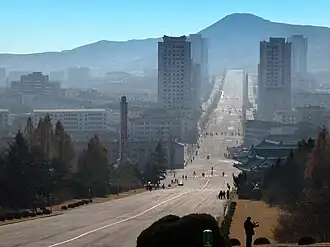
Kaesong
Kaesong (개성) is a historic city in southwestern North Korea, just 8…
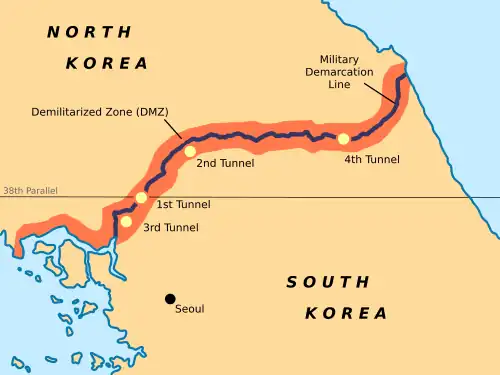
Korean Demilitarized Zone
The Korean Demilitarized Zone (DMZ) is a 4-km-wide buffer zone…
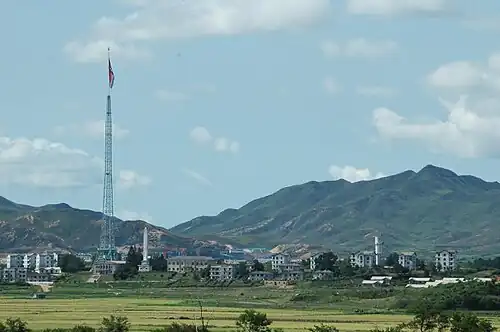
Panmunjom
Panmunjom (Korean: 판문점), also romanised as P'anmunjŏm, is a small…
Mount Pakyon
Mount Pakyon is a scenic mountain area located near Kaesong in…
Songgyungwan
Songgyungwan (Koryo Songgyungwan) was the supreme state academy…
Sonjuk Bridge
Sonjuk Bridge (Korean: 선죽교, also romanised Sŏnjukkyo) is a small…
Tomb of King Kongmin
The Tomb of King Kongmin (Korean: 공민왕릉) is a pair of royal burial…
Pair the highlights of Kaeseong into one easy trip — we'll plan the route.
WhatsApp
Contact Us
Get in touch with us.
Get in touch
Contact Us
Tell us where you'd like to go and how you like to travel. A real Tripcuro planner — not a bot — will craft an itinerary around you.
- Personalised, hassle-free planning end-to-end
- Transparent pricing, no hidden costs
- 24/7 support for complete peace of mind