
Mount Pakyon
Kaeseong, North Korea
Why visit Mount Pakyon?
Mount Pakyon is a scenic mountain area located near Kaesong in Kaeseong Province (KP-15), North Korea. It is best known for Pakyon Falls, one of the most celebrated waterfalls in the Kaesong region, set in a forested valley among steep, granite hills. The area lies within the broader historic zone surrounding Kaesong, the former capital of the Goryeo Dynasty (918–1392 CE), and has been a place of natural beauty and quiet contemplation for centuries. The mountain's slopes are covered in dense mixed forest, with rocky outcrops and clear streams feeding the falls.
Mount Pakyon sits in a continental climate zone with cold, dry winters and warm, humid summers. Temperatures in January average around −6 °C, while July and August bring averages near 25 °C with significant rainfall. Spring (April–May) and autumn (September–October) are the best times to visit, offering clear skies and comfortable temperatures. The area is accessible as a half-day excursion from Kaesong and is typically included in organised tours of the Kaesong region. There is no independent tourist infrastructure; all visits must be arranged through a licensed North Korean tour operator.
Planning Mount Pakyon? Tell us your dates and we’ll tailor the trip.
Ask on WhatsAppHow do you get there?
By Plane
The nearest airport is Pyongyang Sunan International Airport (FNJ), approximately 140 km to the northeast. Mount Pakyon is reached by road from Pyongyang via Kaesong, a total journey of roughly 2½–3 hours. There is no airport near Mount Pakyon.
By Train
There is no railway station at Mount Pakyon. The nearest station is Kaesong Station, which does not appear to be in regular passenger use. Travel to the area is by road only.
By Car / Road
Mount Pakyon is reached by road from Kaesong, a short drive of approximately 10–15 minutes from the city centre. From Pyongyang, the journey is approximately 140 km by highway, taking about 2½ hours, typically combined with a visit to Kaesong's other sights. All transport is arranged by the tour operator. Road access is along well-maintained highways to Kaesong, with a shorter local road leading to the mountain area.
All movement in the Mount Pakyon area is on foot as part of a guided excursion. Trails lead from the road access point to Pakyon Falls and through the surrounding forest. There is no public transport, shuttle service, or other motorised local transport within the mountain area. The walking is generally moderate, though some sections near the falls may be steep or slippery.
What are the things to do?
Pakyon Falls — The centrepiece attraction of the Mount Pakyon area. A waterfall cascading down a granite cliff face into a clear pool below, surrounded by forest. The falls are particularly impressive during the summer rainy season (July–August) when water flow is at its peak. The site has been a scenic destination since the Goryeo Dynasty.
Forest trails — The mountain slopes offer pleasant walking through mixed deciduous and coniferous forest, with views of the surrounding Kaesong valley and distant hills.
Granite rock formations — Weathered granite outcrops and boulders are a feature of the landscape, with some bearing historical inscriptions or markings from earlier periods.
Views over the Kaesong basin — From elevated points on the mountain, there are panoramic views of the Kaesong area, including the old town and the plains stretching toward the DMZ to the south.
Hiking to Pakyon Falls — The primary activity in the area is the walk to Pakyon Falls and back, typically taking 1–2 hours depending on pace and the route taken. The trail passes through forest and along streams.
Nature observation — The forested slopes support various bird species and small mammals. The quiet setting offers a rare opportunity for peaceful nature appreciation in North Korea.
Photography — The falls, forest, and rock formations provide photographic opportunities, though check with your guide regarding any restrictions.
Planning Mount Pakyon? Want these on a customised itinerary?
Ask on WhatsAppWhere to eat?
There are no restaurants or food vendors at Mount Pakyon. Meals are provided as part of the tour itinerary, typically at one of Kaesong's designated tourist restaurants or the Kaesong Folk Hotel, which is a short drive away. North Korean staples such as cold noodles (naengmyeon), kimchi, and rice with side dishes are standard. If the visit is part of a day trip from Pyongyang, lunch may be arranged at the Kaesong Folk Hotel.
Where to drink?
There are no bars, cafés, or refreshment stands at Mount Pakyon. Bring water from your hotel or tour vehicle. Tap water should not be consumed — bottled or boiled water is recommended. Taedonggang beer and North Korean soju are available at Kaesong hotels and restaurants.
Planning Mount Pakyon? We’ll book the stays and dining for you.
Ask on WhatsAppWhere to stay?
- Budget: No accommodation exists at Mount Pakyon itself.
- Mid-range: Janamsan Hotel in Kaesong — a standard hotel for foreign visitors near Sonjuk Bridge, a short drive from Mount Pakyon.
- Upscale / heritage: Kaesong Folk Hotel in Kaesong — traditional Korean courtyard houses converted into a hotel, the most distinctive accommodation in the area. Located a few blocks from Nam Gate, approximately 10–15 minutes by road from Mount Pakyon.
Where to go next?
- Kaesong — approximately 10–15 minutes by road; the historic Goryeo capital with UNESCO World Heritage sites including Nam Gate, Sonjuk Bridge, and royal tombs.
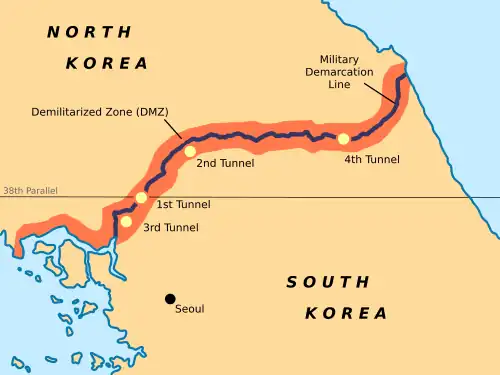
- Panmunjom (Korean DMZ) — approximately 20 km south of Kaesong; the truce village on the North–South border, commonly visited as part of the same tour (30 minutes by road).
- Pyongyang — approximately 140 km northeast; the capital with the country's main monuments, museums, and tourist infrastructure (2½ hours by road).
- Tomb of King Kongmin — approximately 13 km from Kaesong; a Goryeo-era royal tomb in excellent condition on a scenic hillside (20–30 minutes by road).
- Kumgangsan (Diamond Mountains) — approximately 200 km to the east; one of Korea's most celebrated scenic areas, though access has been restricted in recent years.
Nearby in Kaeseong
More places to explore around Mount Pakyon.
Guide content as of June 2026.

Contact Us
Get in touch with us.
Get in touch
Contact Us
Tell us where you'd like to go and how you like to travel. A real Tripcuro planner — not a bot — will craft an itinerary around you.
- Personalised, hassle-free planning end-to-end
- Transparent pricing, no hidden costs
- 24/7 support for complete peace of mind