
Kiritimati
Line Islands, Kiribati
Why visit Kiritimati?
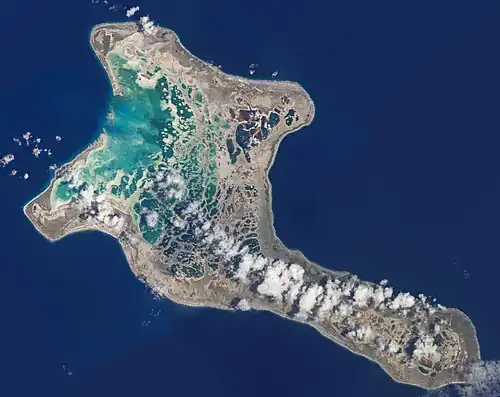
Kiritimati — pronounced "kee-rees-mass" and better known to English-speakers as Christmas Island — is the largest coral atoll in the world by land area (642 km²), and on its own accounts for the majority of Kiribati's territory. Captain James Cook sighted it on Christmas Eve 1777, which gave the island its name; "Kiritimati" is simply the Gilbertese transliteration of "Christmas". The atoll sits just west of the International Date Line, which makes it one of the first inhabited places on Earth to enter each new day — a quirk that drew a small but enthusiastic wave of Y2K tourism and still anchors the island's identity.
What you come for is space, silence, and saltwater. The entire island is a designated wildlife sanctuary, with five closed areas requiring permission to enter. The lagoon and flats are world-renowned for bonefish and giant trevally fly-fishing, and the outer reef draws divers chasing untouched coral, wrecks, and pelagics. Life clusters in four villages: London (the main settlement and port, on the northwest coast), Tabwakea (the largest by population, just north of London), Banana (near the airport), and the small, isolated Poland to the south. There is essentially one road threading them together.
Climate is hot, flat, and trade-wind cooled year-round: highs of 29–31°C, lows of 24–25°C. The dry season runs August through December (often under 2 cm of rain a month) and is the most reliable window for fishing and diving. April is the wettest month, averaging around 21 cm. El Niño years can bring extreme rainfall (up to 2,500 mm); La Niña years can flip the island into severe drought. Steady ~10-knot trades blow most days, gusting to 25+ knots — pleasant on shore, occasionally a factor on the flats.
Planning Kiritimati? Tell us your dates and we’ll tailor the trip.
Ask on WhatsAppHow do you get there?
By Plane
Cassidy International Airport (CXI) sits next to Banana village, roughly 10 km southeast of London. It is the only way in for visitors. Two routings serve the island, both infrequent — confirm schedules well in advance and build slack into your itinerary:
- Fiji Airways operates a once-weekly Nadi (NAN) – Kiritimati (CXI) – Honolulu (HNL) rotation, the classic route most anglers and divers use to reach the island from North America or the South Pacific.
- Air Kiribati, in partnership with Nauru Airlines, connects Kiritimati to Tarawa and onward to Brisbane, giving an Australian gateway. FlightConnections also lists FlexFlight service to Tarawa.
There is no scheduled airport bus or taxi rank in the Western sense. Lodges and resorts arrange transfers as part of their packages, and almost every visitor arrives on a pre-booked package — confirm pickup with your accommodation before you fly.
There is essentially one main road, running from Cassidy Airport through Banana, on to London, and up to Tabwakea, with a separate spur down toward Poland. A modest public transport service (shared minibuses/utes) plies the airport–London corridor; flag them down along the road. Most visitors, however, move around in vehicles arranged by their lodge — fishing and diving operators include daily transfers to and from the lagoon or boat ramp.
Self-drive rentals are limited and informal; ask your accommodation if you need a vehicle for a half-day. Walking is fine within London or Tabwakea but distances between villages are too long for foot travel in tropical heat. There are no ride-hailing apps, no metered taxis, and no metro — pricing is whatever you negotiate. Cash (Australian dollars, the local currency) is essential; card acceptance is effectively zero outside a couple of larger lodges.
What are the things to do?
The Lagoon and Flats — The vast central lagoon and surrounding sand flats are the island's headline natural feature: gin-clear shallows, tailing bonefish, and reef sharks cruising the edges. Best seen by skiff with a local guide.
Cook Island (Motu Tabu / Cook Islet area) — A small islet within the atoll famed for enormous seabird colonies (frigatebirds, boobies, terns, tropicbirds). Access is restricted as part of the wildlife sanctuary; arrange a permitted guided visit through the Wildlife Conservation Unit.
The five closed wildlife reserves — Five sanctuary zones across the atoll protect breeding seabirds and require advance permission to enter. Your lodge or guide can apply on your behalf.
London — The main village and port, with a small handful of shops, the Catholic church, and the working waterfront. A short wander gives you the texture of daily atoll life.
Poland — The southernmost village, named (the story goes) by a Polish-born plantation manager. Quiet, end-of-the-road feel and good shoreline.
WWII and nuclear-test era remnants — Kiritimati was used by the UK and US for atmospheric nuclear tests in the late 1950s and early 1960s ("Operation Grapple", "Operation Dominic"). Scattered concrete bunkers, runways, and rusting equipment are visible around the island; ask locally before approaching any restricted-looking site.
Saltwater fly-fishing — Kiritimati is one of the planet's premier bonefish destinations, with miles of wadeable flats and large average fish. Giant trevally (GT), milkfish, and triggerfish round out the target list. Most guests come on multi-day packages with daily guided skiff trips.
Scuba diving and snorkelling — As the world's largest coral atoll, Kiritimati offers an enormous coastline of reef, drop-offs, and channels. Expect schooling reef fish, manta rays, sharks, turtles, and several historic shipwrecks. Visibility is typically excellent in the dry season.
Birdwatching — Among the most important seabird breeding sites in the central Pacific. Sooty terns, frigatebirds, red-tailed tropicbirds, and multiple booby species nest in vast numbers, particularly in the protected motus.
Surfing and kiteboarding — Reliable trade winds and an open Pacific swell window make for occasional surf on the outer reef and steady kiteboarding conditions in the lagoon. There is no commercial school; bring your own gear.
Lagoon kayaking and beachcombing — Long, empty beaches and turquoise lagoon water reward slow exploration. Sunsets from the western beaches near London are exceptional.
Date Line / "first to see the new day" experience — A novelty rather than a sight, but Kiritimati's position makes it a memorable spot to mark a New Year or birthday.
Planning Kiritimati? Want these on a customised itinerary?
Ask on WhatsAppWhere to eat?
Food on Kiritimati is, in practical terms, whatever your lodge serves. Most accommodation packages are full board, leaning on the day's catch (yellowfin tuna, wahoo, mahi-mahi, reef fish), rice, imported tinned goods, and the occasional fresh vegetable when a supply ship has recently called. Signature local foods include palu sami (taro leaves baked in coconut cream), grilled reef fish, te bua toro ni baukin and other coconut-based preparations, and copious fresh coconut.
For independent eating, options are limited:
- The two Chinese restaurants in London — The island's only proper sit-down dining outside the lodges. Locals consistently rate the one closer to the petrol station as the better of the two; expect simple stir-fries, fried rice, and noodles at modest prices.
- Lodge dining rooms (Lagoon View Resort, Ikari House, etc.) — Open to non-guests by arrangement; call ahead.
- Trade store snacks in London and Tabwakea — Tinned fish, instant noodles, biscuits, and the occasional fresh bread; useful for self-catering and boat lunches.
Vegetarian, vegan, halal, and gluten-free diets can be accommodated at the lodges if you flag them at booking, but choice will be narrow — bring your own staples if you have strict requirements.
Where to drink?
The local specialty is toddy (sometimes called kaokioki or sour toddy) — sap tapped from the coconut palm, drunk fresh and sweet or fermented into a mildly alcoholic palm wine. Trying it with a local family is a cultural highlight; ask around in Tabwakea or London.
Beyond that, drinking is simple: imported Fiji Bitter, Vonu, or Australian beer at lodge bars, basic spirits, and soft drinks at the trade stores. There is no bar scene to speak of and nightlife is limited to lodge verandahs and occasional village gatherings (botaki) with dancing and singing — if you're invited, go.
Visitors arriving by air may bring up to 1 litre of spirits duty-free, which is a meaningful perk given island prices.
Water safety: do not drink the tap water. Rainwater catchment and brackish well water are the norm; stick to bottled or boiled water for drinking and brushing teeth. Lodges typically provide filtered or bottled drinking water.
Planning Kiritimati? We’ll book the stays and dining for you.
Ask on WhatsAppWhere to stay?
Accommodation is concentrated in and around London and Banana, and almost universally sold as multi-night fishing or diving packages (typically 7 nights, all-inclusive of meals, guides, and transfers). Walk-in rates are uncommon; book ahead.
Budget
- Mary's Motel (London) — Simple, clean rooms favoured by visiting fisheries staff and budget independent travellers. Fans, shared facilities, no frills. Around AUD 80–120 / night, room only.
- JMB Lodge / village guesthouses — A handful of small family-run guesthouses around London and Tabwakea offer basic rooms; arrange via your tour operator or on arrival.
Mid-range
- Ikari House (London) — Long-running fishing lodge with air-conditioned rooms, on-site dining, and a strong guide team. Sold primarily as week-long fishing packages; per-night equivalent typically AUD 250–400 depending on package inclusions.
- The Villages (Captain Cook Hotel area, London) — Older mid-range option with simple en-suite rooms, lagoon views, and a restaurant; often used by non-fishing visitors and government travellers.
Upscale
- Lagoon View Resort (London) — The most prominent hotel on the island, popular with fishing and diving groups for its lagoon-front location, on-site restaurant and bar, and full-service package arrangements. Expect roughly AUD 350–500 / night equivalent within a package, depending on season and inclusions.
- Crystal Beach Lodge — Boutique-scale fishing lodge with dedicated guide boats and full-board service; package-priced and aimed at serious anglers.
What should you buy?
There is no shopping in any conventional sense. London has a few small trade stores stocking basic groceries, fishing tackle, and household goods, mostly imported from Fiji or Australia and priced accordingly.
The best buying opportunity is opportunistic: when a cruise ship calls (roughly weekly in season), islanders bring out handicrafts — woven pandanus mats and hats, shell jewellery, carved wooden models of outrigger canoes — at improvised stalls near the dock. Prices are modest and bargaining is gentle rather than expected; a polite counter-offer is fine, hard haggling is not.
Bring Australian dollar cash in small denominations. ATMs are unreliable to non-existent for visitors, and card payment is the exception, not the norm.
Where to go next?
- Tarawa, Gilbert Islands (KI) — Kiribati's capital atoll, ~3,300 km west; reachable via the Nauru Airlines / Air Kiribati routing. Combine for a full picture of the country, including WWII Battle of Tarawa sites.
- Fanning Island (Tabuaeran), Line Islands — ~240 km northwest; remote sister atoll occasionally reached by supply ship. For travellers chasing true outer-island silence.
- Washington Island (Teraina), Line Islands — ~370 km northwest of Kiritimati; lush, freshwater-lake atoll, served by infrequent inter-island shipping.
- Honolulu, Hawaii (USA) — ~2,160 km north, ~3 hours by Fiji Airways; the natural transit point for North American travellers and an easy add-on at the start or end of a trip.
- Nadi, Fiji — ~3,250 km southwest, ~5 hours by air; the main South Pacific gateway to Kiritimati and a worthwhile multi-day stopover for diving, beaches, and Fijian culture.
- Brisbane, Australia — ~5,400 km southwest via Tarawa on the Nauru Airlines routing; the most practical Australian connection for a Kiritimati trip.
Nearby in Line Islands
More places to explore around Kiritimati.
Guide content as of May 2026. Portions adapted from Wikivoyage, CC BY-SA 4.0.

Contact Us
Get in touch with us.
Get in touch
Contact Us
Tell us where you'd like to go and how you like to travel. A real Tripcuro planner — not a bot — will craft an itinerary around you.
- Personalised, hassle-free planning end-to-end
- Transparent pricing, no hidden costs
- 24/7 support for complete peace of mind