
Puzhehei Scenic Area
Yunnan Sheng, China
Why visit Puzhehei Scenic Area?
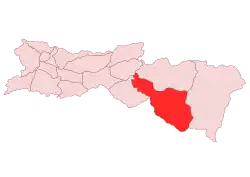
Puzhehei Scenic Area sits in Qiubei County, in the Wenshan Zhuang and Miao Autonomous Prefecture of southeastern Yunnan — a roughly 165 km² landscape of clear lakes, lotus-filled wetlands, and hundreds of isolated karst peaks rising abruptly from flat farmland. The name "Puzhehei" comes from the Yi language, loosely "pond of fish and shrimp," and the area has been inhabited for centuries by Yi (Sani), Zhuang, and Miao communities whose stilted villages still dot the lakeshores. Domestic Chinese travellers have known Puzhehei for decades, and it has more recently drawn attention as a filming location for several popular Chinese television dramas, which has pushed visitor numbers up sharply during Chinese holiday periods.
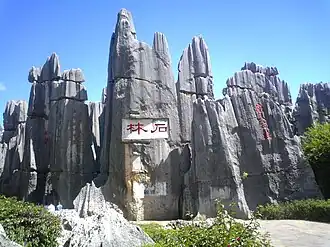
The character of Puzhehei is closer to Guilin than to anywhere else in Yunnan — punt-style boats, reed beds, mirror-flat water, and stone teeth of limestone — but at higher altitude (about 1,450 m) and with a distinctly Yi cultural overlay. The signature experience is being poled through the lake system in a wooden boat between the peaks; in summer (mid-June to late August) the wetlands burst into pink and white lotus, the area's most photographed feature. Climate: subtropical highland — mild year-round, with a dry season (November–April) of cool, clear days and a wet season (May–October) bringing the lotus but also afternoon downpours. Winter mornings can drop near freezing; bring a layer. Avoid the first week of October (National Day) and Chinese New Year, when the boats and viewpoints clog with tour groups.
Layout: the scenic area is built around two clusters. Puzhehei Village (普者黑村), on the eastern lakeshore, is the main visitor base — guesthouses, restaurants, the boat docks, and the entrance to the lake circuit. Xianrendong (仙人洞村), a Yi village on the south shore a short distance away, is the quieter, more cultural alternative, with traditional courtyard homes converted to homestays. The karst peaks between the two clusters serve as the area's main viewpoints.
Planning Puzhehei Scenic Area? Tell us your dates and we’ll tailor the trip.
Ask on WhatsAppHow do you get there?
By Plane
The nearest airport is Wenshan Puzhehei Airport (IATA: WNH), southeast of the scenic area and named for it. It has limited domestic service, primarily to Kunming and a few other Chinese cities. Taxis to Puzhehei Village take roughly an hour; a shuttle van sometimes meets flights but is not reliable off-schedule. Most international travellers fly into Kunming Changshui International Airport (KMG) instead and continue by high-speed train.
By Train
The closest station is Puzhehei Railway Station on the Kunming–Nanning high-speed line, a short taxi ride from the scenic area entrance.
- From Kunming South: roughly 2 hours, frequent daily departures.
- From Nanning East: useful if combining with Guangxi.
- From Guangzhou South: a direct several-hour journey.
From the station, taxis to Puzhehei Village or Xianrendong are inexpensive; insist on the meter or use Didi. Book tickets in advance on the 12306 app or Trip.com, especially in summer and around national holidays.
By Car / Road
Puzhehei sits just off a major expressway, which makes road access straightforward.
- From Kunming: around 285 km, about 3.5 hours. Road quality is good, mostly toll expressway.
- From Mengzi / Honghe area: a shorter drive of a couple of hours.
- From Guilin (Guangxi): a long but logical overland link for travellers chasing karst landscapes.
Long-distance buses run from Kunming's East Bus Station to Qiubei County Bus Station several times daily; from Qiubei it's a short taxi ride to Puzhehei Village. Self-driving is comfortable, and parking inside the village is straightforward.
The scenic area itself is best navigated by a combination of electric shuttle bus, boat, and foot or bicycle. The entrance ticket (see below under See) includes a shuttle that loops between the main viewing points.
Wooden boats are the iconic transport: small, flat-bottomed punts poled by a local boatman, hired at the main dock for circuits of varying length. In summer, expect playful "water fights" — passing boats splash each other with scoops, a local custom; bring a dry bag and a change of clothes.
Bicycles and electric scooters can be rented at guesthouses and are excellent for the flat lakeside loop between villages. Didi (the Chinese ride-hailing app) works in Qiubei town but coverage inside the scenic area is patchy — taxis are easier flagged at hotel ranks.
Scams to watch: at the train station, drivers occasionally claim Puzhehei is "closed" and offer to take you to an alternative — ignore and proceed to the official taxi rank. In peak season, unlicensed boat operators outside the official dock may quote low prices and then demand more mid-trip; book through your guesthouse or at the official ticket office.
What are the things to do?
The entire scenic area is gated; a through ticket covers entry, the shuttle, and a basic boat ride.
Karst peaks and viewpoints
- Qinglongshan — the signature viewpoint, a stairway climb giving a panoramic shot of karst peaks rising from the lake patchwork; come at sunrise for mist over the water or sunset for golden light.
- Yuepao Mountain — a quieter alternative viewpoint over the southern lake basin, less crowded than Qinglongshan.
- Xianrendong Yi Village — a working Yi (Sani) village with stone-and-timber courtyard houses and an old well. Walk the lanes for free; some courtyards open as teahouses.
Lakes and wetlands
- Lotus Pond area — the densest concentration of lotus, blooming late June to August. Best by boat in early morning.
- Puzhehei Lake circuit — the main boat route weaving between karst islets; a short loop of an hour or two, or a longer loop of several hours reaching the southern coves.
Caves
The karst is honeycombed with caverns; several are part of the scenic area, including the namesake cave near Xianrendong village and a boat-accessed cave on the lake circuit.
- Take the long boat circuit at dawn — leave the dock early in summer to catch mist rising off the lotus before the day-tripper boats arrive. Arrange this directly with a boatman the night before through your guesthouse.
- Climb Qinglongshan for sunrise, descend, then circle the lakes by bicycle — a classic full-day loop combining the two iconic angles of the landscape.
- Join a water-splashing boat ride in July or August. It's a Yi tradition that has become the area's signature summer activity; boats stocked with wooden scoops chase and douse each other across the lake.
- Visit a Yi homestay village in Xianrendong. Several families serve home-cooked dinners (arranged a few hours ahead) and some host informal lessons in Sani embroidery or the lusheng (reed mouth-organ).
- Cycle to surrounding villages for half-day rides through rice and rapeseed fields — spectacular in March when the rapeseed flowers.
- Attend a local festival if your dates align: the Huashan Festival (Miao, around the Lunar New Year), the Torch Festival (Yi, midsummer), and a Lotus Festival all bring music, dance, and night markets.
- Photography — the karst-and-lotus combination is among China's most photogenic landscapes; drone rules vary, so check current rules at the entrance gate.
Planning Puzhehei Scenic Area? Want these on a customised itinerary?
Ask on WhatsAppWhere to eat?
There are limited full-service restaurants inside the reserve proper; most dining is in Puzhehei Village and Xianrendong just outside the ticketed core. Cuisine here blends Yunnan staples — rice noodles, mushrooms, smoky cured pork — with Yi and Zhuang touches: sour-soup hotpots, glutinous "five-colour rice" tinted with plant dyes, and freshwater fish from the lakes. Lotus root, lotus seed, and lotus flower turn up everywhere in summer.
- Lake fish in sour soup — a signature dish; carp or grass carp simmered with pickled greens, tomato, and wild herbs. Look for it at lakeside restaurants in Puzhehei Village.
- Five-colour glutinous rice — Zhuang specialty, the rice tinted with natural plant dyes; sold by weight at village stalls.
- Qiubei chili chicken — chicken stir-fried with a mountain of dried local chilies; less searing than Sichuan's version, more aromatic.
- Lotus-themed dishes — lotus-root stir-fries, lotus-seed soup, candied lotus petals; most restaurants have a lotus section on the menu in summer.
Recommendations across tiers: budget street-side noodle stalls in Puzhehei Village serve mixian and steamed buns; the Qiubei town morning market has the cheapest and most authentic options. Family-run restaurants along the lakeshore in Puzhehei Village have lake views and serve a mixed Yi/Yunnan menu at mid-range prices. A handful of resort hotel restaurants on the Xianrendong side serve more refined Yunnan menus at a premium; the village places are generally more characterful.
Dietary notes: vegetarian options exist (lotus-root dishes, mushroom hotpot, stir-fried greens) but verify dishes are cooked without lard, which is common. Halal restaurants are scarce in the scenic area — the nearest reliable options are in Qiubei town. Gluten-free is challenging given the noodle- and soy-sauce-heavy cuisine; rice and grilled fish are usually safe.
Where to drink?
- Yi rice wine — cloudy, low-strength, served from clay jars at homestay dinners. Often shared communally with a song from the host.
- Sanqi flower tea — Wenshan sanqi flower steeped as a slightly bitter tonic tea; sold by weight in tea shops.
- Pu'er and Yunnan black teas — Yunnan is the homeland of pu'er; teahouses in Xianrendong serve fresh leaves by the pot.
- Local beer: domestic Chinese lagers dominate; craft beer has not arrived in any meaningful way.
- Bars: nightlife is low-key — a handful of bar-cafés along the Puzhehei Village waterfront serve drinks and play live music in summer, closing by midnight.
Water safety: do not drink tap water. Bottled water is sold everywhere; most guesthouses provide a kettle and a thermos of boiled water. Lake water is clear but not potable.
Planning Puzhehei Scenic Area? We’ll book the stays and dining for you.
Ask on WhatsAppWhere to stay?
Accommodation clusters in two areas: Puzhehei Village (more options, livelier, closer to boat docks) and Xianrendong (quieter, Yi-village character, courtyard homestays). Booking via Ctrip/Trip.com or Meituan is straightforward; in peak season (July–August, October holiday) book at least two weeks ahead.
Budget
- Hostels and youth guesthouses along the village main street offer dorm beds and basic private doubles, most with shared bathrooms but lake or village views.
- Xianrendong family homestays offer Yi-family courtyard rooms with breakfast, arranged on arrival or via a booking app.
Mid-range
- Solid mid-tier hotels near the lake in Puzhehei Village.
- A handful of small, design-forward inns in Xianrendong run by owners from larger cities.
Upscale / heritage
- International-brand and Chinese resort-style hotels have opened in recent years on the outskirts, with full resort facilities.
What should you buy?
Puzhehei is not a shopping destination per se, but the village street near the main entrance and the lanes of Xianrendong have a handful of worthwhile stalls.
- Yi and Zhuang embroidery — indigo-dyed cloth, embroidered shoe insoles, and small purses. Quality varies; the better pieces come from village women selling at homestay courtyards rather than the tourist street.
- Lotus products — dried lotus seeds, lotus-root powder, lotus-leaf tea. Vacuum-packed seeds travel well.
- Sanqi (notoginseng) — Wenshan Prefecture is China's main growing region for this medicinal herb; whole roots and powder are sold at most shops. Buy from a pharmacy or the local farmers' market rather than tourist stalls for fairer pricing.
- Local chili and pickles — Qiubei chili is a protected regional product, bright red and fragrant rather than scorching. Sold by the bag at the morning market.
Bargaining is expected at souvenir stalls and the market — start at about 50–60% of the asking price for handicrafts. Fixed-price shops are common too.
Where to go next?
- Bameicun (坝美村) — about 90 km / 2 hours south, a Zhuang village accessible only by boat through a river-cave; often described as the closest real-world echo of the "Peach Blossom Spring" legend. Half-day or overnight.
- Wenshan city — about 90 km / 1.5 hours, prefectural capital and gateway to the sanqi-growing region; useful as a transport hub more than a destination.
- Luoping — about 220 km / 3 hours northeast, famous for late-February to mid-March rapeseed flower fields; combine with Puzhehei for a spring landscape trip.
- Jianshui — about 270 km / 4 hours west, Ming-era walled town with the Zhu Family Garden, Confucian temple, and the Jianshui–Tuanshan narrow-gauge tourist train. Easily two days.
- Yuanyang Rice Terraces — about 360 km / 5 hours southwest, UNESCO-listed Hani terraces best from November to March. A natural pairing for travellers chasing Yunnan's signature landscapes.
- Nanning (Guangxi) — a direct high-speed train ride from Puzhehei Station, gateway to Guangxi and onward to Vietnam.
Nearby in Yunnan Sheng
More places to explore around Puzhehei Scenic Area.

Guide content as of July 2026. Portions adapted from Wikivoyage, CC BY-SA 4.0.

Contact Us
Get in touch with us.
Get in touch
Contact Us
Tell us where you'd like to go and how you like to travel. A real Tripcuro planner — not a bot — will craft an itinerary around you.
- Personalised, hassle-free planning end-to-end
- Transparent pricing, no hidden costs
- 24/7 support for complete peace of mind