
Shanxi Sheng
China · Province · 18 destinations with guides
Photography coming soonWhy visit?
Shanxi (山西省 Shānxī Shěng) is a province in northern China's Yellow River basin, bounded to the east by the Taihang Mountains and to the west by the Yellow River itself. Its name — "west of the mountains" — reflects this geography. Shanxi is one of the cradles of Chinese civilisation: the legendary Emperor Yao is said to have established his capital here, and the province was home to powerful merchant dynasties (the Jin merchants, 晋商) whose trading networks stretched across imperial China for over 500 years. Today, Shanxi holds more surviving ancient architecture than any other Chinese province — over 70% of China's Yuan-dynasty (1271–1368) wooden buildings are found here.
The landscape is dominated by the Loess Plateau: terraced hills of yellow earth, deep river gorges, and vast tablelands punctuated by fortified villages and cave dwellings. The province stretches roughly 680 km north to south, encompassing arid steppe in the north (near Datong) and warmer, more fertile basins in the south (around Yuncheng and Linfen). Shanxi is also China's coal country — the energy industry has shaped its economy and its cities, though the province is now pivoting toward heritage tourism and clean energy.
Key travel draws include the UNESCO-listed ancient city of Pingyao, the spectacular Yungang Grottoes near Datong, the sacred Buddhist mountain of Wutai Shan, the dramatic Hanging Monastery, and the well-preserved merchant compound courtyards of Jinzhong. Shanxi offers a China that feels deeply historical and distinctly northern — less polished than the coastal megacities, but rich in atmosphere and authenticity.
When is the best time to visit?
The best months are May–June and September–October. Spring (April–May) brings wildflowers to Wutai Shan and moderate temperatures (15–25 °C) across the province. Autumn (September–October) is crisp and dry, with golden light on the loess landscapes — ideal for photography and hiking. Summers (July–August) are hot in the southern basins (Linfen, Yuncheng can exceed 35 °C) and rainy in the mountains; winters (November–March) are bitterly cold, especially in Datong and northern Shanxi, where temperatures drop to −20 °C.
Shanxi Vinegar Festival (October, Taiyuan) — Celebrating the province's most famous condiment. Pingyao International Photography Festival (September) — Major photography exhibition within the ancient city walls. Wutai Shan Buddhist festivals — Various dates through the year, with the largest celebrations around Vesak (April/May). Ice and snow festivals at Wutai Shan (January–February) for winter temple visits in the snow.
Tell us your dates and we'll shape a Shanxi Sheng route around them.
WhatsAppHow do you get around?
Shanxi has a developing high-speed rail network. The Datong–Xi'an high-speed line (opened 2019) connects the major cities: Taiyuan to Datong is about 2.5 hours, Taiyuan to Pingyao is 40 minutes, Taiyuan to Linfen is about 1.5 hours, and Taiyuan to Yuncheng is about 2.5 hours by high-speed rail. The Taiyuan–Jiaozuo high-speed line connects Shanxi to Henan Province.
Conventional rail reaches smaller towns like Qikou and Jiexiu. Long-distance buses are the primary way to reach Wutai Shan, Qikou, and rural sites — departures are frequent from Taiyuan's main bus stations. Journey times: Taiyuan to Wutai Shan is about 4 hours by bus; Taiyuan to Qikou is about 3 hours.
Taxis and ride-hailing (Didi) work well in cities. For remote sites like the Hanging Monastery and Yungang Grottoes, hiring a car and driver for the day from Datong (¥300–500) is the most practical option. Distances: Taiyuan to Datong is 280 km (3 hours by car); Taiyuan to Pingyao is 100 km (1.5 hours).
Where should you go?
- Taiyuan — The provincial capital and transport hub, with the Shanxi Museum (superb bronze and Buddhist art collections), Jinci Temple, and Yingze Park; a practical base for exploring the province.
- Datong — Northern gateway city, home to the Yungang Grottoes (UNESCO World Heritage, 51,000 carved Buddha figures), the Hanging Monastery (悬空寺) at Hunyuan, and the Nine Dragon Screen.
- Shuozhou — Gateway to the Yingxian Wooden Pagoda, the oldest and tallest surviving wooden structure in China (built 1056).
- Xinzhou — Staging point for Wutai Shan and the Yanmen Pass; the city itself has a preserved old town and local vinegar producers.
- Yangquan — Eastern Shanxi city near the Niangzi Pass and the dramatic Taihang Mountain gorge scenery; emerging adventure tourism destination.
- Lüliang — Western Shanxi's loess plateau region, known for its fortified cave villages and the Qikou ancient town on the Yellow River.
- Jinzhong — Heartland of the Jin merchant culture, with the Wang Family Compound, Qiao Family Compound, and Chang Family Compound — vast courtyard estates showcasing Qing-dynasty commercial wealth.
- Changzhi — Southeastern Shanxi with the Fahua Temple, Chongqing Temple, and well-preserved Tang-to-Ming wooden architecture.
- Jincheng — Southernmost Shanxi, home to the Huangcheng Xiangfu (Huangcheng Chancellor's Residence) and Qingliangsi Temple; gateway to the Taihang Mountains.
- Linfen — Ancient capital of Yao, with the Yao Temple, Hukou Waterfall on the Yellow River (one of China's most spectacular waterfalls), and the Guangsheng Temple with its flying rainbow pagoda.
- Yuncheng — Southern Shanxi basin, home to the Guan Di Temple (dedicated to the deified general Guan Yu), the Yongle Palace with its Yuan-dynasty murals, and China's oldest salt lake — Yuncheng Salt Lake.
- Pingyao — A perfectly preserved Ming-dynasty walled city (UNESCO World Heritage), with intact city walls, courtyard hotels, the Rishengchang (China's first draft bank), and atmospheric flagstone streets.
- Qikou — An ancient Yellow River trading port with cave-dwelling guesthouses, crumbling merchant houses, and dramatic river views; one of China's most photogenic heritage villages.
- Wutai — Sacred Buddhist mountain (UNESCO World Heritage) with dozens of temples spanning Tang to Qing dynasties, alpine meadows, and five flat-topped peaks; a pilgrimage destination for over 1,500 years.
- Jiexiu — Home to the Mianshan (介休绵山) scenic area — a mountain retreat with temples built into cliff faces, associated with the origin of the Cold Food Festival (寒食节).
Want the scenic legs and stays booked for you? Just ask.
WhatsAppWhat should you eat?
Shanxi cuisine is dominated by noodles and vinegar. The province produces over 200 varieties of noodles and is the birthplace of Shanxi Aged Vinegar (山西老陈醋), a dark, malty, complex condiment that accompanies nearly every meal.
Signature dishes: dāoxuēmiàn (刀削面, knife-shaved noodles — the province's iconic dish, hand-scraped into boiling broth); māo ěr duō (猫耳朵, "cat ear" pasta); bō lóu miàn (拨烂子, steamed shredded potato with flour); guào ròu (过油肉, flash-fried pork slices in vinegar sauce); and píngyáo niúròu (平遥牛肉, Pingyao cured beef — a famous regional delicacy).
Regional specialities: Datong-style huáng gāo (黄糕, steamed millet cake); Yuncheng máhuā (twisted fried dough); and wǎn tuō (碗托, buckwheat jelly from Qikou). Street food is abundant in Pingyao and Datong's old quarters.
Dietary considerations: Vegetarian options are limited outside Buddhist temple areas (Wutai Shan has temple vegetarian food). Halal restaurants are scarce. The cuisine is wheat-heavy and vinegar-forward, which may challenge those with gluten or acid sensitivities.
What is the culture like?
Shanxi's cultural heritage runs extraordinarily deep. The province is a living museum of Chinese wooden architecture — from Tang-dynasty Buddhist halls at Nanchan and Foguang temples (near Wutai) to the merchant courtyard compounds of Jinzhong. Píngyáo gǔchéng (Pingyao Ancient City) preserves an entire Ming-era urban landscape. Shanxi opera (晋剧, jìnjù) is the local flavour of Chinese opera, with a distinctive northern vocal style. Shadow puppet theatre (皮影戏) and paper-cutting (剪纸) are folk arts still practised in rural areas.
Major festivals: Pingyao Spring Festival (January/February) — Traditional lantern displays, stilt walkers, and yangge dances within the walled city. Wutai Shan Buddhist ceremonies — Multiple dates, including the Mani Festival (农历六月). Cold Food Festival / Qingming (April) — Originated in Shanxi, associated with the story of Jie Zitui; Jiexiu's Mianshan is the spiritual centre. Taiyuan Vinegar Culture Festival (October). Yuncheng Guan Yu Festival (June/July) — Celebrating the deified warrior at his hometown temple.
Travelling during a festival? We'll plan around the crowds.
WhatsAppWhat are the standout experiences?
- Walk the walls of Pingyao at sunset — The 6-km Ming-dynasty city wall offers rooftop views over the grey-tiled old town; stay in a converted courtyard hotel inside the walls.
- Explore the Yungang Grottoes — Fifty-one caves containing 51,000 stone Buddha figures carved between the 5th and 6th centuries; the scale rivals the Mogao Caves at Dunhuang.
- Stand beneath Hukou Waterfall — The Yellow River narrows to 30 metres and plunges into a thunderous cauldron at the Shanxi–Shaanxi border; most dramatic in September–October when flow is highest.
- Pilgrimage to Wutai Shan — Hike between ancient temples across five flat-topped peaks at 2,500–3,000 m elevation; the Tang-dynasty Foguang Temple and Nanchan Temple are among China's oldest surviving wooden buildings.
- Stay in a cave dwelling at Qikou — Sleep in traditional yaodong (窑洞) cave rooms carved into the loess hills above the Yellow River, and watch the sunset from the village's crumbling stone terraces.
Top Destinations
Every destination in Shanxi Sheng with a guide — tap a place for the full guide.
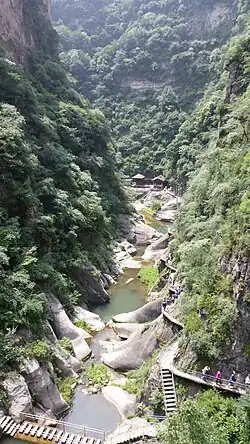
Changzhi
Changzhi (长治) is a prefecture-level city in the southeastern corner…
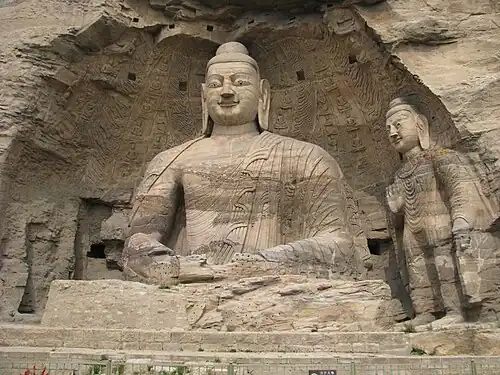
Datong
Datong (大同) sits in the far north of Shanxi Province, close to the…
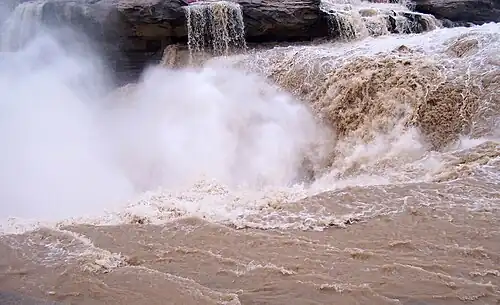
Hu kou Pu Bu
Hukou Waterfall (壶口瀑布, Húkǒu Pùbù) is the largest waterfall on the…
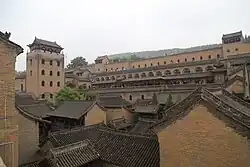
Jincheng
Jincheng (晋城) is a prefecture-level city in the southeastern corner…

Jinzhong
Jinzhong (晋中) is a prefecture-level city in east-central Shanxi…
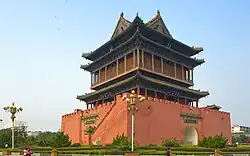
Linfen
Linfen (临汾) is a prefecture-level city in southwestern Shanxi…
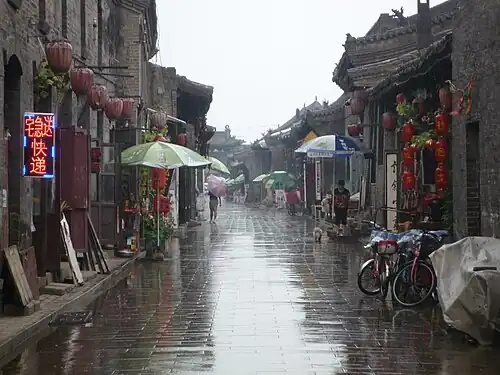
Pingyao
Pingyao (平遥) is a small county seat in central Shanxi Province whose…
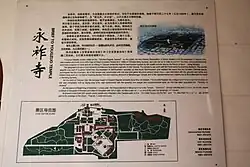
Taiyuan
Taiyuan (太原) is the capital of Shanxi Province, a city with well over…
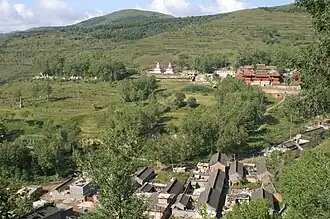
Wutai Shan National Park
Wutai Shan (五台山, "Five Plateau Mountain") is one of the Four Sacred…
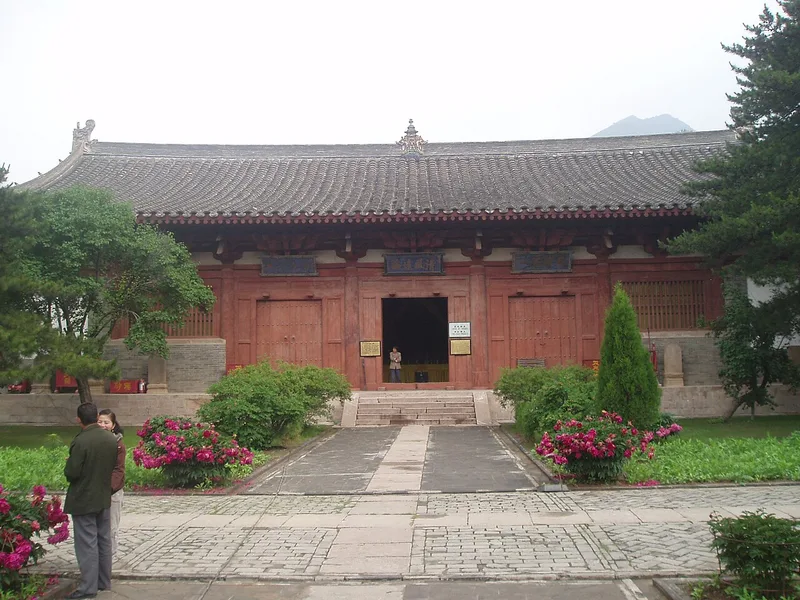
Xinzhou
Xinzhou spans the Hutuo River basin between the Taihang Mountains to…
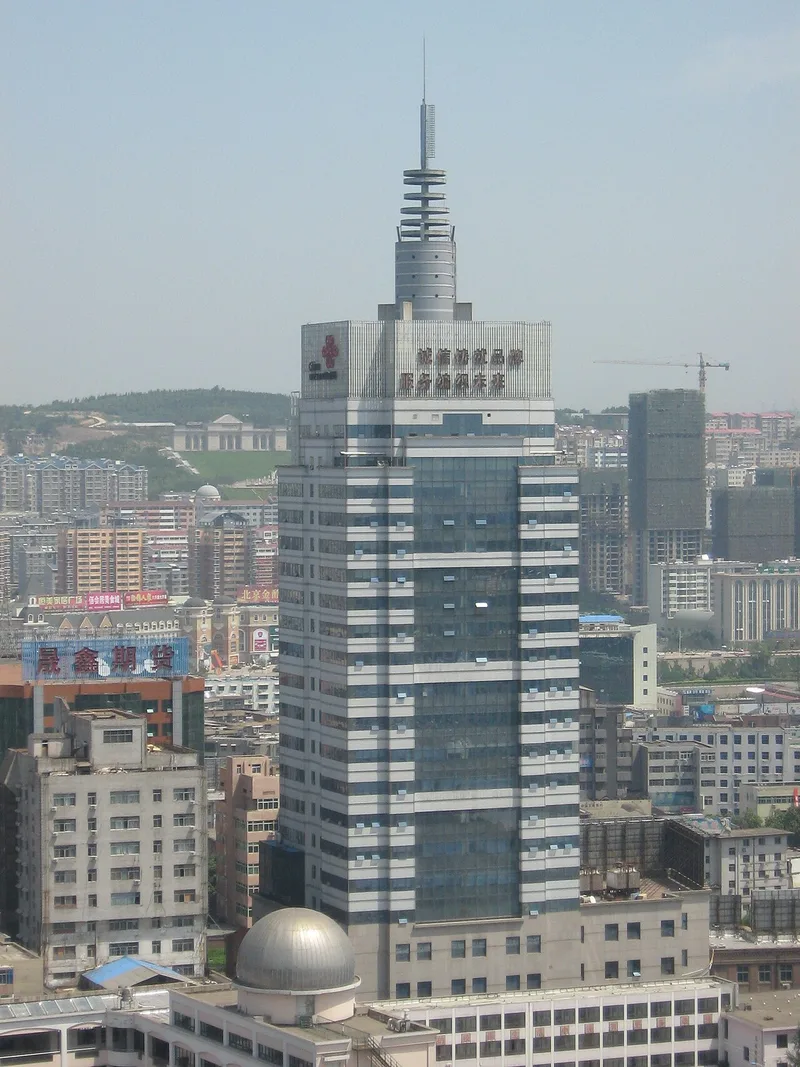
Yangquan
Yangquan sits at moderate elevation in a decisively continental…
Yuncheng
The climate is temperate continental with sharp seasonality: hot…
Beiwudang Mountain Scenic Area
Beiwudang Mountain (北武当山, "Northern Wudang Mountain"), also known…
Jiexiu
Jiexiu (介休; Jièxiū) is a county-level city in central Shanxi…
Luliang
Luliang (吕梁; Lǚliáng) is a prefecture-level city in western Shanxi…
Qikou
Qikou (碛口; Qìkǒu) is a historic riverside town on the eastern bank of…
Shuozhou
Shuozhou (朔州) sits on the high loess plateau of northern Shanxi, a…
Wutai
Wutai (五台; Wǔtái) is a county in Xinzhou prefecture, eastern Shanxi…
Pair the highlights of Shanxi Sheng into one easy trip — we'll plan the route.
WhatsApp
Contact Us
Get in touch with us.
Get in touch
Contact Us
Tell us where you'd like to go and how you like to travel. A real Tripcuro planner — not a bot — will craft an itinerary around you.
- Personalised, hassle-free planning end-to-end
- Transparent pricing, no hidden costs
- 24/7 support for complete peace of mind