
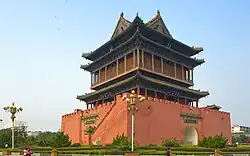
Linfen
Shanxi Sheng, China
About Linfen
Linfen (临汾, LÃnfén) is a prefecture-level city in southwestern Shanxi Province, set in the fertile valley of the Fen River. The area is regarded as one of the cradles of Chinese civilization — traditional accounts associate it with the legendary sage-emperor Yao, who is said to have established his capital here, and archaeological finds at sites like Taosi point to early settlement going back to the Neolithic. Through later dynasties the city was known as Pingyang, serving as the capital of the Warring States kingdom of Han and, in the Ming and early Qing periods, as the seat of a superior prefecture. A devastating magnitude-7.8 earthquake struck the region in 1695, and the 20th century brought railways, coal mining and heavy industry that reshaped Linfen into the modern urban centre it is today.
For travellers, Linfen is less a destination in itself than a base for exploring some of the most rewarding cultural and natural sights in southern Shanxi: the spectacular Hukou Waterfall on the Yellow River (about 150 km west, in Jinshan Gorge), the Yuan-dynasty Guangsheng Temple with its glazed Feihong Pagoda, the Tang-era iron Buddha at Tiefo (Dayun) Temple, and the Yao Temple complex tied to the city's legendary founding emperor. Linfen sits at roughly 12.6 °C annual mean temperature and has a continental monsoon climate with four distinct seasons. Autumn (September–October) is the most pleasant time to visit, with cool, comfortable weather and light rain. Spring is mild but dry and occasionally dusty. Summer is hot, with most of the year's 500–600 mm of rain falling in July and August (extremes can hit 41 °C); winter is long, cold and dry, with very little snow but lows that can reach –23 °C.
The administrative and travel core is Yaodu District, where the railway stations, airport access, hotels and most urban sights are concentrated. The downtown grid centres on Jiefang Road, Gulou Street and Wuyi Road; the Fen River park runs along the western edge of the urban area. Most of the marquee historical sites (Guangsheng Temple, Hukou Waterfall, Hongdong) lie outside the city in the surrounding prefecture and are reached by car, bus or organised day trip.
Planning Linfen? Tell us your dates and we’ll tailor the trip.
Ask on WhatsAppHow to reach
By Plane
Linfen Yaodu Airport (LFQ) sits in Qiaoli Town, Yaodu District, about 15 km from the city centre. It handles a modest schedule of domestic flights to other Chinese cities. From the terminal, shuttle buses connect to Linfen West Railway Station, the West Passenger Station and the main bus stations; taxis into the city centre are the simpler option for visitors with luggage.
By Train
Linfen has two useful stations:
- Linfen West Railway Station (临汾西站) — near Zhoujiazhuang Village, Liucun Town, Yaodu District. The high-speed rail hub, on the Datong–Xi'an line, with frequent G- and D-trains to Taiyuan (around 1 hour) and Xi'an (around 2 hours), plus longer connections toward Beijing and Zhengzhou. City buses 5, 6, 7 and 13 depart from here into town.
- Linfen Railway Station (临汾站) — No. 5 Chezhan Road, Yaodu District. The older conventional-rail station, useful for slower regional services across Shanxi and into neighbouring provinces. It is centrally located; most taxis can reach it from anywhere in the urban area in 10–20 minutes.
Book HSR tickets in advance via the official 12306 app (passport-friendly) or aggregator platforms like Trip.com — Linfen West can sell out on weekends and holidays, particularly the Xi'an and Taiyuan legs.
By Car / Road
Linfen lies on the G5 (Beijing–Kunming) Expressway and the G108 national highway, with good paved connections in all directions:
- Taiyuan — about 280 km north, roughly 3 hours by expressway.
- Xi'an — about 380 km southwest, roughly 4–4.5 hours.
- Yuncheng — about 170 km south, roughly 2 hours.
- Pingyao (UNESCO old town) — about 150 km north, around 1.5–2 hours.
Long-distance coaches serve nearby Shanxi cities and Yan'an from the city's bus stations; Yaomiao Bus Station (尧庙公交站) near Yao Temple and Chengbei Bus Station (城北公交站) on the north side handle local and suburban routes. For Hukou Waterfall and other prefecture-level sights, hiring a car with driver for the day is the most efficient option.
Linfen's urban core is compact and easy to cover on a mix of bus, taxi and ride-hail.
- Buses are run by the Linfen Public Transport Company, covering Jiefang Road, Gulou Street, Wuyi Road and the rest of the central grid. Most lines run roughly 06:30–20:30; fares are a flat ¥1–3 depending on distance. You can pay by WeChat Pay, Alipay, Meituan QR, UnionPay card or local bus card. Free 45-minute transfers apply only to the local Linfen card — QR payments and national transit cards don't get the discount, so visitors will pay each leg separately.
- Taxis are easy to flag in the centre. The metered fare is ¥6 flagfall for the first 2 km daytime / ¥7 at night (22:00–05:00), then ¥1.3/km daytime and ¥1.6/km at night. Most rides within the urban area are inexpensive. Cash is universally accepted; many drivers will also take WeChat or Alipay. Expect harder hailing during peak hours and bad weather.
- Ride-hailing via Didi Chuxing works well across the city and is the path of least resistance for non-Chinese speakers — the in-app translation handles addresses and pickups without needing to negotiate.
- Public bicycles exist along the Fenhe River park and central streets, but registration normally requires a Chinese ID, local mobile number or resident transit card, so short-stay foreign visitors generally can't access the system.
- Walkability is reasonable in the central grid around Gulou Street and the Ancient City Park. For prefecture-level sights (Hukou, Guangsheng Temple, Hongdong) you'll need a car, taxi-charter or day tour.
Things to do
Temples & religious sites
- Tiefo Temple / Dayun Temple (�佛寺 / 大云寺) — Haizibian Alley, Yaodu District. A historic Buddhist temple in the heart of the old city, famous for its six-tier glazed pagoda and a colossal Tang-dynasty iron-cast Sakyamuni Buddha head housed inside. Tue–Sun 09:00–17:30, closed Mondays (except holidays). Free.
- Guangsheng Temple (广胜寺) — at the foot of Huoshan Mountain, about 17 km northeast of Hongdong Town (roughly 50 km from central Linfen). Founded in 147 CE in the Eastern Han, rebuilt after the 1303 earthquake, with structures preserving Yuan-dynasty style. The headline sight is the Feihong Pagoda ("Flying Rainbow Pagoda") — the largest and best-preserved glazed pagoda in China, an octagonal 13-storey, 47-m tower wrapped in multi-coloured glazed tiles that genuinely glitter in sun.
- Yao Temple (尧庙) — Yaodu District, near Yaomiao Bus Station. Dedicated to the legendary sage-emperor Yao, traditionally credited with founding his capital in this region. Reconstructed pavilions, ancient cypresses and ceremonial halls; an essential stop for understanding why Linfen calls itself the "cradle of Chinese civilisation."
Historic & cultural sites
- Linfen Ancient City Park (æ´ªæ ‹å?¤åŸŽ) — Xizhong Street, Yaodu District. A modern recreation of the historic walled city with lakes, bridges, sculptures and themed zones drawn from Linfen's heritage. Free. Reach it on the 601 double-decker sightseeing bus.
- Taosi Ruins (陶寺��) — Xiangfen County, southeast of Linfen city. A major Neolithic site (c. 2300–1900 BCE) often associated with the Yao-era civilisation; excavations have revealed an early walled settlement, an astronomical observatory and elite burials. The site museum interprets the finds.
Natural sights
Hukou Waterfall (壶�瀑布) — Jinshan Gorge, about 150 km west of Linfen city on the border with Shaanxi. The largest waterfall on the Yellow River and the second-largest in China; the Yellow River squeezes from a 300-m-wide channel into a 50-m gorge, producing thundering yellow-brown cascades. Most dramatic in late spring (April–May) with snowmelt and again after the summer monsoon (August–September). Plan a full day from Linfen by chartered car or organised tour.
Day-trip the Yellow River Loop. The classic Linfen excursion pairs Hukou Waterfall with the Hukou stretch of the Yellow River for a full day of cliffs, mist and viewpoints. Hire a driver in Linfen (¥600–1,000/day for a private car is typical for this distance).
Hongdong & the Great Pagoda Tree (大æ§?æ ‘). Around 50 km north of Linfen, the Hongdong Great Sophora Tree (Da Huai Shu) Ancestral Park commemorates the great Ming-dynasty migrations from Shanxi — for millions of overseas Chinese this is a roots-pilgrimage site. Easily combined in a single day with Guangsheng Temple.
Walk the Fen River Park. The greenway along the Fenhe through the western edge of the city is the locals' evening promenade — pleasant for an early-morning jog, kite-flying or sunset stroll, with food carts in the warmer months.
Catch a folk performance. Southern Shanxi's signature art forms — thunderous drum-and-gong ensembles, lion dances and other traditional performances — appear during festivals and village celebrations. Ask at your hotel or the Yao Temple ticket office whether anything is scheduled during your visit.
Yaodong cave-dwelling visit. In the surrounding countryside, traditional yaodong loess-cave homes are still in use; some have been adapted as small guesthouses, offering an evocative way to spend a night beyond the city.
Planning Linfen? Want these on a customised itinerary?
Ask on WhatsAppFood & Dining
Linfen's cooking sits squarely in the Shanxi tradition: a thousand kinds of noodle, generous use of vinegar, hearty wheat-and-millet staples, lamb in winter, plenty of garlic. The signature techniques — knife-shaved noodles, hand-pulled noodles, oat-flour pasta — are best eaten in dedicated noodle houses. Vegetarians do reasonably well (many noodle dishes are meat-free or easily ordered without meat); halal options exist around the Muslim Quarter / qīngzhēn (清真) restaurants found in most Shanxi cities. Gluten-free is genuinely difficult in noodle country — rice and meat-and-vegetable dishes are your friend.
Dishes to seek out
- DÄ?o xiÄ?o mià n (刀削é?¢) — knife-shaved wheat noodles, tossed with tomato-egg sauce, minced pork or vinegar-and-chilli.
- MÄ?o'Ä›r duÇ’ (猫耳朵) — "cat's ear" pasta, thumb-pressed into curls and stir-fried with vegetables.
- Yóumià n kÇŽo lÇŽolao (莜é?¢æ ²æ ³æ ³) — steamed oat-flour rolls, served with a vinegary dipping sauce.
- GuÅ? kuÄ« (é”…ç›”) — thick, crusty wheat flatbread, eaten plain or stuffed.
- Tóu nǎo (头脑) — a Shanxi breakfast soup of mutton, lotus root, yam and yellow wine; an acquired taste but iconic.
For a reliable starting point, walk Gulou Street in the evening — noodle shops, dumpling houses and street-food stalls cluster here, and prices in even the busiest places rarely top ¥30–50/person for a full meal. Hotel restaurants in the upscale tier and the dining streets near Linfen West Station fill the mid-range and higher brackets.
Cafes & Nightlife
- Tap water is not safe to drink — stick to bottled water (¥2–5 for a 500 ml bottle from any convenience store) or boiled water, which every hotel and restaurant supplies in flasks.
- Tea is the everyday drink — green and jasmine teas are standard in restaurants, often refilled free.
- Shanxi vinegar drinks. Some local cafés serve sweetened vinegar tonics — an acquired but genuinely local sip.
- Fenjiu (汾酒). Shanxi's most famous báijiǔ (sorghum spirit), distilled in nearby Xinghuacun, is the regional toast of choice — strong (typically 38–53% ABV), clear, and present at any banquet. Look for it at hotel restaurants and liquor shops.
- Beer. Local Yanjing and Tsingtao are everywhere; craft options are limited.
- Cafés and bars. Western-style coffee chains (Luckin, occasional Starbucks) operate in the central malls and around Linfen West Station. Dedicated cocktail-bar culture is thin; nightlife concentrates on KTV (karaoke) parlours and hotel lounges rather than standalone bars.
Planning Linfen? We’ll book the stays and dining for you.
Ask on WhatsAppPlaces to Stay
Budget
Mid-range
International and Chinese mid-range chains operate near Linfen West Railway Station and along Jiefang Road in central Yaodu District. Expect rooms in the ¥250–500 range.
Upscale
The top end of Linfen's accommodation is local-luxury rather than international five-star — large business hotels with banquet halls, full-service spas and Chinese-Western breakfast spreads, typically ¥500–900 per night.
For more atmospheric sleeps, several yaodong cave-house guesthouses operate in the surrounding countryside near Guangsheng Temple and the Taosi area; these are best booked through Chinese-language travel platforms (Ctrip / Meituan) with help from a hotel concierge.
What to buy
Linfen isn't a designer-shopping city — what you take home is local and edible.
- Shanxi vinegar (山西�陈醋, lǎo chén cù). Shanxi's signature aged black vinegar is sold in everything from supermarket bottles to ceramic jars at gift shops. Look for clearly-marked aged grades (3-year and above).
- Shanxi noodles & noodle-making tools. Knife-cut, cat's-ear, oat noodles — dried packages travel well, and you can pick up a small dÄ?o xiÄ?o noodle-cutting blade as a souvenir.
- Linfen pastries and dates. The wider Shanxi region is known for jujubes (red dates) and dried-fruit confections; markets stock them by the catty.
- Glazed-tile and ceramic souvenirs referencing the famous Feihong Pagoda turn up at temple shops near Guangsheng Temple.
- Markets & shopping streets. Gulou Street in central Yaodu District is the city's main commercial spine; surrounding lanes have tea and dried-goods shops. Modern malls cluster along Jiefang Road.
Bargaining is expected at temple-area stalls and open markets but not in shops with marked prices, supermarkets or malls. Mobile payment (WeChat / Alipay) is universal; cash works everywhere but few foreign cards do.
Go next
- Pingyao (平��城) — about 150 km north, ~1.5–2 hours by HSR or expressway. UNESCO-listed walled Ming-Qing town, the best-preserved historic city in northern China.
- Taiyuan (太原) — about 280 km north, ~1 hour by HSR. Shanxi's capital, with the magnificent Jinci Temple and the Shanxi Museum.
- Xi'an (西安) — about 380 km southwest, ~2 hours by HSR. Terracotta Warriors, the Tang-era city walls and one of China's great food cities.
- Yuncheng (�城) — about 170 km south, ~1 hour by HSR. Gateway to Guandi Temple in Jiezhou and the salt lake; also the jumping-off point for the Yellow River's Pujin Bridge ironworks.
- Wutai Shan (五�山) — about 400 km northeast, half-day by car/rail combo. One of China's four sacred Buddhist mountains, with dozens of working monasteries.
- Hukou Waterfall (壶�瀑布) — 150 km west, ~2.5 hours by car. Day-trippable from Linfen but worth a stay on the Shaanxi side if continuing west toward Yan'an.
Nearby in Shanxi Sheng
More places to explore around Linfen.
Portions adapted from Wikivoyage, CC BY-SA 4.0.

Contact Us
Get in touch with us.
Get in touch
Contact Us
Tell us where you'd like to go and how you like to travel. A real Tripcuro planner — not a bot — will craft an itinerary around you.
- Personalised, hassle-free planning end-to-end
- Transparent pricing, no hidden costs
- 24/7 support for complete peace of mind