
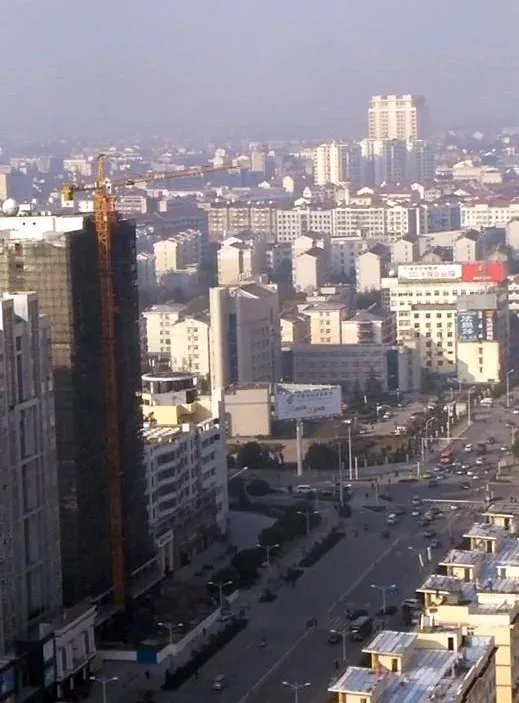
Xiaogan
Hubei Sheng, China
Why visit Xiaogan?
Xiaogan (孝感) is a prefecture-level city in northeastern Hubei Province, central China, taking its name — literally "filial piety moves [Heaven]" — from a local legend of filial devotion. The city sits on the Fu River in the Jianghan Plain, bordering Wuhan to the south, and functions primarily as a satellite of that much larger metropolis: Wuhan Tianhe International Airport lies only about 40 km away and central Wuhan around 60 km, making Xiaogan an easy half-day side trip rather than a primary destination. Most travellers who pass through are visiting relatives, transiting to or from the airport, or sampling the rice wine the region is famous for.
The climate is humid subtropical: hot, sticky summers with daily highs of 30–33°C from June through August and frequent heavy rain, and cool, damp winters dipping to a few degrees above freezing overnight in January. Spring (late March to May) and autumn (late September to early November) are the most comfortable windows for a visit.
The downtown area centres on Xiaonan District (孝南区), where People's Square (人民广场), the main commercial streets, and Houhu Lake (后湖) are clustered. The high-speed rail station sits a short distance from the centre. Outside the urban core, the prefecture sprawls across rural counties — Yingcheng, Anlu, Yunmeng, Dawu, Xiaochang, Hanchuan — whose small towns and farmland hold most of the historical and cultural sites.
Best time to visit: April–May or October, when sightseeing is pleasant and hotel prices are moderate. Avoid the peak of summer (July–August), when heat and heavy monsoon rain make outdoor exploration uncomfortable. Chinese New Year brings temple fairs and family reunions; the Mid-Autumn Festival offers mild evenings for a lakeside stroll.
Planning Xiaogan? Tell us your dates and we’ll tailor the trip.
Ask on WhatsAppHow do you get there?
By Plane
The nearest airport is Wuhan Tianhe International Airport (WUH), roughly 40 km southeast of central Xiaogan. From the airport, a high-speed train connection via Wuhan's rail network is the fastest option into Xiaogan; a taxi or ride-hail runs perhaps an hour via the expressway.
By Train
Xiaogan has two main stations. Xiaogan East Railway Station, on the Beijing–Guangzhou high-speed line, handles most CRH/G-series trains and is a short hop from Wuhan. Xiaogan Railway Station in the city centre handles slower conventional trains. Book through 12306.cn or Trip.com; trains on weekends and around holidays can fill up, so reserve ahead where possible.
By Car / Road
Xiaogan is on the G4 Beijing–Hong Kong–Macau Expressway, putting it within easy driving distance of Wuhan. Long-distance buses run frequently from Wuhan's main bus terminals directly to Xiaogan Bus Station.
The city centre is compact and walkable around People's Square, Chengzhan Road, and Houhu Lake. Public buses cover the urban area with flat, low fares; pay in cash (exact change) or by scanning Alipay/WeChat Pay QR codes at the farebox. Taxis are easy to flag down outside major hotels and the train stations; insist on the meter (打表). Didi (滴滴出行) ride-hailing works throughout the city, though the app is easiest to use with a Chinese payment method. There is no metro system in Xiaogan. Shared bikes (Meituan, Hellobike) are widely available in the centre. Watch for the usual scams: unmetered taxis at the train stations quoting flat fares, and "tour drivers" offering to take you to "best restaurants."
What are the things to do?
Houhu Lake (后湖) — the most pleasant downtown stroll, a short walk west of People's Square. Landscaped paths, willows, pavilions, and locals doing tai chi at dawn. Free, open all day.
People's Square (人民广场) — the civic heart of Xiaonan District, busiest in the early evening with dancers, kite-flyers, and food carts. Free.
Xiaogan Museum — north of People's Square, with local archaeology and exhibits on the city's filial-piety legends.
Shuangfeng Mountain (双峰山) — a forested scenic area in Xiaochang County, north of the city. Hiking trails, small lakes, and Buddhist sites.
Baizhao Mountain (白兆山) — in Anlu, associated with the Tang-dynasty poet Li Bai, who is said to have lived here for a decade. Temples and rock inscriptions.
Yingcheng Tangchi Hot Springs (汤池温泉) — a hot-spring resort area in Yingcheng, roughly an hour from central Xiaogan.
Day-trip from Wuhan. The most common reason travellers come to Xiaogan is the easy contrast — a quieter, smaller-city counterpart to Wuhan, doable as a half-day trip on the high-speed train.
Soak at Tangchi Hot Springs. Yingcheng's geothermal pools have been a Hubei weekend tradition for decades.
Hike Shuangfeng Shan or Baizhao Shan. Both are easy half-day outings with temples and pavilions, best in spring or autumn.
Walk the Houhu lakeside in the early evening to catch the square-dancing (广场舞) — the unofficial sport of urban China.
Visit a rice-wine producer in Anlu or Xiaochang. Anlu's mijiu (米酒) traditions run deep, though calling ahead is essential.
Planning Xiaogan? Want these on a customised itinerary?
Ask on WhatsAppWhere to eat?
Xiaogan cooking sits within the broader Hubei (Ezhou/E-cuisine) tradition: freshwater fish, lotus root, hot-and-sour flavours, and a fondness for steaming. The signature local dishes are anything involving rice wine — most famously mijiu tangyuan (米酒汤圆), sweet rice wine soup with glutinous rice balls, eaten as breakfast or dessert — and Yunmeng dried fish-flour noodles served in a clear broth with sesame oil. Street-food staples shared with Wuhan include reganmian (热干面, hot-dry sesame noodles) for breakfast and doupi (豆皮, savoury stuffed bean-curd skin).
- Budget: breakfast stalls near People's Square and along Chengzhan Road for hot-dry noodles and a glass of rice wine.
- Budget: branches of the Wuhan hot-dry-noodle chain Cai Lin Ji (蔡林记) are a reliable, nationally known option.
- Mid-range: hotpot and Hubei home-cooking restaurants cluster around Beijing Road and the newer commercial districts.
- Mid-range / upscale: larger downtown hotels serve banquet-style Hubei cuisine with lotus-root soup and steamed fish.
Vegetarian options exist (lotus root, tofu, vegetable dumplings, fresh greens) but a strict no-meat order needs to be made explicit — most "vegetable" dishes contain pork stock or lard by default. Halal (清真) restaurants exist around the train stations and are easy to spot by the green signs.
Where to drink?
The drink to try is Xiaogan rice wine (孝感米酒) — low in alcohol, sweet, and traditionally served warm in a small bowl with a spoon. It is a breakfast and dessert drink as much as an evening one. Beyond rice wine, local bars stock the standard Chinese lineup — Snow (雪花), Tsingtao, and Harbin beers — plus baijiu by the bottle in restaurants. Tea is everywhere. National coffee chains have a presence around the malls and the high-speed rail station. Nightlife is modest — a handful of karaoke (KTV) venues and lounge bars — and most locals socialise over long dinners rather than late drinks.
Tap water is not safe to drink. Boil it, use the in-room kettle, or stick to bottled water. Hotels typically supply free bottles per room.
Planning Xiaogan? We’ll book the stays and dining for you.
Ask on WhatsAppWhere to stay?
- Budget: chain business hotels such as 7 Days Inn (7天连锁), Hanting (汉庭), and Home Inn (如家) have several Xiaogan branches near the train stations and downtown. Book through Trip.com or Meituan for current rates.
- Mid-range: chain hotels such as Vienna International Hotel operate branches in Xiaogan, along with a handful of independent local business hotels.
- Upscale: Xiaogan's high-end hotel scene is small; larger commercial-district hotels offer the city's top end with standard business-hotel amenities.
What should you buy?
Xiaogan's signature export is Xiaogan rice wine (孝感米酒) — a sweet, lightly fermented, milky-white drink, sold both as a ready-to-drink bottle and as a soup-like dessert in jars. It is the standard souvenir to take home and is available in every supermarket and at the train stations. Other regional buys include Yunmeng dried fish-flour noodles (云梦鱼面), unique to Yunmeng County, and cured hams from Anlu. The main shopping streets are around Chengzhan Road and Beijing Road in Xiaonan District. Bargaining is expected at outdoor markets and small independent stalls but not in supermarkets, malls, or branded shops.
Where to go next?
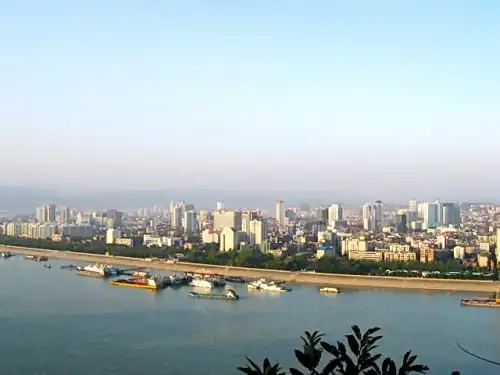
- Wuhan — a short high-speed train ride away. Hubei's capital: the Yangtze waterfront, Yellow Crane Tower, Hubei Provincial Museum, and East Lake.
- Anlu (安陆) — Li Bai's adopted hometown; Baizhao Mountain and old-town temples.
- Yingcheng Tangchi (应城汤池) — hot-spring resort complex, easy overnight escape.
- Suizhou (随州) — home of the Marquis Yi of Zeng tomb site and a related museum.
- Xiangyang (襄阳) — walled river city, one of the best-preserved Ming-era city walls in China.
- Jingzhou (荆州) — Three Kingdoms history, intact city walls, and the Jingzhou Museum's lacquerware collection.
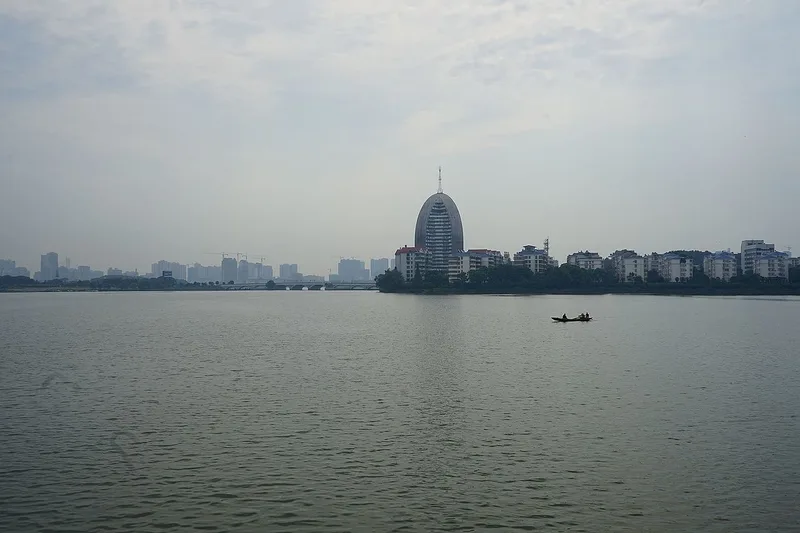
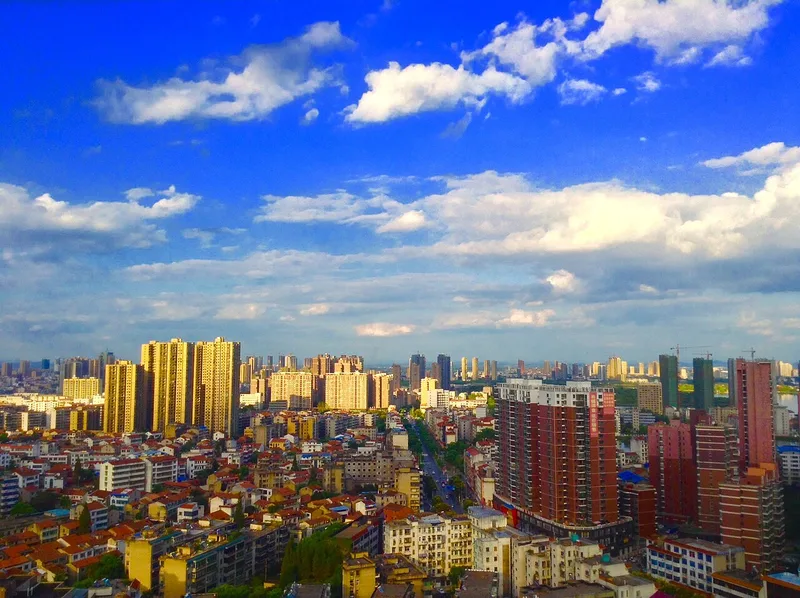
Nearby in Hubei Sheng
More places to explore around Xiaogan.

Guide content as of July 2026. Portions adapted from Wikivoyage, CC BY-SA 4.0.

Contact Us
Get in touch with us.
Get in touch
Contact Us
Tell us where you'd like to go and how you like to travel. A real Tripcuro planner — not a bot — will craft an itinerary around you.
- Personalised, hassle-free planning end-to-end
- Transparent pricing, no hidden costs
- 24/7 support for complete peace of mind