
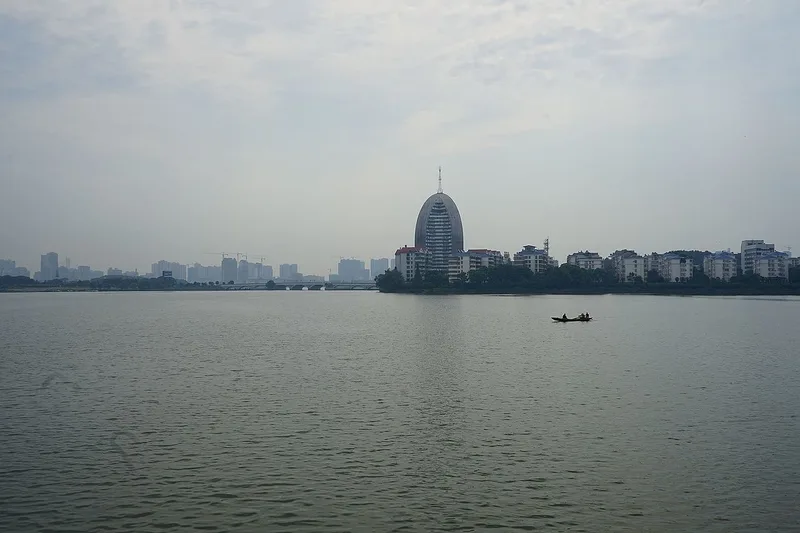
Ezhou
Hubei Sheng, China
Why visit Ezhou?
Ezhou's importance far outstrips its modest size. In 221 CE, Sun Quan briefly made the city — then called Wuchang (武昌, not to be confused with the modern Wuchang district of Wuhan) — the capital of the Eastern Wu kingdom during the Three Kingdoms period. The renaming of his capital was reportedly inspired by the phrase "以武而昌" ("flourishing through martial virtue"). For a few brief years this riverbank town was the seat of one of China's three rival courts, and the Wu legacy still anchors much of Ezhou's tourist identity, from West Mountain (Xishan) to the reconstructed Wu King's City.
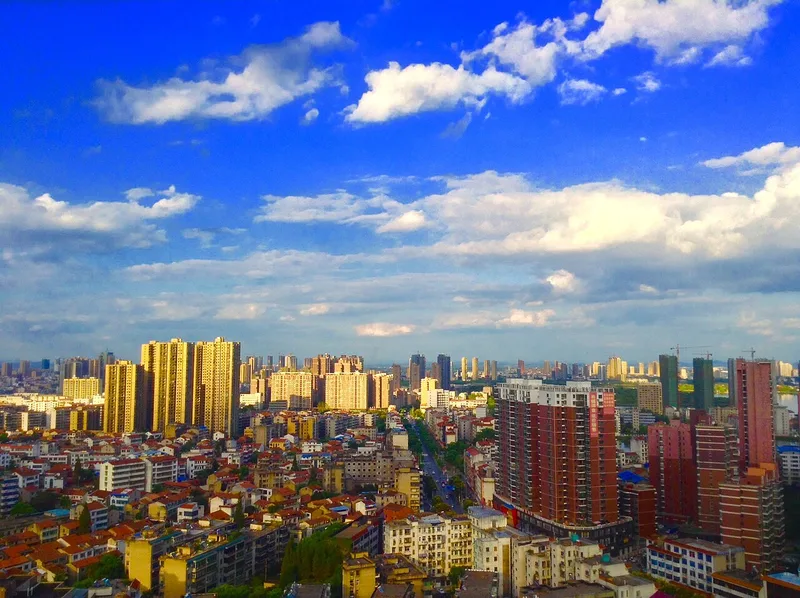
Today Ezhou is a manufacturing and logistics city in transition. The opening of Ezhou Huahu Airport in 2022 — Asia's first purpose-built cargo hub, anchored by SF Express — has put the city on the map as a freight node, with secondary passenger service growing. The old town is compact and walkable, hugging the Yangtze; newer development sprawls south and east toward the lakes. Climate is humid subtropical: summers (June–August) are punishing, with high heat and humidity and a real risk of riverine flooding; winters (December–February) are damp and chilly with little snow. The best windows are late March to mid-May and late September to early November, when temperatures are mild and skies clearer.
Layout-wise, three areas matter. Old Ezhou / Binjiang along the Yangtze contains the ferry terminal, the older commercial streets, and Wu-era sites. Xishan (West Mountain) rises immediately west of the centre and is the city's main scenic park. Liangzi Lake (æ¢?å?æ¹–), about 30 km south, is the major out-of-town draw — one of the largest freshwater lakes in Hubei.
Planning Ezhou? Tell us your dates and we’ll tailor the trip.
Ask on WhatsAppHow do you get there?
By Plane
Ezhou Huahu Airport (EHU) opened in July 2022 about 25 km east of the city centre. It was built primarily as SF Express's freight super-hub but operates a growing roster of domestic passenger flights to cities such as Beijing, Shanghai, Shenzhen, Xi'an, Chengdu and Kunming. Airport shuttle buses connect to Ezhou city (around ¥20, 40–50 minutes) and to Wuhan; a taxi to central Ezhou runs roughly ¥80–120.
Many travellers still prefer Wuhan Tianhe International Airport (WUH), about 100 km northwest, which has far broader international and domestic service. From Tianhe, the easiest route is metro/intercity train to Wuhan station and then a high-speed train to Ezhou (see below); allow 2–2.5 hours door to door.
By Train
Ezhou is well served by both conventional and high-speed rail.
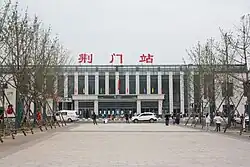
- Ezhou Station (é„‚å·žç«™) sits on the Wuhan–Jiujiang conventional line and the Wuhan–Huangshi intercity line. It's the most central station, a short taxi ride from the Yangtze waterfront.
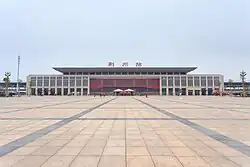
- Ezhoudong Station (鄂州东站, Ezhou East) is on the Wuhan–Huangshi intercity high-speed line; frequent G- and D-trains from Wuhan take 25–35 minutes (around ¥30–45 second class). Onward connections run to Huangshi, Jiujiang and beyond.
- Ezhounan Station (é„‚å·žå?—ç«™, Ezhou South) opened with the Wuhan–Huangang intercity expansion and serves additional regional services.
Tickets are best booked via the official 12306 app or platforms such as Trip.com; bring your passport for collection or e-ticket gate entry.
By Car / Road
Ezhou lies on the G50 Shanghai–Chongqing Expressway and is easily driven from Wuhan in roughly 1–1.5 hours (about 80 km), traffic depending. Huangshi is 30 minutes east; Huanggang lies just across the Yangtze to the north and is reached via the Ezhou Yangtze River Bridge in around 30–40 minutes. Long-distance buses from Wuhan's Hongji and Fujiazhuang stations serve Ezhou bus station throughout the day (~¥30–40, ~1.5 hours), though most travellers now prefer the train.
Central Ezhou is compact and walkable; the riverfront, old town and the foot of Xishan can be covered on foot in a long day. The city has no metro. Local public buses are the main option, with flat fares typically ¥1–2 — useful routes link the railway stations, the bus terminal and Xishan.
Taxis are plentiful and cheap by Chinese standards: flagfall is around ¥6 with most cross-town rides ¥15–25. Didi (滴滴出行) works well and is the easiest option for non-Chinese-speaking visitors — link it to Alipay or WeChat Pay before arrival, since cash is rarely accepted. Shared e-bikes and bicycles (Meituan, Hello) are widely available in the central districts.
For Liangzi Lake and other out-of-town sites, either book a Didi for the day, hire a car through your hotel, or take a long-distance bus toward Liangzihu town. Watch for the usual airport/station taxi touts who offer "fixed price" rides without the meter — insist on the meter (打表, dÇŽ biÇŽo) or use Didi.
What are the things to do?
Three Kingdoms & historical sites
- Xishan Scenic Area (西山风景区) — Forested hill immediately west of the old town, the symbolic heart of Ezhou. Trails wind past the Ancient Lingquan Temple (ç?µæ³‰å¯º), the Sun Quan-era Wu King's Stone Chamber (å?´çŽ‹é?¿æš‘宫), pavilions and viewpoints over the Yangtze. Open roughly 08:00–17:30; entry around ¥40.
- Wu King's City / Wuchang Lou (武昌楼) — A modern reconstruction of the Wu-era tower atop Xishan, evoking Sun Quan's short-lived capital. Best at sunset for river views.
- Guanyin Pavilion (观音é˜?, GuÄ?nyÄ«n Gé) — Ezhou's signature image: a 700-year-old Yuan-dynasty pavilion built directly on a rocky outcrop in the middle of the Yangtze, accessible by a narrow causeway only when the river is low. In summer it appears to float on the water. Free to view from the bank; small fee to enter when accessible. Check water levels before visiting.
- Sun Quan Cultural Park (å™æ?ƒæ–‡åŒ–å›) — Themed park exploring the Wu kingdom's founder, with statues, halls and re-enactment events.
Lakes & nature
- Liangzi Lake (æ¢?å?æ¹–) — One of Hubei's largest freshwater lakes, famous for its Wuchang fish (武昌鱼), lotus blossoms in summer, and small island villages reached by ferry. A relaxed half- or full-day trip from town.
- Honglian Lake (洪莲湖) and the Yangtze wetlands south of the city offer easy cycling and birdwatching in the cooler months.
Museums
Ezhou Museum (鄂州市å?šç‰©é¦†) — Compact city museum with strong holdings on the Wu kingdom period, including bronzes, ancient mirrors (Ezhou was historically a major bronze-mirror production centre), and Yangtze archaeology. Generally open 09:00–17:00, closed Mondays; free with ID/passport.
Climb Xishan at dawn for mist over the Yangtze and the best photographs of Wuchang Lou.
Cycle the Yangtze embankment between Binjiang Park and the Guanyin Pavilion lookout — flat, scenic and almost traffic-free.
Take a Liangzi Lake boat trip to one of the lake islands; combine with a long lunch of steamed Wuchang fish at a lakeside restaurant.
Visit during the Lotus Festival (typically late June to August at Liangzi Lake) when the lotus fields bloom across hundreds of hectares.
Catch a Three Kingdoms-themed performance at one of the seasonal events around Xishan and Wu King's City; ask your hotel for current schedules.
Day-trip to Huangshi for the surreal open-pit National Mine Park, easily combined as a half-day from Ezhou.
Planning Ezhou? Want these on a customised itinerary?
Ask on WhatsAppWhere to eat?
Ezhou's food culture is firmly Hubei: freshwater fish, lotus root, spicy-savoury seasoning, and breakfast noodle culture shared with Wuhan. The single most famous dish is Wuchang fish (武昌鱼) — a bream from Liangzi Lake, traditionally steamed whole with ginger, scallion and a light soy dressing, and immortalised in a 1956 Mao Zedong poem about swimming in the Yangtze. Other staples include lotus root and pork-rib soup (排骨藕汤), hot dry noodles (热干é?¢, rè gÄ?n miàn) for breakfast, and a wide range of river fish and shrimp.
- Liangzihu Fish Restaurants (æ¢?å?湖渔家ä¹?) — Cluster of lakeside family restaurants near Liangzi Lake serving the freshest possible Wuchang fish. Expect ¥80–200 per person depending on the catch.
- Old Ezhou snack street near Binjiang Park — Stalls and small shops selling hot dry noodles, dumplings, doupi (豆皮), grilled skewers and seasonal river snacks. ¥15–40 per person.
- Xiao Lan Jing (å°?è“?鲸) / local Hubei chains — Reliable mid-range Hubei cuisine; good place to try lotus-root soup and braised river dishes. ¥60–120 per person.
- Hotel restaurants at the Ezhou International Hotel and Junyi Garden — Solid sit-down options for banquet-style Hubei food, useful if you want a quieter setting. ¥120–250 per person.
Vegetarians can do reasonably well — lotus root, tofu dishes, seasonal greens and noodles are widely available — but explicit vegetarian (素食, sùshí) restaurants are rare; a search on Dianping (大众点评) for 素食 in Ezhou will surface the current options. Halal (清真, qÄ«ngzhÄ“n) noodle and lamb shops exist around the bus station area. Strict gluten-free is genuinely difficult in central China; rice-based meals are your safest bet.
Where to drink?
Local drinking habits skew toward beer and baijiu with food rather than dedicated bar-going.
- Beer: Local and regional Chinese lagers (Snow / 雪花, Tsingtao) are everywhere; a large bottle in a restaurant runs ¥8–15.
- Baijiu: Hubei's local brands appear at banquets; sip rather than gulp.
- Tea: Hubei produces respectable green and dark teas. Look for Enshi Yulu (�施玉露) green tea and Hubei dark teas at tea shops in town; teahouses around Xishan offer a quiet pot with a view.
- Coffee: Luckin (瑞幸) and a growing number of independents are present in central Ezhou; expect ¥15–30 for a specialty coffee.
For a casual evening drink, the riverside terraces near Binjiang Park and the bars around the Fenghuang commercial district are the most reliable options.
Tap water is not safe to drink anywhere in mainland China — stick to bottled or boiled water (every hotel room provides a kettle and free bottled water). Ice in upmarket restaurants and chain cafés is generally fine; be more cautious at street stalls.
Planning Ezhou? We’ll book the stays and dining for you.
Ask on WhatsAppWhere to stay?
Budget
- 7 Days Inn Ezhou (7天连é”?酒店 鄂州店) — Reliable national budget chain near the city centre. Clean rooms, en-suite, basic English. Around ¥150–220 per night.
- Hanting Hotel Ezhou (汉庭酒店 鄂州店) — Similar tier, slightly newer in some branches. Around ¥180–260 per night.
Mid-range
- Atour Hotel Ezhou (亚朵酒店 鄂州店) — Stylish mid-range chain popular with Chinese business travellers; good beds, decent breakfast, reliable Wi-Fi. Around ¥350–500 per night.
- Junyi Dynasty Hotel (å?›æ€¡é…’店) — Long-standing local mid-range option with full facilities. Around ¥300–450 per night.
Upscale
- Ezhou International Hotel (鄂州国际大酒店) — The city's traditional flagship, with a central location, large rooms and full restaurant facilities. Around ¥500–800 per night.
- Howard Johnson / international-brand properties near Huahu Airport — Newer business hotels catering to airport and logistics traffic; useful if you have early flights. Around ¥600–900 per night.
What should you buy?
Ezhou is not a major shopping destination, but a few things are worth seeking out:
- Bronze mirrors and replicas — The Ezhou region was famous in the Han and Three Kingdoms periods for bronze-mirror casting; museum shops and a handful of specialist stores sell good-quality reproductions.
- Wuchang fish products — Smoked, dried and vacuum-packed fish from Liangzi Lake make a regional souvenir; sold at lakeside stalls and city supermarkets.
- Lotus seeds, lotus-root powder and tea from Liangzi Lake's lotus harvest.
- Fresh-market shopping in the old town's lanes around Binjiang for produce, dried goods and street snacks.
For everyday shopping, head to the malls and pedestrian streets in the central Fenghuang (Phoenix) commercial district. Bargaining is expected at markets and tourist stalls but not in malls or chain stores. Mobile payment (WeChat Pay / Alipay) is essentially universal; carry some small cash as backup.
Where to go next?
- Wuhan (~80 km / 30–45 min by high-speed train) — Hubei's capital, with the Yellow Crane Tower, East Lake, Hubei Provincial Museum, and serious food.
- Huangshi (~30 km / 20 min by train) — Industrial-heritage city with the dramatic Huangshi National Mine Park (a vast open-pit copper mine turned scenic area).
- Huanggang (~40 km / 30 min by car across the Yangtze) — Riverside city associated with Song-dynasty poet Su Dongpo and the Red Cliff (赤å£?) of his famous odes.
- Chibi (Red Cliff) (~150 km / 1.5 hours by train + road) — Site of the 208 CE Battle of Red Cliffs from the Three Kingdoms era; a natural pairing with Ezhou's Wu kingdom heritage.
- Jiujiang & Lushan (~150 km / 1 hour by high-speed train) — Across the border in Jiangxi: the lake-and-mountain city of Jiujiang and the cool, misty resort of Mount Lu.
- Xianning (~100 km / 1 hour by train) — Hot springs, bamboo forests and tea country, an easy weekend escape.
Nearby in Hubei Sheng
More places to explore around Ezhou.
Guide content as of May 2026. Portions adapted from Wikivoyage, CC BY-SA 4.0.

Contact Us
Get in touch with us.
Get in touch
Contact Us
Tell us where you'd like to go and how you like to travel. A real Tripcuro planner — not a bot — will craft an itinerary around you.
- Personalised, hassle-free planning end-to-end
- Transparent pricing, no hidden costs
- 24/7 support for complete peace of mind