
Huanggang
Hubei Sheng, China
Why visit Huanggang?
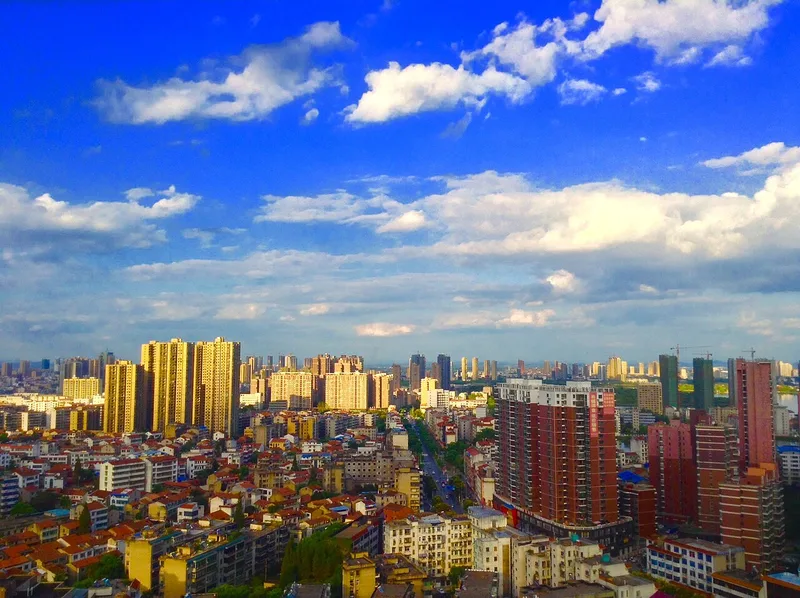
Huanggang (黄冈), historically known as Huangzhou, is a sprawling prefecture-level city in eastern Hubei Province, sitting on the north bank of the Yangtze River across from Ezhou and roughly 80 km east of Wuhan. With a permanent population of around 5.79 million (2022), it is one of Hubei's most populous prefectures, though most of that population is spread across ten counties and county-level cities — only the urban core in Huangzhou District feels city-like. The prefecture's reputation in China rests on three things: the educational dynasty of Huanggang Middle School, whose exam-prep workbooks are sold nationwide; the literary association with the Song-dynasty polymath Su Dongpo, who was exiled here and produced some of his most famous work along the river bluffs; and the Dabie Mountains, which rise across the northern and eastern counties and form the watershed between the Yangtze and Huai river systems.
For travellers, Huanggang is best understood as two trips stitched together. The urban guide — Huangzhou District — is a half-day affair built around Su Dongpo's Red Cliffs, Yiai Lake Park and the Huanggang Museum. The wider prefecture is the real draw: Tiantangzhai and Triangle Mountain for hiking, Taohuachong for spring peach blossom, Guifeng Mountain near Macheng for azaleas, Huangmei County for the birthplace of Huangmei opera, and Hong'an for Red Tourism sites tied to the early Communist movement. Climate is humid subtropical: summers (June–August) are hot, sticky and prone to thunderstorms, with the Yangtze valley regularly clearing 35 °C; winters (December–February) are damp and chilly with occasional light snow in the mountains. The sweet spots are late March to early May (peach and azalea blossom in the Dabie Mountains) and late September to early November (clear skies, comfortable hiking weather). Avoid the late-July to mid-August peak heat unless you're heading straight up to Tiantangzhai's 1,729 m summit.
The prefecture is divided into Huangzhou District (the seat) plus Tuanfeng, Xishui, Luotian, Yingshan, Qichun, Huangmei and Hong'an counties, and the county-level cities of Macheng and Wuxue. Distances are real — Macheng to Wuxue is over 200 km — so plan around one or two counties per visit rather than trying to tick off the whole prefecture.
Planning Huanggang? Tell us your dates and we’ll tailor the trip.
Ask on WhatsAppHow do you get there?
By Plane
There is no airport in Huanggang itself. The nearest is Wuhan Tianhe International Airport (WUH), roughly 110 km west of Huangzhou District. From the airport:
- Direct shuttle buses run from Tianhe to several outer counties — Hong'an, Luotian, Macheng City, Qichun and Yingshan — which is convenient if those are your final destination.
- For the Huangzhou urban core, there is no direct airport bus. The simplest routing is to take an airport shuttle or the Metro Line 2 → intercity rail combination into Wuhan, then transfer to a Huanggang-bound train (see below). Allow 2.5–3.5 hours airport-to-Huangzhou door-to-door.
- A taxi or Didi from Tianhe to Huangzhou will run roughly ¥350–450 depending on traffic and time of day; not recommended unless you're splitting it.
By Train
Huanggang is well served by rail and the train is the right way in for almost every visitor. Four stations serve the urban area:
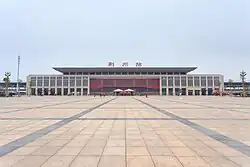
- Huanggang Railway Station (黄冈站) — Lukou Avenue, Huangzhou District. High-speed services on the Wuhan–Jiujiang corridor. Bus nos. 9, 19, 23 and 105 outside; 9, 19 and 105 go to the city centre.
- Huanggang East Railway Station (黄冈东站) — Xinhua Road, Huangzhou District. Bus no. 105 to the centre.
- Huanggang West Railway Station (黄冈西站) — Provincial Highway 112, Huangzhou District. The main intercity station for arrivals from Wuhan; bus nos. 1, 6, 7 and 22 all run to the city centre.
- Huangzhou Railway Station (黄州站) — Jinggang Road. Conventional-speed trains only; bus no. 101 to the centre.
The most common arrival is the Wuhan–Huanggang intercity train from Wuhan Railway Station to Huanggang West, which takes roughly 35–50 minutes. Book on the 12306 app (China Railway's official platform; foreign passports are supported) or via Trip.com. Buy at least a day ahead during weekends and Chinese holidays.
By Car / Road
Huanggang sits on the G45 Daqing–Guangzhou Expressway and the G42 Shanghai–Chengdu Expressway, with the Yangtze River bridges at Huangshi and Echeng tying it into the south bank.
- From Wuhan: ~80 km / 1 hr 15 min via the G70 Fuyin Expressway and G45.
- From Hefei (Anhui): ~280 km / ~3 hr 30 min via the G42.
- From Jiujiang (Jiangxi): ~150 km / ~2 hr along the Yangtze via the G70.
Roads are good four-lane expressways; tolls are payable in cash or via WeChat/Alipay. For long-distance buses, the two main terminals are:
- Donghua Bus Station (东å?Žå®¢è¿?ç«™), 98 Mingzhu Avenue, Huangzhou District; ☎ +86 713 8391592. Local routes 6, 18, 23, 25 and 108.
- Huangzhou Bus Station (黄州客è¿?ç«™), 90 Baota Avenue, Huangzhou District; ☎ +86 713 8356981. The prefecture's main bus terminus; near the Baota Avenue / Xihu 2nd Road junction. Local routes 24, 101, 102, 103 and 107.
Huangzhou District is compact enough that you'll mostly use buses, taxis and shared bikes; the wider prefecture needs a hire car or long-distance bus.
- City buses are the workhorse — flat fare typically ¥1–2, paid in cash or via WeChat/Alipay QR. Useful core routes: no. 1 connects Huanggang West Station and Huangzhou Ancient City; no. 6 runs along the Yiai Lake corridor; no. 8 goes to Su Dongpo's Red Cliffs (Chibi Park stop); no. 105 links the high-speed stations to the centre. Bus no. 21 runs from Dabieshan Medical Center to Longwangshan at ~20-minute intervals.
- Taxis start at ¥5 for the first 2 km from 06:00–23:00, then ¥1.4/km up to 7.5 km, ¥1.8/km from 7.5–14.5 km, and ¥2.4/km beyond 14.5 km. The night rate (23:00–06:00) starts at ¥6 for the first 1.5 km. Most rides within Huangzhou District come in under ¥20.
- Didi (滴滴出行) works throughout Huanggang; it's usually cheaper than flagging a taxi and avoids language friction. You'll need a Chinese phone number or a linked international payment method.
- Shared bikes (Meituan, Hellobike) are widespread in the urban core — scan the QR code, pay by time/distance, typically ¥1.5 per 30 minutes. Good for the flat lakeside routes around Yiai Lake.
- Walkability: the area between Yiai Lake, Mingzhu Avenue and Dongmen Road is comfortably walkable. Outside that core, distances stretch quickly.
Watch for: unmetered "black taxis" outside the train stations — insist on the meter or use Didi. Carry small notes; not every bus driver can break a ¥100.
What are the things to do?
- Su Dongpo's Red Cliffs (东å?¡èµ¤å£? / Dongpo Chibi) — 11 Gongyuan Road, Huangzhou District; ☎ +86 713 8366568. Bus no. 8 to Chibi Park, then walk. Open 07:30–17:00. Admission ¥40. The riverside bluff that Su Dongpo immortalised in his 1082 Former Ode on the Red Cliffs during his exile in Huangzhou. Whether or not this was the actual site of the AD 208 Battle of Red Cliffs is hotly disputed (Chibi in southern Hubei has the stronger historical claim), but the pavilions, calligraphy halls and Su Dongpo memorials built up over the centuries make it the single most atmospheric stop in the city.
- Yiai Lake Park (é?—爱湖公园) — Chibi Avenue, Huangzhou District; ☎ +86 713 8829729. Buses 6, 9, 16, 81 or 102 to the north entrance. Park open 24 hours; Su Dongpo Memorial Museum open 09:00–11:00 and 14:30–16:30, closed Mondays. Free. The largest park in the urban area, named after a phrase from Su Dongpo's writing. Lakeside paths, pavilions and a worthwhile museum tracing his life and work; pleasant at sunset.
- Huanggang Museum (黄冈å?šç‰©é¦†) — 110 Mingzhu Avenue, Huangzhou District; ☎ +86 713 8354810 / 8118309; [email protected]. Bus to Dongfang Square (9, 18, 25, 102, 108). Tue–Sun 09:00–17:00 (no entry after 16:30), closed Mondays. Free. Bring your passport for entry. Solid regional collection covering Chu-state bronzes, the Dabie Mountains revolutionary period, and Huanggang's literary heritage.
- Huangzhou Ancient City (黄州å?¤åŸŽ) — No. 1 Gucheng Road. Bus no. 1 or 3 to Gucheng Station, then 5 minutes on foot. 09:00–17:00, closed Mondays. ¥60. Restored Song-dynasty city walls, Ming–Qing streetscapes and folk-craft demonstrations.
Outside the urban core (in the wider prefecture):
Tiantangzhai Scenic Area (天堂寨风景区) — Luotian County; ☎ +86 713 5826191. The headline natural attraction of the Dabie Mountains, sitting on the Hubei–Anhui border at 1,729 m. The "Yaochi" pond at the summit is famous for never running dry. Allow a full day from Huangzhou (~3 hours each way).
Triangle Mountain (三角山) — Xishui County. National 4A scenic area with a 1,055 m main peak, a continental-monsoon climate, and 60 km² of forested ridges and trails.
Taohuachong Scenic Area (桃花冲风景区) — Yingshan County. National AAAA scenic area in the eastern Dabie Mountains, average elevation 1,205 m, peaks to 1,698.7 m. Best in late March / early April for peach blossom.
Guifeng Mountain Scenic Area (龟峰山风景区) — County Road 211, Macheng City; ☎ +86 7132886168. "Turtle Peak" — named for its giant tortoise-like silhouette. Famed for ancient azalea forests; peak bloom is roughly late April to mid-May.
Wuzu Temple (五祖寺) — Huangmei County.
Hike the Dabie Mountains. Tiantangzhai (Luotian), Triangle Mountain (Xishui) and Taohuachong (Yingshan) all have well-marked trail networks with cable cars to shortcut the steepest ascents. April–May and October are ideal; bring layers — summit temperatures run 8–12 °C cooler than the valley floor.
Walk Su Dongpo's Huangzhou. Combine Yiai Lake Park, the Su Dongpo Memorial Museum and Dongpo Chibi for a half-day literary pilgrimage. Reading even one translation of the Red Cliff odes beforehand transforms the experience.
Catch a Huangmei opera (黄梅æˆ?) performance. Huangmei County is the genre's birthplace; performances also run at the Huangmei Opera Theater in Huangzhou (the bus no. 2 stop is named for it).
Red Tourism in Hong'an. Hong'an County produced more than 200 generals of the People's Liberation Army; the Huang-Ma Uprising memorial sites, Tiantai Mountain National Forest Park, Changsheng Street in Qiliping Town, and the Hong'an Film and Television City make a full-day loop.
Spring blossom run. Late March: peach blossom at Taohuachong (Yingshan). Late April–early May: ancient azaleas at Guifeng Mountain (Macheng) — a genuinely spectacle-grade bloom drawing visitors from across central China.
Cycle the Yiai Lake loop. Grab a Meituan or Hellobike and circle the lake (about 8 km of paved path) — easy, scenic, and the best way to feel the rhythm of urban Huangzhou.
Day trip to Wuhan. A 35-minute intercity train puts you at the Yellow Crane Tower, East Lake or Hubu Alley for street food.
Planning Huanggang? Want these on a customised itinerary?
Ask on WhatsAppWhere to eat?
Huanggang's food is East Hubei (鄂东) cuisine — a freshwater-fish, rice-noodle, hot-and-savoury idiom that sits between Hunan's chilli intensity and Jiangsu's lighter sweetness. Yangtze fish feature heavily; so do hot dry noodles (a Wuhan import that's now everywhere), sesame oil, and the prefecture's signature Dongpo pork (东å?¡è‚‰) — slow-braised pork belly named for Su Dongpo, who reputedly perfected the dish here during his Huangzhou exile.
Signature dishes to try: Dongpo pork (东å?¡è‚‰); Huangzhou hot dry noodles (热干é?¢) for breakfast; Macheng fish noodle soup (麻城鱼é?¢); Qichun crispy plum cake (蕲春酥糖); Luotian roasted chestnuts in season; Yingshan steamed dishes (英山蒸è?œ); fried lotus root cakes (藕夹), a Hubei staple.
Recommendations:
- Authentic Victory Hanging Pot Bridgehead Shop (正宗胜利å?Šé”…桥头店) — Budget. Featured on CCTV-7; the speciality is diao guo (å?Šé”…), a Dabie Mountain hanging-pot stew of pork, tofu, dried vegetables and chillies bubbled over a charcoal brazier. Generous portions, low prices.
- Green Pavilion Western Restaurant (绿茵é˜?西é¤?厅) — Mid-range. 2nd Floor, Wushang Store, Dongmen Road, Huangzhou District. Chain Western-ish café with steaks, pasta, fruit teas and big desserts; menu refreshes often. Useful when the family wants a break from Chinese food.
- Local breakfast stalls along Mingzhu Avenue and around Yiai Lake — Budget. ¥6–12 for hot dry noodles, soy milk and youtiao. Cash or WeChat/Alipay only.
- Dabie Mountain farmhouse restaurants (农家ä¹?) — Budget to mid-range. Cluster around the entrances to Tiantangzhai, Triangle Mountain and Taohuachong. Mountain-foraged greens, free-range chicken stews, smoked pork and the local rice wine. Quality varies; pick one that's busy with Chinese tourists.
Dietary notes: vegetarian options are limited but not impossible — vegetable stir-fries (ç´ è?œ), tofu dishes, and noodles without meat broth are widely available, but cross-contamination with lard or fish sauce is common, so flag dietary requirements clearly. Halal (清真) restaurants exist around the bus and railway stations but are not abundant; gluten-free is essentially unsupported — soy sauce and noodles are everywhere.
Where to drink?
Tea, not alcohol, is the default beverage of choice in Huanggang. The Dabie Mountains produce respected green teas (Yingshan Cloud Mist most notably), and you'll see locals carrying glass jars of leaves to refill all day.
- BaWangChaJi (霸王茶姬) — National chain serving "Chinese-style" milk teas built around oolong and pu'er bases; rich, milky and very popular with younger locals. Several branches in Huangzhou District.
- Grandpa Doesn't Make Tea (爷爷ä¸?泡茶) — A trendy local-favourite tea-drinks chain; fruit teas and cheese-foam teas. Worth the queue.
- Macheng old rice wine (麻城è€?米酒) — Sweet, cloudy, low-alcohol (typically 5–10%). Served warm in winter, often at farmhouse meals; sold in ceramic jars to take home.
- Local beer: Xingyin (行å?Ÿé˜?) and the national brands (Snow / Tsingtao / Budweiser) are standard. Craft beer is essentially absent.
Nightlife in Huangzhou District is low-key — KTV, mall-bar lounges and a handful of late-night barbecue (烧烤) streets where ¥5 skewers and cold beer carry conversations into the small hours. The lanes off Dongmen Road are the easiest place to find this.
Water safety: do not drink the tap water. Hotels supply boiled water flasks or kettles in every room; bottled water (¥2–3 for 550 ml) is sold everywhere. Ice in chain cafés and reputable restaurants is safe; avoid it at street stalls.
Planning Huanggang? We’ll book the stays and dining for you.
Ask on WhatsAppWhere to stay?
Budget
- Hanting Hotel Huanggang (汉庭酒店) — 1st Floor, Building 1, Zhongzhou Huigu, intersection of Mingzhu Avenue and Xinggang 2nd Road, Huangzhou District. Reliable national budget chain; clean, predictable, English-limited but workable. Rates from ~¥180–260 per night.
- 7 Days Inn Huanggang (7天连é”?酒店) — branches near Huangzhou Bus Station and Yiai Lake. Bare-bones but cheap and central. Rates from ~¥150–220.
Mid-range
- New Beacon Hotel Huanggang (新航标酒店) — well-known to locals; bus no. 22 from Huanggang West Station stops at the door. Solid 4-star equivalent with restaurant and conference facilities. **Rates from ~¥350–500.
- Atour Hotel Huanggang (亚朵酒店) — design-led mid-scale chain with branches in Huangzhou District; reading-corner lobbies, decent beds, strong Wi-Fi. Rates from ~¥400–600.
Upscale / heritage
- Huanggang International Hotel (黄冈国际大酒店) — the city's long-standing flagship business hotel in central Huangzhou District, with full-service restaurants, gym and meeting space. **Rates from ~¥600–900.
- Mountain resort lodges at Tiantangzhai (Luotian) and Guifeng Mountain (Macheng) — for a heritage-style stay, the better option is to base yourself in the Dabie Mountains rather than the city.
Booking via Trip.com / Ctrip generally beats walk-in rates by 15–25%; foreign passports are accepted at all chain hotels listed but smaller guesthouses in the counties may decline non-Chinese guests, so confirm before arrival.
What should you buy?
Huanggang is not a shopping destination in the Wuhan or Shanghai sense — expect everyday Chinese mall culture rather than tourist bazaars. Local specialities are mostly food and craft, picked up from supermarkets or county-town markets rather than dedicated souvenir streets.
- Huangshang Shopping Center (黄商购物中心) — No. 18 Dongmen Road, Huangzhou District. The anchor mall in central Huangzhou, surrounded by restaurants, pharmacies and chain shops; the de facto "centre of town".
- Wanda Plaza — Huahu Avenue. Cinema, mid-tier fashion brands, jewellery, supermarket and a large food court. Useful for a rainy afternoon.
- County markets — Macheng, Huangmei and Qichun each have lively morning markets where you'll find regional produce and crafts.
What to buy:
- Macheng Old Rice Wine (麻城è€?米酒) — sweet, low-alcohol fermented rice wine, sold in ceramic jars.
- Luotian chestnuts (ç½—ç”°æ?¿æ —) — Luotian is one of China's largest chestnut producers; autumn is the season.
- Qichun medicinal herbs — Qichun is nicknamed "Professor County" and is the birthplace of Ming-dynasty pharmacologist Li Shizhen. Look for traditional Chinese medicine ingredients in shops near his memorial hall.
- Yingshan green tea (英山云雾茶) — high-altitude cloud-mist tea from the Dabie Mountains, light and floral.
- Huangmei pickles and salted plums — gift-friendly, vacuum-packed.
Bargaining is not expected in malls or chain stores; at open-air markets, a 10–20% reduction on quoted tourist prices is normal.
Where to go next?
- Wuhan — ~80 km / 35–50 min by intercity train. Hubei's capital; Yellow Crane Tower, East Lake, Hubu Alley street food, and the Hubei Provincial Museum's Marquis Yi of Zeng bronze bells.
- Ezhou — ~30 km / ~25 min by train. Across the Yangtze; Xishan Park, Wuchang Tower, and an easier base for the south bank.
- Huangshi — ~70 km / ~50 min by train. Industrial-heritage Yangtze city; the Tonglüshan ancient copper mine is a UNESCO-tentative site.
- Jiujiang (Jiangxi) — ~150 km / ~1 hr by high-speed train. Gateway to Lushan (UNESCO), one of China's most celebrated mountain landscapes.
- Hefei (Anhui) — ~280 km / ~1 hr 40 min by high-speed train. Provincial capital and a launchpad for Huangshan and the Anhui side of the Dabie Mountains.
- Macheng (within the prefecture) — ~90 km / ~1 hr by car. Worth a standalone overnight in late April for Guifeng Mountain's ancient azalea bloom.
Nearby in Hubei Sheng
More places to explore around Huanggang.
Guide content as of May 2026. Portions adapted from Wikivoyage, CC BY-SA 4.0.

Contact Us
Get in touch with us.
Get in touch
Contact Us
Tell us where you'd like to go and how you like to travel. A real Tripcuro planner — not a bot — will craft an itinerary around you.
- Personalised, hassle-free planning end-to-end
- Transparent pricing, no hidden costs
- 24/7 support for complete peace of mind