
Chibi
Hubei Sheng, China
Why visit Chibi?
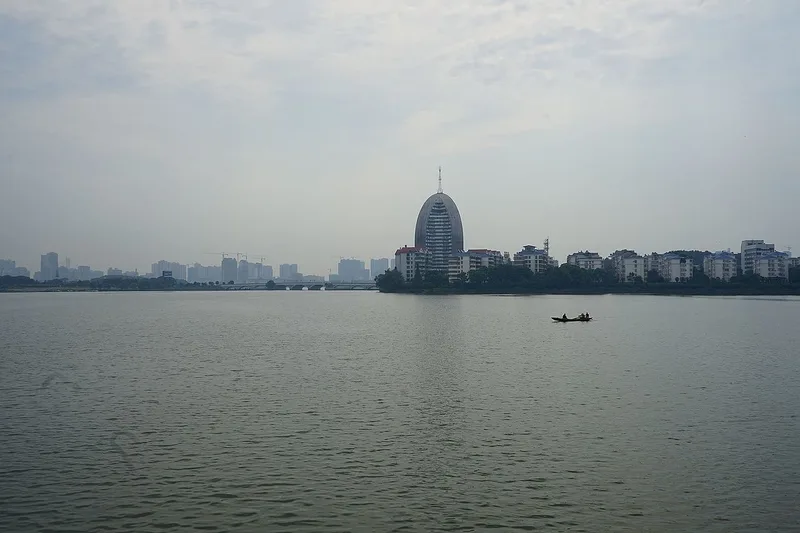
Chibi (赤å£?, "Red Cliffs") is a county-level city in southern Hubei, administered by Xianning prefecture, sitting on the south bank of the Yangtze River near the Hunan border. The name is etched into Chinese cultural memory: in the winter of 208 AD, the allied forces of Liu Bei and Sun Quan defeated Cao Cao's far larger northern army here in the Battle of Red Cliffs, the climactic set-piece of the late Han collapse and the most famous battle in Chinese literature thanks to the 14th-century novel Romance of the Three Kingdoms. For most domestic visitors that history is the entire reason to come — the riverside cliffs, ancient battlefield, and Three Kingdoms-themed scenic park draw a steady flow of pilgrims of the Sanguo legend, especially Chinese, Japanese, and Korean readers raised on the story (and on the Koei video games it inspired).
Beyond the battlefield, Chibi is a quiet Yangtze tea town. The surrounding hills produce qingzhuancha (é?’砖茶, "green brick tea") — a dark, post-fermented compressed tea that travelled the old Tea Horse Road north into Mongolia and Russia for centuries, and which is still pressed in local factories you can visit. The pace is small-city Hubei: river mist, lake fish, spicy-savoury cooking, no foreign-tourist scene. English is rarely spoken; bring translation apps and patience.
Climate. Humid subtropical. Summers (June–August) are hot and sticky, often above 35 °C with thunderstorms; winters are cool and damp, occasionally near freezing. The most pleasant windows are late March to early May (cherry blossom and tea-picking season) and late September to early November (clear skies, mild temperatures, the historically resonant time to stand on the cliffs as Cao Cao's fleet did). Avoid the National Day holiday (Oct 1–7) unless you enjoy crowds shoulder-to-shoulder at the battlefield gate.
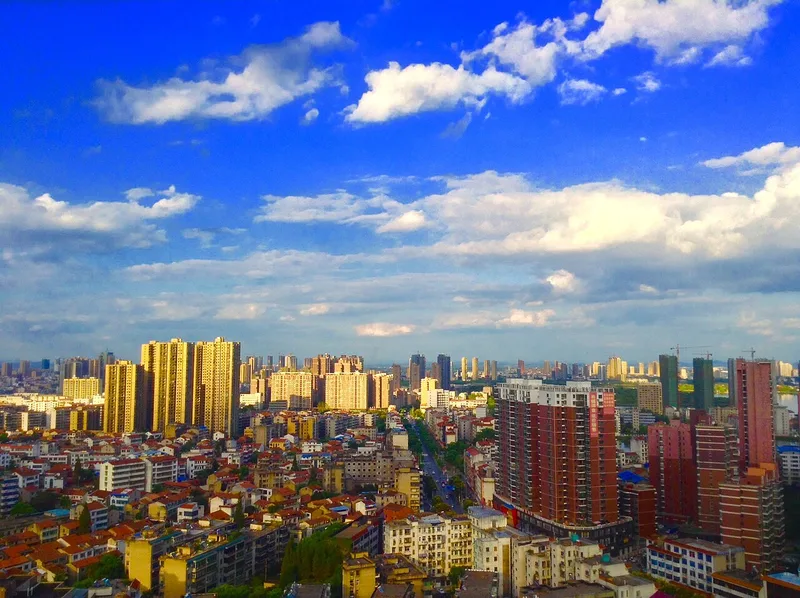
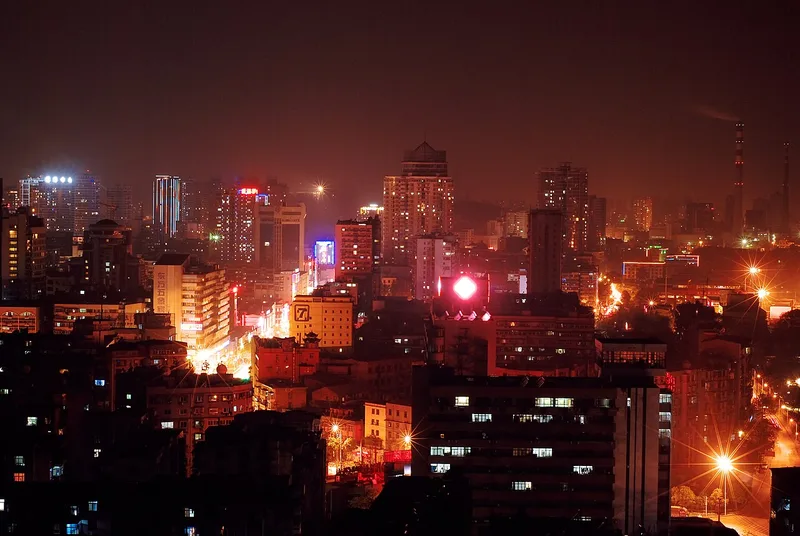
Layout. The modern city centre clusters around Chibi Avenue (赤å£?大é?“) and the Chibi North railway station area. The historic battlefield — the Chibi Ancient Battlefield Scenic Area — lies about 40 km northwest of the city centre, on the Yangtze near the town of Chibi Town (赤å£?镇), confusingly sharing the name. Most visitors base themselves in the city centre or near the high-speed rail station and day-trip to the battlefield.
Planning Chibi? Tell us your dates and we’ll tailor the trip.
Ask on WhatsAppHow do you get there?
By Plane
There is no airport in Chibi itself. The two practical options:
- Wuhan Tianhe International Airport (WUH), ~180 km north, is the main gateway with full international connections. From WUH, take the airport metro/shuttle to Wuhan or Hankou station and connect by high-speed rail to Chibi North (about 30–40 min). Allow 3–4 hours airport-to-Chibi door-to-door.
- Changsha Huanghua International Airport (CSX), ~200 km south in Hunan, is a viable alternative with strong domestic coverage. Connect via Changsha South station to Chibi North (≈45 min on G/D-trains).
Direct taxis from either airport are possible but expensive (expect ¥600–900 from Wuhan); rail is faster and cheaper.
By Train
Chibi North Railway Station (赤å£?北站) on the Wuhan–Guangzhou high-speed line is the main arrival point and the reason Chibi is easy to reach. Frequent G- and D-class trains stop here.
- Wuhan ↔ Chibi North: ~30–45 min, multiple services per hour.
- Changsha South ↔ Chibi North: ~45–60 min.
- Guangzhou South ↔ Chibi North: ~3 hours direct on G-trains.
The older Chibi Railway Station (赤å£?ç«™) on the conventional Beijing–Guangzhou line still handles slower K- and T-trains; useful only if you're coming from somewhere the high-speed line skips.
Book on the official 12306 app or via Trip.com; foreigners need passport details, and you collect a paper ticket or use the e-ticket gates with your passport scanned at the station.
By Car / Road
The G4 Beijing–Hong Kong–Macau Expressway runs straight through Chibi, making road access easy.
- From Wuhan: ~150 km, 2 hours via G4.
- From Changsha: ~200 km, 2.5 hours via G4.
- From Yueyang (Hunan): ~80 km, just over an hour — a natural pairing with a Dongting Lake trip.
Long-distance buses run from Wuhan's Fujiapo and Hongji stations to Chibi (≈3 hours, ¥70–90), but the high-speed train is faster and only marginally pricier. Within Chibi, ride-hailing covers most needs; renting a car is rarely worthwhile for short visits.
The city itself is compact enough to cross by taxi in 15–20 minutes. There is no metro.
- City buses (¥1–2 flat fare) cover the urban core; route signage is Chinese-only.
- Taxis are plentiful; flagfall around ¥6–7 with metered fares running ¥15–25 across town. Insist on the meter (打表).
- Didi (滴滴出行) is the dominant ride-hailing app and works reliably; set it up before you arrive (international card + Chinese phone number is easiest, or use the Didi feature inside Alipay/WeChat).
- To the Chibi Ancient Battlefield: the easiest options are Didi (one-way ~¥120–150 from the city centre, ~40 km / 50 min) or a chartered half-day taxi (¥300–400 round trip with waiting). Tourist shuttle buses run from Chibi North station seasonally — ask at the station information desk.
- Walkability: the riverside park and the area around People's Square are pleasant on foot; otherwise distances add up quickly.
Scams: low risk. The usual cautions apply — agree on chartered-taxi prices in writing (or via translation app) before getting in, and avoid unmetered "black cabs" loitering outside the rail station.
What are the things to do?
Three Kingdoms history
- Chibi Ancient Battlefield Scenic Area (赤å£?å?¤æˆ˜åœº) — the headline sight. A AAAAA-rated park on the Yangtze that bundles the supposed battle site, the cliff face carved with the giant red character "赤" (traditionally attributed to Zhou Yu), the Baifeng Terrace where Zhuge Liang is said to have "borrowed the east wind," a Three Kingdoms wax museum, statues of the major figures (Zhou Yu, Zhuge Liang, Cao Cao), and reconstructed period architecture. Plan a half-day. Located in Chibi Town, ~40 km northwest of the city centre.
Tea and countryside
- Yangloudong Ancient Town (羊楼洞å?¤é•‡) — the historic heart of Chibi's brick-tea trade, an old Ming–Qing village of stone-paved streets and surviving tea-merchant houses that was the southern terminus of the "Ten Thousand Li Tea Road" to Russia. Quiet, atmospheric, lightly restored. ~25 km southwest of the city.
- Zhao Liqiao Brick Tea Factory (èµµæ?Žæ¡¥ç –茶厂) — a working tea factory near Yangloudong producing qingzhuancha on industrial presses; tours are sometimes available with prior arrangement.
Lakes and parks
Lu Shui Lake (陆水湖) — a large reservoir on the Lushui River with forested islands, pleasant for a boat ride and a break from history. East of the city.
Xuesong Lake (雪æ?¾æ¹–) / urban riverside park — a relaxed evening stroll spot in town.
Walk the cliff. Stand on the Chibi cliff at sunset, look out over the Yangtze, and try to picture Cao Cao's chained warships burning in the east wind. It is, frankly, the whole point of coming.
Read the right book first. Romance of the Three Kingdoms chapters 43–50 cover the Red Cliffs campaign; even a Wikipedia summary transforms the visit. The Chinese-language signage at the battlefield assumes you know the story.
Tour a tea factory and taste qingzhuancha. The dark, earthy brick tea is unlike anything served in a typical Chinese teahouse and is a genuine local specialty. Ask hotels to point you to a tasting room.
Day trip to Yangloudong for the tea-road history and old-town atmosphere — a natural pairing with a factory visit.
Hike or boat on Lu Shui Lake for a low-key half-day in nature.
Cross into Hunan for Yueyang and Dongting Lake as a long day trip — Yueyang Tower (one of the "Three Great Towers of Jiangnan") is an hour south by train and pairs thematically with Chibi as another classical Yangtze literary site.
Planning Chibi? Want these on a customised itinerary?
Ask on WhatsAppWhere to eat?
Chibi cooking is Hubei cuisine (Ezai, é„‚è?œ) with a strong Yangtze-fish accent and Hunan-influenced chilli heat — expect heavy use of dried chillies, fermented black beans, lotus root, and freshwater fish. Breakfast is the local high point: try règÄ?nmiàn (热干é?¢), the sesame-paste-and-noodle dish that is Hubei's gift to the world, and dòupí (豆皮), a pan-fried glutinous rice and tofu-skin parcel.
Signature dishes to seek out:
- Chibi fish hotpot (赤å£?é±¼ç?«é”…) — Yangtze fish simmered in a chilli-and-pickled-vegetable broth.
- Mianyang sÄ?nzhÄ“ng (沔阳三蒸) — three steamed dishes (fish, meat, vegetable) coated in rice flour, a Hubei classic.
- Lotus root and pork rib soup (排骨藕汤) — the Hubei comfort dish, with starchy local lotus root.
Specific recommendations:
Vegetarian options exist (lotus root, tofu, jiacai greens, cold dressed dishes) but pure-vegetarian restaurants are rare; menus will need to be navigated carefully. Halal qingzhen (清真) noodle and lamb places exist in larger Hubei cities; in Chibi specifically, availability is limited.
Where to drink?
- Tea, tea, and more tea. Qingzhuancha is the local pour — dark, woody, low in caffeine, traditionally boiled rather than steeped, and excellent after a heavy meal. Ask for it specifically; default tea in restaurants is usually green or jasmine.
- Baijiu is the standard banquet spirit; local Hubei brands include Baiyunbian (白云边). Beer is typically Snow (雪花) or Tsingtao.
- Cafés are increasing — expect a Luckin Coffee and a handful of independents around Chibi Avenue and near the high-speed rail station.
Water safety. Do not drink tap water. Bottled water is cheap (¥2–3) and universal; hotel rooms supply electric kettles and most Chinese travellers boil tap water for tea. Ice in informal restaurants may be made from tap water — fine in proper hotels and chains, ask if you have a sensitive stomach.
Planning Chibi? We’ll book the stays and dining for you.
Ask on WhatsAppWhere to stay?
Chibi has a solid range of domestic-chain hotels clustered around the high-speed rail station (Chibi North) and the central Chibi Avenue area. Foreign-friendly registration is most reliable at international and large domestic chains; smaller guesthouses sometimes turn away foreign passport holders due to police-registration paperwork.
Budget (≈ ¥120–220 / night)
- Hanting Hotel Chibi (汉庭酒店) — reliable budget chain, multiple branches in town including near Chibi North station. Clean, small rooms, fast Wi-Fi, English booking via Trip.com.
- 7 Days Inn Chibi (7天连é”?酒店) — comparable, sometimes cheaper.
Mid-range (≈ ¥250–500 / night)
- Atour Hotel Chibi (亚朵酒店) — if a branch is operating in town, it's the most comfortable mid-tier option in the region with good beds and design-forward rooms.
- Jinjiang Inn Select Chibi (锦江之星å“?å°š) — solid Jinjiang Group offering with consistent service.
Upscale / heritage (≈ ¥600–1,200 / night)
Chibi does not yet have a true international five-star hotel. The top tier is local-luxury domestic properties.
- Chibi International Hotel (赤å£?国际大酒店) — the established business-traveller standard, large rooms, reliable restaurant.
For genuine five-star comfort, consider basing in Wuhan and day-tripping to Chibi by high-speed rail.
What should you buy?
Chibi is not a shopping destination, but two things are worth taking home:
- Qingzhuancha (é?’砖茶, green brick tea) — pressed bricks of dark fermented tea, often stamped with the "å·?" (Chuan) character of the historic Sanyutai brand. Sold at the Zhao Liqiao factory shop, at Yangloudong, and at tea shops along Chibi Avenue. Bricks range from small souvenir pieces (¥30–80) to full-sized 2 kg bricks (¥150–400 depending on grade and age).
- Three Kingdoms souvenirs — calligraphy scrolls of Su Shi's Red Cliff Rhapsody (《赤å£?赋》), miniature figurines of Zhuge Liang and the Five Tiger Generals, and feather fans modelled on Zhuge Liang's. Best selection at the battlefield park's exit shopping street.
Bargaining is expected at souvenir stalls and tea-shop loose pricing, less so in branded tea-factory outlets.
Where to go next?
- Wuhan — 30–45 min by high-speed rail. The provincial capital, with the Yellow Crane Tower, Hubei Provincial Museum (the Marquis Yi of Zeng bell set), East Lake, and Hubu Alley street food. The natural anchor of any Hubei trip.
- Yueyang (Hunan) — ~1 hour south by HSR. Yueyang Tower and Junshan Island on Dongting Lake — pairs perfectly with Chibi as a classical-literature itinerary.
- Xianning — 20 min by HSR. Hot springs and bamboo forests; a relaxed overnight from Chibi.
- Jingzhou — ~1.5 hours by HSR. The intact Ming-era city walls and another stop on the Three Kingdoms trail (Guan Yu's stronghold; this is where he "lost Jingzhou").
- Changsha (Hunan) — ~1 hour by HSR. Chairman Mao's home region, the Hunan Provincial Museum (Mawangdui tombs), and the country's hottest dining city.
- Wulingyuan / Zhangjiajie — ~4–5 hours via Changsha. The sandstone pillar landscape that inspired Avatar. A separate trip rather than a side-trip, but easily added on if you're flying out via Changsha.
Nearby in Hubei Sheng
More places to explore around Chibi.

Guide content as of May 2026. Portions adapted from Wikivoyage, CC BY-SA 4.0.

Contact Us
Get in touch with us.
Get in touch
Contact Us
Tell us where you'd like to go and how you like to travel. A real Tripcuro planner — not a bot — will craft an itinerary around you.
- Personalised, hassle-free planning end-to-end
- Transparent pricing, no hidden costs
- 24/7 support for complete peace of mind