
Changyang
Hubei Sheng, China
Why visit Changyang?
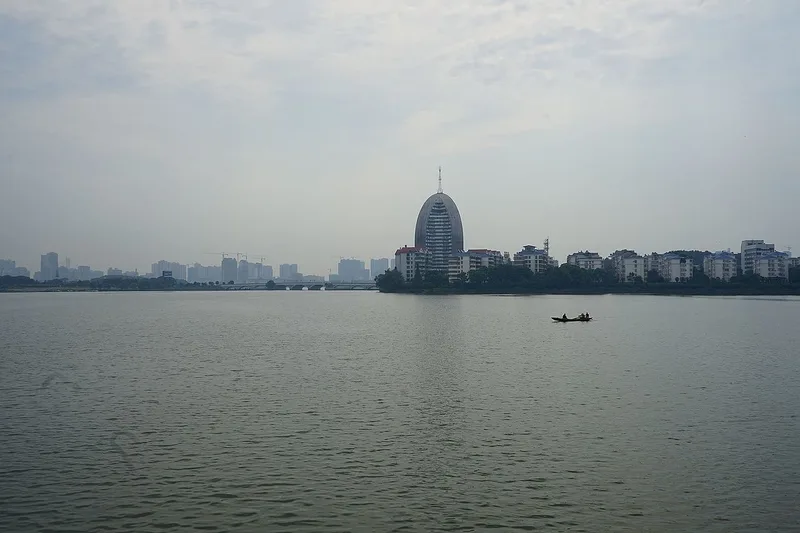
Changyang Tujia Autonomous County (长阳土家æ—?自治县) sits in the western hills of Hubei, administered by Yichang prefecture-level city and threaded by the emerald Qingjiang River. The county is named for its position along the "long sunny" stretch of the river and is the historical heartland of the Tujia people, one of China's officially recognised ethnic minorities. Hand-axe finds at the Changyang Man (长阳人) palaeolithic site place humans here well over 100,000 years ago, and the area was a frontier zone between Han imperial administration and the tusi (chieftain) polities of the Wuling Mountains until the Qing dynasty broke the chieftaincies in the 18th century. That layered past — prehistoric, ethnic-minority, riverine-Han — is exactly what makes Changyang feel different from the flat industrial Yangtze cities downstream.
For most visitors the draw is scenery and culture rather than urban life: karst peaks rising sheer from the green water of the dammed Qingjiang, Tujia stilt houses (diaojiaolou), folk songs and the baishouwu "hand-waving dance," and a food culture built around cured pork, river fish, soy-bean hezha, and chilli. The county seat, Longzhouping (龙舟å?ª), is a small, walkable riverside town that functions as the gateway to the Qingjiang Gallery scenic area; very few foreign travellers come here, and English is rare.
The climate is humid subtropical: hot, sticky summers (June–August often 30–35 °C with afternoon thunderstorms), cool damp winters (typically 3–8 °C, occasional light snow on the higher ridges), and beautiful shoulder seasons. April–early June and mid-September–early November are the best windows — rapeseed and azaleas in spring, clear river light and cool nights in autumn. Avoid the Chinese national holidays (Spring Festival, the 1–7 October "Golden Week," and the early-May break) unless you enjoy queueing for boats.
Planning Changyang? Tell us your dates and we’ll tailor the trip.
Ask on WhatsAppHow do you get there?
By Plane
The nearest airport is Yichang Sanxia Airport (IATA: YIH), about 90–100 km northeast of Longzhouping (roughly 1.5–2 hours by road). It has domestic flights to Beijing, Shanghai, Guangzhou, Shenzhen, Chengdu, Kunming, Xi'an and other major Chinese cities; there are no scheduled international services.
From the airport, the simplest options are:
- Didi / taxi to Longzhouping — expect roughly ¥250–350 depending on traffic and surcharges.
- Airport shuttle to Yichang East Railway Station (~¥20–30), then a coach or Didi onward to Changyang.
By Train
Changyang has no high-speed rail station of its own. The functional rail gateway is Yichang East Railway Station (宜昌东站) in Yichang city, on the Hanyichong / Yiwan corridor, with frequent G- and D-trains from Wuhan (about 2 hours), Chongqing (about 4–5 hours), Chengdu, Zhengzhou and Guangzhou. From Yichang East, take a long-distance coach or Didi onward (~90 minutes by expressway).
Booking tip: buy tickets on 12306 (the official China Railway site/app) or via Trip.com; you'll need your passport number for purchase and at the gate. Tickets release 15 days in advance and Wuhan–Yichang sells out around holidays.
By Car / Road
Driving is the natural way to reach Changyang. The G50 Shanghai–Chongqing Expressway runs along the north bank of the Qingjiang/Yangtze corridor, with a Changyang exit feeding into Longzhouping.
- From Yichang city centre: ~65 km, about 1 hour 15 minutes on the expressway.
- From Wuhan: ~370 km, around 4.5–5 hours.
- From Chongqing: ~600 km, around 7–8 hours, much of it scenic mountain expressway through Enshi.
Long-distance buses run from Yichang Long-Distance Bus Station and from Yichang East Railway Station's coach bay to Changyang's Longzhouping bus station throughout the day; the ride is roughly 1.5 hours and fares are typically in the ¥35–55 range. Roads are paved and in good condition, but mountain sections beyond the expressway are winding — not ideal for nervous drivers, and night driving in fog is best avoided.
Longzhouping is small enough that walking covers most of the town centre, the riverside promenade, and the main pier for Qingjiang Gallery boats. Outside town, distances grow quickly and public transport thins out.
- City buses run a handful of routes around Longzhouping for a flat ¥1–2 fare; signage is Chinese-only.
- Taxis and Didi are the most useful option for travellers. Short hops in town are typically ¥8–15; trips out to Qingjiang Gallery's main piers, Tianzhushan, or Qingjiang Fangte run ¥30–80 depending on the pier. Have your destination written in Chinese characters.
- Tourist shuttles connect Longzhouping to the main scenic area entrances during peak season; ask your hotel for the current departure point.
- Boats on the Qingjiang are themselves the main "transport" attraction — see Do.
Scams are rare compared to bigger Chinese cities, but watch for unmetered "black taxis" at the bus station offering inflated fixed-price tours to scenic spots; agree on a price up front or use Didi. Cash is increasingly useless — set up Alipay or WeChat Pay with a foreign card before you arrive.
What are the things to do?
Qingjiang Gallery (清江画廊, QÄ«ngjiÄ?ng Huàláng) — the headline attraction: a long, dammed stretch of the Qingjiang River where karst peaks plunge into water the colour of jade, dotted with Tujia villages and small islands. Most visitors experience it as a half- or full-day cruise from Longzhouping (see Do). A combined boat-and-entry ticket is the standard way in.
Wuluo Zhongli (æ¦è?½é’Ÿç¦»å±±) — a sacred mountain island in the Qingjiang Gallery cruise route, traditionally regarded as the cradle of the Tujia ancestor Lin Jun (廪å?›). Temples, ancestor halls and viewpoints over the river. Usually visited as a stop on the standard cruise.
Tianzhushan (天柱山) — a dramatic columnar peak on the southern bank with cliff stairs, a summit Taoist temple, and panoramic views back over the Qingjiang. Less crowded than the cruise circuit. Half-day visit; bring proper shoes.
Changyang Man Site (长阳人é?—å?€) — at Xiazhongjiawan near Daxi (大堰乡), the cave where the late-Pleistocene "Changyang Man" jawbone was discovered in 1956. Interpretive signage is in Chinese; combine with a half-day drive through the back country.
Qingjiang Bafanggu (清江方山 / 八方山) — a karst plateau and grand-canyon-style scenic area south of the river, with glass walkways, cliff trails and viewing platforms.
Longzhouping waterfront and Old Town — free. The riverside promenade in the county seat is pleasant at dusk for the lit-up bridges and locals dancing on the squares; a few blocks back from the water you'll find older Tujia-style houses and a small night market.
- Cruise the Qingjiang Gallery. The classic Changyang experience: a 3–4 hour return boat trip from Longzhouping Pier (倒影峡ç ?头 / 清江画廊ç ?头), with stops at Wuluo Zhongli, Xianren Village and the karst "Mirror Gorge." Tujia singers often perform on board. Multi-class boats run; the slower wooden-style craft are more atmospheric than the fast catamarans.
- See a Tujia folk performance. Look for the baishouwu (摆手舞) "hand-waving dance," the kuijia (å“å«?) "crying bride" wedding song, and Nanqu opera. Evening shows aimed at tourists run in Longzhouping during peak season; some river cruises include a shortened version.
- Hike the karst rim. Trails around Tianzhushan and Bafanggu give you the river views without the boat queues; a day with a hired car covering both is the strongest scenery itinerary outside the cruise.
- Qingjiang Fangte / Fantawild theme park (清江方特东方神画). A large Fantawild-branded theme park on the river west of Longzhouping, with mostly indoor rides themed around Chinese folklore — a useful rainy-day or family option.
- Day trip to the Three Gorges Dam. Around 1.5–2 hours' drive northeast at Sandouping; combines well with a one-night stay in Yichang.
- Try a Tujia village homestay. Several villages along the upper Qingjiang and in the Zihui/Yuxiakou direction operate nongjiale (农家ä¹?) homestays with cooking, river swimming in summer, and walks to terraced fields. Best arranged through your Longzhouping hotel.
Planning Changyang? Want these on a customised itinerary?
Ask on WhatsAppWhere to eat?
Changyang food is Tujia mountain cooking: chilli-forward, sour-pickled, smoke-cured, and unembarrassed about pork fat. Signature dishes to look for:
- Hezha (å?ˆæ¸£) — a thick stew of ground soybean and wild greens, eaten over rice. Sometimes called "poor man's tofu"; the Tujia version is the canonical one.
- Larou (腊肉) — slow-smoked, intensely flavoured cured pork, stir-fried with garlic shoots, dried radish, or peppers.
- Zha guangjiao (鲊广椒) — fermented cornmeal-and-chilli paste stir-fried with pork, a distinctive western-Hubei taste.
- Qingjiang fish hotpot — fresh river fish (often jiyu or guiyu) simmered with pickled chillies and tofu.
- Baogu fan (包谷饭) — steamed cornmeal mixed with rice, the everyday Tujia staple.
Vegetarians can do reasonably well on hezha, stir-fried mountain greens, tofu dishes and cold dressed vegetables, but ask explicitly for bu yao rou (no meat) — broths and stir-fries often hide bacon. Halal options are limited; look for Lanzhou Lamian noodle shops, which are run by Hui Muslims. Gluten-free is difficult given the ubiquity of soy sauce and noodles.
Where to drink?
- Baojing tea (å®?é?™èŒ¶ / 长阳绿茶) — Changyang's hill country produces good green tea; teahouses around the riverfront serve it by the glass for a few yuan.
- Tujia rice wine (土家米酒) — sweet, low-alcohol fermented-rice drink, often served warm with meals; the homemade village versions are best.
- Baijiu — local guzhuang and Hubei brands are common in restaurants; ask for a smaller bottle unless you mean it.
- Beer — Snow (雪花), Tsingtao and Budweiser dominate; Wuhan-brewed Xingyinge (行å?Ÿé˜?) sometimes shows up.
Bar life is modest: a handful of KTV bars, lounge-style pubs and milk-tea / coffee chains (Luckin, Mixue) along Qingjiang Avenue cover most evening drinking. The riverside promenade itself is the real "night scene" — locals walking, dancing and sitting on the wall with bottles.
Water safety: tap water is not safe to drink. Stick to bottled or boiled water; hotels provide kettles and most have a free water dispenser in the lobby. Ice in lower-end restaurants is best avoided.
Planning Changyang? We’ll book the stays and dining for you.
Ask on WhatsAppWhere to stay?
As a practical guide to what's available in Longzhouping:
- Budget (¥80–180 / night): small Chinese-chain "express" hotels and family-run binguan (宾馆) around the bus station and Qingjiang Avenue. Look for Home Inn (如家), 7 Days (7天) or Hanting (汉庭) branches on Ctrip/Trip.com; rooms are clean and basic but staff rarely speak English.
- Mid-range (¥250–500 / night): business hotels along the riverfront and near the Qingjiang Gallery pier, plus Tujia-themed boutique inns with carved-wood interiors. Ask for a river-view room.
- Upscale (¥600–1,200+ / night): a small number of resort-style properties on the Qingjiang Gallery scenic area, including lakeside hotels at the cruise terminal and villa-style Tujia stilt-house resorts further up the river. Best booked through a Chinese OTA (Ctrip / Fliggy) — these properties often don't appear on Booking.com.
For an immersive option, consider one night in town plus one night in a Tujia village homestay (土家民宿 / 农家ä¹?) upriver; your Longzhouping hotel can usually arrange a driver and call ahead in Chinese.
What should you buy?
Changyang isn't a shopping destination, but it's a strong place to pick up Tujia handicrafts and edible souvenirs:
- Xilankapu (西兰å?¡æ™®) — Tujia brocade in geometric patterns of red, black, blue and white. Look for table runners, small bags and wall hangings rather than mass-printed copies.
- Tujia bacon (土家腊肉) and smoked sausage — vacuum-packed at any local supermarket; check customs rules before flying home with meat.
- Dried Qingjiang fish and Qingjiang tea from the hill villages above the river.
- Tujia silver jewellery — chunky neck rings and earrings, sold in a handful of speciality shops near the riverside promenade.
The main retail strip is on and around Qingjiang Avenue (清江大é?“) in Longzhouping, with a daily produce-and-everything market a few blocks inland. Bargaining is acceptable at souvenir stalls and the market (expect ~20% off opening prices); supermarkets, branded shops and the cruise-pier kiosks are fixed-price.
Where to go next?
- Yichang (宜昌) — ~90 km / 1.5 hours by car. Hubei's western gateway, the launchpad for Three Gorges cruises, and home to the Three Gorges Dam Scenic Area at Sandouping.
- Three Gorges Dam (三峡大å??) — ~110 km / ~2 hours via Yichang. The world's largest hydropower project, with viewing platforms over the dam and ship locks.
- Shennongjia (神农架) — ~250 km / 5–6 hours by car. UNESCO-listed forested mountains, the legendary home of the "wild man" yeren, with high meadows, alpine lakes and golden snub-nosed monkeys.
- Enshi Grand Canyon (æ?©æ–½å¤§å³¡è°·) — ~250 km / ~4 hours by expressway. Spectacular karst canyon with the "One Pillar of Heaven" needle peak; pair with Enshi city's Tujia tusi sites.
- Wudang Mountains (武当山) — ~450 km / 6–7 hours by car or via Yichang–Shiyan high-speed rail. Taoist sacred peak, birthplace of Tai Chi, with a UNESCO-listed Ming-era temple complex.
- Wuhan (武汉) — ~370 km / 2 hours by high-speed rail from Yichang East. Hubei's capital, with the Yellow Crane Tower, East Lake, and an outstanding food scene built around hot-dry noodles.
Nearby in Hubei Sheng
More places to explore around Changyang.

Guide content as of May 2026. Portions adapted from Wikivoyage, CC BY-SA 4.0.

Contact Us
Get in touch with us.
Get in touch
Contact Us
Tell us where you'd like to go and how you like to travel. A real Tripcuro planner — not a bot — will craft an itinerary around you.
- Personalised, hassle-free planning end-to-end
- Transparent pricing, no hidden costs
- 24/7 support for complete peace of mind