
Wuhan
Hubei Sheng, China
Why visit Wuhan?
Wuhan (武汉, WÇ”hàn) is the capital of Hubei Province and the largest metropolis in central China, sprawling across the confluence of the Yangtze and Han rivers. Formed in 1927 by amalgamating three historic cities — Hankou (the commercial centre, once a 19th-century treaty port lined with European concession-era architecture), Hanyang (the industrial west bank), and Wuchang (the educational and political heart on the east bank) — the city earned the nickname "Thoroughfare of Nine Provinces" for its role as China's central inland transport hub. It was here, on 10 October 1911, that the Wuchang Uprising sparked the Xinhai Revolution and brought down the Qing dynasty; the city briefly served as the wartime capital of the Republic of China in 1938 before falling to Japanese forces. More recently, Wuhan is recognised as a UNESCO City of Design and gained worldwide name recognition in late 2019/early 2020 as the initial epicentre of the COVID-19 outbreak.
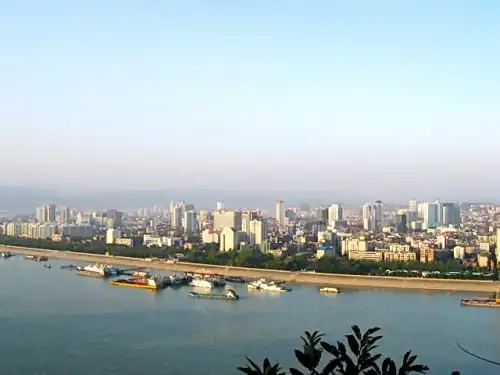
Most travellers come for a layered mix: Tang-dynasty-era poetry made famous at the Yellow Crane Tower, the cherry blossoms of Wuhan University, the freshwater immensity of East Lake, and a street-food scene anchored by the city's signature breakfast culture (guo zao) — reputedly the most diverse in China. The river geography defines daily life: Hankou sits to the northwest of the Yangtze, Hanyang to the southwest of the Han River, and Wuchang occupies the entire east bank. Ten road bridges and two tunnels stitch the three sides together.
Wuhan is one of the so-called "Three Furnaces" of China, with summer highs routinely exceeding 35 °C and crushing humidity from June through August — visit in late March to early May (cherry-blossom season, mild weather) or October to early November (clear, cool, dry). Winter is damp and chilly with little snow but plenty of bone-cold drizzle; January averages 8 °C/1 °C.
Planning Wuhan? Tell us your dates and we’ll tailor the trip.
Ask on WhatsAppHow do you get there?
By Plane
Wuhan Tianhe International Airport (WUH) lies about 30 km northwest of the city centre, with three terminals and the largest domestic operation in central China. Flights connect virtually every major Chinese city — Beijing, Shanghai, Guangzhou, Chengdu, Xi'an, Hong Kong — and a smaller international roster including Taipei, Seoul, Tokyo, Singapore, Bangkok, Paris, and Moscow.
Transport into town:
- Metro Line 2 runs from the airport to Hankou, Hanyang, and Wuchang via the city centre, roughly 06:00–22:30, ¥5–8 depending on distance, ~50 min to central Hankou.
- Airport commuter rail to Hankou Railway Station runs every 1–1½ hours; useful if you're connecting onward by long-distance train.
- Taxi to Wuchang costs roughly ¥70–80 plus a ¥10 expressway toll; allow 50–70 min depending on traffic. Use Didi to avoid haggling.
By Train
Wuhan is one of China's most important high-speed rail hubs, with three main stations all linked by the metro:
- Wuhan Railway Station (武汉站, Metro Line 4) — the main G-series high-speed terminus on the east side.
- Hankou Railway Station (汉å?£ç«™, Metro Line 2) — historic station serving the north and northwest.
- Wuchang Railway Station (武昌站, Metro Line 4) — older lines, overnight sleepers, and conventional trains.
Sample G-train (high-speed) times: Beijing 4 hr, Shanghai 4½ hr, Guangzhou 4 hr, Zhengzhou 2 hr, Xi'an 4 hr, Changsha 1½ hr. Book through Trip.com, the official 12306 app, or via a hotel concierge — bring your passport for ticket pickup, and arrive 45 min early to clear ID checks and security. For the right station, double-check your booking: a G-train from Beijing usually terminates at Wuhan Station, not Hankou or Wuchang.
By Car / Road
Major expressways converge on Wuhan from every direction; drive times approximately:
- Changsha ~350 km / 4 hr via the G4 Beijing–Hong Kong–Macau Expressway
- Zhengzhou ~530 km / 5½ hr via G4
- Chongqing ~890 km / 10–11 hr via the G42
- Yichang ~330 km / 3½ hr via G42
Long-distance buses serve regional destinations from Hankou Bus Station (Jinjiadun) and Fujiapo Bus Station in Wuchang. For most travellers, the high-speed train is faster, cheaper, and dramatically less stressful than driving.
The Wuhan Metro is the workhorse: 11+ lines covering all three "cities" and the airport, fares ¥2–8, runs ~06:00–22:30. Buy a stored-value Wuhan Tong card at any station for a small discount and convenience, or scan via Alipay/WeChat (foreign-card support has improved but is not always reliable — keep some cash on the card). Tap-and-go QR codes from Alipay's "Travel" mini-program work on metro and most buses.
Buses cover everything the metro doesn't but are dense, signage is Chinese-only, and routes change. Didi (China's Uber) is universal and cheap — a typical cross-river ride runs ¥25–45. Regular taxis flag down for ¥10 base; insist on the meter and have your destination written in Chinese characters, since drivers rarely speak English.
The Yangtze River Ferry between Zhonghua Lu (Wuchang) and Wuhan Pass (Hankou) is a charming alternative crossing for ¥1.5–2. The Yangsigang Yangtze River Bridge and the Wuhan Yangtze River Bridge both have pedestrian sidewalks for those who want to walk across the river.
Walkability is poor in most districts beyond the riverfronts and university quarters — distances are vast, summers are brutal, and traffic is heavy. Scams to watch: unmetered taxis at the airport and railway stations (use the official taxi rank or Didi); "tea ceremony" invitations from English-speaking strangers near tourist sights — politely decline and walk away.
What are the things to do?
Towers, gates, and historic landmarks
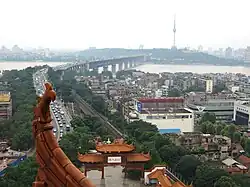
- Yellow Crane Tower (黄鹤楼) — Wuhan's defining monument, immortalised in Tang-dynasty poetry by Cui Hao and Li Bai. The current five-storey reconstruction (1985) crowns Snake Hill (Sheshan) on the Wuchang bank with sweeping views over the Yangtze and the First Yangtze Bridge. Open 08:00–18:00 (summer until later); ¥60. Metro Line 4, Yellow Crane Tower Station.
- Guiyuan Temple (归元寺) — A working Chan Buddhist temple founded in the 17th century, famed for the Hall of 500 Arhats — gilded statues, no two alike. 08:00–17:00; ¥10. Hanyang District.
- Wuhan Yangtze River Bridge (武汉长江大桥) — The 1957 Soviet-era bridge that first crossed the Yangtze, a national engineering icon. Walk the upper deck for free, with stairway access from the park near the TV tower (Hanyang side) or west of the Yellow Crane Tower (Wuchang side).
Museums
- Hubei Provincial Museum (湖北çœ?å?šç‰©é¦†) — One of China's great regional museums; the highlight is the Marquis Yi of Zeng's bell set, a 65-bell bronze chime from 433 BCE, plus daily musical performances. Free (passport required for ticket); 09:00–17:00, closed Mon. East Lake area, Metro Line 8 Liyuan Station.
- Xinhai Revolution Museum (辛亥é?©å‘½å?šç‰©é¦†) — Modern museum on the centenary site of the 1911 Wuchang Uprising, next to the Red Building (Hongloul, the original revolutionary headquarters). 09:00–17:00, closed Mon; free.
- Wuhan Revolution Museum / Mao Zedong's Former Residence — Lower-key but informative, in Wuchang.
Lakes and parks
- East Lake (东湖, Donghu) — At ~33 km², the largest urban lake in China, six times the size of Hangzhou's West Lake. Walk or cycle the 100+ km East Lake Greenway, hire a boat, or wander the Tingtao, Moshan, and Luoyan scenic areas. Free entry to most areas; sub-attractions like the Botanical Garden charge ¥40.
- Moshan Botanical Garden / East Lake Cherry Blossom Garden — In spring (mid-March to early April), Wuhan's cherry blossoms rival Japan's; ¥60 in season.
- Wuhan University campus (武汉大学) — Among China's most beautiful university campuses, with 1930s "Chinese Renaissance"-style buildings, the famous cherry-blossom avenue, and Luojia Hill. Free, but timed reservations required during cherry-blossom season via the WeChat mini-program.
Old Hankou
Jianghan Road Pedestrian Street (江汉路步行街) — A kilometre of restored European treaty-port architecture (now anchored by malls and chain stores); pleasant in the evening with the river breeze.
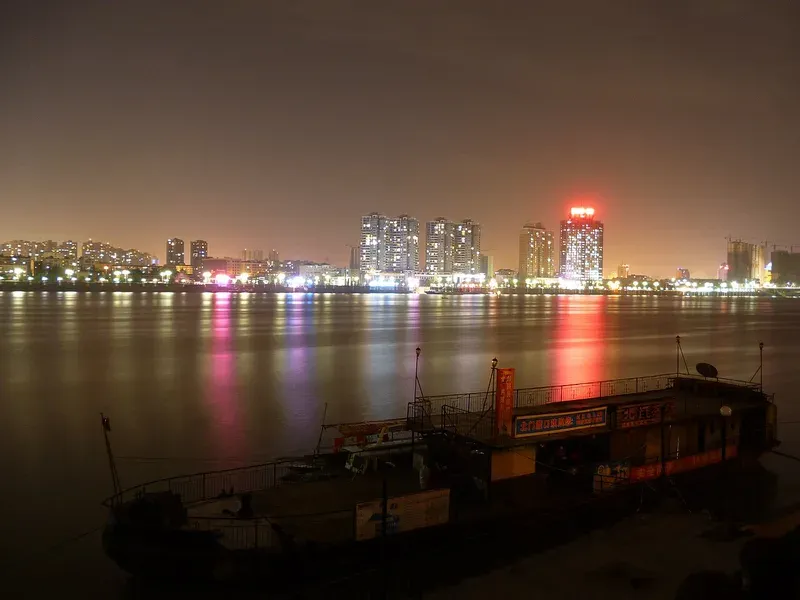
Hankou Bund (汉å?£æ±Ÿæ»©) — Promenade along the Yangtze with views of the Hankou skyline, especially atmospheric at dusk.
Liu Du (黎黄陂路) — A short, leafy street of preserved Russian, French, and British concession-era villas now occupied by cafés and boutiques.
Walk the cherry blossoms in late March/early April — Wuhan University's campus and East Lake's Moshan garden are the two essential spots. Reservations required for both during peak bloom.
Cycle the East Lake Greenway — Rent a bike at one of the entrances and ride a 30–100 km loop through forested headlands, lake views, and pavilions; one of the great urban cycling experiences in China.
Take a Yangtze night cruise — Departures from Wuhan Pass (Hankou) typically 19:30 and 20:30, ~90 min, around ¥120–180. The skylines of Hankou and Wuchang are spectacularly lit.
Listen to the Marquis Yi bell set performance at the Hubei Provincial Museum — daily replicas played on reproductions of the 2,400-year-old chime; check the schedule on arrival.
Climb (or ride the chairlift up) Snake Hill at sunset to combine the Yellow Crane Tower with golden-hour views over the river.
Day trip to Wudang Mountains — Sacred Taoist range, the spiritual home of tai chi; high-speed rail to Shiyan-Wudangshan (~2 hr), then taxi/bus to the gate.
Catch a show at the Han Show Theatre (汉秀剧场) in Wuhan Central Cultural District — a Franco Dragone-directed water-and-acrobatics spectacle, ¥280 and up.
Soak at Mulan Tianchi or Hot Springs — Several hot-spring resorts ring the city; Mulan area, ~90 min north.
Planning Wuhan? Want these on a customised itinerary?
Ask on WhatsAppWhere to eat?
Wuhan's most beloved meal is breakfast (过早, guo zao) — small stalls and shops serve dozens of regional specialities from sunrise. The signature dish is reganmian (热干é?¢) — chewy alkaline noodles tossed with sesame paste, pickled vegetables, chilli oil, and chopped scallions; eat standing up for ¥6–10. Also try doupi (a savoury sticky-rice and pork pancake), mianwo (deep-fried dough rings), shaomai (Hubei-style with peppery glutinous rice), and tang baozi (soup buns). Lunch and dinner lean to Hubei province's robust river-fish cuisine — wuchang fish, lotus-root soup, hot-and-sour catfish — plus Sichuan and Hunanese imports.
- Cai Lin Ji (蔡林记) — The most famous reganmian chain in the city; the Hubu Alley and Jianghan Road branches are tourist-friendly. Bowl ~¥10. Budget.
- Hubu Alley (户部巷, Wuchang) — A whole pedestrian alley dedicated to guo zao and snacks; a one-stop crawl through the city's breakfast canon. Touristy but legitimate. Budget.
- Sijimei Tangbao (四季美汤包) — Jianghan Road; classic Wuhan-style soup dumplings, ¥25–40 a steamer. Budget.
- Yanji Lishi (艳阳天) — A reliable mid-range Hubei chain doing wuchang fish, lotus-root and pork-rib soup, three-cup chicken; ¥120–180 per person. Mid-range.
- Xiao Lan Jing (å°?è“?鲸) — Long-standing local favourite for refined Hubei cuisine, multiple branches; ¥150–250 per person. Mid-range.
- Yan Yu Lou at Shangri-La / Wan Li Chinese Restaurant at the Hilton Optics Valley — Hotel fine dining for Cantonese/Hubei tasting menus; ¥400+ per person. Upscale.
Vegetarians will find Guiyuan Temple's vegetarian restaurant excellent and authentic. Halal eaters should head to the Muslim-quarter restaurants near Erqi Road in Hankou. Gluten-free is genuinely difficult given the noodle-and-soy-sauce backbone of the cuisine — communicate dietary needs in Chinese in writing.
Where to drink?
Wuhan's go-to non-alcoholic drink is mi jiu (米酒) — a sweet, lightly fermented rice wine often served warm with osmanthus or fermented glutinous rice (lao zao); ubiquitous at breakfast spots. Hubei tea culture is strong: green Enshi yulu and Qingzhuan brick tea are easy to sample at any teahouse.
For nightlife, the action splits between Hankou's riverside bar strips (around Lihuangpi Road and the old concessions) and Wuchang's student quarters near Guanggu (Optics Valley) and Jiedaokou. Notable spots:
- Wuhan Prison — a perennial expat bar in Hankou with craft beer and live music
- Vox Livehouse (Wuchang, near Guangbutun) — the city's main indie/rock venue, cover ¥60–150
- Hankou riverfront craft-beer bars — local breweries like 18° Brewing have taprooms
Local Chinese beers are dominated by Tsingtao and Snow, but craft beer has a respectable scene. Baijiu drinkers can sample Baiyunbian, the Hubei provincial brand.
Tap water is not safe to drink — use bottled or boiled water, which is supplied free in every hotel room and most restaurants. Ice in upmarket establishments is generally fine; avoid it from street stalls.
Planning Wuhan? We’ll book the stays and dining for you.
Ask on WhatsAppWhere to stay?
Budget
- Pathfinder Youth Hostel (Wuhan Pathfinder) — Near the Yellow Crane Tower in Wuchang; dorms ~¥80, private rooms ~¥220. Good English-speaking staff, the standard backpacker base.
- Wuhan Yangtze International Youth Hostel — Riverfront in Hankou, dorms ~¥75, doubles ~¥240; the location is the selling point.
Mid-range
- Ji Hotel (Wuhan Jianghan Road) — Reliable Chinese chain in old Hankou, walking distance to the Bund and Jianghan Road; doubles ~¥450–550.
- Holiday Inn Wuhan Riverside — Solid international standard on the Hanyang riverbank facing Hankou; ¥600–800.
Upscale / heritage
- Wuhan Jin Jiang International Hotel — A 1950s landmark in Hankou with rebuilt interiors and a dose of history; ¥900–1,300.
- Shangri-La Hotel, Wuhan — Service-led five-star in the Jianghan business district with a strong Chinese restaurant; ¥1,400–2,200.
- The Westin Wuhan Wuchang — Modern luxury near the Wuchang waterfront and Han Street; ¥1,200–1,800.
What should you buy?
The big shopping streets are Jianghan Road (Hankou) for mid-market international and Chinese chains, Chuhe Hanjie / Han Street (Wuchang) for premium brands and the riverside Wanda development, and Optics Valley Walking Street (Guanggu) in eastern Wuchang, a sprawling pedestrian zone with European-themed architecture popular with students.
For local specialities look for:
- Hubei tea — particularly Enshi yulu green tea and Qingzhuan dark "brick" tea
- Hanxiu embroidery — traditional Hubei silk embroidery
- Jingzhou lacquerware — bold red-and-black Han-dynasty-style designs
- Reganmian sets and packaged sesame paste — easier to take home than the fresh noodles
- Cuiweifu pastries and Wuhan duck-neck snacks (Jingwu, Zhouheiya — both originated here) for vacuum-packed gifts
For souvenirs and antiques, browse Chongren Road's music and stamp district. Bargaining is expected at markets and small antique stalls (start ~40% of the asking price); department stores and chain shops are fixed-price.
Where to go next?
- Yichang (宜昌) — 2 hr by high-speed rail. Gateway to the Three Gorges of the Yangtze and the Three Gorges Dam; cruise embarkation point.
- Wudang Mountains (武当山) — ~2 hr by G-train to Shiyan-Wudangshan. UNESCO-listed Taoist mountain complex, the spiritual birthplace of tai chi.
- Enshi (æ?©æ–½) — 4 hr by high-speed rail. Dramatic karst canyons, the Enshi Grand Canyon, and Tujia minority villages in western Hubei.
- Jingzhou (è?†å·ž) — 1½ hr by train. Intact Ming-dynasty city walls and a strong Chu-kingdom historical legacy.
- Changsha (é•¿æ²™) — 1½ hr by G-train. Capital of Hunan, fiery food culture, the Mawangdui Han tombs, and Mao Zedong's hometown nearby.
- Lushan (åº?å±±) — ~3 hr by train via Jiujiang. UNESCO mountain retreat famed for misty peaks, waterfalls, and early-20th-century summer villas.
Nearby in Hubei Sheng
More places to explore around Wuhan.
Guide content as of May 2026. Portions adapted from Wikivoyage, CC BY-SA 4.0.

Contact Us
Get in touch with us.
Get in touch
Contact Us
Tell us where you'd like to go and how you like to travel. A real Tripcuro planner — not a bot — will craft an itinerary around you.
- Personalised, hassle-free planning end-to-end
- Transparent pricing, no hidden costs
- 24/7 support for complete peace of mind