
Xiangyang
Hubei Sheng, China
Why visit Xiangyang?
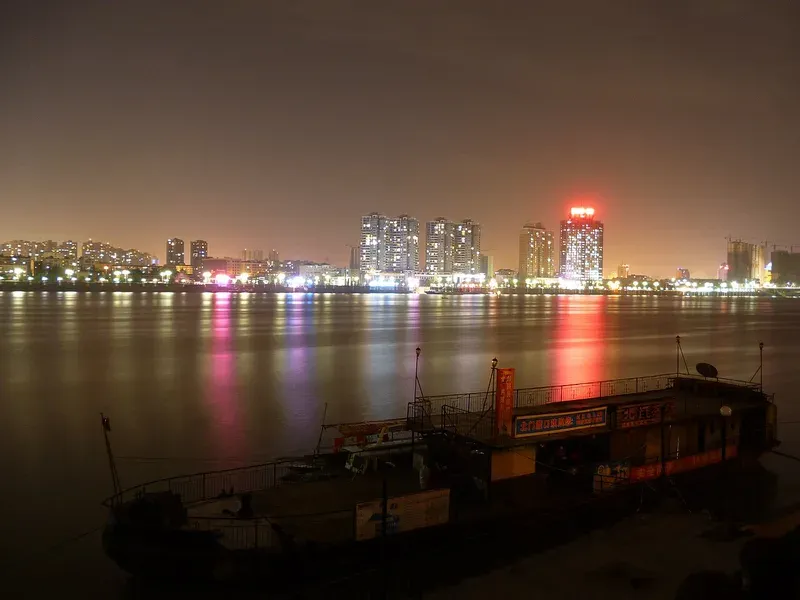
Xiangyang (襄阳) is a city of roughly 5.3 million people in northwestern Hubei, straddling the middle Han River. The southern half — historic Xiangyang proper — sits inside one of China's best-preserved Ming-era city walls, while the northern half, Fancheng, is the modern commercial and rail-hub side. With over 2,800 years of recorded history, Xiangyang has been a frontier military stronghold, a Han River trading port, and the cradle of Chu, Han, and Three Kingdoms culture. It is most famous internationally as the site of the six-year Mongol siege (1267–1273) that broke the Southern Song, and domestically as the hill-country retreat of the strategist Zhuge Liang, whose "Longzhong Plan" was hatched here.
For travellers, Xiangyang's draw is a concentration of Three Kingdoms heritage that few Chinese cities can match: the Gulongzhong scenic area west of town, the moated ancient city, and a string of temples and museums all within an hour of one another. It rewards a slower pace than the better-known Hubei stops, and the local Southwestern Mandarin dialect, riverside food culture, and relative lack of foreign tourists give it a more lived-in feel than Wuhan or Yichang.
The climate is humid subtropical with four distinct seasons. Spring (April–May) and autumn (late September–early November) are the comfortable windows, with mild temperatures and manageable rain. Summer (June–August) is hot, humid, and accounts for most of the 820–1,100 mm annual rainfall — July and August routinely hit 32 °C with heavy afternoon thunderstorms. Winters are cold and dry, dipping near freezing in January, with low rainfall but bleak grey skies. Layout-wise, think of the city in two halves: Xiangcheng District (south of the Han, walled old town, most of the heritage sights) and Fancheng District (north of the river, main railway station, bus terminal, hotels, modern shopping). Xiangzhou District further west holds the airport and Gulongzhong.
Planning Xiangyang? Tell us your dates and we’ll tailor the trip.
Ask on WhatsAppHow do you get there?
By Plane
Xiangyang Liuji Airport (XFN) sits about 18 km west of the city centre at 1 Jichang Road, Liuji Subdistrict, Xiangzhou District (☎ +86 710 3236737). It's a regional airport with a 2,600 m runway and a T2 terminal opened in 2017, handling more than two million passengers a year on routes to over 20 Chinese cities (Beijing, Shanghai, Guangzhou, Shenzhen, Kunming, Chengdu among them) plus a handful of seasonal international flights since 2019. A taxi to the centre costs roughly RMB 60–80 and takes 25–35 minutes; the airport shuttle bus runs to downtown for around RMB 20. For onward connections, Wuhan Tianhe (WUH), about 3.5 hours by high-speed train, has far more international options.
By Train
Xiangyang has two main stations and is well-connected to the national rail network.
- Xiangyang Railway Station (襄阳站), 38 Qianjin Road, Fancheng District (☎ +86 710 12306) — about 6 km from the centre. The legacy hub, opened 1958, sits at the junction of the Handan, Jiaoliu, and Xiangyu lines. Around 78 daily conventional and high-speed trains serve Beijing, Shanghai, Chengdu, Guangzhou, and Wuhan.
- Xiangyang East Railway Station (襄阳东站), 1 Gaotie South Road, Dongjin New District — about 17 km east of the centre. Opened in 2019, this is the high-speed hub on the Wuhan–Xi'an and Zhengzhou–Chongqing corridors, with nine platforms and twenty tracks. Wuhan is roughly 1h 45m, Xi'an about 2h 30m, and Chongqing around 4h.
Two outlying stations also serve the prefecture: Nanzhang (å?—æ¼³), ~45 km southwest, and Yicheng (宜城), ~40 km south, both on the Zheng-Yu high-speed line. Book via the China Railway 12306 app (English available) or Trip.com; reserve 3–7 days ahead during Chinese holidays. Bring your passport — it's both your ticket and your ID at the gate.
By Car / Road
Xiangyang sits on the G55 (Erenhot–Guangzhou) and G70 (Fuzhou–Yinchuan) expressways, putting it within easy driving reach of much of central China. Approximate drive times: Wuhan ~3h 30m via G70 (320 km); Xi'an ~5h via G70 (440 km); Chongqing ~7h via G42/G50 (700 km); Zhengzhou ~4h via G55 (350 km). Roads are toll expressways, well-maintained, and signposted in pinyin as well as Chinese.
For intercity bus travel, Xiangyang Bus Terminal (襄阳汽车客è¿?中心站), 8 Zhongyuan Road, Fancheng District (☎ +86 710 3223768), is the main hub — a Ministry of Transport first-class station running about 800 daily departures to 18 provinces, with luggage storage, dining, and direct connections to the railway station and city buses. Xiangyang South Bus Terminal (襄阳汽车客è¿?å?—ç«™) on Xiangnan Avenue in Xiangcheng District (☎ +86 710 3513831, 07:00–17:00) opened in March 2025 and handles 19 intercity routes (154 buses), notably to Nanzhang, Wuzhen, and Baokang.
The city has an extensive bus network with very wide coverage. Regular routes are RMB 1–2 per ride; air-conditioned buses charge RMB 2 in summer and winter. Buses run every 5–10 minutes at peak and 10–15 minutes off-peak, and routes link the major sights — Gulongzhong, Xiangyang Ancient City, Xijia Pool, Tang City — with the main commercial areas. Pay with Alipay or WeChat ride codes (you'll need a Chinese mobile number linked) or a physical bus card; cash is no longer accepted on most lines. English stop announcements are inconsistent on older buses, so keep Amap (高德地图) or Baidu Maps open for real-time stop tracking.
Taxis operate 24 hours. The base fare is RMB 8 for the first 2 km, then RMB 2 per km; from 23:00–06:00 it's RMB 9 base and RMB 2.2 per km. There's no fuel surcharge. Hail on the street or use Didi Chuxing — the latter is much easier given that nearly all drivers speak only Chinese. Have your destination written in Chinese characters or saved as a screenshot from a map app. Cabs get scarce in rush hour (07:30–09:00, 17:30–19:00) and on rainy days.
Shared bikes and e-bikes (Meituan, Hello, Didi Qingju) are scattered across the city: roughly RMB 2–3 per half hour for pedal bikes, RMB 3–5 for e-bikes. Scan the QR code in the relevant app to unlock; park only in painted designated zones to avoid relocation fees. Dedicated bike lanes run near Gulongzhong and Xijia Pool, and the riverside paths along the Han are pleasant. The walled old city is compact enough to explore on foot, but some lanes are steep or narrow.
Scams to watch: unofficial "tour drivers" loitering at the airport and East railway station offering fixed-price rides to Gulongzhong — book Didi or take a metered taxi instead. At Gulongzhong itself, ignore touts selling "combined" tickets to extra "scenic" annexes that aren't part of the official 5A area.
What are the things to do?
Three Kingdoms & historic core
- Xiangyang Ancient City (襄阳å?¤åŸŽ) — 128 Binjiang North Street, Xiangcheng District (☎ +86 710 3500002). One of the best-preserved walled cities in China, built up from Western Han foundations, with a 7.3 km wall, a moat averaging 180 m wide, and Ming-era gates including Zhenhua Gate, Linhan Gate, and the Zhongxuan and Zhaoming towers. Earned the nickname "Iron Xiangyang" for resisting the Mongols for six years. Open 24 hours, free. Buses 6, 29, or 512 to Shizijie stop, then a 980 m walk.
- Gulongzhong Scenic Area (å?¤éš†ä¸æ™¯åŒº) — 461-1 Longzhong Road, Xiangcheng District (☎ +86 710 3591656). National 5A site about 12 km west of the old city: Zhuge Liang's hillside retreat where Liu Bei made his "Three Visits to the Thatched Cottage" and the Longzhong Plan was conceived. Includes the thatched hut (a Yuan-based replica), Wuhou Shrine, Hall of Three Visits, the academy, a cave, and his well, plus the Ming-era "Ten Views of Longzhong." 08:00–17:00, ¥82. Bus 6 to Gulongzhong Tourist Center North Gate.
- Zhuge Liang Thatched Hut (诸葛è?‰åº?) — inside Gulongzhong, separately ticketed at ¥87, 08:30–17:00. The centrepiece structure, repeatedly rebuilt over the centuries.
Museums
- Xiangyang Museum (襄阳市å?šç‰©é¦†) — 1 North Street, Xiangyang District (☎ +86 710 3513330). National first-class museum in Tang-style buildings, six halls covering prehistory through Qing, with over 4,000 relics; the inscribed pre-Qin bronzes are the standout. 09:00–17:00 (last entry 16:00), closed Mondays. Free (bring passport for ID registration). Buses 6, 8, 13, 21, 24, 28, 29, 512, 517, 532, 537, 539, g03, k11 to Shizi Street.
Temples
Guangde Temple (广德寺) — about 250 m southwest of Liujiaying Road / Longzhong Avenue, Xiangcheng District (☎ +86 710 3456557). Tang-dynasty foundation, renamed in the Ming, with Ming–Qing wood architecture. 08:00–18:00. Bus 512 to Sangu Lukou stop.
Zhenwu Shan Temple (真武山) — small active Daoist temple staffed mainly by Daoist nuns; a peaceful counterpoint to the bigger heritage stops.
Walk the city walls. A full lap of the Xiangyang Ancient City wall is roughly 7.3 km — do it at sunset when the moat lights come on and the gate towers (Linhan Gate is the photogenic one) are floodlit. Allow 2–3 hours including stops.
Han River boat ride. Short tourist cruises depart from quays near the old city, taking in both the Xiangyang and Fancheng waterfronts. Best at dusk when the riverbanks light up. Roughly 45–60 minutes.
Day-trip to Wudang Shan. The Daoist holy mountain is one of the great trips out of Xiangyang — see "Go Next."
Tang City Film & TV Park (å”?城) — full-scale recreation of Chang'an streetscapes used for period dramas; come for the costumed processions and the floodlit night opening, especially on weekends.
Three Kingdoms self-guided trail. Pair Gulongzhong with the ancient city and the museum's bronze hall for a one-day deep dive into the era. The museum gift shop carries bilingual paperback editions of the Romance of the Three Kingdoms if you want to read on site.
Riverside cycling. Pick up a shared bike along Binjiang Road and follow the Han River paths between the two halves of town — flat, scenic, mostly traffic-separated.
Planning Xiangyang? Want these on a customised itinerary?
Ask on WhatsAppWhere to eat?
Xiangyang's food culture sits at the crossroads of Hubei, Henan, and Sichuan influences, with a deep noodle and river-fish tradition. The signature dish is Xiangyang beef noodles (襄阳牛肉é?¢) — a fiery breakfast bowl of alkaline yellow noodles, slow-braised beef, and a beef-bone-and-chilli broth, traditionally chased with a glass of huangjiu (yellow rice wine) even at 7 a.m. Other locals: panlong cai (盘龙è?œ), a steamed pork-and-egg roll dating to the Ming dynasty; gongcheng pancakes (襄阳大头è?œ) mustard-tuber pickle; and Han River fish dishes featuring catfish and bighead carp.
- Budget — any "Xiangyang Niurou Mian (襄阳牛肉é?¢)" shopfront in Fancheng or near Beijie. A bowl runs RMB 12–18; arrive before 9 a.m. for the freshest broth. Yifu Mian (one famous chain) and the cluster around Zhongyuan Road are dependable picks.
- Budget — Beijie Snack Street (北街) inside the ancient city. Skewers, sticky-rice cakes, sesame buns, stinky tofu; expect RMB 30–50 to graze your way down the street.
- Mid-range — Xiangyang Restaurant (襄阳饭庄), a long-running local chain serving Han River fish, panlong cai, and home-style Hubei dishes. Mains RMB 40–80, dinner for two RMB 150–250.
- Mid-range — Lao Fancheng (è€?樊城), Fancheng District. Old-school Hubei cuisine, popular with locals for celebratory meals; book a table on weekends. Around RMB 200 for two.
- Upscale — hotel restaurants at the Celebrity City Hotel and Shangri-La (see the Sleep section) offer the most reliable fine-dining experiences in the city, with Cantonese, Huaiyang, and Western menus. Set dinners from RMB 300 per head.
Vegetarian options exist but are limited outside hotel restaurants and Buddhist temple canteens; most noodle and Hubei dishes are pork- or beef-based. Halal (清真 qingzhen) noodle shops are scattered through Fancheng and recognisable by the green signage.
Where to drink?
The local breakfast pairing of Xiangyang beef noodles with huangjiu (黄酒) — a sweet, low-alcohol fermented rice wine served chilled in glass tumblers — is a genuine cultural ritual; try it at any noodle shop that has a row of clay jars behind the counter. Beyond that, green tea from the surrounding hills is the daily drink; teahouses cluster around the ancient city walls and along Binjiang Road, where a pot of mid-grade Yuxian Maojian runs RMB 30–60 with unlimited refills and snacks.
Nightlife is modest by big-city standards. Expect a handful of craft-beer pubs and live-music bars around Renmin Square and Wanda Plaza in Fancheng, and Western-style cafés (Starbucks, Manner, Luckin) in the major malls. Riverfront beer gardens pop up along the Han in summer.
Water safety: do not drink tap water. Bottled water is cheap (RMB 2–3 per 550 ml) and universally available; hotels provide kettles and free bottled water. Hot water dispensers on trains and in hotels are safe for tea or instant noodles.
Planning Xiangyang? We’ll book the stays and dining for you.
Ask on WhatsAppWhere to stay?
Budget
- Hanting Hotel Xiangyang Railway Station (汉庭酒店襄阳ç?«è½¦ç«™åº—) — reliable nationwide chain, walking distance from Xiangyang Railway Station. Doubles around RMB 180–240.
- 7 Days Inn Xiangyang Renmin Square — basic but clean, central Fancheng location. Doubles around RMB 150–200.
Mid-range
- Atour Hotel Xiangyang Wanda Plaza (亚朵酒店) — design-led mid-scale chain, in the main Fancheng shopping district. Doubles around RMB 380–500.
- Celebrity City Hotel Xiangyang (å??人城市酒店) — long-standing four-star with a strong Chinese restaurant and large rooms. Doubles around RMB 450–650.
Upscale / heritage
- Shangri-La Hotel, Xiangyang — the city's flagship international five-star, on the Fancheng riverfront with views across the Han to the ancient city walls. Full-service spa, club lounge, and the best Cantonese kitchen in town. Doubles from around RMB 900–1,400.
- Crowne Plaza Xiangyang — international five-star alternative in central Fancheng with a strong business-traveller following. Doubles from around RMB 700–1,000.
What should you buy?
Xiangyang is a workaday provincial city rather than a shopping destination, but a few things are worth seeking out. Local Han River freshwater pearls and green tea from the surrounding hills (notably Yuxian Maojian) are the standout regional buys. Three Kingdoms souvenirs — calligraphy scrolls of the Longzhong Plan, Zhuge Liang feather fans, and chess sets — cluster around the gates of the ancient city and at Gulongzhong; haggle to about 50–60% of the asking price. Look out as well for Nanzhang baked tea (å?—漳烤茶) and Baokang wild honey from the prefecture's mountain counties.
The main shopping districts are around Renmin Square and Changhong Road in Fancheng for malls and brands (Wanda Plaza, Renmin Square Wanxianghui), and Beijie pedestrian street just inside the north gate of the ancient city for snack stalls, tea shops, and souvenirs. Bargaining is normal in markets and tourist stalls, but fixed-price in malls and supermarkets.
Where to go next?
- Wudang Shan (武当山) — ~150 km / 1h 30m by high-speed train. Daoist holy mountain, UNESCO-listed Ming temple complex, the spiritual home of Tai Chi; the obvious 1–2 night side trip.
- Wuhan — ~320 km / 1h 45m by high-speed train. Hubei's capital: East Lake, Yellow Crane Tower, Yangtze riverfront, and Hubei Provincial Museum's Marquis Yi of Zeng bronzes.
- Shennongjia (神农架) — ~230 km / 4–5h by road. UNESCO biosphere reserve of cloud forest and primates, base for hiking and the legendary "wild man" folklore.
- Wuzhen (Nanzhang) and Baokang — ~80–150 km southwest by bus. Mountain-county hot springs, karst caves, and tea-country villages, an offbeat 1-night escape.
- Xi'an — ~440 km / 2h 30m by high-speed train. Ancient capital, Terracotta Army, Muslim Quarter — the natural northern continuation of a Three Kingdoms / Tang itinerary.
- Jingzhou (è?†å·ž) — ~210 km / 1h 30m by high-speed train. Another walled Three Kingdoms city, lower-key than Xiangyang but with one of China's longest intact Ming city walls — a natural pairing.
Nearby in Hubei Sheng
More places to explore around Xiangyang.

Guide content as of May 2026. Portions adapted from Wikivoyage, CC BY-SA 4.0.

Contact Us
Get in touch with us.
Get in touch
Contact Us
Tell us where you'd like to go and how you like to travel. A real Tripcuro planner — not a bot — will craft an itinerary around you.
- Personalised, hassle-free planning end-to-end
- Transparent pricing, no hidden costs
- 24/7 support for complete peace of mind